CrossFireArabia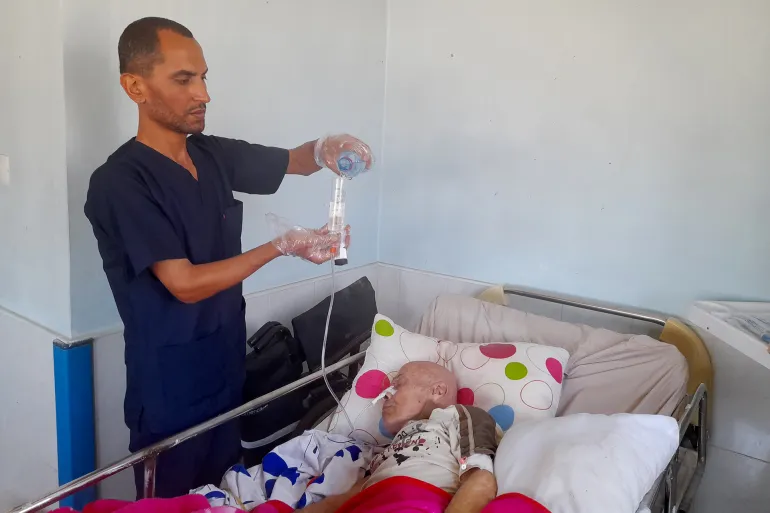
Approximately 1,200 elderly Palestinians have died in the past two months due to Israel’s starvation policy, malnutrition, and lack of medical care, all of which have intensified in recent days.
The actual death toll may be significantly higher, noting an unprecedented surge in daily fatalities over the past two weeks. Hundreds of elderly people have been arriving each day at hospitals and primary care centres in states of extreme exhaustion, seeking nutritional fluids.
The Ministry of Health in the Gaza Strip officially recorded 55 deaths from starvation and malnutrition within a single week, bringing the documented total to 122, including 83 children. The report noted that this figure excludes many deaths caused by the broader consequences of starvation and lack of medical care.
Over the past period, as the starvation intensified, we had almost nothing left to eat. My mother was the most affected due to her age and chronic illnesses. Within days, she lost a significant amount of weight, became visibly weak and emaciated, and fainted several times
Muhammad, the son of 77-year-old Tamam Deeb Shaaban
Euro-Med Monitor’s field team documented the deaths of dozens of elderly people in displacement camps due to starvation, malnutrition, or lack of treatment. Many of these deaths were recorded as natural causes, owing to the absence of a clear reporting mechanism within the ministry and the tendency of families to bury their loved ones immediately.
In reality, these deaths result from deliberate starvation policies and the systematic dismantling of the health system, forming a pattern of intentional killing prohibited under international humanitarian and criminal law.
These conditions involve crimes of deliberate starvation, the infliction of severe suffering, and the systematic denial of healthcare, all taking place under a comprehensive blockade within the context of an ongoing genocide that has persisted for nearly 22 months.
The rising death toll stems from a deliberate Israeli policy of using starvation and denial of medical care as weapons to kill civilians, enforced through a stifling blockade that has intensified since 7 October 2023 and entered a more severe phase on 2 March. This blockade targets the most vulnerable, turning the humanitarian catastrophe into a central instrument in the execution of genocide.
Euro-Med Monitor’s field team has documented harrowing testimonies from elderly individuals whose health deteriorated as a result of starvation and denial of medical care.
In a testimony to Euro-Med Monitor, Muhammad, the son of 77-year-old Tamam Deeb Shaaban, said: “Over the past period, as the starvation intensified, we had almost nothing left to eat. My mother was the most affected due to her age and chronic illnesses. Within days, she lost a significant amount of weight, became visibly weak and emaciated, and fainted several times.”
“As the blockade persisted and food and adequate healthcare remained unavailable, her condition worsened significantly. Two weeks ago, we transferred her to Wafaa Rehabilitation Hospital for medical care and IV fluids, but the damage to her body was severe. She suffered multiple complications, the last being a stroke, and passed away this morning, Saturday,” Muhammed added. “I am overwhelmed with profound grief and a deep sense of helplessness, knowing that my mother died from entirely preventable causes, had anyone in this world intervened to stop the crime of starvation.”
Palestinian Muhammad Abu Daqqa told the Euro-Med Monitor team: “We were displaced weeks ago under bombardment from Abasan al-Kabira to Al-Mawasi in Khan Younis, along with my 74-year-old mother, Fatima. She suffers from high blood pressure, diabetes, and limited mobility, and there is no suitable medication for her. We ran out of flour more than six days ago, and there are no alternatives.”
He continued, “We have now gone over 30 hours without a single meal. When we were given a kilo of flour, there was nothing to eat it with. My mother needs nutritious food because of her condition, but it is simply not available. I had to take her to the hospital for an IV after she lost consciousness from extreme hunger.”
Aisha al-Najjar, 33, told Euro-Med Monitor that, driven by the pressure of starvation, especially her 76-year-old mother’s suffering, she decided to go to the aid distribution centre in Rafah last Thursday after hearing it was designated for women.
“I was shocked upon arrival to be met with gunfire from the occupation forces, who killed two women near me. I returned without receiving any aid,” she said. “Sometimes an entire day passes without us eating anything, which severely affects the health of my elderly, ill mother, and we are unable to provide her with medication for her chronic conditions.”
Israeli authorities continue to control the volume and mechanisms of aid distribution, using it as part of a starvation strategy that turns aid into death traps and a violation of human dignity.
Israel’s announcement that it destroyed thousands of tons of aid after it spoiled from sitting for prolonged periods on Gaza’s outskirts, while deaths from starvation are recorded daily, is a stain of shame not only on Israel but on the entire international community. The world watches in silence, or at best issues timid statements that do nothing to feed a single hungry child or elderly person.
The starvation is worsened by the intense bombardment of homes and shelters, combined with forced displacement. As families flee death and the fear of being targeted, they lose their few remaining belongings and limited stocks of canned food.
The aforementioned acts represent some of the most serious crimes under the Rome Statute of the International Criminal Court, which classifies “wilful killing” as causing death through means such as starvation and denial of medical care. These acts qualify as war crimes and crimes against humanity when committed as part of a widespread or systematic attack on civilians, which clearly describes Israel’s actions in the Gaza Strip.
Israel’s actions also meet the legal criteria for genocide, including killing and inflicting serious physical or mental harm on members of a protected group and deliberately imposing living conditions intended to bring about the group’s physical destruction, in whole or in part. This is a crime that Israel has been committing continuously for nearly 22 months against the civilian population in the Gaza Strip.
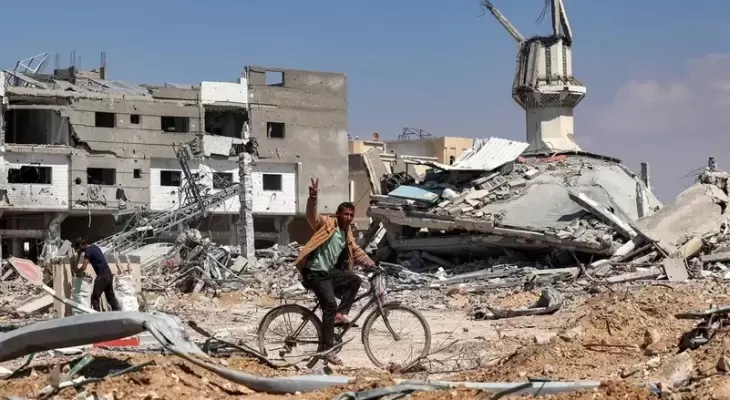
The humanitarian crisis in the besieged enclave has now reached catastrophic levels. Hunger currently affects not only the most vulnerable but every segment of society, amid the near-total collapse of essential services and the absence of basic necessities such as food, healthcare, and shelter.
The unlawful Israeli blockade, which existed prior to the start of the genocide in October 2023 but has worsened since then, along with systematic restrictions on humanitarian aid and the deliberate destruction of the Gaza Strip’s health system, particularly over the past 70 days, has caused irreversible destruction. The Strip’s population of over two million people faces widespread health consequences.
All states, individually and collectively, must assume their legal responsibilities and act urgently to halt the genocide. This includes taking all effective measures to protect Palestinian civilians, and to immediately lift the illegal blockade on the Gaza Strip—the only viable path to halting the worsening humanitarian crisis and ensuring the unimpeded entry of life-saving aid.
Any further delay in lifting the siege constitutes a continuation of grave violations of international humanitarian law, worsening the catastrophic and uncontainable consequences. Until the international community compels Israel and its more powerful allies to change course, the over two million civilians in the Gaza Strip are being held hostage—starved, dehydrated, and denied medical care, in direct violation of their fundamental rights to life and dignity.
The international community must impose economic, diplomatic, and military sanctions on Israel and its closest allies for the aforesaid systematic and serious violations of international law. These sanctions include a complete arms embargo, including the ban of exports, dual-use goods, and military cooperation; suspension of all forms of political, financial, and military support; freezing the assets of Israeli officials implicated in crimes against Palestinians; imposing travel bans on all those responsible; and suspending trade privileges and bilateral agreements that provide Israel with economic advantages enabling its continued crimes.
The international community must immediately fulfil its legal and moral obligations by addressing the root cause of the Palestinian people’s suffering and oppression, which has persisted for 77 years: the apartheid regime imposed on Palestinians by the Israeli settler-colonial enterprise. To ensure Palestinians’ rights to freedom, dignity, and self-determination under international law, the international community must act to end Israel’s illegal occupation.
Euro-Med Monitor reiterates that Israel must be compelled to lift its illegal blockade on the Gaza Strip, all perpetrators of crimes committed against Palestinians in the Strip must be held accountable, and justice and reparations for Palestinian victims there must be guaranteed.