Israeli military officials warned a mass-casualty settler attack could ignite widespread Palestinian resistance as violence and home demolitions escalate across the West Bank.
Key Developments
- Senior Israeli military officials reportedly warned political leaders that a mass-casualty settler attack against Palestinians was now considered a realistic scenario.
- Four Palestinians were shot during an illegal settler attack on Al-Mughayyir, while Israeli forces demolished residential buildings in Birzeit and Nablus.
- Military officials fear escalating settler violence could draw previously uninvolved Palestinians into armed resistance and trigger a broader West Bank confrontation.
Israeli Military Warns of Mass-Casualty Attack
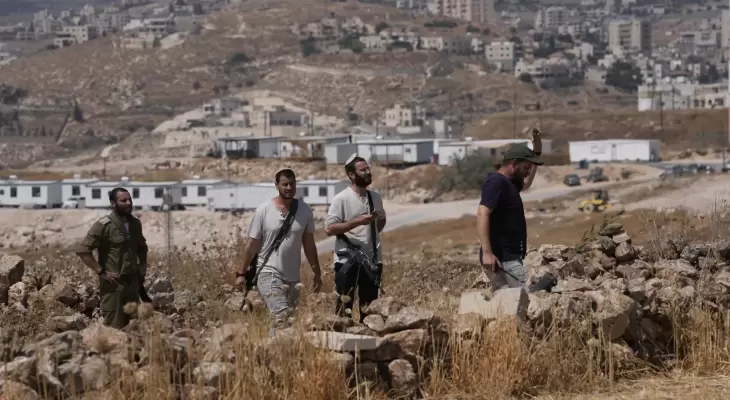
Senior officials in the Israeli occupation army have warned political leaders that early indicators point to the possibility of a mass-casualty attack by illegal Israeli settlers against Palestinians, potentially triggering a major escalation across the occupied West Bank.
According to Israeli military officials cited by Palestinian and Hebrew-language media, such a scenario is now considered realistic rather than hypothetical.
Officials reportedly warned Prime Minister Benjamin Netanyahu and members of his government that settlers could burn Palestinian homes and property or use live ammunition against residents.
The Israeli military reportedly compared the feared scenario to the July 2015 attack in Duma, south of Nablus, when Israeli settlers firebombed the Dawabsheh family home.
https://www.palestinechronicle.com/over-4500-settler-attacks-recorded-across-west-bank-since-start-of-2026/embed/#?secret=aKI03Jq7y6#?secret=QEuGsU6cqq
Eighteen-month-old Ali Dawabsheh was killed in the attack, while his parents, Saad and Riham, later died from their injuries.
Military officials fear another attack causing large numbers of Palestinian casualties could push Palestinians who are currently not involved in confrontations to join armed resistance activities across the West Bank.
According to the assessments, this could open the way to a much broader confrontation, including retaliatory attacks against illegal settlements and outposts.
Israeli officials are also monitoring growing groups of young Palestinians traveling to areas of confrontation to defend villages facing settler attacks.
While officials said these Palestinians are currently unarmed, the occupation army fears that continued violence could lead to a shift toward armed activity.
“The most serious predictions are about to come true, and very soon,” military officials were quoted as warning.
The officials reportedly said settler attacks had become increasingly violent and that those participating “no longer fear anyone.”
They also expressed concern that prominent settlement rabbis were providing religious cover for settler violence, including by permitting settlers to violate Sabbath restrictions to travel to Palestinian villages.
Officials cited events in Qusra over the weekend as an example.
Four Palestinians Shot in Al-Mughayyir
The warnings came as illegal settlers continued attacks against Palestinian communities across the occupied West Bank.
Four Palestinians were shot and wounded on Sunday evening during a settler attack on Al-Mughayyir, northeast of Ramallah.
The Palestinian Red Crescent Society said its crews transported four Palestinians suffering gunshot wounds to hospital.
According to the official WAFA news agency, groups of settlers entered the village under the protection of Israeli occupation forces, damaged Palestinian vehicles and attempted to attack several homes.
Among the targeted properties was the home of resident Shaaban Abu Aliya, while other settlers approached Palestinian houses on the western side of the village.
https://www.palestinechronicle.com/israeli-forces-injure-six-as-raids-sweep-west-bank-al-mughayyir-siege-tightens/embed/#?secret=h6F9TSubKU#?secret=Nhby2ucsMd
Israeli occupation forces had earlier closed Al-Mughayyir’s entrance, preventing Palestinians from entering or leaving.
The closure coincided with settlers and their livestock spreading across Palestinian areas south and west of the village under military protection, according to WAFA.
Al-Mughayyir has repeatedly faced settler attacks involving assaults on residents, grazing livestock on Palestinian agricultural land and attempts to seize territory.
Elsewhere, settlers attacked Palestinian homes in Beita, south of Nablus, damaging the contents of at least one house.
In Al-Minya, southeast of Bethlehem, settlers also began infrastructure work at a recently established illegal settlement outpost.
Israeli military officials reportedly believe the normalization of such violence has itself become a security threat.
The assessments pointed to political and religious support for settlers, alongside what officials described as failures by Israeli authorities to confront the attacks.
Demolitions Escalate amid Internal Israeli Rift
Israeli forces simultaneously carried out widespread demolitions in Birzeit and Nablus as pressure on Palestinian communities intensified.
In Birzeit, north of Ramallah, occupation forces demolished two residential buildings housing more than eight Palestinian families, according to Al Jazeera.
The demolitions were reportedly carried out without prior notice.
Al Jazeera reported that nearby agricultural land has increasingly come under pressure from recently established settlement outposts, with settler attacks forcing Palestinian families from parts of the area.
An Al Jazeera team covering the demolition was also reportedly confronted by a 15-year-old settler accompanied by Israeli soldiers. The network said the settler attempted to assault journalists and prevent them from working while soldiers protected him.
In Nablus, Israeli forces deployed around 15 military vehicles and bulldozers to the Upper Al-Taawon neighborhood, where they began demolishing at least two multi-story residential buildings.
The Israeli military cited construction without permits, maintaining that the buildings stood in Area C.
Palestinian residents, however, reportedly possess documents indicating that the land is classified as Area A under the Oslo Accords.
https://www.palestinechronicle.com/today-qusra-tomorrow-the-west-bank-israels-new-plan-dalet/embed/#?secret=5rNeDPPKRO#?secret=JyQRcix36n
The demolitions coincided with raids on the Balata refugee camp involving gunfire and arrests.
The escalating violence has also exposed divisions within Israel’s military and political establishments.
Military officials have reportedly accused some officers of avoiding confrontation with political leaders for fear of jeopardizing their careers or promotions.
Israeli security sources said some officers being considered for promotion enjoy support from Defense Minister Israel Katz, Finance Minister Bezalel Smotrich — who also holds powers within the Defense Ministry — and Netanyahu.
A separate rift has reportedly emerged between Central Command chief Avi Blot and West Bank police commander Moshe Ben-Shali, with military officials accusing the latter of answering primarily to National Security Minister Itamar Ben-Gvir and disregarding Central Command instructions.
Meanwhile, the scale of settler attacks continues to grow.
According to figures cited by Al Jazeera from the UN Office for the Coordination of Humanitarian Affairs, more than 1,550 settler attacks have been recorded since the beginning of 2026, while the Wall and Settlement Resistance Commission reported a 63-percent increase during the first seven months of the year compared with the same period in 2025.
More than 5,050 Palestinian structures have also been demolished since October 7, 2023, according to figures cited in the report.
The combination of demolitions, settlement expansion, armed settler attacks and growing Palestinian efforts to defend targeted communities has prompted Israeli military officials to warn that the occupied West Bank could be approaching a much broader confrontation. Palestine Chronicle


 CrossFireArabia