An Unholy War!

By Robert Stephen Ford

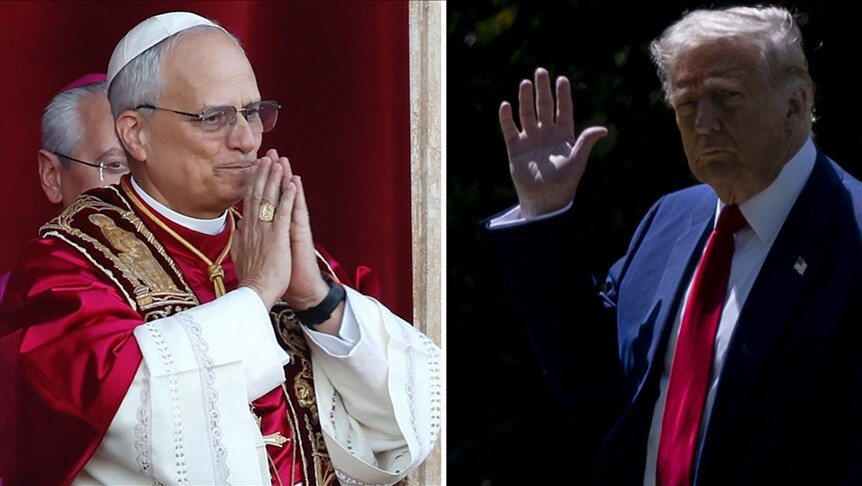
Presidents and popes have disputed wars in the past. Pope Paul VI criticized the American war in Vietnam, saying that America was losing its moral standing. Pope John Paul II called the American invasion of Iraq in 2003 unjust and illegal. However, the clash between US President Donald Trump and Pope Leo XIV, who are the two most influential Americans in the world, about the war against Iran is without precedent.

The rift that preceded the war

The relations between the Vatican and the Trump administration were difficult even before the Iran war. Before the appointment of Pope Leo, Pope Francis in 2025 criticized Donald Trump’s restrictions against immigration and the treatment of refugees and immigrants in American detention centers. In January 2026, three top Catholic Church leaders in the United States issued a report stating that American foreign policy was immoral. They pointed to reduced assistance to world health programs that have harmed tens of millions of people worldwide.

The American surprise attack on Iran on February 28 sharpened the dispute between the Vatican and the White House. The Trump administration portrays the war as a kind of holy crusade blessed by God. In his April 7 social media message threatening to destroy Iranian civilization, Trump exclaimed, “Glory to God!” while also saying that God ensured the success of the mission to rescue an American pilot whose plane was shot down over Iran. On March 26, US Defense Secretary Pete Hegseth told a press conference that military strikes against Iran enjoyed protection from God, and at a religious service in the Pentagon on April 1, he quoted from the Old Testament, asking God to “break the enemy’s teeth.”

The Pope responded on April 6 that Jesus called for peace and reconciliation, and he rejected politicians using God to justify war. His rebuke generated sharp counterattacks from Trump and some Republican Party leaders. Vice President JD Vance and Speaker of the House of Representatives Mike Johnson said the pope appeared not to understand the Catholic Church theory of just war. Several American bishops close to Pope Leo responded that it was ridiculous to suggest that the pope did not understand the theology and the theory of just war since Leo himself is from the branch of the Catholic Church founded by Augustine, the Christian thinker who, 1,600 years ago, first set down the principles of a just war. The surprise American attack in the middle of negotiations, the American failure to avoid striking civilian targets and the ambiguous American government goals of the Iran war did not meet the standards of a just war, they noted.

Politics dressed as theology

Trump and the Republicans are politicians, not theologians. They portray the war against Iran as holy because they understand that the war is unpopular in the United States and they need the support of Christian conservatives in their political base. Notably, most Catholics, who are about 20% of the American population, voted for Trump in 2024. Opinion polls since late March have shown that most Americans doubt the war is in America’s national interests. After Trump’s threat to destroy Iranian civilian infrastructure and civilization on April 6-7, the pope called the threats “unacceptable” and would violate international law. He even urged American citizens to contact their representatives in Congress to demand that the war stop. It was unprecedented for a pope to urge Americans to mobilize this way, and it directly touched a big part of the Republican Party base. Trump responded five days later with his social media message alleging that the pope appears to accept that Iran can have nuclear weapons and does not understand foreign policy. No American president had attacked a pope so personally. With economic damage from the Iran war and opinion polls indicating Democratic Party victories in the November congressional elections, the White House and Republicans are especially sensitive to criticisms towards their war policy.

The pope enjoys a big advantage over Trump in opinion polls in the United States, and Trump over the past four days has retreated a little. He said on April 16 that while he respected the pope’s right to say what he thinks, Trump insisted that he would continue to say and do what he thinks is right. The pope, meanwhile, said on April 18 that he did not want to debate the president. The pope’s role in the end is not to descend to politics but rather to stay on a high level focused on how people should live according to the principles of Christianity. This round of arguments has been winding down, but the Trump administration’s use of Biblical scripture and symbols to justify controversial policies will trigger new fights with the Catholic Church in the months ahead, especially if the war escalates.

The writer is a former US Ambassador to Algeria and Syria and contributed this article to Anadolu

CrossFireArabia

CrossFireArabia
Dr. Marwan Asmar holds a PhD from Leeds University and is a freelance writer specializing on the Middle East. He has worked as a journalist since the early 1990s in Jordan and the Gulf countries, and been widely published, including at Albawaba, Gulf News, Al Ghad, World Press Review and others.

Related Posts

The Chinese Fortune Cookie and The “Thucydides Trap”! A  View From Amman

By Saleem Ayoub Quna

Nearly 2000 years ago, there lived a prosperous Empire in ‘Athens’ which dominated the whole region of ancient Greece, along the hundreds of islands in the Aegean Sea. It was situated approximately 200 kilometers away from another military strong city, an empire called ‘Sparta’.

The advisors of the Emperor of Athens started warning their leadership of the growing power of this relatively distant neighbor, which could pose an imminent threat to its supremacy, and even to the existence of their empire in Athens as well.

In one of the ancient Greek ‘think-tanks’ in Athens also, lived a general and philosopher, who was monitoring the evolution of relations between the two city states. His name was ‘Thucydides’. He foresaw disaster and advised his fellow Athenians to resist the temptation to go after the Spartans, in order to quell the possibility that their power might expand and grow bigger in the region, and threaten and challenge the actual supremacy of Athens.

He begged them not to fall to such an illusionary trap. Sparta seemingly was minding its own business and was not fully aware of Athens’ fears and phobia of the unknown.

‘Thucydides’ kept warning his own people about such eventuality, but to no avail. The war finally broke out and it was called the “Peloponnesian war” that lasted for nearly three decades. Its endgame was a humiliating defeat for Athens, and a decisive victory for Sparta.

In the first decade of this century, a certain Graham Allison, a professor of political science at Harvard School for International Studies, was studying and analyzing this pattern of hostile relations between nations, built on suspicion and mistrust.

Out of 16 wars in the world, big and small, he found out, 12 wars erupted between nations, precisely because of, not similar, but identical circumstances, where a certain nation would fear the rising power and influence of another nation, and decides to go to war to eliminate this imaginary threat, so the former would keep its clout and domination.

While studying and tracking back cases of war from modern times such as WWI and WWII and other older conflicts, and when he reached the “Peloponnesian War, 431-404 BC” in Greece, he came up with a simple conclusion that causes such wars between nations, which is the fear of a nation of another nation’s power and ill-intentions! And he brilliantly dubs it the “Thucydides Trap” thus emulating the first experienced and documented war of this kind in ancient Greece, nearly 2000 years ago!

Now we come back to our present day and astonishingly hear Chinese President Xi Jinping warning his powerful visitor, US President Trump, and himself not to submit to the “Thucydides Trap” which many nations in the past did!

What is also amazing in this regard, is first, that the Chinese leader alluded to that ancient lesson which happened in Greece that lies thousands of miles away from China, and second, is how the smart and knowledgeable Xi Jinping’s speech writers, were as they inserted Graham Allison’s most famous political coinage in connection with today’s issues of war and peace!

In conclusion, I would like to list two questions and one footnote:

  • Does not the name “Thucydides” phonetically rhyme with the word “suicide”, especially if you could listen to its pronunciation in Greek!
  • Does not the “War of choice” launched against Iran on the pretext that it is posing a threat to Israel, squarely fall under the category of “Thucydides Trap” wars?
  • When Sparta won the war against Athens, it was significantly due to Persian support against Athens, bearing in mind that the Persians were the forefathers of present-day Iranians!

Continue reading
Oslo: Strangling The Dove

By Dr Khairi Janbek

When we do a recap of the Oslo Agreements, they were a series of accords between Israel and the PLO signed in 1993. It was a process meant to lead to a permanent settlement of the Palestinian-Israeli conflict within five year, including decisions on borders, refugees, security, Jerusalem and settlements.

But right from the start, voices were divided over the process, while for others, the whole idea had a built-in mechanism for failure from the start. The Palestinians started seeing that the Oslo Agreements were neither ending the establishment of Israeli settlements nor the end to occupation, while for the Israelis it didn’t seem to end their security concerns.

Indeed, it is pointless to think which comes first, the chicken or the egg, because two different fears and logistics persisted from the start.  But also, it is important to think about the circumstances which brought about the idea of launching the process, and which did put the PLO in a tough position for being perceived as supporting the wrong side which lost; Iraq.

The room for manoeuvre for the late Yasser Arafat was very tight as he stood to lose the legitimacy of the PLO.

What one is trying to say is that, right from the start, outside official circles, many on the Palestinian side were against Oslo probably as many as was the case on the Israeli side.

The gradual erosion of Oslo mainly through the continued Israeli actions kept feeding extremism on both sides.  Nevertheless, the concept was not revoked by any Israeli government because of its effect on Arab public opinion, pressure which is likely to block any peace initiative. Moreover, the international atmosphere was not conducive for such an initiative.

Having said that, one cannot claim that the international atmosphere is currently more indifferent to the abrogation of the Oslo, rather Israel seems to have more leeway in undertaking unilateral actions with more impunity.

Of course, it is not international law that can be counted on in this respect but rather, at least for the time being Donald Trump’s disapproval of the idea of annexing the West Bank by Israel. This is despite the fact that all the Israeli actions of dividing the West Bank from north to south first and currently from west to east, goes unnoticed. But the important thing has been till now, and don’t say the magic word, end of Oslo.

However, the recent development is that Israeli political parties, the partners in Netanyahu’s government are all pushing openly, for the abrogation of the Oslo agreements and cancelling out all the Israeli obligations towards it.

One can only say such an open declaration is a matter of principle by the Israeli government, because the changes on the ground are there for all to see. One supposes all parties are playing for time to see the end of the Palestinian national aspirations.

The columnist is a Jordanian writer based in Paris, France

Continue reading

You Missed

The Chinese Fortune Cookie and The “Thucydides Trap”! A  View From Amman

The Chinese Fortune Cookie and The “Thucydides Trap”! A  View From Amman

Israel Kills 200 Lebanese Children – UNICEF

Israel Kills 200 Lebanese Children – UNICEF

Nakba – 78 Years of Occupation Misery

Nakba – 78 Years of Occupation Misery

Palestinians Remember The Eveil Nakba

Palestinians Remember The Eveil Nakba

Nakba – 78 Years On

Nakba – 78 Years On

An Egyptian House in a German Town

An Egyptian House in a German Town