Hormuz: Mines, Strategy or Business?

By Ismail Al Sharif

The US thought that assassinating senior Iranian leaders would bring down the regime, but this did not happen.

Iran’s inability to match American military and technological superiority led it to adopt a number of strategies, most notably what is known in the military literature as the Mosaic Defense Doctrine. This doctrine is based on dismantling its military central command into small, independent units, each operating autonomously and making its own decisions without consulting the higher command.

From Day 1 of the war, Iran adopted this approach. However, the lack of coordination and the disintegration of the military hierarchy led to chaos and confusion which affected the management of its operations. The situation became contradictory; the politicians were declaring one thing and military commanders acting in a completely different manner and direction.

This was reflected on the ground through extremely dangerous behavior. Military units, using small boats, indiscriminately laid naval mines to deter enemy ships. However, the lack of coordination here backfired resulting in the Iranian navy officers losing their ability to pinpoint the coordinates of the mines they planted in the Hormuz Strait with no accurate maps or reliable records. Some of these mines may have been completely displaced by the currents of the sea. This was further complicated by the fact that these mines were not primitive but far from it; they were sophisticated and able to detect sound and pressure, and thus able to track the passage of large ships and submarines, and detonate automatically upon approach.

However, mine removal is not easy task, as history shows. Even today, news reports continue to surface of mines in various parts of the Kingdom, half a century after the last war. Indeed, mines from World War II are still being discovered on land and at sea.

Even with Britain’s pledge to remove mines after the war, and despite possessing the latest specialized technologies in this field, the task remains arduous, protracted, and uncertain. The specter of a sudden explosion looms, reminding us that the danger of mines is not easily eliminated.

But the decisive factor in weakening navigation in the Hormuz Strait is not primarily military, but rather material. Commercial ships are massive investments, with some vessels valued at around $150 million and their cargoes potentially worth hundreds of millions of dollars. Therefore, a single mine explosion can cause catastrophic losses to both the ship and its cargo. Consequently, no ship sails without insurance; ports, banks, and shipping companies refuse to deal with uninsured vessels, and without insurance, global shipping grinds to a halt.

Herein lies the real surprise: the fate of the Strait is no longer dependent on Iran’s pronouncements regarding its opening or closure, but has effectively fallen into the hands of insurance companies. With the escalating risks, insurance costs have skyrocketed; “war risk” premiums have jumped from approximately 0.25% of the ship’s value to nearly 1% or more, exceeding a massive $1 million per voyage. And it doesnt stop there; seven major insurance companies announced their complete withdrawal, issuing notices of coverage cancellation just within just 72 hours.

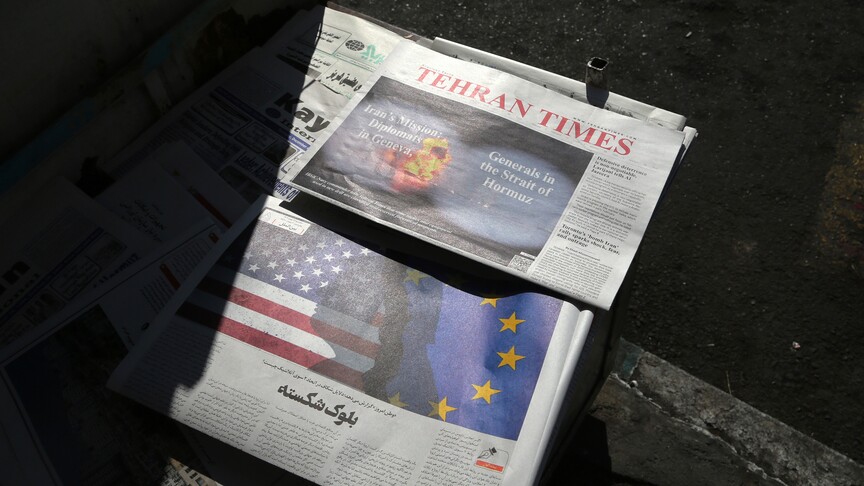
And here comes the decisive turning point: Once the insurance coverage is lost, maritime traffic ground to a halt. During this 39-war, ships have effectively ceased sailing with the number of vessels transiting the Strait plummeting by more than 80%. Around 150 oil tankers remain anchored offshore, and major shipping companies suspended their operations, as if this vital artery of global trade had been frozen by a financial, rather than a military decision.

The US government attempted to provide alternative insurance coverage, but this effort failed and US President Trump’s pronouncements regarding mine removal were inconsistent with the reality.

The issue of reopening the Strait has once again become a prominent topic, but the deeper truth is that its fate is no longer determined by political statements or military actions, but rather by the decisions of insurance experts. Even if the war were to end immediately, ships would not resume sailing right away. Insurance companies need time to reassess the level of risk, and they base their decisions not on political logic, but on cold, hard numbers and rigorous data.

This article was originally published in Arabic in Addustour daily newspaper and republished in English in crossfirearabia.com.

Continue reading
Analysis: Middle East in Iranian Eyes

CROSSFIREARABIA – During the Israeli Genocide on Gaza Benjamin Netanyahu used to stand up and say with a smirk: ‘We are changing the face of the Middle East’.

Upbeat about murdering the women and children of Gaza from the late 2023 onwards, he was talking about the further normalization of the Arab world as established by the Abraham Accords, establish an economic order under Israel’s hegemony and end Hamas, Hezbollah and Houthis while clipping the wings of Iran.

Of course, Netanyahu’s face soon changed, albeit two-and-a-half years later, when Iran and Hezbollah were forced into a war generated by Israel and the USA on 29 February, 2026. While Iran got a battering, in the next 39 days, US ships and military bases in the Gulf and Jordan received such a hammering that soon forced US President Donald Trump to plead for a ceasefire.

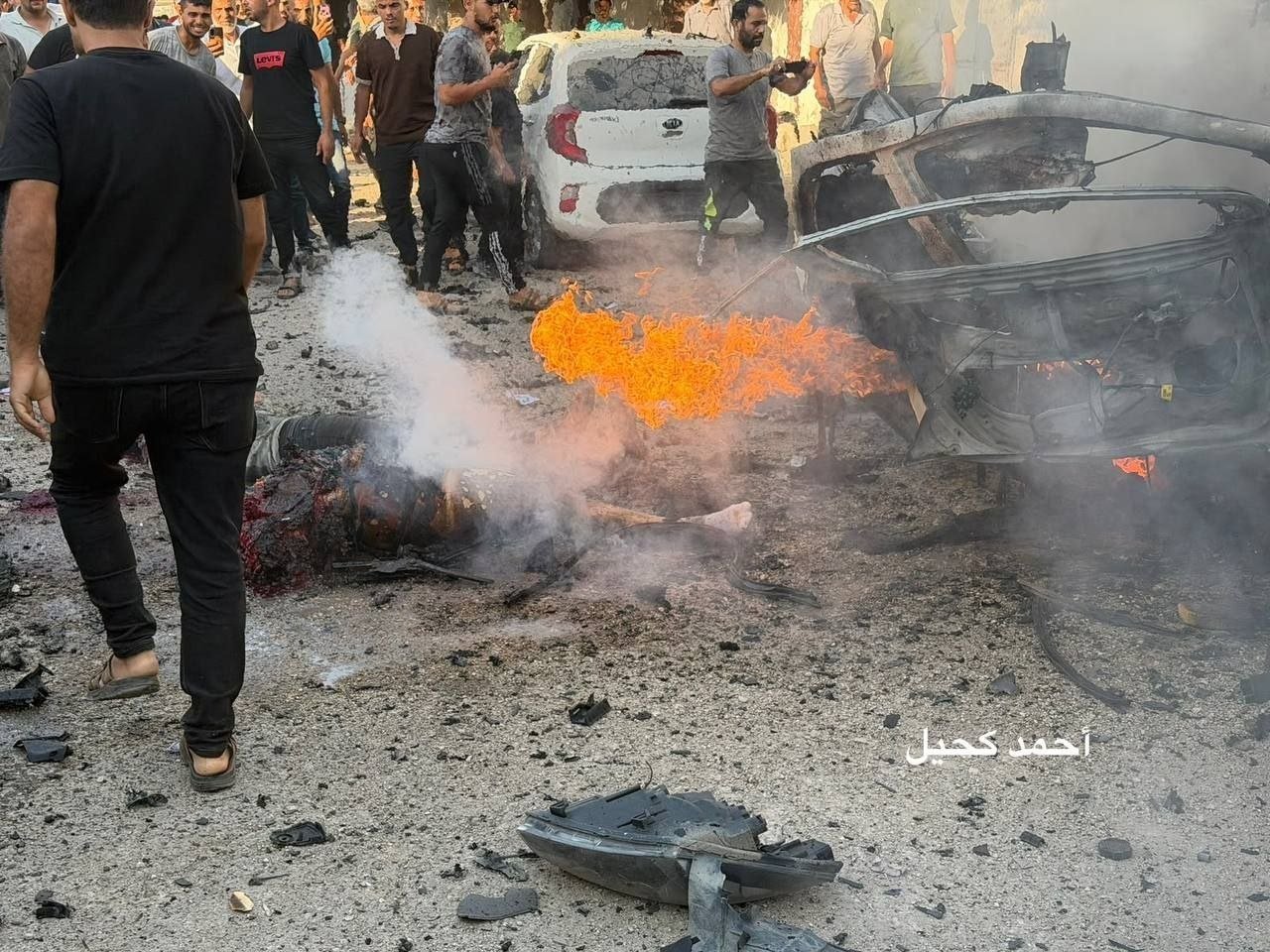
In this war, Israel received a great shock, being attacked literally on an hourly and daily basis with its buildings, military basis and infrastructure taking directs hits while its millions of people living in underground shelters around-the-clock. 

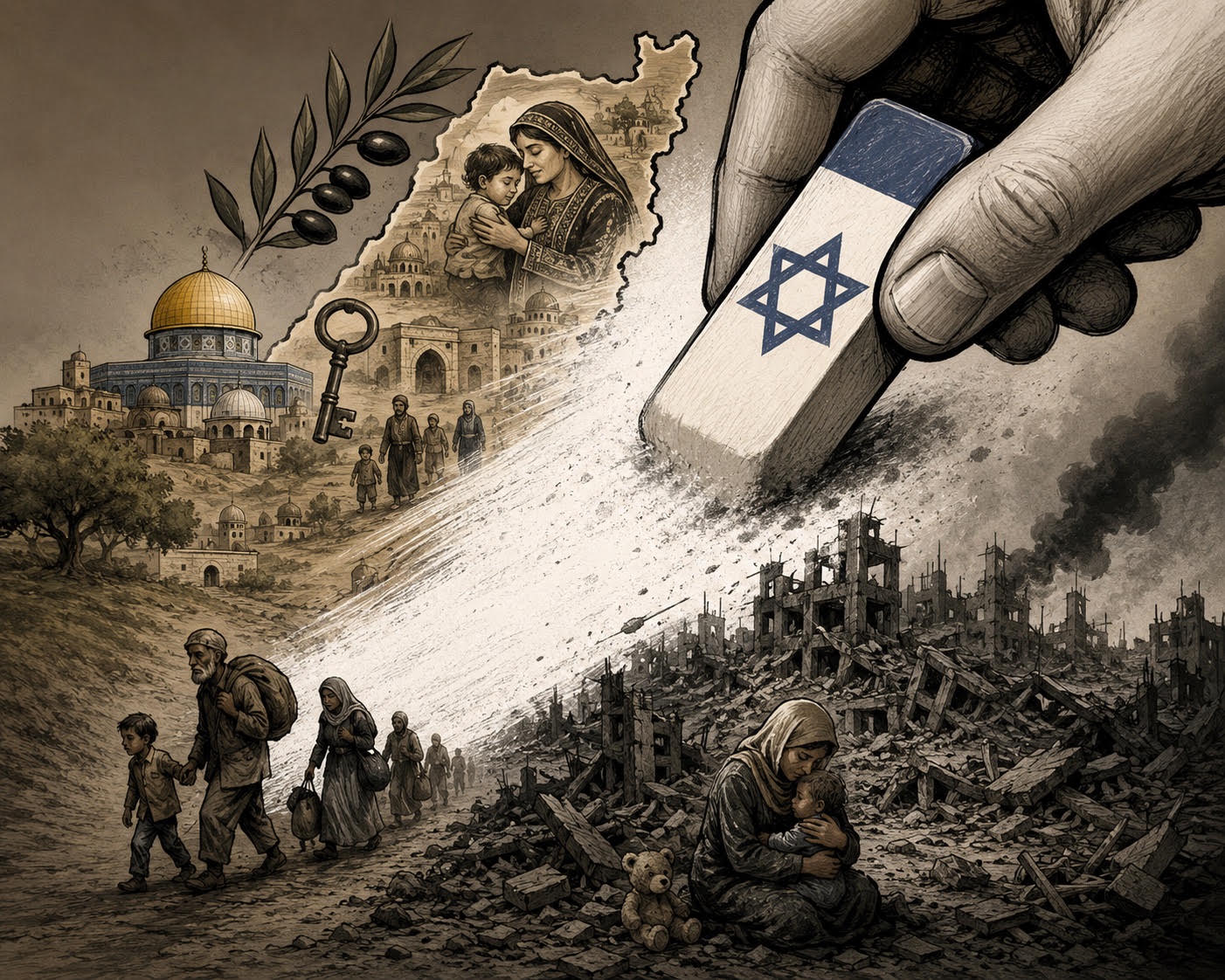
To use a metaphor Tel Aviv’s nose was being rubbed in the sand in a way that has never been imagined by Netanyahu nor his ilk of extremist right wing fascist politicians who started calling for the expulsion of Gaza Palestinians from their homeland ever since the Israeli genocide on them since 7 October, 2023. 

Today’s Netanyahu’s vision of a new Middle East has been drastically changed, thrown in his face in fact! Iran’s political stances and its missiles have changed things around. The US and Israel were not able to change the current Iranian government in Iran despite killing the country’s spiritual leader Ali Khameini, have not ended the country’s nuclear program nor ended its ballistic missiles. 

So what is Netanyahu talking about? Yes, today there is clearly a new Middle East emerging but it is not according to Netanyahu’s eyes nor his wishful thinking. If anybody should be ‘celebrating’ it is clearly Iran, it’s government, revolutionary guard, its Generals, officers and soldiers who are very probably changing the face of the Middle East and may even be setting the map of how the region should look like in form from now on. 

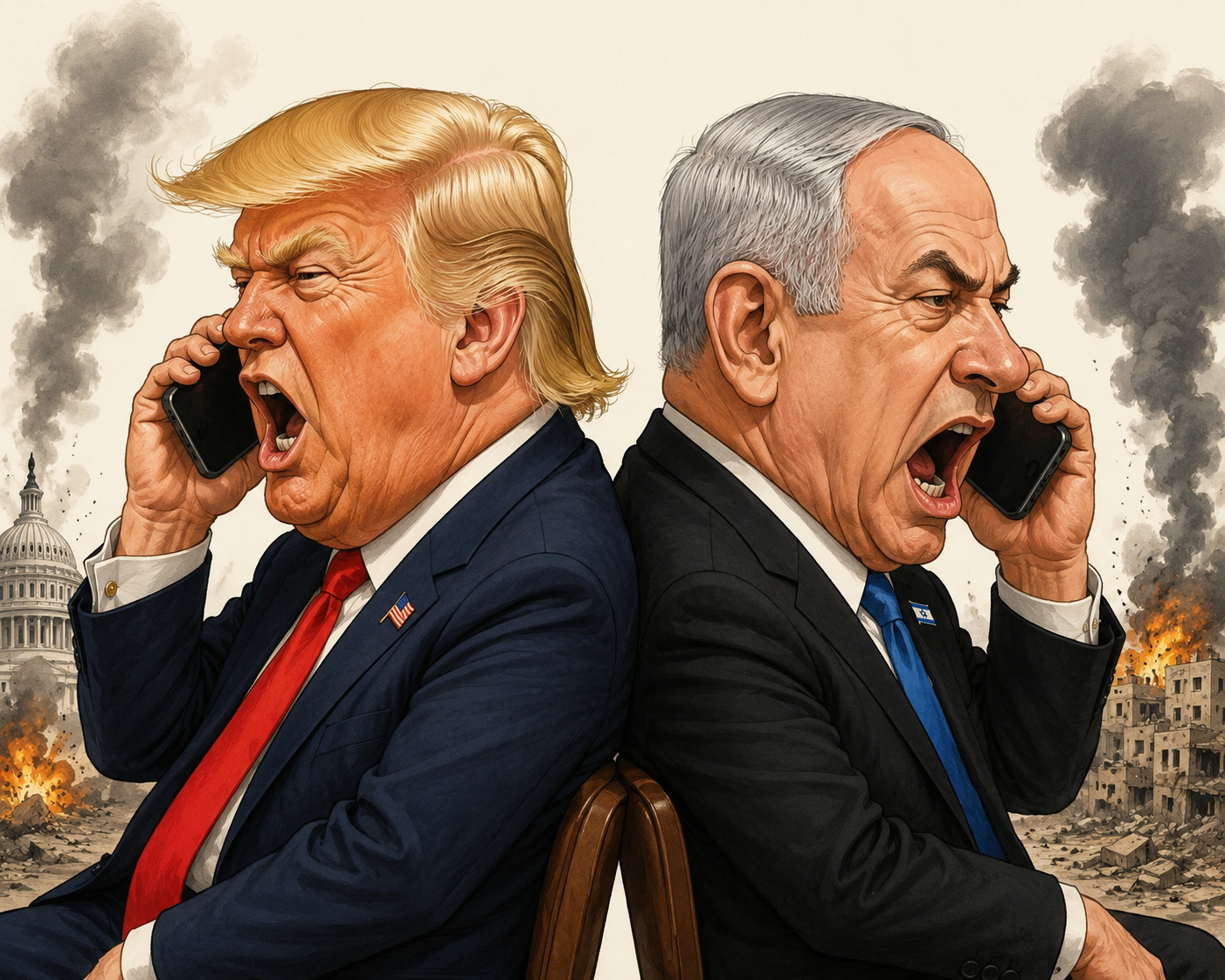
From day one of the war, Trump started running scared despite his outlandish mutterings! He came to realize quickly that Netanyahu and the Mossad pushed him against Iran, convincing him it would be an easy fight and the government there would fall like a pack of cards. Trump since, started kicking himself as he finally fell to Netanyahu’s squinted prism to go after that country. Netanyahu kept pushing for this wild step since the 1990s through previous US presidents from Bill Clinton, George W Bush, Barack Obama and Joe Biden.

But they did not listen to him however, Trump fell into the trap and maybe this is why he is now privately kicking himself because he basically sent the globe into an economic tailspin and soaring exorbitant oil prices, a potentially deep recession and financial chaos.

In this war Netanyahu may have shot himself in the foot. His alliance with the USA  juxtaposed by Hezbollah whose fighters laid dormant since November 2024 when it stopped firing at Tel Aviv was a big surprise to the latter. Israel had previously thought that Hezbollah agreed to a ceasefire out of weakness and thus their entry into military action was unexpected. Hezbollah kept the military pressure on for six more days after Washington signed off with Iran and beating the Israeli army into submission.

On day 46 Trump intervened calling on the Israeli army to stop fighting Hezbollah. He had ulterior motive, he wanted to extract a normalization agreement between the Lebanese government and Israel; their ambassadors had just started meeting in Washington at the invitation of the US State Department in an upbeat atmosphere and inline for a final agreement to establish an accord between Tel Aviv and Beirut alongside the ones signed between Israel and four Arab states, the UAE, Bahrain, Sudan and Morocco starting September 2020. 

Thus a normalization agreement would be a feather in Trump’s cap, a sort of prestige move for the US president. But his pressure may have been seen as a life-saving formula. Trump was saving Israel from Netanyahu’s insistence that his army to keep fighting in southern Lebanon. Its fight has already cost Israel at least 13 soldiers who were killed, more than 500 injured and more than 100 topnotch Merkava tanks destroyed. Israeli towns and cities were being hammered from the north.

Israel was being beaten from the north. Its towns, cities and military bases again were wide-open to incoming rockets from Lebanon and were not being deflected. It was a war that had to be stopped. This time Trump insisted. If a ceasefire with Iran was going to stick, then Netanyahu had to be forced to make his soldiers stop their fight in Lebanon. 

Thus for the time being Netanyahu’s hand lie in check. Yet in the long run his dream for a new Middle East with Israel playing a central part in it may have been halted. After all, no Gulf or even Arab states now would think of normalizing with Israel despite the fact that Lebanon is being forced into it, but even for then its early days.

Netanyahu can kiss goodbye his long-life attempt to sign a normalization accord with Saudi Arabia for instance, a kingdom which is seen as a “major puller” in the Arab and Muslim world. It has already said that normalization is off the table with Israel. The Gulf has been disappointed in this war because it showed that America were not able to protect them from Iranian missiles that targeted their infrastructure as well the US military bases strewn across the region.

Netanyahu has lost on the economic level as well. His country stands economically devastated, army in ruins as admitted to by the Israeli chief of staff Eyal Zamir, and the dream of opening an ‘economic Middle East’ is definitely dashed for the time being.

America, as Trump knows, is left to pick up the pieces of a tattered world caused by war any choas in a region that is vital to the global system.

Continue reading
Bint Jbeil: Town of Heroic Resistance

By Mohammad Jaradat

Weaker than a spider’s web. This is a slogan used by the late martyr Sayyed Hassan Nasrallah, from here in Bint Jbeil that represents the crucible of southern Lebanese geography intertwined with a history of resistance from the last century against the French occupation, and the crown jewel of northern Palestine in the face of the British occupation. Here, some of Sheikh Izz ad-Din al-Qassam’s men received their training and ammunition for the battlefield.

The Litani River, with its proud craned neck, peering from its geographical depression into the nearby hills, eastward towards Ainata and southward opposite Maroun al-Ras and Ain Ebel peers in fervor. Here, the Israeli occupation army finally declared its encirclement after 50 days of war and nearly a month of intermittent ground incursions by their two fully equipped divisions.

The 98th Division, with over 15,000 soldiers, advanced from the east, and the 162nd Division, with a similar strength, advanced from the west. The spokesperson of this “army” boasted that the sports stadium had been captured. It was here that the complex of “weaker than a spider’s web” took root in the Israeli psyche, beginning in 2000 with the victory speech by Nasrallah, then general secretary of Hezbollah, delivered in this very stadium. This complex solidified in 2006, becoming deeply ingrained in the Israeli psychological and political landscape and surfacing.

Today Bint Jbeil, a southern town with a population of 25,000 and an area exceeding 10 square kilometers, is besieged. The encirclement is now complete, and the Israeli army intends to storm it, as they did in 2006 for four weeks. Then, Brigadier General Gal Hirsch repeatedly announced its capture in three consecutive false claims. Israeli soldiers attempted a takeover 2024, but Bint Jbeil remained defiant against the invaders, even under the cover of the world’s most powerful air force and accompanied by the most advanced and sophisticated tanks.

Bint Jbeil sits peacefully in its low-lying geographical area, just 3 kilometers from the northern Palestinian border. Only Mount Maroun al-Ras separates it from this border, being fraught with tension and pride. This time the Israeli occupation army traversed its roads, advancing towards the outskirts of Bint Jbeil. Channel 14 of the Israeli entity, albeit through circuitous means, circumvented the military censor’s scissors to reveal the hell of war in Bint Jbeil, where the tank of the commander of Battalion 52 had just been blown up by an anti-tank missile.

The Israeli occupation army is pushing towards Bint Jbeil, fully aware of the symbolic and strategic importance of this town. It is the geographical neck that separates the eastern and western branches of the Litani River. Israel cannot claim to have complete control over the southern Litani without Bint Jbeil. However, its past experiences with the town have been bitter. While it may have studied its reality and learned from those experiences, its people and their resistance have surpassed even the lessons learned and the harshness of the confrontation.

The alleys and lanes of Bint Jbeil bear witness to the footsteps of dozens of resistance fighters and commanders who have fallen within its walls in previous battles. Dozens of Israeli soldiers and commanders have also fallen there. Today, in the Battle of Asif al-Ma’kul (Operation Protective Edge), Bint Jbeil opens its arms not to welcome invaders, but to shelter some of them as prisoners, after the promise made by today’s Secretary-General of the Resistance, Sheikh Naim Qassem. He, a man of action rather than oratory, and he would not have made such a vow unless the men of God, under his guidance, had prepared themselves for the present fight. There are resistance prisoners whom the November 2024 agreement left unfulfilled, and the resistance does not abandon its prisoners in prisons.

A picture of victory.

Through this, Benjamin Netanyahu seeks to market his empty slogans here, even at the cost of dozens of the lives of his soldiers. What he failed to achieve in his aggression against Iran, he now aims to accomplish here in Lebanon, even through direct negotiations with a government that represents only a small minority of subservient individuals. He arrogantly insists on negotiations under fire, hence his insistence that his Chief of Staff, Eyal Zamir, rush to Bint Jbeil, just as Ehud Olmert did previously when he insisted on his Chief of Staff, Dan Halutz, and persisted until some officers, according to Olmert’s later admissions, disobeyed orders and withdrew without permission from some of the areas they had seized in Bint Jbeil, leaving in a worse state than when they had entered.

The concentrated targeting of Bint Jbeil, amidst the rush to resolve the battle, even if only by attempting to stage a photo opportunity in some of its neighborhoods, points to several important aspects, most notably:

First: The quagmire of the Israeli army in southern Lebanon is becoming increasingly entrenched, especially as Israeli political ambitions have begun to outweigh its military achievements on the ground. This is due to the composure of the resistance leadership, its effective management, and its mobile control over key areas in southern Lebanon. It is also due to the pressure of Iranian steadfastness and the interconnectedness of the various fronts, which has driven Netanyahu to seek a preemptive escape by jumping into direct negotiations with the Lebanese government lead by Nawaf Salam in Washington.

Second: This serves to cover up the Israeli-American failure on the Iranian front. This failure, on the one hand, is what prompted the Israeli army to commit Wednesday’s massacres against hundreds of civilians. On the other hand, it indicates the frenzied behavior that gripped Netanyahu after the US agreed to the Iranian condition of halting the aggression against Lebanon, just as it halted the aggression against Iran—a condition that remains a thorn in Israel’s side.

Third: Exploiting the official Lebanese rush towards Israel through direct negotiations—negotiations devoid of any real possibility of agreement. The Lebanese government lacks the necessary realities and is negotiating to secure a ceasefire agreement, separate from any Iranian gains, in exchange for Israel’s insistence on disarming Hezbollah. Hezbollah’s weapons are used to bombard Israeli settlements in northern Palestine day and night, and to destroy invading tanks and vehicles with alarming regularity.

Fourth: Attempting to resolve the stalemate on all fronts south of the Litani River through a decisive battle in Bint Jbeil. This battle is seen as capable of dismantling the entire stalemate. Herein lies the Israeli spirit of adventurism, which might sometimes suit the resistance forces. Israel would not lose much if its gamble failed. However, in the approach of conventional armies, such reckless actions break their backs and cause them to lose their overall balance. This is precisely the situation the occupation army might find itself in if its adventurism backfires on it at the gates of Bint Jbeil or within its shadowy environs.

It is no exaggeration to say that the state of enticement that the Israeli occupation army is pursuing in Bint Jbeil may decide the fate of the aggression against Lebanon as a whole, especially with the insistence of Netanyahu and his war minister Israel Katz and their exertions on the army commanders in the field, at which point continuing to run away since October 7, 2023 will not be of any use.

Mohammad Jaradat is a Palestinian researcher who contributed this article to Al Mayadeen and this article is presented in translation form and reprinted in crossfirearabia.com

Continue reading
Hormuz and Washington: War Fails to Neutralize Iran

By Retired Major-General Dr. Musa Al-Ajlouni

The Hormuz Strait is one of the world’s most important maritime chokepoints, through which approximately one-fifth of global oil trade passes. For this reason, the security of this strait has been a cornerstone of the strategic hegemony system established by the United States in the Middle East since the end of the Cold War.

However, recent military and political developments indicate that this equation no longer operates and Washington’s ability to impose maritime security in the Gulf is no longer absolute as it once was.

Unconventional Warfare Confounds Naval Power

Iran’s military strategy for threatening navigation in the strait relies on a combination of asymmetric warfare tools, such as coastal missiles, drones, fast attack craft, and sea mines. These tools are relatively low-cost yet highly effective, making it difficult for any naval power—even the world’s most powerful—to provide complete protection for every ship transiting the Strait.

Over the past few years, Iran has also successfully developed what is known as the Anti-Access/Area Denial (AAD) strategy, a military doctrine aimed at making it extremely costly for large naval vessels to enter certain areas. In a relatively confined geographical environment like the Arabian Gulf, this strategy becomes even more effective because it reduces the room for maneuver for large fleets.

The challenge here is not Washington’s ability to respond militarily, but rather the impossibility of preventing every potential threat. A single missile or small drone may be sufficient to disrupt navigation or increase insurance and shipping costs, thus achieving the objective of strategic pressure without engaging in a large-scale conventional naval confrontation.

Redeployment of the aircraft carrier… an indicator of a changing equation

One of the most prominent military indicators of this shift is Washington’s own announcement of the redeployment of the USS Abraham Lincoln (CVN-72) aircraft carrier away from the waters near the Iranian coast. The carrier, considered one of the largest assets of the US Navy, is no longer operating in the immediate vicinity of the threat, as was the case in previous crises in the Gulf.

According to US statements, this move comes as part of a reorganization of naval forces to better suit the nature of current threats. However, many observers see this change as evidence that the tactical risk balance in the region has shifted significantly.

Tacit Admission of Incapacity

In this context, US President Donald Trump called on international partners to participate in protecting the Strait of Hormuz. He appealed to NATO countries and also called on major economic powers such as China, Japan, and South Korea to contribute to securing the waterway, arguing that Middle Eastern oil flows primarily to their economies, and therefore protecting this vital artery should be a shared responsibility.

This call implicitly acknowledges that the United States is no longer able—politically, militarily, or economically—to bear the burden of protecting global trade routes alone, as it did in past decades.

Limitations of War

This development also reveals another dimension related to assessing the potential outcomes of a war against Iran. Had this war truly succeeded in achieving its strategic objective of neutralizing Iran as an influential regional power, Tehran would no longer be able to threaten one of the world’s most vital energy arteries. Its continued ability to use missiles, drones, and other asymmetrical warfare tools to impact international maritime security indicates that the war, despite the damage it inflicted, failed to diminish Iran’s geopolitical role or remove it from the regional power equation.

Indeed, the current situation suggests that Iran still possesses strategic leverage that enables it to influence the global economy, which explains Washington’s efforts to garner broad international support to protect navigation in the Strait. Thus, the Strait itself becomes evidence that the strategic neutralization of Iran has not yet been achieved.

Attempt to Pressure Allies

Trump did not merely call on allies to participate; he also reminded European countries of their commitments within NATO, recalling the substantial military and financial support the United States provided to Ukraine in its conflict with Russia following the outbreak of the Russian-Ukrainian War.

Through this reminder, Trump is attempting to establish a political equation: Washington stood with Europe against Russia, and therefore Europeans should now stand with it in protecting global energy routes in the Gulf.

Expected European Reaction

However, the European response may be more cautious than Washington anticipates. European countries understand that direct military involvement in securing the Strait of Hormuz could place them at the heart of a regional confrontation with Iran, a scenario many capitals are trying to avoid.

Furthermore, past experiences in the Middle East, particularly after the Iraq War, have made European public opinion more hesitant to engage in US-led military operations. Therefore, the European role may be limited to logistical support or limited participation in maritime surveillance operations, without direct involvement in the conflict.

Calculations of Asian Powers

Asian powers such as China, Japan, and South Korea are the most dependent on Gulf oil, but they are also the most eager to avoid becoming embroiled in a military conflict in the region. China, for example, has economic and political ties with Iran and simultaneously seeks to present itself as an international balancing power, not a party to the conflict.

Therefore, these countries may be inclined to support limited security arrangements or international initiatives to guarantee freedom of navigation, without joining a broad US-led military coalition.

Strait of Hormuz: Mirror of the Shifting Balance of Power

Ultimately, the debate surrounding the protection of the Strait of Hormuz reveals a deeper shift in the structure of the international system.

The country that for decades was able to maintain security in strategic waterways now finds itself compelled to seek assistance from its allies and even some of its rivals.

At the same time, it appears that Iran still possesses sufficient tools to maintain its role as a strategic player in the region. Thus, the Strait of Hormuz, with all its importance to global energy, becomes a mirror reflecting the shifting balance of power in the Middle East and the world.

This article war written in Arabic for the JO24 website.

Continue reading
Trump’s Advisor: Warns White House Against Escalation

Trump adviser David Sacks warns that continued escalation with Iran could destabilize the region and strain Israel’s defenses.

Key Takeaways

  • David Sacks urged Washington to “declare victory and get out” of the war with Iran before escalation spirals further.
  • He warned Iran could target Gulf oil infrastructure and desalination plants, threatening water supplies for millions.
  • His remarks come amid growing divisions within the Trump administration over whether to escalate the conflict or seek an exit.

A Rare Warning

A senior adviser to Donald Trump has warned that Washington may already be approaching the limits of what it can safely achieve in its escalating war with Iran.

Speaking on the All-In Podcast, White House AI and cryptocurrency adviser David Sacks urged the United States to step back from the conflict before it spirals further across the Middle East.

“This is a good time to declare victory and get out,” Sacks said, arguing that Washington should seek a negotiated off-ramp rather than push toward deeper escalation.

“I agree that we should try to find the off-ramp,” he added.

His remarks are notable because they challenge the dominant narrative coming from the White House and many Republican figures who continue to frame the war as a decisive strategic success.

Instead, Sacks sounded a far more cautious note, suggesting that the longer the war continues, the more unpredictable its consequences may become.

‘Catastrophic’ Consequences

Sacks warned that Iran retains the capacity to retaliate in ways that could destabilize the entire region.

One of the scenarios he outlined involved strikes on Gulf oil infrastructure and desalination plants that supply drinking water across the Arabian Peninsula.

“I think it’s something like 100 million people on the Arabian Peninsula that get their water from desal,” Sacks said.

Damage to those facilities could have immediate humanitarian consequences across several Gulf states that depend heavily on desalinated water.

Sacks described such a scenario as “truly catastrophic.”

His comments reflect growing concern that Iran may respond asymmetrically, targeting infrastructure and economic systems rather than focusing solely on military confrontation.

Israel’s Position Under Strain

Sacks also warned that the war could create serious pressure on Israel if it continues to escalate.

During the podcast discussion, he noted that prolonged regional confrontation could test Israel’s air defense systems and expose the country to sustained missile pressure.

In the same conversation, Sacks described Iran as holding what he called a “dead man’s switch over the economic fate of the Gulf States.”

The phrase referred to Iran’s ability to disrupt key economic and energy infrastructure throughout the region if the war intensifies.

Reshaping the Region

The remarks came shortly before the United States launched a major bombing raid on Iran’s Kharg Island, a strategic terminal through which the vast majority of Iranian oil exports pass.

The strike highlighted how deeply the war has already penetrated the economic and strategic infrastructure of the region.

Energy markets have reacted nervously to the widening conflict, while Gulf states remain exposed to the risk of retaliatory strikes on oil facilities and shipping routes.

Meanwhile, Iran and allied groups have continued missile and drone attacks against Israel and other targets across the region, expanding the battlefield beyond the initial US-Israeli strikes.

The result is a conflict that now spans multiple fronts across West Asia.

Growing Debate

Sacks’ remarks highlight a widening divide within Washington over how far the United States should go in its confrontation with Iran.

Publicly, the Trump administration has continued to project confidence that the military campaign is weakening Tehran and reshaping the regional balance of power.

But behind that messaging, officials and political allies appear increasingly split over what the next step should be.

Some figures within the administration and the broader Republican Party are pushing for deeper escalation. Defense Secretary Pete Hegseth has repeatedly framed the strikes as part of a broader effort to weaken Iran’s regional influence and restore deterrence.

Trump himself has combined victory rhetoric with threats of further escalation. After announcing the bombing raid on Iran’s Kharg Island, he claimed US forces had “obliterated” key military targets while warning that Iranian oil infrastructure could also be struck if Tehran moves to disrupt shipping through the Strait of Hormuz.

At the same time, a smaller but increasingly visible group within Trump’s orbit appears wary of a prolonged war.

Those voices argue that continued escalation could draw the United States into a wider regional conflict involving Iran’s network of allied forces across Lebanon, Iraq, Yemen, and elsewhere.

Sacks’ call to “declare victory and get out” reflects that concern.

Rather than advocating additional military pressure, he suggested Washington should use the current moment to claim success and pursue a negotiated exit before the conflict expands further.

The contrast between those positions — escalation versus exit — is becoming one of the central political questions shaping Washington’s response to the war. – The Palestine Chronicle

Continue reading