Top Nobel Laureate Coetzee Refuses Israel Prize

Nobel laureate JM Coetzee has declined to attend an upcoming literature festival in Israel, citing the “genocidal campaign” in Gaza, stating: “It will take many years for Israel to clear its name”.

The Nobel laureate, who was born in apartheid South Africa and lives in Australia, addressed a letter to the Jerusalem International Writers Festival artistic director, Julia Fermentto-Tzaisler, in November, as seen by the Guardian, in which he outlined his reasons for not attending the May event.

“For the past two years the state of Israel has been conducting a genocidal campaign in Gaza.. this campaign, conducted by the [Israeli army], appears to have had the enthusiastic support of the vast majority of Israel’s population.”

“For this reason it is not possible for any considerable sector of Israeli society, including its intellectual and arts community, to claim that it should not share in the blame for the atrocities in Gaza.”

Coetzee, who won the Booker Prize twice and was awarded the Nobel Prize in Literature in 2003, visited Jerusalem in 1987 to receive the Jerusalem Prize for the Freedom of the Individual in Society. At the event, he called for the end of apartheid in South Africa, according to the Quds News Network.

Coetzee revealed he had once been a supporter of Israel. “The campaign of annihilation in Gaza has changed all that,” he continued. “Long-time supporters of Israel have turned away in revulsion at the actions of the Israeli military. It will take many years for Israel to clear its name, assuming that it wishes to do so, and to re-establish itself in the international community.”

A UN special committee of inquiry found that Israel’s assault on Gaza, with mass civilian casualties and life-threatening conditions as well as statements by senior Israeli leaders, demonstrated “direct evidence of genocidal intent”.

Amnesty International has said Israel is still committing genocide in Gaza during the so-called ceasefire which took effect in October and backed by the US by continuing to strike Gaza’s now mostly destroyed civilian infrastructure, killing hundreds and restricting the entry of much-needed aid, including to medical supplies and humanitarian relief.

More than 72,000 Palestinians have been killed since the start of the Israeli genocide in Gaza in October 2023.

CrossFireArabia

CrossFireArabia
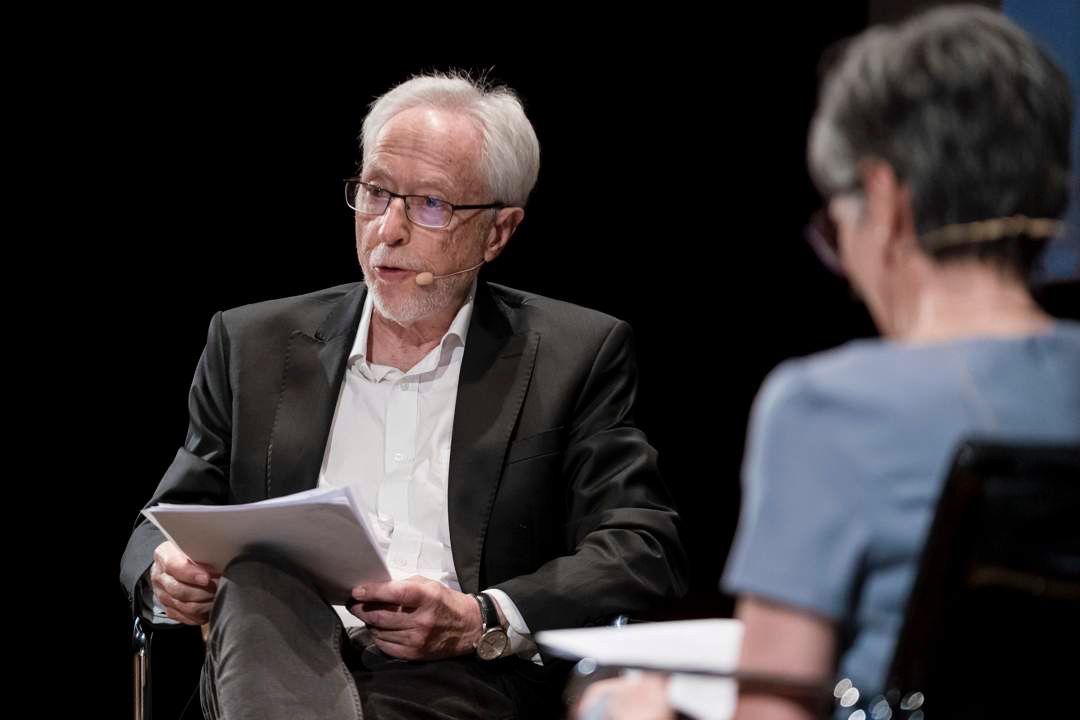
Dr. Marwan Asmar holds a PhD from Leeds University and is a freelance writer specializing on the Middle East. He has worked as a journalist since the early 1990s in Jordan and the Gulf countries, and been widely published, including at Albawaba, Gulf News, Al Ghad, World Press Review and others.

Related Posts

Beirut Weeps For a Poet

Lebanon mourns Khatoun Salma, a Lebanese national poet who was killed along with her husband in an Israeli airstrike that targeted their home in the Tallet al-Khayat neighborhood of Beirut Wednesday, 8 April.

Rasha al-Amir, publisher of Dar al-Jadeed, announced that the bodies of Khatoun and her husband were recovered from the rubble, Thursday morning.

Lebanese journalist Maha Salma also mourned her sister Khatoun on her Instagram account, writing: “My dear sister is in God’s care. May God grant me patience in the pain of her loss and the burning of my heart and soul.”

Poet and playwright Yahya Jaber wrote a tribute to Khatoun on Facebook, saying: “Yesterday, the Israeli airstrike cut down a poet with its sharp scissors, a poet of delicate Arabic.” Under the rubble, the conjunction “waw,” the plural “waw,” the feminine plural “nun,” the feminine suffix “ta,” the definite article “al-“: a massacre of language at the hands of language. Jaber attached a picture of the building where Khatoun lived to his post, saying:

“Here is the Khayat Hill building, and here on one of these balconies, we used to stay up late with Khatoun and her husband, Muhammad Karsht, in the late 198s, spinning yarns of laughter and sewing memories. We would recite poetry and remember our city, Tyre, and love Beirut, the capital.”

Lebanese poet Majida Dagher wrote on her Facebook page in mourning for Khatoun: “Under the rubble of her house in Khayat Hill, they found a poet lying among her shattered rhymes. The death of a poet in an airstrike on Beirut makes you feel that war is very, very close. The sound of bones breaking has become louder, and the smell of blood deeper.

Salma fell from the heights of poetry before she could bid farewell to ‘the last inhabitant of the moon.'” She thought Beirut was her tent, Beirut the roof of her poem, where she would hide, “embracing a woman waiting” for the dust to settle. But the dust became the tent of a new Beirut, a Beirut weeping, broken, martyred.

Salma, who studied Arabic literature at the American University of Beirut, published two collections of poetry, “I Embraced a Woman Waiting” in 2009 and “The Last Inhabitants of the Moon” in 2012, both with the Lebanese publishing house Dar Al-Jadeed. She first gained recognition in the 1970s, during her secondary school years, when she won a poetry prize. Later, at the beginning of this century, she became known in cultural circles for her relatively small but distinguished poetic output and her academic pursuits, which included studies in Sufism and Sufi mystics.

She combined profound knowledge with poetic sensitivity. She left her mark on the Lebanese cultural scene with a unique poetic voice, manifested in her literary works that carried the pain of humanity, exile, and memory. With her tragic passing, Lebanon loses a literary and human figure who wrote of the wound in a language that resembled nothing but truth.

Continue reading
Al Bahri: The Man Who Set Palestinian Theater

He is a playwright and author of 12 plays, nearly 20 novels, and numerous translations. Jamil Habib Afara (al-Bahri) was known as the “Father of Theater.” He was born in 1895 in Haifa and his family name dates back to the mid-18th century, as his ancestor owned a merchant fleet that sailed the Mediterranean between Haifa, Acre, and Tripoli. This is where his family name originated.

He showed early interest in literature and writing. He and his brother, Hanna, were keen to revitalize the literary and intellectual scene in Haifa, establishing the National Library there in 1922. He first published the “Zahrat al-Jamil” (The Beautiful Flower) and later “al-Zahra” (The Flower) which was initially a weekly publication that later became a bi-weekly and continued publication for about nine months after his death in 1931. His last piece was

a journalistic investigation into the execution of the three martyrs: Muhammad Jamjoum, Fuad Hijazi, and Ata al-Zeer, in the city of Acre in 1930. He dedicated his time and his newspaper that day to the souls of these martyrs, leading with: “The terrible hour in Haifa and all of Palestine: Let us commemorate those who gave their lives for the homeland.” A large funeral was held for him, and poems and eulogies were recited and published in the Palestinian press, such as the “Al-Karmel” and “Falastin,” newspapers.

The Department of Culture of the Palestine Liberation Organization posthumously awarded him the Jerusalem Medal for Culture and Arts in 1990, and the Palestinian Ministry of Culture reprinted his first book, “The History of Haifa,” in 2022.

Continue reading

Leave a Reply

Your email address will not be published. Required fields are marked *

You Missed

Top Nobel Laureate Coetzee Refuses Israel Prize

Top Nobel Laureate Coetzee Refuses Israel Prize

Mental Health Crisis: Mass Cover up Revealed in Israel’s Army

Mental Health Crisis: Mass Cover up Revealed in Israel’s Army

How Trump Burned Western Friendships

How Trump Burned Western Friendships

7,241 Israeli Soldiers Discharged Due to Mental Disorders

7,241 Israeli Soldiers Discharged Due to Mental Disorders

3-Month Pregnant Amina Al Taweel Speaks of Her Tough Detention in Israeli Jail

3-Month Pregnant Amina Al Taweel Speaks of Her Tough Detention in Israeli Jail

UN: ‘Gaza Most Dangerous Place in World For Journalists’

UN: ‘Gaza Most Dangerous Place in World For Journalists’