Punishing The Olive Tree

By Dr Marwan Asmar

Israel’s government, soldiers and settlers destroyed between 13,000 and 14000 olive trees in the occupied West Bank in the first five months of 2026. The figures are based on different Palestinian and Israeli sources.

In May 2026 alone Israeli Finance Minister Bezalel Smotrich said he had ordered the uprooting and destruction of 3000 trees in northern Palestine. The uprooting of these trees were ordered to be felled in a single day.

In early February, 2006 human rights’ groups reported that over 8000 trees were destroyed and a report by the Palestinian Wall and Settlement Commission (PWSC) released last Mid-May showed that 4,414 had been uprooted, destroyed and/or poisoned.

The uprooting of “Palestinian trees” by Israeli settlers backed by the Zionist army has become a normal state of affairs as it has increased viciously since October 2023 when over 37,200 olive trees were “uprooted”, “broken” and “burned” in conjunction with the Israeli war and slaughter of Gaza.  

The situation spelled disaster for Palestinian farmers. In cahoots with Israeli soldiers, settlers would go down on Palestinian villages and towns and start uprooting olive trees out of sheer vandalism.

At the end of last April, this is exactly what happened when settlers from the “Adi Ad” settlement descended on the Turmus Aya village that lies to the north-east of Ramallah in the occupied West Bank and started to destroy and vandalize 400 olive trees.

As they did this, on Saturday night, they were guarded by the Israeli army. This attack came days after the settlers descended on the village and set fire to a house and a car there.

The attack on Turmus Aya is not an isolated incident. The village has been targeted for the past few years. The PWSC, a monitoring organization of such attacks said the Israeli army had been responsible for 1,322 of such attacks while the settlers involved for 497 acts of vandalism on different Palestinian cities with Hebron topping the list at (321), Nablus (315), Ramallah (292) and Jerusalem (203).

Statistics point out that Israel has destroyed between 800,000 and 1 million olive trees in the occupied Palestinian territories from 1967 till now. However, since that year, when Israel effectively occupied all of the Palestinian territories, it destroyed 2.5 million trees.  

Besides olives, they included orange (different varieties), lemon, grapefruit and clementine trees. The Palestinian territories are known for their varieties like almond, figs, apricots, peaches and plums trees.

These trees were destroyed by the Israeli occupation for basic military takeover to expand the Palestinian lands with Israeli settlements – about 147 settlements and 224 outposts – and create the required infrastructure and roads for these since some of them resemble big cities.

In the case of the Smotrich announcement for example, and the uprooting of 3000 trees on Palestinian lands in the north West Bank, the purpose there was to expand the Israeli Shaked Industrial Park which is next to the settlement there that has the same name.

Gaza, another story

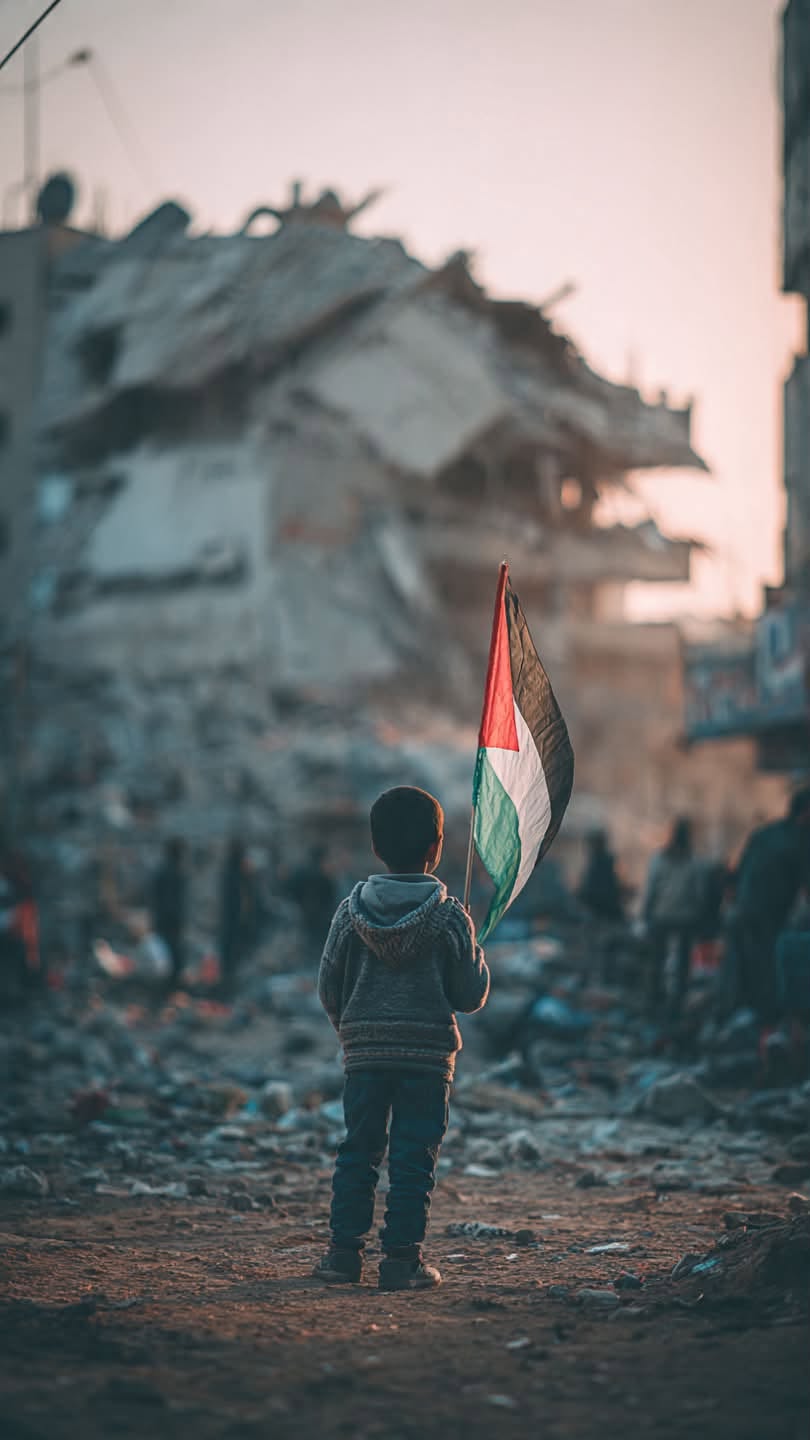
Gaza is another sad story for the Israeli genocide has affected the whole of the agricultural sector. During the last war on the Gaza Strip, Israel destroyed 1 million trees according to Fayyad Fayyad, head of the Palestinian Olive Council. The destruction literally decimated the agriculture sector of the enclave.  

Prior to 7 October, 2023, Gaza had 1.1 million trees roughly producing 50,000 tons of olives every year but no more.  About 98 percent of Gaza’s tree cropland has been destroyed.

Dr Mazen Qumsiyeh, a biologist at Bethlehem University, calls the destruction in Gaza an “ecocide” as statistics show that over the past two years and more, Israel has destroyed between 500,000 to 700,000 non-olive trees.

Today in Gaza everything has been razed to the ground. There had once been 35 olive oil presses in the Strip but most of these have been destroyed with only five left as of the end of last year.

The loss of a million olive trees is a $50-million-plus-loss since the total olive oil sector (West Bank and Gaza) contributed between $160 and $190 million to the Palestinian national economy as a direct result of exports to regional and international markets.

The olive oil sector accounts for roughly five percent of the Palestinian GDP and 20 percent of the agricultural sector. Further olive oil production sustains 100,000 families in the Palestinian territories.

Marwan Asmar is a writer from Amman and blogs for crossfirearabia.com

CrossFireArabia

CrossFireArabia
Dr. Marwan Asmar holds a PhD from Leeds University and is a freelance writer specializing on the Middle East. He has worked as a journalist since the early 1990s in Jordan and the Gulf countries, and been widely published, including at Albawaba, Gulf News, Al Ghad, World Press Review and others.

Related Posts

Crisis in Yemen: I in 3 Women Die in Childbirth

Yemen remains gripped by one of the world’s worst humanitarian crises, with 22 million – out of a population of 35 million – requiring assistance. Women and girls account for half of those in need, and two-thirds of them are of childbearing age, placing reproductive health at the heart of the emergency.

The UN agency supporting women and girls in the field (UNFPA) is working across the country to meet urgent reproductive needs. It warns that a combination of malnutrition, limited healthcare and rising protection risks is putting lives in jeopardy.

‘Malnutrition is on the rise’

One of the most immediate concerns is food insecurity. “Unfortunately, malnutrition is on the rise,” says Francesco Galtieri, the agency’s senior official in Yemen. 

The consequences are particularly severe for pregnant women – when they lack adequate nutrition during pregnancy, the risks to their babies’ development and health increase significantly.

Healthcare access, especially in rural and remote areas, is another critical challenge. 

The country has the highest maternal mortality rate in the Arab region, and three women die every day due to pregnancy complications or during childbirth. Around two-thirds of these deaths could be prevented if they had access to a midwife or doctor.

Beyond health, protection from violence is a pressing concern. Conflict and economic hardship have heightened risks for women and girls, who often bear the brunt. 

Funding cuts result in death

Safe spaces supported by UNFPA offer women refuge and a path to recovery, providing psychosocial support, vocational training and economic empowerment initiatives designed to help survivors rebuild their lives. 

The agency also provides legal assistance to those seeking justice through Yemen’s legal system.

Despite these achievements, funding cuts are putting the programmes under severe strain. Mr. Galtieri told UN News that around 40 per cent of UNFPA’s humanitarian funding was cut last year, forcing the agency to suspend or halt support for roughly one third of its services.

In a country with high maternal mortality, reduced services mean that a woman experiencing complications may be unable to access lifesaving care, often resulting in the death of both mother and child.

Protection services have also been affected. This year, UNFPA-supported shelters have been unable to accept new survivors of gender-based violence, and the cuts can lead to lasting effects on children affected by malnutrition and trauma.

A truck loaded with WHO-branded boxes unloads supplies at the Al-Thawra Hospital in Yemen, with a crowd of people gathered nearby.
Photo: WHO/ Abdullah Al-Halabi The World Health Organization (WHO) has provided the Al-Thawra Hospital in Hudaydah, Yemen, with 30 medical beds, 5 infant radiant warmers and 1 trauma kit.

Healthy debate?

Mr Galtieri is currently in New York attending meetings of UNFPA’s Executive Board, where representatives from conflict-affected areas are engaging with Member States. 

Discussions have highlighted renewed debate around sexual and reproductive health and rights, an issue he says has not been under such scrutiny in decades.

“I always wonder why, when a society enters into a phase of tension and confrontation, women and girls become the focus of that political confrontation,” he says.

Appealing directly to decision-makers, Mr. Galtieri urges greater investment in essential services such as midwifery, arguing that prioritising lifesaving care over other expenditures should not be controversial. 

Funding decisions often favour other priorities, despite the clear human cost. In Yemen, he warns, that cost is measured in the lives of women and girls who might otherwise have survived. UN News

Continue reading
984 Palestinians Killed Since The Ceasefire

A young man and a child were killed in two separate incidents, and another was seriously wounded, by Israeli occupation forces, Sunday morning in Khan Younis, southern Gaza Strip.

Medical sources reported that Zaki Muhammad al-Qara, 30, was killed by Israeli fire near the Bani Suheila roundabout, east of Khan Younis.

The same sources added that another young man was seriously wounded in an Israeli drone strike near the Austrian area, west of Khan Younis.

Earlier that morning, a child was killed by Israeli fire in the Batn al-Samin area, south of Khan Younis.

A medical source at Nasser Hospital said that the child, Amir al-Bashiti, 13, arrived with critical injuries and later died from his wounds.

The Gaza Ministry of Health announced yesterday that the total number of Palestinians killed since the ceasefire on October 11 has reached 984, with approximately 3,122 wounded, and 783 bodies recovered.

Continue reading

You Missed

Limited Iran Strike: Concept and International Dimensions

Limited Iran Strike: Concept and International Dimensions

Arabism From The Skies?

Arabism From The Skies?

Crisis in Yemen: I in 3 Women Die in Childbirth

Crisis in Yemen: I in 3 Women Die in Childbirth

984 Palestinians Killed Since The Ceasefire

984 Palestinians Killed Since The Ceasefire

US-Iran: Deal Today, Deal Tomorrow!

US-Iran: Deal Today, Deal Tomorrow!

Hassan Al Karmi: The Dictionary-Maker

Hassan Al Karmi: The Dictionary-Maker