US-Iran: Who Will Blink First!

One would say that our main inheritance from the Covid period is the term, new normal, which has been since used, conveniently, in any circumstance we found baffling to our senses.

So one wonders if the stand in Hormuz will not be our current new normal, which will mean putting up with the economic consequences of the blockage and trying at the same time to find different routes for trade. Here, one is talking economics and trade simply because the loss of life and destruction doesn’t more matter in comparison to budgets and the flow of goods.

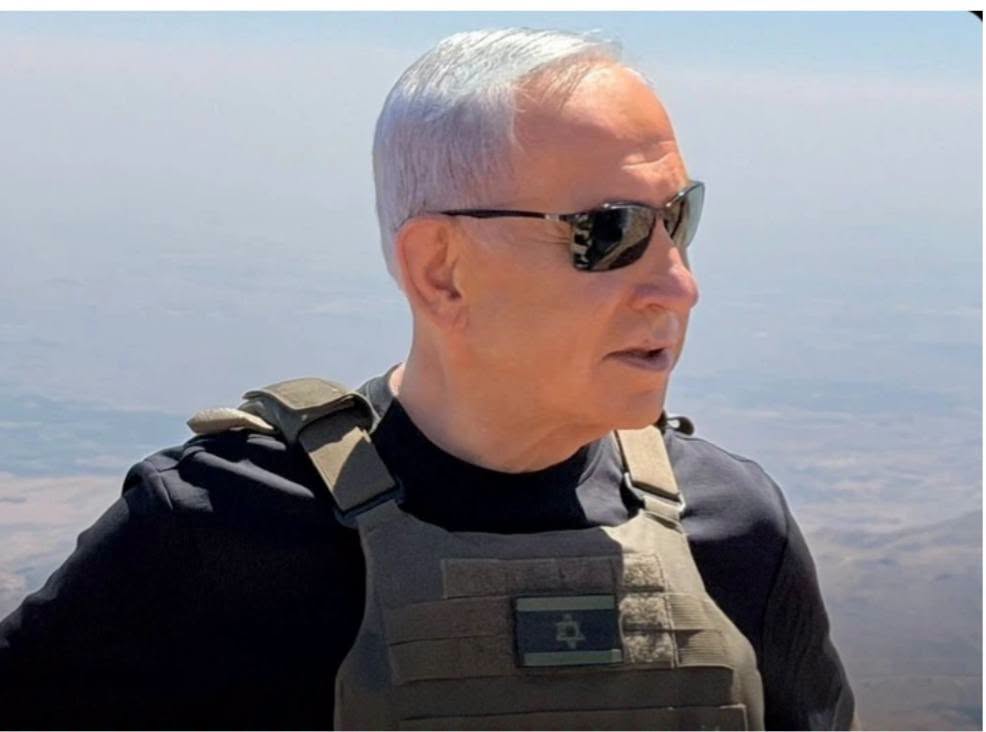
In fact each time anyone finds an intelligent reason for this ongoing conflict, the rediculous actions of the protagonists proves the impossibility of saying an informed or otherwise opinion. For all intents and purposes, all what can be reasonably said, is that for now, the war is supposed to be inconclusive despite the threats flying around, because essentially no one wants a regime change in Iran because no one can predict the consequences.

Therefore, back to economics again, the strategy seems, who will blink first and accept the conditions of the other to return to Islamabad. Iran with its enormous financial and economic problems which fears a new uprising in the streets once the stalemate with the US becomes the norm, or the USA with the mid term elections looming, rising inflation and higher energy prices, as well as volatility in stocks and shares prices in Wall Street.

When it comes to the situation in Lebanon, clearly the link with Iran is in fact Hizbullah; which is by its own admission the Party of Veliyati -Fatih in Lebanon, under the current circumstances, with the Israeli invasion of the south of Lebanon, for the first time in the history of Lebanon, not a sect, religious community, or power group, but in fact the official state representatives are talking about direct negotiations with Israel for peace, and in fact negotiating directly with each other in Washington.

For the Lebanese state, the situation now is legitimacy over the whole geography of the country, and limiting the possession of arms only in the hands of the Lebanese army and security. However, here also we face the scenario of whether the egg comes first, which is for Hizbullah Israeli withdrawal first, or the chicken, for the Lebanese government to negotiate the withdrawal of Israel.

Leaving the devil out of the details, would it mean ultimately, that a diplomatic agreement between Lebanon and Israel makes Hizbullah the enemy of both Israel and the Lebanese state together?, and what would the Lebanese state do as a next step, if Hizbullah decides to keep its weapons?

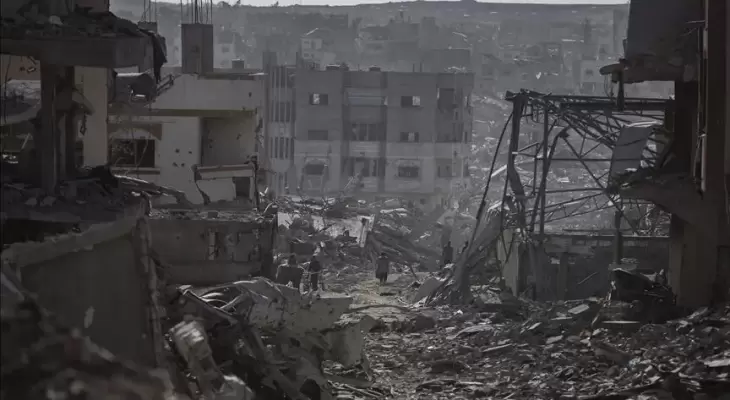
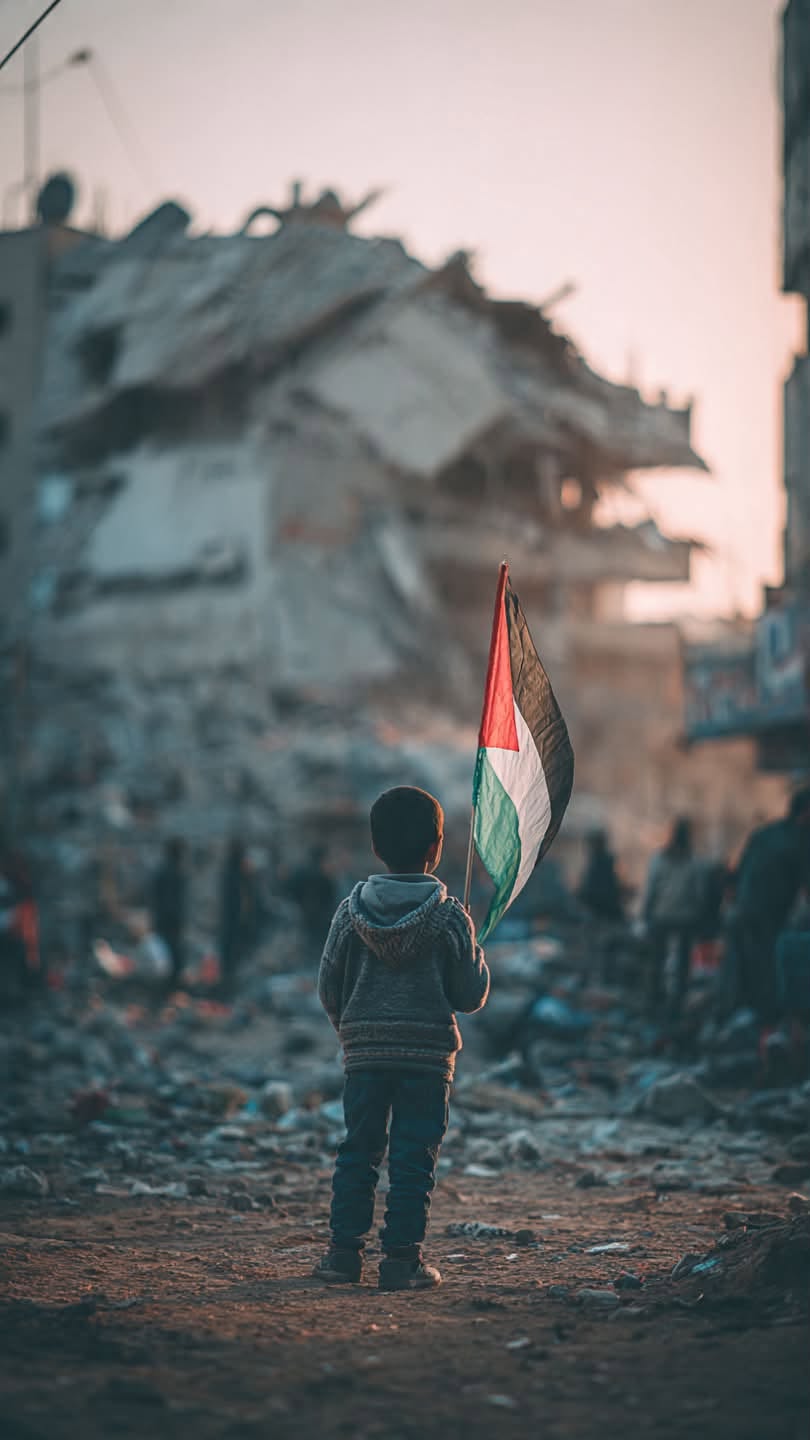
Then of course, there is the festering wound of Gaza and the West Bank which hardly warrant any news considering the scale of what is going on in the Gulf and in Lebanon. For Gaza, the vision fluctuates between lost peace, Israeli occupation withdrawn yellow lines, and Hamas with its show of force, amidst refugees, squalor, destruction and whether aid can go in or not, while on the other hand AI generated images of its rise beach resorts which no one is likely, from now on, be able to think about even if they can afford and realize them.

Future? What can one say save for bleak.

As for the West Bank, one has to apologise for saying that the Arabs, before anyone else, are reconciled with idea that the PNA is no longer there, apart from of course, moneymaking, here and there, and that what is termed as Palestinian territory will become a Bantustan in the sea of expanded Israel. Thus where do we go from here, well, there are people with paid salaries to think about!

Janbek is a Jordanian columnist based in Paris


Continue reading
100,000 Perform Friday Prayers in Al Aqsa

About 100,000 performed the Salat prayers in Jerusalem’s Al Aqsa Mosque on the second Friday during the holy month of Ramadan. Palestinians from the occupied city of Jerusalem and the West Bank flocked to the mosque compound despite the severe restrictions imposed by the Israeli occupation forces. Despite the checkpoints – Qalandia and the one leading to Bethlehem – 1000s of Palestinians began to assemble in the city since the early morning. Israeli soldiers checked the ID cards of those attempting to enter the city, banning men below the age of 55, and 50 for women from going through the checkpoints. It was reported that anyone below those ages – reportedly 100s of Palestinians – were turned back.

Continue reading
Israeli Soldiers Attack Al Jazeera News Crew

Israeli forces fired at an Al Jazeera news crew on Friday as it covered an illegal settler attack in the town of Talfit, south of Nablus in the occupied West Bank, the broadcaster said.

The Qatar-based channel reported that soldiers shot toward its team, causing partial damage to camera equipment.

Al Jazeera correspondent Tharwat Shaqra said in a live broadcast that troops used live ammunition against the crew before firing a tear gas canister that directly struck and damaged filming gear.

She said the journalists were positioned in a clearly visible, open area and were targeted without being asked to leave the location.

The Israeli army did not immediately comment on the incident.

The shooting occurred as the crew was reporting on a settler attack in Talfit that left three Palestinians injured, according to the Palestinian Red Crescent. One person was shot and taken to hospital, while two others were beaten and treated at the scene.

Israel closed Al Jazeera’s operations inside Israel on May 5, 2024, and shut its offices in the West Bank on Sept. 22, 2024, with the closure order repeatedly extended.

On Dec. 23, 2025, Israeli Communications Minister Shlomo Karhi said the channel would be barred from operating “forever.”

Israel has intensified operations in the West Bank, including East Jerusalem, since launching its military campaign in Gaza on Oct. 8, 2023. Palestinians view the escalation, including killings, arrests, displacement and settlement expansion, as a step toward formal annexation of the territory.

At least 1,112 Palestinians have been killed and about 11,500 injured in the West Bank during that period, and more than 21,000 people have been arrested.

In a landmark opinion in July 2024, the International Court of Justice declared Israel’s occupation of Palestinian territory illegal and called for the evacuation of all settlements in the West Bank and East Jerusalem. Anadolu

Continue reading
‘Creeping Colonization’ – An Israeli Blueprint

By Najla M. Shahwan

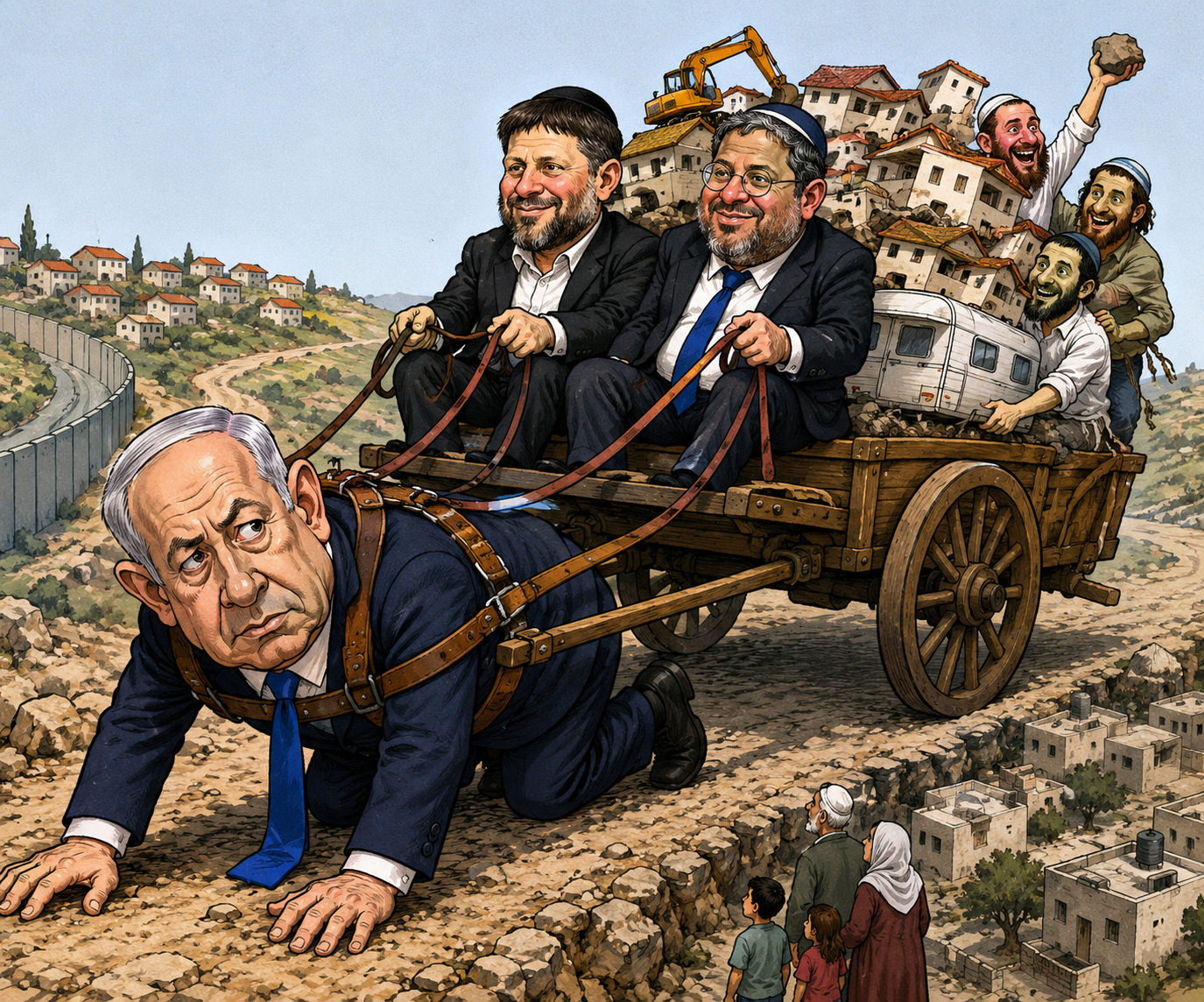
The Israeli government has initiated a significant expansion of settlements in the occupied West Bank and East Jerusalem , and while 2025 was a year of settlement expansion, 2026 is intended to be a year of “action on the ground” focusing on accelerating construction, retroactively legalizing outposts, and deepening control in strategically sensitive areas.

New construction projects, such as bypass roads and barriers, are actively slicing through the West Bank, creating disconnected “islands” of Palestinian areas and facilitating the expansion of settlements.

This strategy, heavily driven by Israeli far-right coalition members, aims to establish, legalize, and expand numerous settlements and outposts, effectively creating “de facto annexation”.

On his part, Israeli Finance Minister Bezalel Smotrich announced a plan to allocate 2.7 billion shekels in the 2026 state budget to establish 17 new colonies in the West Bank over the next five years.

Plans for 22 new settlements in the West Bank were approved in early 2026, building upon a record number of approvals in 2025, which totaled 41 new settlements.

Israel has moved to start construction on the contentious E1 project, with a tender for 3,401 homes posted in late 2025/ early 2026.

This project aims to connect Maale Adumim settlement with East Jerusalem, which analysts warn will divide the West Bank in two and block the contiguity of a future Palestinian state.

Plans are also advancing for a major new 9,000-unit settlement project in East Jerusalem, at the site of the former Atarot/ Qalandiya airport.

Besides, a new settlement named Mishmar Yehuda (or Givat Adumim) was recently approved, located near Kedar and Ma’ale Adumim.

Reports from May 2025 and January 2026 indicate a surge in the legalization of previously unauthorized settler outposts, transforming them into permanent, legal settlements under Israeli law.

Following the repeal of the 2005 Disengagement Law, plans are underway to rebuild and expand settlements in the northern West Bank, such as Homesh and Sa-Nur.

Settlement activity is heavily concentrated in the East Jerusalem area, the northern West Bank, and the Jordan Valley to sever Palestinian territorial continuity.

Settlement expansion has been accompanied by increased settler violence and attacks, with over 1,800 incidents documented in 2025, according to the UN.

Settlers have been involved in the killings of Palestinians, including children, and have caused thousands of injuries through physical assaults, shootings, and arson.

In the first weeks of 2026, the UN Office for the Coordination of Humanitarian Affairs (OCHA) recorded at least 55 settler attacks causing injury or property damage and injuring 30 Palestinians. These attacks, often targeted water systems and schools, have directly led to the displacement of over 100 Palestinian Bedouin and herding households.

In the Jericho area community of Ras ‘Ein al ‘Auja, at least 77 households began dismantling their homes following intensified nighttime settler attacks and threats.

Settler attacks have completely displaced 29 Palestinian communities since October 2023, more than one a month on average, UN data showed.

Attacks frequently target Palestinian property, including the burning of homes, destruction of vehicles , poisoning water sources , steeling livestock , devastating agricultural livelihoods and uprooting or chain sawing of olive trees.

Settler violence is a key driver of forced displacement, creating a coercive environment that has forced dozens of Palestinian communities to leave their homes.

Since October 7, 2023, thousands of Palestinians have been displaced due to settler attacks.

The Office of the United Nations High Commissioner for Human Rights (OHCHR) and various UN bodies have reported that the distinction between settler violence and state violence has become increasingly blurred, with settlers wearing uniforms and acting alongside or as part of the Israeli security forces.

The line between settler and state violence has blurred “to a vanishing point,” according to a 2025 UN report.

This is attributed to the involvement of settlers in official “settlement defense squads” and “regional defense battalions,” which are part of the Israeli army’s structure.

The UN has noted a high level of impunity for perpetrators, with very few investigations into settler attacks resulting in convictions.

The European Union, various international bodies, various nations, including the UK, Canada, and Germany, have urged Israel to halt these activities, citing that the settlements are obstacles to peace , illegal under international law and undermine the possibility of a two-state solution.

The UN human rights office has repeatedly called on Israeli authorities to protect Palestinians from these attacks, end the cycle of violence, and hold perpetrators accountable.

However as of January 2026, reports indicate that Israel is disregarding all condemnations and warnings and accelerating its actions in the occupied West Bank, shifting from a “slow creep” of control to a rapid expansion of settlements and infrastructure, which observers characterize as de facto annexation.

This, combined with increased settler violence and military actions, is profoundly altering the landscape of the West Bank.

This ongoing process, which was often referred to as “creeping annexation’’, and now some analysts call it “running annexation’’ aims to permanently incorporate the West Bank into Israel by creating irreversible, on-the-ground facts.

Najla M Shahwan contributed this article to the Jordan Times

Continue reading
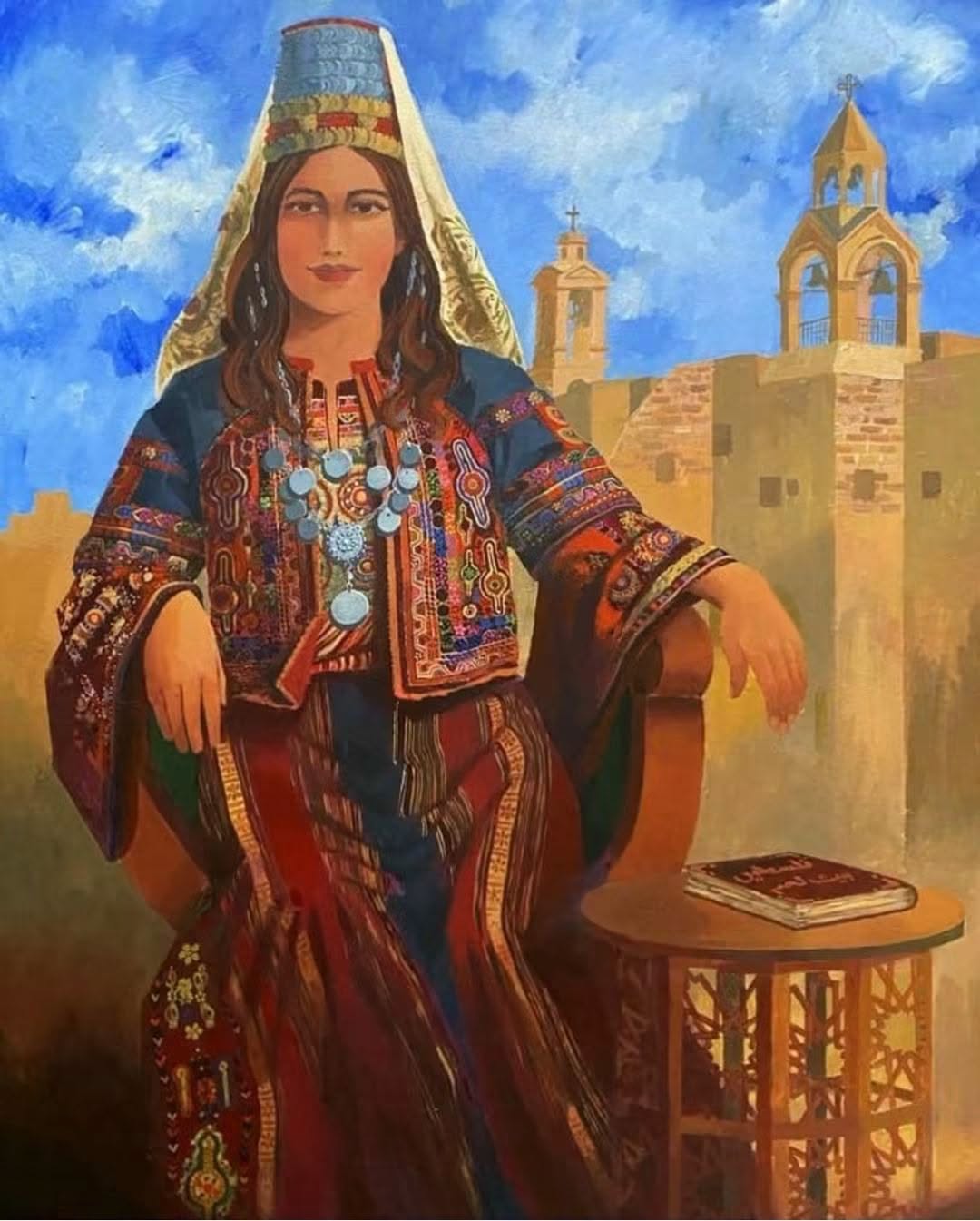
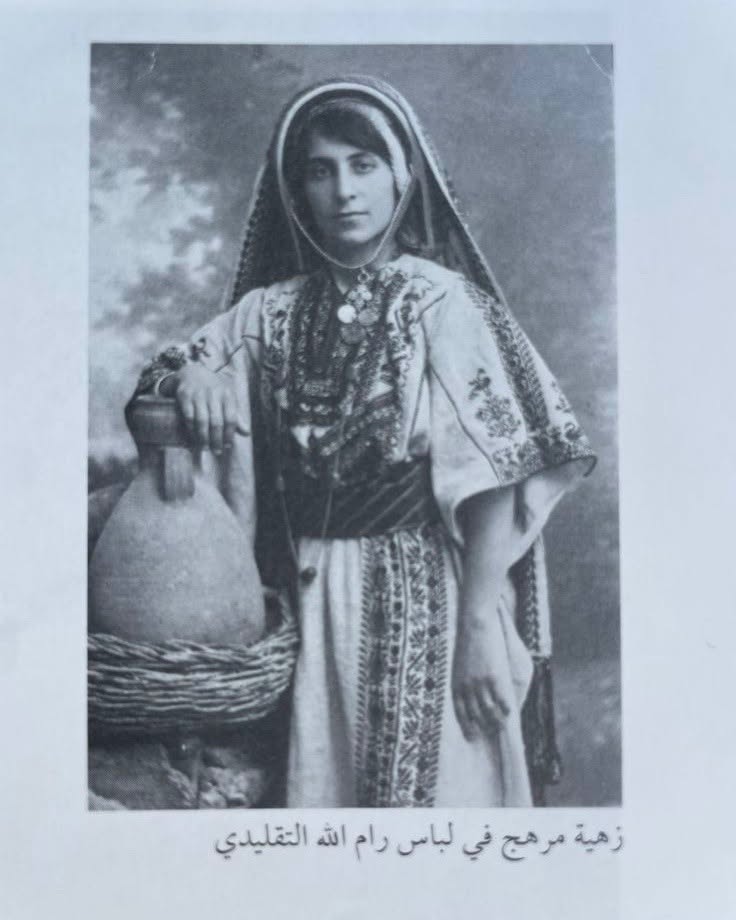
Israel And Palestinian Heritage Destruction

Last month, Palestinian Minister of Tourism and Antiquities Hani Al-Hayek warned that during its 2023-2025 war on Gaza Israel damaged or destroyed more than 316 archaeological sites in Gaza and the West Bank. While most were from the Mamluk and Ottoman eras, others were from the early Islamic centuries and the Byzantine period. He argued that Israel is conducting “systematic targeting” of Palestinian historical sites as part of its long-term strategy of colonising and annexing the West Bank.

While the current right-wing Israeli government flatly rejects withdrawal from Palestinian territories conquered 58 years ago, the Arab world and the international community argue that regional peace depends on the establishment of a Palestinian state in the West Bank, East Jerusalem and Gaza. This means that Palestinians should be in charge of archaeological remains in these territories.

Hayek was prompted to speak out after archaeologists protected by Israeli troops raided a Byzantine era site near Ramallah and stole five columns. Israel claimed Palestinians had built a structure in the centre of the site, damaging the archaeological remains.

Both Israelis and Palestinians claim a second site, Sebastia, near Nablus in the northern West Bank belongs to their cultural heritage, although it has been ignored and unexcavated for decades. Israel holds the archaeological park, which is in Area C under full Israeli control, while the Palestinian town of Sebastia is in Area B, under joint Israeli and Palestinian Authority security control but Palestinian administration.

Israel has begun to expropriate 1,800 dunams of land for the “preservation and development” of Sebastia which has been settled from the Iron Age (1200-586 BC) through modern times. The site contains layers of history reaching back nearly 3en,000 years and contains Iron Age dwellings, walls, and a palace which exist alongside remnants from Roman times.

Sebastia was the capital of the northern Israeli Kingdom during the first half of the 10th century BC. Conquered by the Assyrians in 720 BC, Sebastia became an administrative centre under the Assyrians, Babylonians, Persians, and Romans, Muslim Arabs and Ottomans.

The site and the modern village of Sebastia – which has about 3,200 Palestinian inhabitants – have been declared a World Heritage Site by UNESCO as the town is the location of Roman royal tombs, a Roman amphitheatre, medieval buildings, and a historic mosque built within a Christian church.

As the Israeli expropriation order covers the archaeological site and Palestinian olive plantations, Palestinian landowners were given two weeks to file legal objections to the seizure and their expulsion. This is the largest antiquities-related West Bank expropriation order issued by Israel since the 1967 occupation. While international law prohibits occupiers from carrying out excavations in areas they control, Israel has ignored this as well as most other laws governing occupations. In May 2023, Israel allocated $9.2 million for Sebastia.

The Israeli Peace Now movement declared: “Israel continues to harm Palestinian rights, expropriating thousands of dunams in violation of international law and settling the northern West Bank, an area with only a few thousand settlers compared with more than a million Palestinians.” The movement warned, “Israeli greed harms not only the landowners, but also the prospect of a peaceful solution that upholds the rights and heritage of both peoples.”

Emek Shaveh, an Israeli anti-occupation group founded by archaeologists, and Yesh Din, an Israel rights movement, issued a joint report in 2018 which stated, “Since 1967, Israel has endeavoured to appropriate the archaeological assets of the West Bank, based on the view that the Jewish heritage of places and antiquities testifies to a bond between the antiquities and the state of Israel, and constitutes a justification for deepening its control over ancient sites. This perception underlies every aspect of Israel’s archaeological practices in the West Bank.

“Israel’s control enables the physical exclusion of Palestinians from the sites and ancient finds through various means, ultimately weakening their connection to their heritage. It also enables Israel to shape the historical narrative of the sites by highlighting and glorifying their significance for the Jewish people and downplaying the role of other peoples and cultures who also had a part in the history of the region…

“Under the guise of concern for heritage, the government is investing tens of millions ..in turning heritage sites into weapons of dispossession and annexation.” The group added, “The intention to expropriate private land is anything but preservation; its purpose is to establish a tourism settlement that will detach Sebastia’s heritage from the [Palestinian] town and Judaize the area through the tourists who visit the site.”

Israel has weaponised archaeology to assert the legitimacy of its take-over of the land between the Mediterranean and the Jordan River. While striving to discover, develop and preserve Jewish archaeological remains in Palestine, Israel neglects or even harms non-Jewish or Palestinian heritage at the expense of Palestinians.

Meanwhile, Palestinian Archaeologists are trying to restore damaged sites. They have begun work on the Qasr al-Basha museum, a Mamluk-era palace located on a UNESCO heritage site dating back to 800 BC. After destroying 70 per cent of the museum by bombardment, Israeli troops occupying the site looted 20,000 ancient and medieval artifacts stored there.

UNESCO has reported damage to the Saint Hilarion Monastery, one of the oldest Christian heritage sites in the region, and the 7th century Omari Mosque, Gaza’s main place of Muslim worship. Due to the Israeli blockade on building material restorers have been compelled to scrabble in the ruins of these buildings for material for restoration.

In August, Israel appropriated 63 Palestinian West Bank archaeological sites, 59 in Nablus governate, three in Ramallah governorate, and one in Salfit governorate. Sixty-three were declared “Israeli historical and archaeological sites,” excluding Palestinian ownership. In total, Israel has taken over 2,400 out of the 6,000 Palestinian sites in the West Bank. This process can endanger the study of archaeology and history in this area if archaeologists involved are political motivated and preserve only what suits them while wiping out layers of remnants above and below layers, they explore. Meanwhile, Israeli archaeological organisations and personalities indulge in bitter competition with each other.

This article is written by Michael Jansen for the Jordan Times.

Continue reading