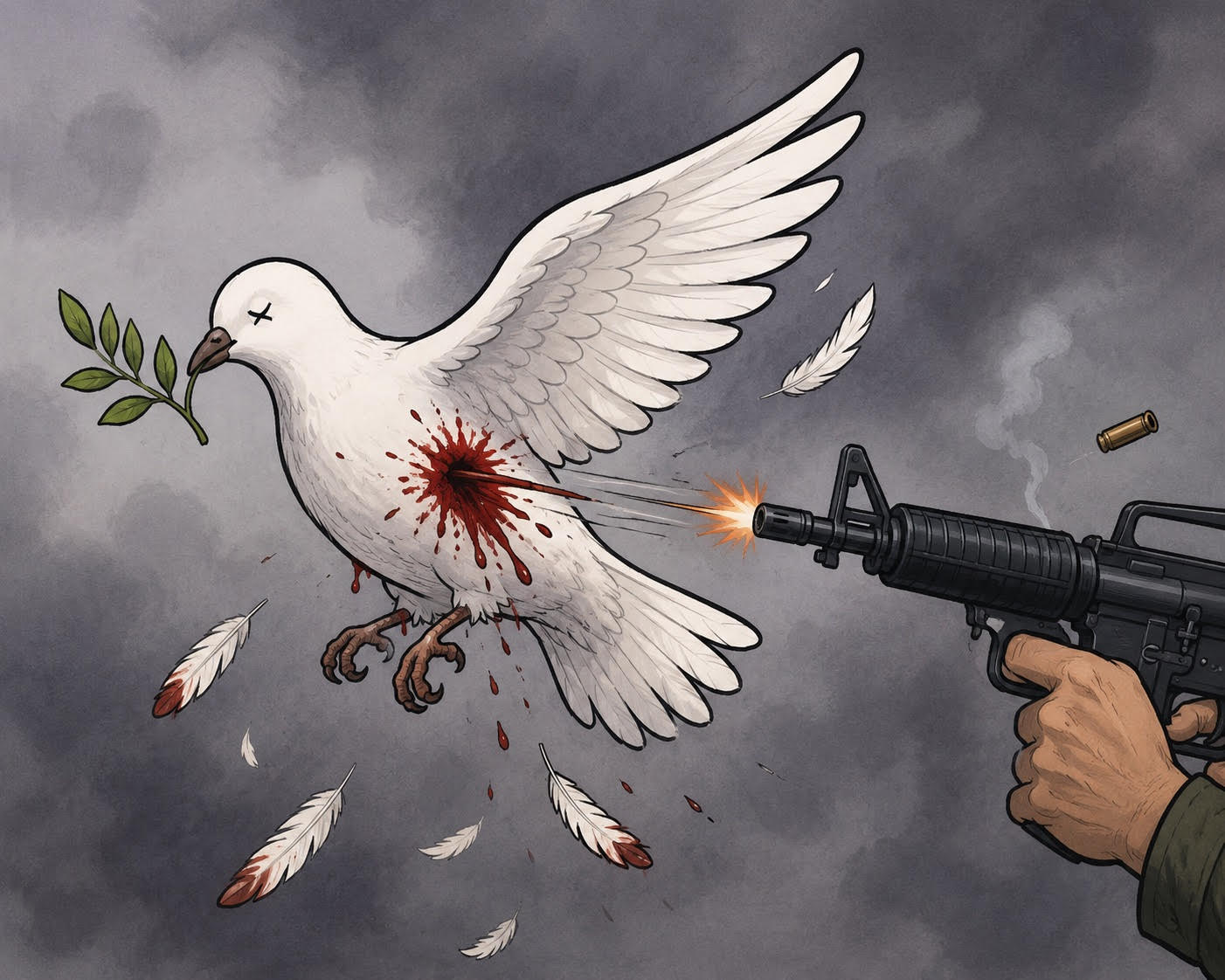
Oslo: Strangling The Dove

By Dr Khairi Janbek

When we do a recap of the Oslo Agreements, they were a series of accords between Israel and the PLO signed in 1993. It was a process meant to lead to a permanent settlement of the Palestinian-Israeli conflict within five year, including decisions on borders, refugees, security, Jerusalem and settlements.

But right from the start, voices were divided over the process, while for others, the whole idea had a built-in mechanism for failure from the start. The Palestinians started seeing that the Oslo Agreements were neither ending the establishment of Israeli settlements nor the end to occupation, while for the Israelis it didn’t seem to end their security concerns.

Indeed, it is pointless to think which comes first, the chicken or the egg, because two different fears and logistics persisted from the start.  But also, it is important to think about the circumstances which brought about the idea of launching the process, and which did put the PLO in a tough position for being perceived as supporting the wrong side which lost; Iraq.

The room for manoeuvre for the late Yasser Arafat was very tight as he stood to lose the legitimacy of the PLO.

What one is trying to say is that, right from the start, outside official circles, many on the Palestinian side were against Oslo probably as many as was the case on the Israeli side.

The gradual erosion of Oslo mainly through the continued Israeli actions kept feeding extremism on both sides.  Nevertheless, the concept was not revoked by any Israeli government because of its effect on Arab public opinion, pressure which is likely to block any peace initiative. Moreover, the international atmosphere was not conducive for such an initiative.

Having said that, one cannot claim that the international atmosphere is currently more indifferent to the abrogation of the Oslo, rather Israel seems to have more leeway in undertaking unilateral actions with more impunity.

Of course, it is not international law that can be counted on in this respect but rather, at least for the time being Donald Trump’s disapproval of the idea of annexing the West Bank by Israel. This is despite the fact that all the Israeli actions of dividing the West Bank from north to south first and currently from west to east, goes unnoticed. But the important thing has been till now, and don’t say the magic word, end of Oslo.

However, the recent development is that Israeli political parties, the partners in Netanyahu’s government are all pushing openly, for the abrogation of the Oslo agreements and cancelling out all the Israeli obligations towards it.

One can only say such an open declaration is a matter of principle by the Israeli government, because the changes on the ground are there for all to see. One supposes all parties are playing for time to see the end of the Palestinian national aspirations.

The columnist is a Jordanian writer based in Paris, France
Continue reading
US-Iran: Who Will Blink First!

One would say that our main inheritance from the Covid period is the term, new normal, which has been since used, conveniently, in any circumstance we found baffling to our senses.

So one wonders if the stand in Hormuz will not be our current new normal, which will mean putting up with the economic consequences of the blockage and trying at the same time to find different routes for trade. Here, one is talking economics and trade simply because the loss of life and destruction doesn’t more matter in comparison to budgets and the flow of goods.

In fact each time anyone finds an intelligent reason for this ongoing conflict, the rediculous actions of the protagonists proves the impossibility of saying an informed or otherwise opinion. For all intents and purposes, all what can be reasonably said, is that for now, the war is supposed to be inconclusive despite the threats flying around, because essentially no one wants a regime change in Iran because no one can predict the consequences.

Therefore, back to economics again, the strategy seems, who will blink first and accept the conditions of the other to return to Islamabad. Iran with its enormous financial and economic problems which fears a new uprising in the streets once the stalemate with the US becomes the norm, or the USA with the mid term elections looming, rising inflation and higher energy prices, as well as volatility in stocks and shares prices in Wall Street.

When it comes to the situation in Lebanon, clearly the link with Iran is in fact Hizbullah; which is by its own admission the Party of Veliyati -Fatih in Lebanon, under the current circumstances, with the Israeli invasion of the south of Lebanon, for the first time in the history of Lebanon, not a sect, religious community, or power group, but in fact the official state representatives are talking about direct negotiations with Israel for peace, and in fact negotiating directly with each other in Washington.

For the Lebanese state, the situation now is legitimacy over the whole geography of the country, and limiting the possession of arms only in the hands of the Lebanese army and security. However, here also we face the scenario of whether the egg comes first, which is for Hizbullah Israeli withdrawal first, or the chicken, for the Lebanese government to negotiate the withdrawal of Israel.

Leaving the devil out of the details, would it mean ultimately, that a diplomatic agreement between Lebanon and Israel makes Hizbullah the enemy of both Israel and the Lebanese state together?, and what would the Lebanese state do as a next step, if Hizbullah decides to keep its weapons?

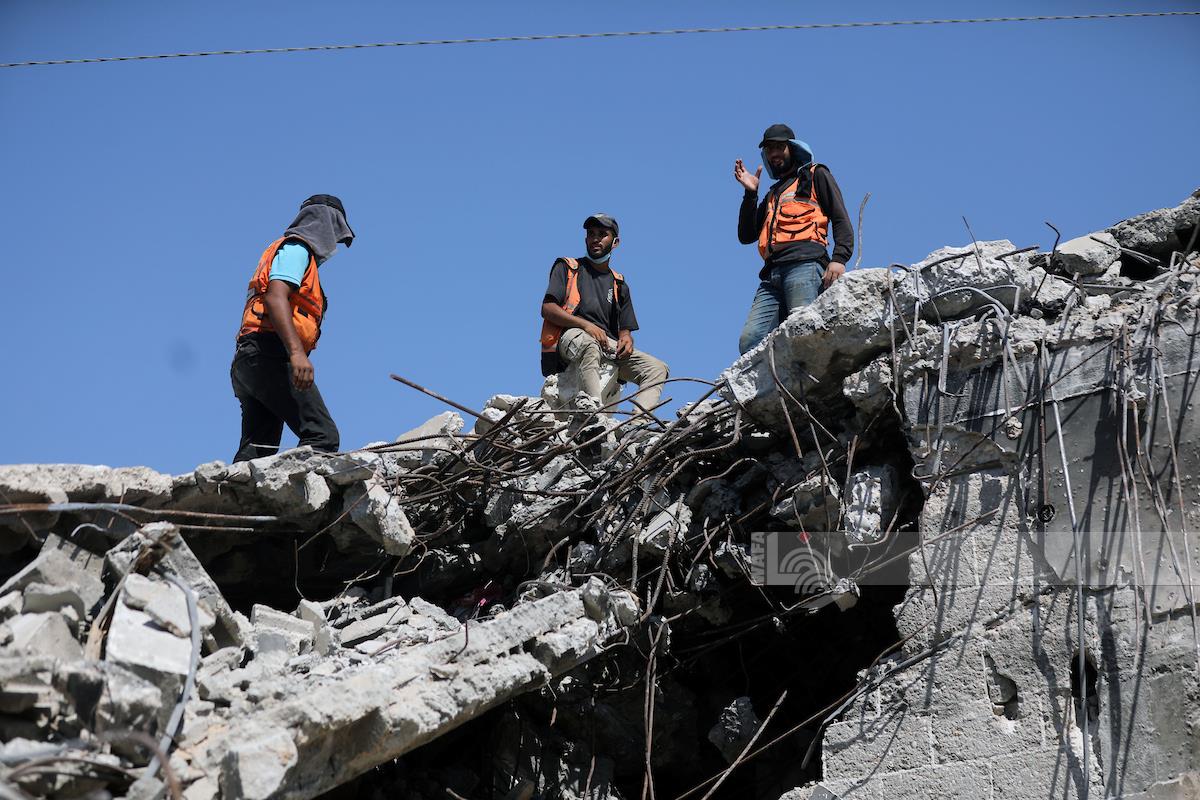
Then of course, there is the festering wound of Gaza and the West Bank which hardly warrant any news considering the scale of what is going on in the Gulf and in Lebanon. For Gaza, the vision fluctuates between lost peace, Israeli occupation withdrawn yellow lines, and Hamas with its show of force, amidst refugees, squalor, destruction and whether aid can go in or not, while on the other hand AI generated images of its rise beach resorts which no one is likely, from now on, be able to think about even if they can afford and realize them.

Future? What can one say save for bleak.

As for the West Bank, one has to apologise for saying that the Arabs, before anyone else, are reconciled with idea that the PNA is no longer there, apart from of course, moneymaking, here and there, and that what is termed as Palestinian territory will become a Bantustan in the sea of expanded Israel. Thus where do we go from here, well, there are people with paid salaries to think about!

Janbek is a Jordanian columnist based in Paris


Continue reading
Hammering The UN?

By Dr Khairi Janbek

Even from the moment of its inception, the UN was subjected to constant criticism and derision. Though it started as a coalition of the willing in order to deal with differences and sources of conflict in a peaceable and/or diplomatic manner, the term willing remained nebulous.

The strong and mighty wanted to bend this will to suit their interests, and the weak and the needy wanted to bend this will for their own protection. Still in this dialectical formula the need for the UN remains as the only viable formula which offers the possibility of negotiations in the Churchillian wisdom of jaw jaw, better than war war, and it remains in this sense, the standard which provides the vaneer for international legality and the semblance of consensus.

Then suddenly and apparently, the concept of the Donald Trump Board of Peace emerged on the scene, thought of, initially, as an effort to deal with the mayhem of Gaza, and to which one may add ironically and cynically, that the most two concerned parties – Palestinians and Israelis – are out of its functioning. On top of this, the notion was propelled in the media that this Board is really an attempt to replace the UN.

So in this context we can assume what is meant is that if the UN started, all these years ago, as a coalition of the willing, today’s Board of Peace is a coalition of the frightened, of states who want to stay on the good side of Trump. This is aside from the reluctant opportunists whom seek some benefits out of becoming a member of this entity.

On the face of it, one can say that the real purpose of its establishment is not to replace the United Nations per se, but a serious attempt to bypass the UN and redefine international relations in accordance with the Trump notion of who is the enemy of peace and who is its friends, with the essential outlook of not needing the international organization at all. Under the new legality, it is Trump who lays down the law, and the one whom distributes the spoils. As for the UN it remains in his eyes as a gathering for losers.

But if we go back to the beginning, in fact the Board of Peace, not only got the blessing of the UN for its creation, but also the support of the Security Council with resolution 2038, but then again, it was linked to the reconstruction and ‘stabilization’ of Gaza, while the current format of the Board emerged on the sidelines of the recent World Economic Forum meetings.

Now irrespective of some in the international community wanting to spite Trump or of waning his influence, there is a serious and big concern that President Trump and the fact that he is presiding over this Board, will mean that the talked about peace will be the peace of the strong imposed by the strong. In itself this rings many alarm bells on the strategic level for many regions in the world about the kind of peace Trump is talking about.

Among the myriad of world conflicts, currently the Palestinian problem, Ukraine war, and Iran, stand out as the most deadly and critical. So in what shape the proposed peace will come?

Dr Janbek is a Jordanian writer based in Paris.

Continue reading
Donald’s War Bells

By Dr Khairi Janbek

When talking about the stand off between the US and Iran, in fact, anything can happen on the kaleidoscope of endless talks to an endless war. Usually it is possible to predict the reaction of one collective or another with some knowledge, but impossible to predict the reaction of an individual no matter what knowledge is available.

This is especially the case if this individual is Donald Trump. He makes it his business to be unpredictable and depending who tells him what and whether he likes it or not; but at least we can attempt to drive some inference from the situation, a situation which finds the current American president who heavily criticized his predecessors for dragging the United States into protracted wars with dubious results.

In this sense, the operative term is a short and decisive war, which is unclear in terms of what duration in order to be decisive about what? From the term, short and decisive, President Trump seems to know what he wants, which we can pontificate on in a myriad of possibilities, however, and for all intents and purposes, it can only mean a campaign of targeting the current leadership, civilian, military and security, coupled with targeting Iran’s missile and nuclear capabilities.

Alternatively, for a leader obsessed with reality show image, he wishes to drag Iran to the negotiations table, which is not supposed to appear as a negotiations table, rather a table which will show a supposedly humiliated Iran, accepting the terms of the Washington administration: Those terms being a peaceful nuclear programme under close international supervision, no missile development programme, and stopping its support to its current regional proxies.

But the snag in all those plans,seems to be based on the reports indicating that the president has been told, that in order for the war to be decisive, it’s not likely to be a short one, which puts Trump in the conundrum of dragging the US into a protracted war on many other fronts, ranging from Iran to Iraq to Yemen. One is not saying at all that the US military cannot handle it, rather how costly will be the confrontation with Iran and its proxies be to achieve a decisive objective, which Trump desires to achieve in a short war?

In effect, if he does go to war at this point the objective has to change, and the meaning of decisive has also to change, meaning it would have to be regime change, knowing only too well, that there is no viable political alternative to the Mullahs except the Shah of Iran, which Trump doesn’t seem to be too keen on, and no one else in the region; for they are not much qualified to deal with day of regime change in Iran.

Also from an economic point of view: How long can a standing navy fleet stay on alert for war. The matter is not only psychological, but rather financial, as the moving of such a sizable war machine costs millions of dollars, now, if there are sponsors for this big operation and whom are willing to pay the expenses, then the US navy, similar to its Venezuelan operations, can encircle Iran and confiscate its oil shipments in the high seas , but if the US is paying for this big operation, then it won’t be long before we hear about a war breaking out.

Continue reading
Trump’s Nightmare Triangle

By Dr Khairi Janbek

For all intents and purposes, US President Donald Trump is presenting himself as the arbiter of Arab-Israeli relations, and/or Arab-Israeli conflict and showing his presence as the patron for the time being, of the Gaza agreement. Therefore, no one, including Israel will be allowed to make him look bad in this multi-phased accord.

Most likely, his intention to reign in Prime Minister Benjamin Netanyahu and rejecting the Israeli rejection of the West Bank, boils down to keeping the Arabs on board in terms of money and influence for the success of his Gaza plan, as well as keeping his hopes alive for the Abrahamic Accords especially the red apple, Saudi-Israeli normalization.

Indeed Trump’s ambiguous stand of rejecting a Palestinian state while at the same time, rejecting Israeli annexation, either means giving the positive nod to Tel Aviv to create facts on the ground and create de facto annexation without the fanfare, and start the gradual population transfer, if we take Gaza as a precedence for his words, to Jordan and probably also to the wider Arab world, or, it could also be, that the future of the West Bank is intended to be united to the East Bank of River Jordan.

In the mean time, the world press talks about the continuous shuttle diplomacy of high-ranking Washington officials to Israel, and Trump’s warnings to Netanyahu, veiled as well explicit not to attempt to jeopardize the Gaza peace, to the extent of saying that Israel would lose all US support.

But what about the other side of this presumed potential rift? Netanyahu after two years of war, has nothing to show for it to the Israelis except barbarism, murder and destruction, in addition to gaining the status of becoming a fullyfledged international war criminal.

The war which he declared to finish off Hamas is increasingly controlled by the American plans, now, face a big failure with him reluctantly having to put up with. However it does not necessarily mean there are no other parties in his government, whose messianic fervour does not override the risk of losing American support, which indeed means, Netanyahu is now stuck between the rock and the hard place.

Indeed one cannot predict his longevity as the prime minister for Israel, but all what can be said is that, the alternative to him, is neither likely to be more peace loving, or more liberal in political outlook.

Dr Janbek is a Jordanian writer based in Paris, France
Continue reading