Mental Health Crisis: Mass Cover up Revealed in Israel’s Army

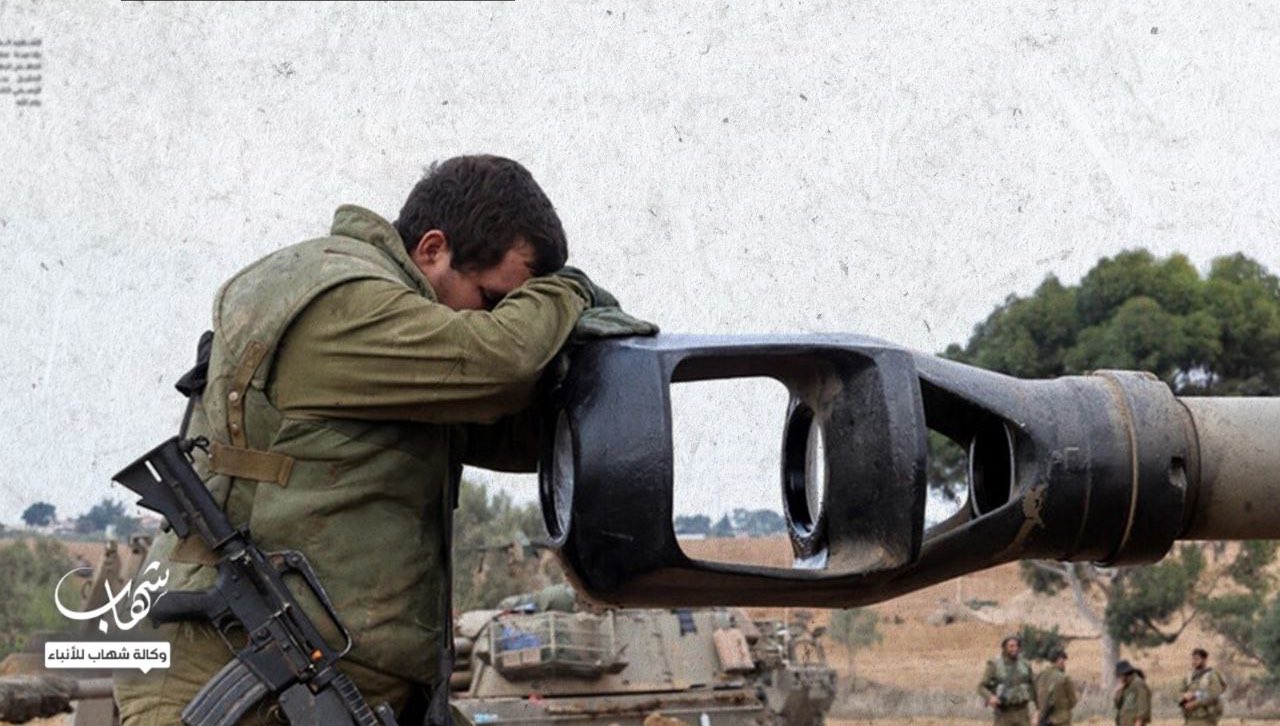
The Israeli army is concealing information about the dismissal of thousands of soldiers from service during the Gaza war due to psychological disorders, Haaretz daily reported on Wednesday.

The army “does not provide all the data regarding the number of soldiers discharged during the war because of their mental condition,” the newspaper commented.

Haaretz said it requested the full data from the army spokesperson in 2025, but the request was rejected on the grounds that it had to be submitted under Israel’s Freedom of Information Law.

The request for full data was formally filed in early June 2025, but the military has yet to respond.

According to the daily, the delay violates the law, which requires authorities to respond to requests within 30 days, with extensions of up to 120 days allowed only under special circumstances.

Haaretz said about a month after the request was submitted, the army said it had received a 30-day extension to respond, but still did not release the data yet.

Citing unnamed officers who served in the military’s personnel directorate and the spokesperson’s office, Haaretz said the army tends to delay releasing data that “does not satisfy commanders or serve its objectives.”

A reserve officer in the personnel directorate said there are officers “who know how to manipulate figures and percentages and conceal information that does not satisfy the army.”

“If the army spokesperson needs information to refute a journalistic or political claim, they make every effort to obtain it within hours,” the officer said.

“It is clear the army does not want the public to know the extent of the psychological pressure soldiers are experiencing,” he added.

Unprecedented

According to the newspaper, sources in the army’s mental health department believe the military has reasons to avoid publishing data on the phenomenon because of its scale, fearing it could damage public morale.

Haaretz said the Israeli army has been dealing since the start of the war with an unprecedented number of soldiers suffering psychological disorders.

“In the early days, the army and Defense Ministry had to handle an unprecedented number of cases involving soldiers suffering severe psychological stress,” the paper said.

It added that many soldiers involved in combat during the siege of Gaza reported serious mental distress and said they were unable to return to fighting.

According to the daily, the army significantly increased the number of mental health officers, established specialized treatment centers, and kept rising suicide figures out of official publications until the end of 2024.

Haaretz noted that last July, following inquiries from the newspaper and a petition filed by the Hatzlacha association, the army agreed to release data covering the first year of the war.

According to the figures, 7,241 officers and soldiers were discharged during that period because of psychological conditions.

Sources in the army’s personnel directorate told the newspaper that the number was believed to be the highest ever recorded in the military’s history.

However, some officers reportedly said the figure was lower than the actual number, while the army officially denied possessing complete data on the phenomenon.

The report added that thousands of conscript soldiers were reassigned during the war to support or rear-line roles due to psychological stress or severe exhaustion.

Israel launched a genocidal war on the Gaza Strip on Oct. 2023, killing more than 72,000 Palestinians and injuring over 172,000, most of them women and children.​​​​​​​

Despite a ceasefire agreement that has been in effect since last Oct. 10, Israel has continued deadly attacks and a blockade on Gaza, killing 837 Palestinians and injuring 2,381 others, most of them women and children, in addition to causing widespread destruction. Anadolu

  • CrossFireArabia

    CrossFireArabia
    Dr. Marwan Asmar holds a PhD from Leeds University and is a freelance writer specializing on the Middle East. He has worked as a journalist since the early 1990s in Jordan and the Gulf countries, and been widely published, including at Albawaba, Gulf News, Al Ghad, World Press Review and others.

    Related Posts

    Punishing The Olive Tree

    By Dr Marwan Asmar

    Israel’s government, soldiers and settlers destroyed between 13,000 and 14000 olive trees in the occupied West Bank in the first five months of 2026. The figures are based on different Palestinian and Israeli sources.

    In May 2026 alone Israeli Finance Minister Bezalel Smotrich said he had ordered the uprooting and destruction of 3000 trees in northern Palestine. The uprooting of these trees were ordered to be felled in a single day.

    In early February, 2006 human rights’ groups reported that over 8000 trees were destroyed and a report by the Palestinian Wall and Settlement Commission (PWSC) released last Mid-May showed that 4,414 had been uprooted, destroyed and/or poisoned.

    The uprooting of “Palestinian trees” by Israeli settlers backed by the Zionist army has become a normal state of affairs as it has increased viciously since October 2023 when over 37,200 olive trees were “uprooted”, “broken” and “burned” in conjunction with the Israeli war and slaughter of Gaza.  

    The situation spelled disaster for Palestinian farmers. In cahoots with Israeli soldiers, settlers would go down on Palestinian villages and towns and start uprooting olive trees out of sheer vandalism.

    At the end of last April, this is exactly what happened when settlers from the “Adi Ad” settlement descended on the Turmus Aya village that lies to the north-east of Ramallah in the occupied West Bank and started to destroy and vandalize 400 olive trees.

    As they did this, on Saturday night, they were guarded by the Israeli army. This attack came days after the settlers descended on the village and set fire to a house and a car there.

    The attack on Turmus Aya is not an isolated incident. The village has been targeted for the past few years. The PWSC, a monitoring organization of such attacks said the Israeli army had been responsible for 1,322 of such attacks while the settlers involved for 497 acts of vandalism on different Palestinian cities with Hebron topping the list at (321), Nablus (315), Ramallah (292) and Jerusalem (203).

    Statistics point out that Israel has destroyed between 800,000 and 1 million olive trees in the occupied Palestinian territories from 1967 till now. However, since that year, when Israel effectively occupied all of the Palestinian territories, it destroyed 2.5 million trees.  

    Besides olives, they included orange (different varieties), lemon, grapefruit and clementine trees. The Palestinian territories are known for their varieties like almond, figs, apricots, peaches and plums trees.

    These trees were destroyed by the Israeli occupation for basic military takeover to expand the Palestinian lands with Israeli settlements – about 147 settlements and 224 outposts – and create the required infrastructure and roads for these since some of them resemble big cities.

    In the case of the Smotrich announcement for example, and the uprooting of 3000 trees on Palestinian lands in the north West Bank, the purpose there was to expand the Israeli Shaked Industrial Park which is next to the settlement there that has the same name.

    Gaza, another story

    Gaza is another sad story for the Israeli genocide has affected the whole of the agricultural sector. During the last war on the Gaza Strip, Israel destroyed 1 million trees according to Fayyad Fayyad, head of the Palestinian Olive Council. The destruction literally decimated the agriculture sector of the enclave.  

    Prior to 7 October, 2023, Gaza had 1.1 million trees roughly producing 50,000 tons of olives every year but no more.  About 98 percent of Gaza’s tree cropland has been destroyed.

    Dr Mazen Qumsiyeh, a biologist at Bethlehem University, calls the destruction in Gaza an “ecocide” as statistics show that over the past two years and more, Israel has destroyed between 500,000 to 700,000 non-olive trees.

    Today in Gaza everything has been razed to the ground. There had once been 35 olive oil presses in the Strip but most of these have been destroyed with only five left as of the end of last year.

    The loss of a million olive trees is a $50-million-plus-loss since the total olive oil sector (West Bank and Gaza) contributed between $160 and $190 million to the Palestinian national economy as a direct result of exports to regional and international markets.

    The olive oil sector accounts for roughly five percent of the Palestinian GDP and 20 percent of the agricultural sector. Further olive oil production sustains 100,000 families in the Palestinian territories.

    Marwan Asmar is a writer from Amman and blogs for crossfirearabia.com

    Continue reading
    Israel Kills 200 Lebanese Children – UNICEF

    More than four children have been killed or injured every day on average in Lebanon in the first 25 days of a temporary ceasefire with families still unable to return to their homes, said Save the Children.

    New data from Lebanon’s Ministry of Health on Tuesday showed that 22 children have been killed and 89 injured since the temporary ceasefire started on 17 April. This brings the number of children killed in Israeli strikes since renewed escalation in hostilities in Lebanon on 2 March to almost 200 with about 2,900 people killed.

    The violence and renewed displacement orders have forced more than one million people – or one in six of the population – from their homes with many now living with relatives, in host communities or in collective shelters.

    The number of families living in collective shelters has increased 5% since the conditional ceasefire due to renewed displacement orders by Israeli forces and as families return home to find destroyed houses and damaged farmland so move back the collective shelters. There are now 44,800 children among about 125,000 people in collective shelters.

    Thousands of children have been living in collective shelters for over two months in overcrowded conditions with inadequate water, sanitation and hygiene facilities leading to reports of scabies and growing health concerns.

    Parents are reporting widespread behavioural changes among children living in collective shelters due to a lack of routine and reduced school engagement including loss of appetite and trouble sleeping. Many children are struggling to continue learning with some schools used as collective shelters and also difficulties accessing online learning due to limited electricity, and poor connectivity.

    Tala*, 10, has been living in a collective shelter after being displaced from southern Lebanon, said:

    “I just want the war to end so I can go home to my village and sleep in my own bed. I really miss school, I want to see my teachers and be with my friends, and study and play again.”

    Nora Ingdal, Save the Children’s Lebanon Country Director, said:

    “This ‘so called’ ceasefire that still sees more than four children killed or injured every day is not a ceasefire for children. Attacks on civilians have not stopped – it has simply continued under another name. Colleagues have told me that the airstrikes feel more intense in some areas than they ever did before. Children are not safe until there is a permanent and definitive ceasefire with no violations.”

    With further peace talks set to take place on Thursday to determine next steps between Lebanon and Israel, Save the Children is calling on the international community to urgently work toward a permanent and definitive ceasefire and ensure flexible and sustained funding to protect children and allow families to return home to resume their lives.

    Save the Children has worked in Lebanon since 1953. In collaboration with partners and local authorities, we are distributing essential items in hard-to-reach areas in the south, provide psychosocial support for children, educate families and children about the risks of unexploded ordnance, ensure access to safe water and sanitation facilities, and distribute essential items for those displaced.

    ENDS:

    Sources:

    Lebanon Ministry of Health

    Israeli strikes have killed 380 in Lebanon since truce: Health ministry

    Lebanon Ministry of Health

    Lebanon-Emergency-Sitrep-23-2026.pdf

    Continue reading

    You Missed

    Educator For The Arab World

    Educator For The Arab World

    ‘We Are All Bin Gvir’

    ‘We Are All Bin Gvir’

    Punishing The Olive Tree

    Punishing The Olive Tree

    Jordan 2007! Elections and Hiccups: Looking Backwards

    Jordan 2007! Elections and Hiccups: Looking Backwards

    Iran is Writing The Final Chapter!

    Iran is Writing The Final Chapter!

    Gaza Fishermen Dream of Life Prior to 7 Oct

    Gaza Fishermen Dream of Life Prior to 7 Oct