Occupation and Israeli Violence

By Najla M. Shahwan

In the context of Israel’s unlawful occupation and its imposition of a system of apartheid against all Palestinians, and against the backdrop of its ongoing genocide in Gaza, Israeli authorities have been recently accelerating its violations of international human rights and humanitarian law in pursuing its policy of ethnic cleansing in the occupied West Bank.

This policy has been implemented through the forcible displacement of Palestinians in refugee camps, Bedouin and herding communities in the West Bank, as well as the creation and expansion of settlements , acts that amount to the war crime of unlawful deportation and transfer.

Palestine’s Permanent Mission to the UN on June 12 sounded the alarm over the newest largest wave of forced displacement of Palestinians in the occupied West Bank.

During a briefing held by the Palestine’s Permanent Mission to the UN in Geneva, Palestine’s Permanent Representative, ambassador Ibrahim Khraishi, warned of the unprecedented deterioration of conditions in the occupied West Bank amid the upsurge of colonist attacks, colonial settlement expansion, and the ongoing military offensive on the refugee camps of Jenin, Tulkarm and Nur Shams, which has triggered the largest wave of forced displacement in the West Bank since 1967, alongside widespread destruction of infrastructure, homes and civilian facilities.

He stressed that the West Bank was witnessing a dangerous escalation at the political, economic and humanitarian levels due to Israel’s unbridled annexation and settler-colonialism policies, arrests, extrajudicial killings, colonist violence, and the continued withholding of Palestinian clearance revenues.

On his part, UNRWA representatives outlined the latest developments in the northern West Bank, pointing to escalating destruction and the forced displacement of more than 45,000 Palestinians, attacks on infrastructure and medical facilities, and Israeli measures aimed at demolishing the Agency’s premises in occupied Jerusalem.

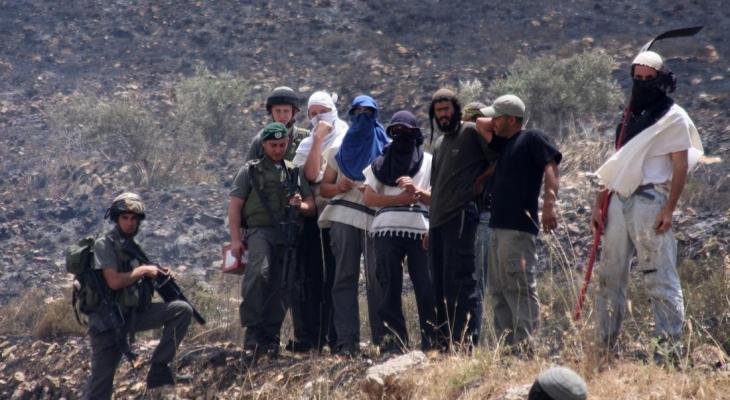
Israeli authorities have been accelerating annexation through a state-driven campaign of ethnic cleansing targeting Palestinian Bedouin and herding communities in Area C of the occupied West Bank, while committing the crime against humanity of forcible transfer.

The Israeli government has made formal annexation an explicit policy objective .

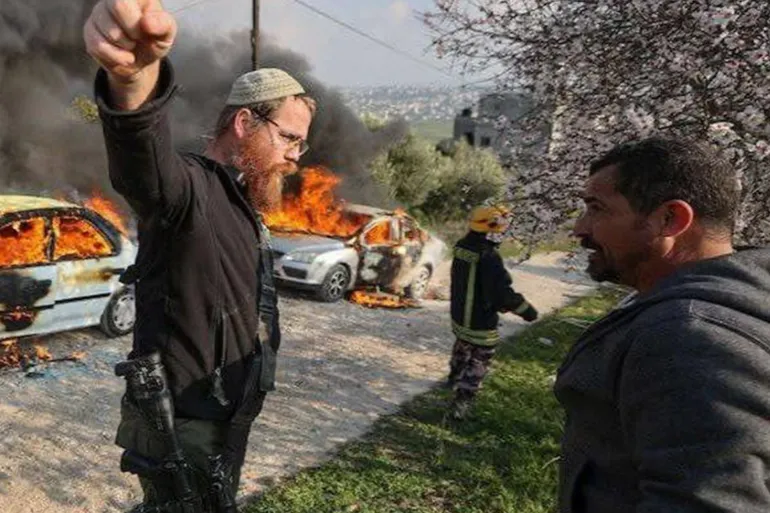
It has accelerated settlement expansion and land grabs, increased financial and logistical support to settlements, and has armed settlers, thereby enabling a brutal state-sanctioned campaign of settler violence and of forced displacement of Palestinians from Area C.

This area constitutes over 60 per cent of the occupied West Bank and has long been central to Israel’s efforts to control land and demographics, given its natural resources, vital grazing and agricultural land.

Communities in Area C have been facing growing risks of displacement and settlement expansion.

The Jordan Valley and South Hebron Hills have been areas under particular pressure where residents have faced repeated raids, demolitions and damage to infrastructure. Restrictions on access to land and essential services have also increased pressure on these communities and State -backed settler violence and home demolitions have forcibly displaced thousands of Palestinians in, emptying out over 100 villages entirely.

In the Gaza Strip , Israel’s ongoing military operations and evacuation orders despite the ceasefire have displaced roughly 90 per cent of the population (approximately 1.9 million people), with much of the civilian infrastructure destroyed to create long-term buffer zones.

Families have been displaced from their neighborhoods many times – and the last time they were uprooted, they were homeless for more than six months.

Israel’s ‘voluntary emigration’ plan from Gaza is its latest attempt to ethnically cleanse Palestinians from the Strip .

Israel’s defense minister has advanced plans to remove Palestinians from the Gaza Strip through “voluntary emigration”.

Israel Katz said late last May that the plans would take place “at the proper time and in the proper manner”.

Israel’s security cabinet approved a proposal by Katz in March to establish a directorate within his ministry to facilitate “migration” from the enclave.

Despite the Israeli genocide in Gaza, which has killed more than 73,000 Palestinians and wrought utter destruction on the coastal enclave, the vast majority of Palestinians there say they will never abandon their home.

Proposals for the removal of Palestinians from the Gaza Strip have been repeatedly raised during the course of the Israeli genocide.

Though some ministers have framed the move to remove Palestinians as a voluntary option, other Israeli officials have been explicitly calling for forced expulsion, which is a war crime.

Article 49 of the Fourth Geneva Convention prohibits an occupying power from forcibly transferring , deporting or displacing occupied people from an occupied territory while the Rome Statute of the International Criminal Court names deportation by “expulsion or other coercive acts” a crime against humanity.

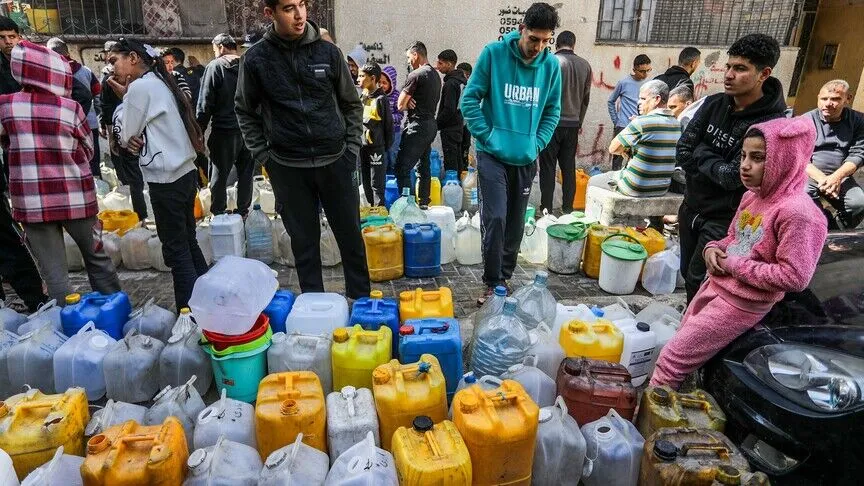
Ninety-two per cent of Gaza’s homes have been destroyed or damaged. None of its 37 hospitals is fully functional. Aid trucks cut from 4,200 a week to 590 when Israel sealed the crossings in February, families burning trash to cook whatever arrives, children frozen to death last winter for lack of shelter materials Israel would not allow in.

The Yellow Line, the boundary of Israeli control drawn by the ceasefire, keeps moving west, swallowing water points and clinics, with Palestinians killed for approaching a line that approaches them. More than 986 Palestinians have been killed since the “ceasefire” was signed in October 2025.

Amid the expanding Israeli military incursions record levels of settler violence, and impending annexations , the overwhelming majority of the Palestinians in the West Bank and Gaza are fiercely resisting displacement , viewing it as a permanent severing from their homeland .

The writer is a Palestinian author, researcher and freelance journalist and contributed this article to the Jordan Times

Continue reading
“Hay Mr Trump Israel is ‘Eating’ Into Gaza”

Story by Mohamed Ahmed and Abdel Qader Sabbah

GAZA CITY—Mustafa Al-Shawa awoke at 2:30 a.m. on Monday to the sound of gunfire and the rumble of tanks in Al-Tuffah neighborhood of Gaza City. When he was finally able to go outside a few hours later, he found two yellow concrete blocks placed in the middle of the street—the Israeli military had moved them at least one hundred meters further west into Gaza where they now lay close to his home.

“They moved the yellow line forward to the Sanafour Junction. It used to be up by Al-Shaaaf Street,” Al-Shawa told Drop Site News. “This is the yellow line,” he said, pointing to the blocks. “There is another yellow line along Salah Al-Din Street that they have moved closer. Enough of what is happening to us. Enough of this suffering.”

Israel has been steadily encroaching further into Gaza, moving the “yellow line” that demarcates its area of control from 53% of the enclave since the start of the so-called ceasefire in October to well over 60%, in violation of the agreement. Prime Minister Benjamin Netanyahu recently ordered the army to take 70%.

“We can’t leave the neighborhood because there is nowhere to go,” Al-Shawa said. “If we leave the area we’re in now, we’ll end up sleeping in the streets, in filth. There is no place left. Where are we supposed to go?”

Along certain parts of Gaza, Israeli troops have placed yellow concrete blocks to delineate the new border. Their placement of the blocks further west into the Al-Tuffah neighborhood on Friday accompanied by gunfire, tanks, and quadcopter attacks caused dozens of Palestinians in the area to pack up their belongings and flee later that day.

Families crammed their scant belongings into open cardboard boxes and plastic bags. Trucks were piled up with thin mattresses, furniture, cookware and plastic bins waiting to be carried away. “The yellow line has destroyed us,” one resident yelled as he walked by.

Like nearly all of Gaza, the Al-Tuffah neighborhood is barely standing. Every building is badly damaged or completely destroyed. Residents traverse dirt roads instead of paved streets, flanked by mounds of rubble and twisted steel.

Palestinians in Al-Tuffah neighborhood in Gaza City are forcibly displaced after Israel attacked and moved yellow blocks into the area on June 15, 2026. Video by Mohamed Ahmed.

“Last night was very, very bad,” Nafiz Al-Ghaz, another resident of Al-Tuffah, told Drop Site. “It was a difficult day and an even more difficult night: tanks, quadcopters, gunfire. All night they were telling us, ‘Run, run.’ People are fleeing, taking whatever furniture, cupboards, and beds they can carry. We are on the yellow line. They placed the yellow line right at the traffic junction. …Where are we supposed to go? They might as well throw us into the sea and be done with us.”

Before the genocide began over two and a half years ago, the Gaza Strip was already one of the most densely populated places on earth. Since the “ceasefire” in October, Israel has steadily seized more land, corralling the nearly two million Palestinians in Gaza into an ever shrinking area. Every inhabitable structure is crammed full of people while hundreds of thousands are living in tents and flimsy tarp shacks pitched close together wherever there is room—on the streets and public squares, in stadiums, and on the coastline.

“No one is paying attention to us,” Mohammed Khalil told Drop Site as he gathered up his belongings along the side of a building in Al-Tuffah. “Every day we wish for death,” he said, his voice trembling as he spoke. “Every day we wish to die, to be done with this life.”

Israel has violated the “ceasefire” on a daily basis since it went into effect in October, killing over 1,000 Palestinians in routine attacks and wounding over 3,100, severely restricting the amount of aid agreed upon in the deal, and seizing more land.

“Despite the ceasefire announced eight months ago, Gaza still faces profound uncertainty and immense human suffering,” UN Secretary-General António Guterres said in remarks to the Security Council last week. “Violence is on the rise, with civilians killed on a daily basis. Humanitarian operations remain heavily constrained. Basic human needs—for clean water, sanitation, food, shelter, health care, and more—are going unmet. And the Israeli Government is declaring its intent to control 70% of the Strip.”

The Security Council voted in November to authorize President Donald Trump’s “Board of Peace” to monitor the ceasefire. In a statement on Sunday, Hamas said it delivered its response in coordination with other Palestinian factions to a proposal it received in April from Nickolay Mladenov, the High Representative of the Board of Peace. Mladenov has turned a blind eye to Israel’s violations and instead called on Hamas to fully disarm despite that not being a part of the phase one deal that Hamas signed in October.

“To the world, there is a ceasefire agreement, but in practical terms on the ground, Israel has moved toward a pattern of gradual escalation that reshapes the aggression and reshapes the genocide in the Gaza Strip through multiple forms,” Ahmed Al-Tannani, a writer and political analyst in Gaza, told Drop Site. “Part of this is the daily killing around the yellow line, in addition to expanding control. Another part is linked to the continuation of assassinations and the bombing of civilians in their homes. In addition to that, it has returned to the policy of evacuating neighborhoods and then bombing them, including in areas west of the yellow line.”

Earlier this month, Israel bombed Al-Jawazat displacement camp west of Gaza City, killing six Palestinians and wounding 20 others, just one of many attacks on areas far from the “yellow line.”

“Attacks are still taking place around us. Here in the Al-Jawazat camp, there have been multiple strikes on tents,” Raed Hajjaj, who lives in a tent within the crowded displacement camp, told Drop Site. “It’s not like before, when massacres were happening continuously and the world’s attention was focused on Gaza. Now, with one or two attacks every day or two, or several times a week, the world is occupied with other issues. We all know what they are—the U.S.-Iran war, the closure of the Strait of Hormuz, and other developments. These things have distracted the world from us.”

Attacks From Israeli Military Bases

Mohammad Al-Zaghl pointed to the bullet holes that ripped through the fabric of his makeshift bathroom on Monday morning. He constructed the small shed out of tarp and wood close to his tent in the Halawa displacement camp in Jabaliya, northern Gaza.

The most frequent Israeli attacks target Palestinians living close to the yellow line in places where the military has built 25 kilometers of massive earth berms to physically divide Gaza. Newly constructed military bases atop the berms appear as elevated colonial forts overlooking a displaced and devastated Palestinian population.

The Halawa camp lies just a few hundred meters from an Israeli base atop one section of the berm—an imposing wall of earth lined with spotlights facing outward and an Israeli flag hanging from a flagpole inside the base alongside several towers.

“The Israelis are about 500 meters away from us,” Al-Zaghl told Drop Site. “There is not just one tower—there are one, two, three. From all three directions, we cannot escape the gunfire. Every day there is shooting. Everyone stays in their place, in their tents.”

Palestinians in Halawa displacement camp in Jabaliya recount Israeli attacks from military bases that overlook the camp on June 15, 2026. Video by Abdel Qader Sabbah.

Like thousands of others, Al-Zaghl has been living in Halawa ever since he was forcibly displaced from the Jabaliya refugee camp. In January, as he was sitting at the entrance of his tent, he heard a burst of gunfire before realizing he had been shot in the abdomen. An angry scar runs along his lower back and a smaller entry wound is visible on the left side of his stomach.

“Today it is worse than before. You hear constant gunfire, explosions, and noise,” he said.

Youssef Shaman, 15, was also shot from the Israeli military base overlooking Halawa. He said it happened in March, as he was going to collect water for his family. “While I was on my way, there was a crowd gathered around the water, and they started shooting at us from the tower,” Shaman told Drop Site. “People were hit, and I was shot in my leg. They kept firing at us from the tower. We could see the Israelis shooting at us.”

Shaman shows the bullet wound on the inside of his thigh just above the knee. An older scar runs along the top of his ankle where he was hit by shrapnel in an earlier airstrike that killed his brother. Along with other eyewitnesses, Shaman said the shooting attacks from the nearby base have steadily increased over the past few months.

“We can see them, and they can see us,” he said. “They look for someone to snipe and open fire on them. They deliberately watch and shoot us. They climb up the hill where we can see them, in their military vehicles and tanks, and then they start shooting at us. …The shooting has increased. They fire at us all day long.”

Israel has not faced any consequences for its wholesale abandonment of the ceasefire over the past eight months, with the violations becoming more acute and attacks intensifying to drive Palestinians further inward, seize more land, and continue the genocide.

“The Israeli occupation still considers the war to be ongoing, and the objectives of the war—linked primarily to achieving the strategic goal of displacing the Palestinian people—are still in place,” Al-Tannani said. “The ceasefire agreement has not brought about any change for the Israeli government.” Drop Site

Sharif Abdel Kouddous and Jawa Ahmad contributed to this report. Sami Vanderlip edited the video.

Continue reading
‘I Hate Israel’

By Ismail Al Sharif

On 4 June, the Pew Research Center released a survey titled: “Most People in 36 Countries Have a Negative View of Israel and No Trust in Netanyahu.”

The study, which polled 44,657 people worldwide, revealed that negative views of Israel have become prevalent in most of the surveyed countries. On average, 67% of respondents hold a negative view of Israel, compared to only 25% who expressed a positive one.

Notably, the study found only a handful of countries—no more than a handful—where Israel enjoyed a positive view among the majority of their people.

Perhaps most importantly, this decline is no longer limited to Muslim-majority countries or societies historically known for their negative stance toward Israel. It now extends to Western countries whose people were traditionally considered supporters of Israel.

In Europe, North America, and Australia, negative views are growing, particularly among young people and those on the political left. The study indicates that young people in several countries hold more negative views of Israel than the older generations there, making the crisis far from a passing phenomenon and giving it a generational character that could have long-lasting effects.

The study also shows the division over Israel has become clearly ideological. In the United States, for example, liberals hold far more negative views than conservatives, and young Americans are more critical of Israel than the older generations. This pattern is repeated in other Western countries, where the left tends to hold even more anti-Israel positions than the right.

President Donald Trump was right when he told the war criminal [Benjamin] Netanyahu in a phone call that the world hates him; the world’s hatred for him even surpasses its hatred for Israel. The study found that a majority in most countries do not trust him. In the United States, 59% of respondents do not trust him, compared to only 27% who do. Even among American Jews, although the positive view of Israel remains relatively high, trust in Netanyahu appears to be significantly low.

The study also indicates that some countries register very high levels of negativity toward Israel, such as in Turkey, where the negative view reached 97%. In the West Bank and East Jerusalem, 85% expressed a negative opinion, compared to only 4% who expressed a positive one. It should be noted that the study did not include Gaza.

The few remaining points of support are mainly confined to some African countries, such as Kenya and Ghana, due to Zionist influence in them, but they do not amount to a clear majority in support of Israel. As for Netanyahu, he enjoys the trust of a majority of the population in only two countries: Kenya and the Philippines, where he is seen as a strong leader.

Unfortunately, this study did not include the opinion of Jordanians regarding Israel or the war criminal Netanyahu, an opinion that, in reality, does not require extensive polling. The Jordanian position on Israel and Netanyahu is well-known and consistent, and is confirmed by other studies. 

A recent Arab Barometer survey revealed that Jordanians’ view of Western policies has sharply declined due to the Gaza war, with 81% believing that the United States defends Zionist interests. A 2023 Washington Institute poll found that 84% of Jordanians oppose establishing trade relations with Israel, even if they bring economic benefits to Jordan, and 76% refuse to accept humanitarian aid from Israel, even in times of disaster.

A 2025 survey of Jordanian university students showed that 92.6% consider Israel as the “main enemy” of Jordan and the Arab world.

Besides Jordan, the study omitted the countries surrounding Israel: Egypt, Syria, and Lebanon. This omission is perhaps questionable, as the populations of these countries hold a deeply negative view of Israel and its prime minister. Their figures would have provided conclusive evidence that Israel remains a foreign entity in the region, despite peace agreements and economic interests that have failed to alter public opinion.

These figures would have raised broader questions among the world’s populations about the very notion of Israel’s acceptance within its surrounding region. If this entity is indeed surrounded by such rejection and hatred, then the logic of history and geography dictates that the region will ultimately reject it.

This article was first published in the Arabic Addustour daily newspaper and reprinted in crossfirearabia.com

Continue reading
Iran Strikes Israel With 10 Ballistic Missiles

Iran launched a missile attack on Israel on Sunday evening. This is its first time since the ceasefire between the two countries was made two months ago. The Iranian strikes came in response to Israel’s escalation of its aggression against Lebanon by targeting Beirut’s southern suburbs.

Sirens sounded in Haifa and across large areas of northern Israel after missile launches from Iran were detected. Initial reports indicated a direct hit on a building in Tiberias.

Media reports state that Iran launched 10 ballistic missiles in four slavos.

Continue reading
Iran: ‘Strategic Patience’ to ‘Sustained Confrontation’

By Najih Mohammad Ali

In a clear and direct language, the Iranian Revolutionary Guard Corps (IRGC) affirmed that regional “peace and stability will not be achieved unless there is withdrawal from the occupied Lebanese territories.” This stance followed Hezbollah’s Secretary-General’s rejection of the Washington talks, emphasizing his refusal to separate the arenas and the “Dahieh for the North” equation.

This statement expresses a coherent strategic vision that considers regional stability inextricably linked to ending occupations and aggressions. It places the defense of Lebanon, Syria, and the region among Iran’s political and military priorities.

This shift to a strategy of “eternal war”—or continuous confrontation—and reflects a pragmatic and principled decision made by Tehran after decades of pressure and aggression. Iran did not abandon the idea of ​​a settlement in vain; rather, it realized that relying on partial agreements with Washington, which imposes unilateral conditions and disregards the rights of peoples, is no longer a viable option.

The cowardly assassination of Martyr Qassem Soleimani, followed by direct strikes targeting high-ranking Iranian leaders, including Supreme Leader Ayatollah Seyyed Ali Khamenei, proved that relying solely on “strategic patience” is mistaken for weakness. Therefore, Iran has shifted to a doctrine of active deterrence based on the entire axis of resistance, making any aggression costly for its adversaries.

This transformation was not the result of the absolute dominance of a hardline faction, as Zionist-American narratives and their Arab proxies (and, of course, the Iranian opposition abroad) claim. Rather, it is a natural evolution of the Iranian elite that stood united in the face of external aggression.

After significant losses, the priority of maintaining national and revolutionary cohesion emerged. Defending revolutionary principles—exporting the spirit of resistance and confronting arrogance—has become an essential part of the regime’s identity that has become a source of strength to prevent internal collapse whilst uniting the people behind the leadership in the face of sanctions. Pragmatists and hardliners alike now agree that continued confrontation better protects national interests than concessions that could lead to disintegration.

The leaders of the Iranian regime believe—and I think they are right—that continuing the confrontation will yield greater strategic gains than any fragile peace agreement. History proves that America understands only the language of force and attrition. From Vietnam to Afghanistan, wars of attrition forced Washington to withdraw.

Today, the “Axis of Resistance” is cleverly applying this equation: Linking the arenas to prevent separate deals that would weaken Lebanon, Iraq, or Yemen, and imposes a heavy price on its adversaries. Iranian diplomacy has been transformed into the diplomacy of the field, as General Soleimani envisioned, and is now a flexible tool that buys time and exposes the contradictions of the other side, while maintaining full military readiness.

The American-Israeli strikes have already altered Tehran’s calculations in favor of adopting an offensive-defensive posture. Instead of settling for limited responses, Iran is developing comprehensive deterrent capabilities through its natural allies, who represent the will of the region’s peoples in the face of occupation.

This is a calculated escalation, a precise strategic calculation based on resilience and strategic depth. Within the elite, a balance prevails between caution, fearing losses, and resolve, which sees resistance as the only path to dignity and independence.

Compared to the previous “strategic patience,” the strategy of sustained confrontation has proven effective in preserving battlefield gains and preventing the regional collapse of the resistance axis. It has succeeded in exhausting the enemy and strengthening internal unity, despite economic challenges primarily attributed to unjust sanctions, not Iranian policy.

The most serious risk facing this strategy lies in the possibility of miscalculation by adversaries and their attempts to impose a full-scale war, but Iran has repeatedly demonstrated an exceptional capacity for resilience and adaptation.

We are indeed facing a “simmering cold war,” where there is no false peace imposed by force, nor a total war that destroys everyone. This situation serves Iran and its axis because it maintains the strategic balance, prevents surrender, and opens the door to a comprehensive and just settlement based on withdrawal from occupied territories and respect for the sovereignty of states.

In conclusion, this “perpetual war” relies on the long-term vision of the Iranian character. It is not a whim, but an existential choice imposed by the ongoing aggression against Iran and the peoples of the region.

Iran is defending itself and the dignity of the nation, and affirms that true stability begins with ending aggression, occupation, and foreign interference. This path, despite its difficulties, reinforces Tehran’s position as an indispensable regional power and paves the way for a new balance of power that respects the rights of peoples. The region needs such firm stances to achieve an honorable peace, not surrender.

The author is a researcher in Iranian and regional affairs and this article is reproduced from the Arabic Al Rai Al Youm website and reprinted in crossfirearabia.com.

Continue reading