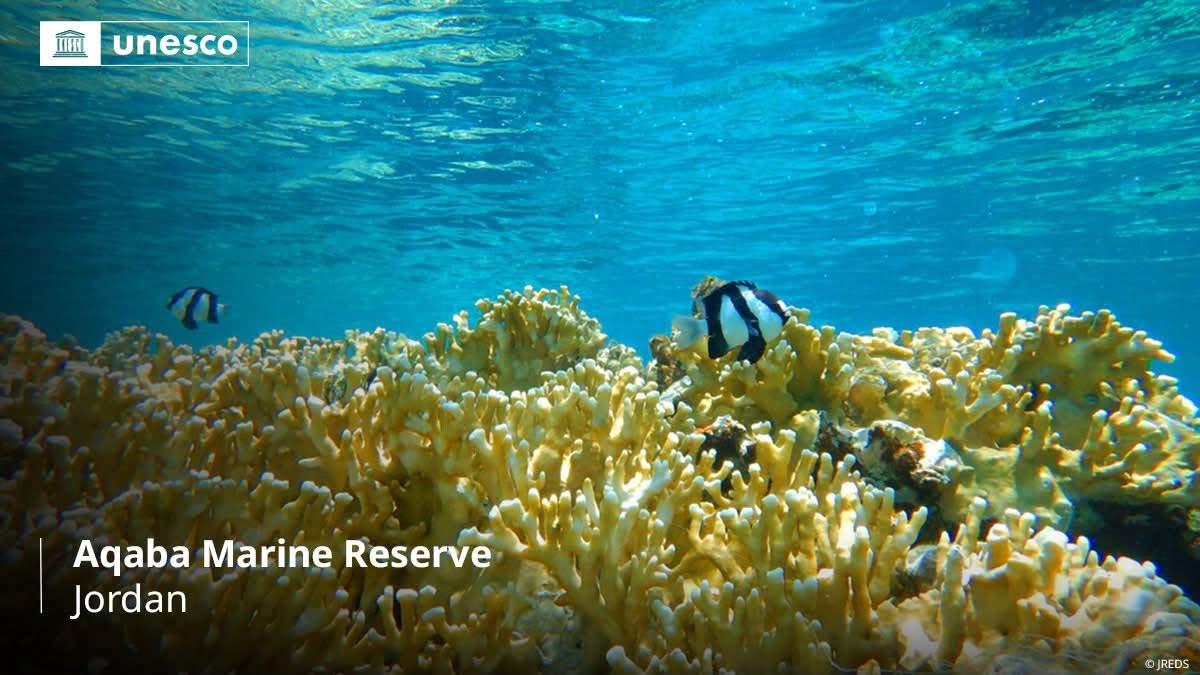
Aqaba Makes World Marine History

By Yazan K. Mahadin

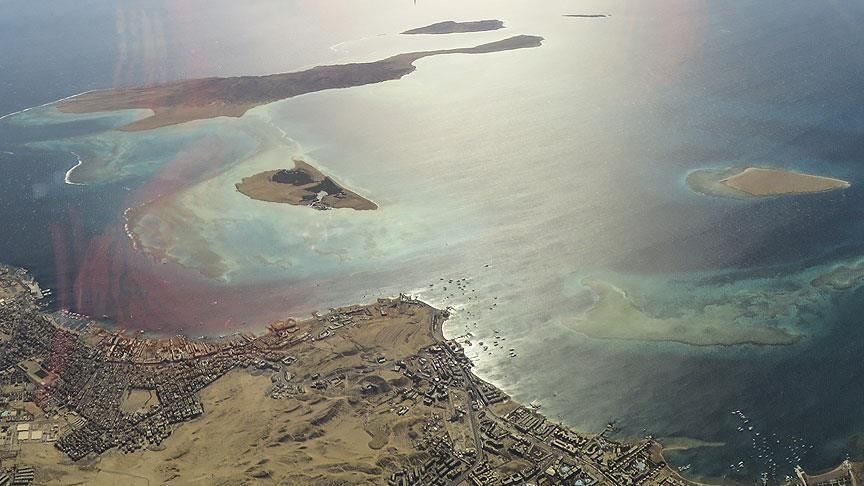
On July 25, Jordan achieved a historic milestone as the Aqaba Marine Reserve was officially inscribed on the UNESCO World Heritage List during the 48th Session of the World Heritage Committee in Busan, Republic of Korea. Recognized under UNESCO’s natural criteria (ix) and (x), the Reserve earned global recognition for its outstanding ecological processes, extraordinary marine biodiversity, and exceptional contribution to the conservation of one of the world’s most resilient coral reef ecosystems. This inscription marks Jordan’s first natural World Heritage Site, adding a new dimension to the country’s internationally celebrated cultural heritage.

This achievement extends far beyond international recognition. It positions Jordan at the center of one of the defining global challenges of the twenty-first century: climate change. While coral reefs around the world continue to suffer unprecedented bleaching events caused by rising sea temperatures and ocean acidification, the coral reefs of the northern Red Sea have demonstrated an extraordinary ability to withstand environmental stress. Scientists increasingly regard the reefs of Aqaba as among the most climate-resilient coral ecosystems on Earth, offering valuable insights into the future survival of tropical reefs worldwide.

The Aqaba Marine Reserve is therefore more than a protected area. It is a living laboratory for international scientific research and a beacon of hope in the global effort to understand, protect, and restore marine ecosystems. The Reserve safeguards hundreds of coral species, over five hundred species of fish, and an extraordinary diversity of marine life that continues to thrive in conditions that threaten reefs elsewhere. At a time when the world is searching for solutions to biodiversity loss and climate adaptation, Jordan now hosts one of the planet’s most significant natural assets.

The UNESCO inscription also carries profound implications for Jordan’s tourism sector. Across the world, World Heritage designation is recognized as a symbol of quality, authenticity, and long-term conservation. It strengthens international confidence, raises global visibility, and attracts travelers seeking meaningful, sustainable, and environmentally responsible experiences. Increasingly, today’s visitors are choosing destinations that demonstrate a genuine commitment to protecting nature and preserving cultural identity. The Aqaba Marine Reserve perfectly reflects this global shift toward sustainable tourism.

For Jordan, this recognition presents an opportunity to diversify its tourism economy beyond traditional cultural attractions. Aqaba can now establish itself as a premier international destination for marine ecotourism, diving, underwater photography, scientific expeditions, educational travel, and conservation-focused experiences. Universities, research institutions, environmental organizations, and climate scientists from around the world are likely to view the Reserve as an increasingly important destination for collaboration and discovery. Such partnerships generate knowledge, investment, employment opportunities, and long-term economic benefits while reinforcing Jordan’s reputation as a responsible steward of global heritage.

Perhaps the greatest opportunity lies in integrating this achievement into Jordan’s broader tourism vision through the Golden Triangle—the internationally renowned destinations of Aqaba, Petra, and Wadi Rum. Few countries possess such an extraordinary concentration of globally significant heritage within such a compact geographical area. Within only a few hours, visitors can dive among some of the world’s most climate-resilient coral reefs, stand before the timeless grandeur of Petra, and experience the breathtaking desert landscapes of Wadi Rum. Together, these destinations offer an unparalleled journey through sea, stone, and desert, where nature, culture, history, and adventure come together in one seamless experience.

The Golden Triangle now tells a more compelling story than ever before. Aqaba represents the resilience of nature. Petra embodies the resilience of human civilization. Wadi Rum showcases the dramatic geological forces that have shaped the landscape over millions of years. Together, they present Jordan as a destination where natural heritage and cultural heritage complement one another, creating a tourism model that is both economically powerful and environmentally sustainable.

Petra and Aqaba, in particular, share a remarkable narrative despite representing different forms of heritage. Petra stands as one of humanity’s greatest achievements in adapting to an arid environment through sophisticated engineering, water management, and urban planning. Aqaba demonstrates how nature itself has adapted to environmental extremes, preserving coral reefs that continue to flourish despite rising sea temperatures. One tells the story of human resilience; the other tells the story of ecological resilience. Together, they position Jordan as a global symbol of adaptation, innovation, and coexistence between people and nature.

This achievement also reinforces Jordan’s international leadership in heritage conservation. With six UNESCO World Heritage properties—five cultural and now one natural—the Kingdom demonstrates that protecting heritage is not limited to preserving monuments and archaeological sites. It extends equally to safeguarding ecosystems, biodiversity, and the natural landscapes upon which future generations will depend. The inscription of the Aqaba Marine Reserve broadens Jordan’s global identity from a country renowned for its ancient civilizations to one that also contributes meaningfully to international environmental conservation.

Yet UNESCO inscription is not the conclusion of the journey—it is the beginning of a greater responsibility. Global recognition brings with it an obligation to strengthen conservation efforts, enhance scientific monitoring, carefully manage tourism growth, regulate coastal development, and ensure that local communities remain active partners in protecting this remarkable marine environment. Sustainable management must remain the foundation upon which future tourism development is built.

Jordan has shown that conservation and economic development are not competing priorities but complementary objectives. Protecting nature creates opportunities for scientific innovation, sustainable investment, local employment, and responsible tourism. The Aqaba Marine Reserve now stands as a global example of how environmental stewardship can generate lasting social and economic value while preserving irreplaceable natural heritage.

As the world confronts the realities of climate change, biodiversity loss, and increasing environmental uncertainty, Jordan offers a powerful message of optimism. The inscription of the Aqaba Marine Reserve is more than a national achievement—it is a contribution to humanity’s shared future. Together with Petra and Wadi Rum, it establishes the Golden Triangle as one of the world’s most remarkable destinations, where ancient civilizations, resilient ecosystems, and extraordinary landscapes unite to tell a story of hope, sustainability, and the enduring relationship between people and the natural world.

Yazan K. Mahadin is commissioner for Petra Archeological park and Tourism – PDTRA. He contributed this article to The Jordan Times

Related Posts

In The Line of Fire: Gaza Families Fear The ‘Yellow Line’

By Mohamed Solaimane

Hanan al-Dali was tidying up her threadbare tent on a humid August weekend when the staccato bursts of gunfire rang out.

She dropped everything to grab her three young children, the oldest just nine years old, and dropped to the ground. By now, it’s become almost routine – everyone flat on the floor, hands over their heads.

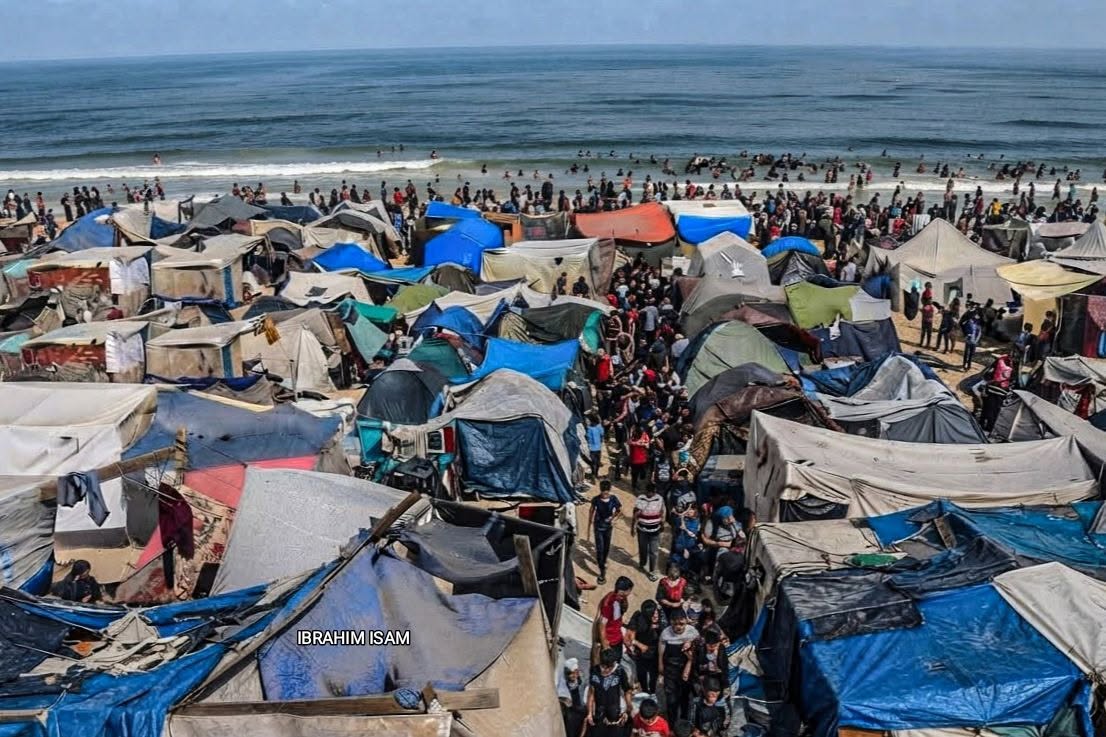
Al-Dali, 31, rarely lets her children roam outside the tent, despite the suffocating heat. It’s simply too dangerous.

They live just a hundred meters from the Yellow Line, the boundary that marks the start of Israeli-controlled territory in Gaza.

Despite a supposed ceasefire in October 2025, the violence has never stopped.

As world leaders prepare to gather in New York for the UN General Assembly’s high-level debate on September 22, Gaza will have endured nearly three years of war since October 2023. 

Though a ceasefire took effect on 10 October 2025, it’s the latest in a long line of UN-backed decisions Israel has disregarded.

“We could no longer bear the shelter, the crowding, the lack of hygiene, and the disease, so we chose to take the risk near the Yellow Line,” she tells TRT World.

“But I never imagined the risk would be like this. Gunfire reaches us daily, and sometimes we don’t sleep for fear the Israeli army might storm in.”

https://youtube.com/watch?v=oYJLtGCMIxc%3Fenablejsapi%3D1%26origin%3Dhttps%253A%252F%252Fwww.trtworld.com%26widgetid%3D1%26forigin%3Dhttps%253A%252F%252Fwww.trtworld.com%252Farticle%252Feb2eb6c61b74%26aoriginsup%3D1%26gporigin%3Dhttps%253A%252F%252Fwww.trtworld.com%252F%26vf%3D1

Nine months since the so-called truce, Israel’s control over the devastated Palestinian enclave has now grown to over 65 percent, according to a UN body

That’s up from 53 percent when the “Yellow Line” was first drawn.

The October truce, under a 20-point US plan, was endorsed by a Security Council resolution on November 17, 2025. It followed an earlier ceasefire beginning January 19 the same year.

While this second truce reduced the fighting, deadly violence near the frontline has carried on. Gaza’s Ministry of Health said that more than 1,200 Palestinians have been killed since the ceasefire, as of early August 2026.

Al-Dali has had to watch the Yellow Line creep closer, steadily bringing the violence closer to their doorstep.

“We thought it would recede as the army withdrew. But it advanced and got closer to us.

Al-Dali’s husband was wounded in an Israeli strike in May 2025. It left him blind in one eye, unable to speak, and without movement in his right hand.

Most of his days are occupied with seeking whatever treatment he can find in the enclave, which faces catastrophic medical shortages amid Israel’s ongoing blockade.

Still, she hopes the UN’s upcoming session will bring action, not just resolutions, to force Israel “to end the genocide, destruction, and starvation it is inflicting on the people of Gaza”.

Hanan rarely lets her children roam outside the tent, despite the suffocating heat.

Hanan rarely lets her children roam outside the tent, despite the suffocating heat.

Two kilometres away, Osama Ahmad Said, 54, and his family are sheltering in a bombed-out timber shop.

He tells TRT World that he can view his own ruined home only from a distance, since it sits beside the line.

He hauls water from hundreds of metres away, as donors are too afraid to reach the area. Even UNRWA, once a critical aid source, has stopped providing assistance, he said.

Israel has abandoned every commitment, said Said, yet what saddens him most is the UN’s failure to enforce its own resolutions.

“If the UN holds its annual meetings just to produce words, with no enforcement or pressure, then what’s the point?” he asked.

“We have a saying: whoever feels safe from punishment behaves badly. As long as Israel remains beyond accountability, the Palestinian people’s Nakba will go on without end.”

Even so, Palestinians are committed to the UN, he says. “We demand mechanisms to enforce its resolutions, because we believe in peace and justice.”

A pattern of UN resolutions, rarely enforced

In late July 2026, Hamas agreed to a US-brokered 15-point disarmament roadmap. Trump hailed it as a “historic” step toward ending the war. Under the roadmap, Hamas would disarm in stages. Israel would withdraw in parallel, pulling back to the Yellow Line.

But on August 9, Netanyahu rejected the deal outright. Israeli forces, he insisted, would not withdraw until Hamas was “genuinely” disarmed first.

Hamas has said it won’t surrender its weapons until Israel withdraws to the Yellow Line, as the original ceasefire promised. 

The deal remains stalled, and people like al-Dali and Said remain trapped in its shadow.

The tragedy unfolding in Gaza goes far beyond a humanitarian crisis, says Hussein Hammad, a Palestinian human rights defender.

It’s “a comprehensive, sustained collapse of the entire system of life, driven by Israel’s effort to turn Gaza into a hostile environment,” Hammad tells TRT World.

He pointed to an unemployment rate of nearly 85 percent, the repeated displacement of roughly two million people, generations of orphans, and the resurgence of diseases like polio amid collapsed sanitation.

Politically, he says, Israel has engineered Gaza into isolated “cantons,” with buffer zones and the Yellow Line blocking movement and cutting off food and water.

All of that comes even as UN bodies repeatedly rule against Israel.

In 2024, the ICJ ordered Israeli forces to fully withdraw. The General Assembly agreed and called for a September 2025 deadline. Israel ignored both.

Security Council resolutions have gone unenforced due to the US veto, and a UN commission concluded in September 2025 that Israel had committed genocide, which Israel denies.

Hammad calls the UN’s failure to enforce resolutions “a fatal marriage of structural flaws and international political complicity.”

UNRWA has long been a backbone of Palestinian survival, but it is now under pressure as Israel seeks to limit its capacity to respond.

UNRWA has long been a backbone of Palestinian survival, but it is now under pressure as Israel seeks to limit its capacity to respond.

The General Assembly “passes resolutions by sweeping majorities, but these are non-binding,” he says, while the Security Council “is completely hijacked by the US veto.”

The UN has reached a historic level of impotence, he said, unable to even protect its own staff – 397 have been killed during the war. Israel meanwhile declared the UN Secretary-General a persona non grata.

“The world’s largest organisation has turned into little more than a narrator of tragedies,” Hammad adds.

Former UNRWA spokesperson Sami Mshasha tells TRT World the problem isn’t a lack of resolutions but that “enforcement remains hostage to the will of member states”.

The General Assembly lacks an executive body to compel parties, he says, while Security Council action under Chapter VII can be politically blocked from within.

Gaza laid bare the consequences of such a compromised structure, says Mshasha.

The Council passed Resolution 2728 in March 2024, demanding a Ramadan ceasefire, then Resolution 2735 in June, endorsing a three-phase truce. “Yet neither was implemented in time.”

UN committee report, he points out, found the Council’s failure wasn’t due to reluctance to invoke Chapter VII, since it was applied in Iraq and Libya. 

That exposes “clear political selectivity.” What happened, he says, is “not simply a ‘UN failure’ but the failure of an international system whose enforcement mechanisms collided with political power.”

“It’s a credibility crisis, not a competence crisis,” Mshasha adds.

Gaza’s last lifeline

UNRWA has long been a backbone of Palestinian survival, stepping in to secure healthcare, food, and water sanitation. It’s now buckling under similar pressures, as Israel seeks to gut the humanitarian agency and limit its ability to respond.

In 2024, Israel’s Knesset designated the agency a terrorist organisation and passed laws to ban its activities. 

Israel also convinced 16 donor states – including the US, Germany, the UK, Canada, and Japan to withdraw funding– pausing $450 million in aid.

Hammad describes UNRWA’s situation as “a reflection of an Israeli political decision to liquidate the refugee cause by destroying their agency.” It’s been reduced to “a mere relief organisation in maximum-emergency mode”.

RelatedTRT World – Most Gaza oxygen stations forced out of service over Israel’s total blockade

Even on a reduced budget, the UNRWA has tried to keep up its work.

“It is inaccurate to say UNRWA now has no role in Gaza, and equally inaccurate to say it operates as before the war,” Mshasha says.

Per its latest report, UNRWA runs six health centres and 61 mobile teams, providing 70,000 weekly consultations and delivering water to over 860,000 people daily.

Yet, according to Mshasha, direct food aid – which once reached 1.9 million people – collapsed once UNRWA exhausted its stockpile and was barred from entering Gaza directly, since March 2025.

In 2026, UNRWA faced a $100 million deficit, with just 44 percent of its budget funded.

Mshasha calls that proof that donors have abandoned their commitments, even as needs multiplied.

A weaker UNRWA could leave a vacuum nothing else could fill, said Mshasha, given its 11,500 staff and network built over decades,  a concern the Colonna Commission also raised.

“This reality makes UNRWA exceptional,” he says, “because it treats the Palestinian as a refugee with legal rights registered since 1949, the year following the Nakba. 

That is why Palestinians still see in its card their last proof of identity and rights, despite all its administrative flaws.”

(This article is published by TRT World in collaboration with Egab)

Continue reading
Kushner Tells Netanyahu Not to Move ‘Westwards’ in Gaza

CROSSFIREARABIA – Israeli Prime Minister Benjamin Netanyahu has been ordered not to expand his self-styled “Yellow Line” further into the west of Gaza. The order came as he met with US envoy Jared Kushner, Monday, according to the Israeli media. Israel public broadcaster, Kan, reported that Israeli troops in Gaza were given a formal order not to move the line westward according to the wishes of US president Donald Trump. Kushner met with Netanyahu in presence of the Board of Peace Director Nickolay Mladenov according to Anadolu.

Continue reading

You Missed

In The Line of Fire: Gaza Families Fear The ‘Yellow Line’

  • By marwan
  • August 17, 2026
  • 8 views
In The Line of Fire: Gaza Families Fear The ‘Yellow Line’

Kushner Tells Netanyahu Not to Move ‘Westwards’ in Gaza

  • By marwan
  • August 17, 2026
  • 8 views
Kushner Tells Netanyahu Not to Move ‘Westwards’ in Gaza

A Middle East Whirlpool! View From Amman

A Middle East Whirlpool! View From Amman

Prisoner Mohammad Arab Hadn’t Seen His Face in 2 Years!

Prisoner Mohammad Arab Hadn’t Seen His Face in 2 Years!

UN: 3000 Settler Attacks on West Bank Palestinians Since 2025

UN: 3000 Settler Attacks on West Bank Palestinians Since 2025

Four Days in Cairo: A Journey Into The Faces of Egypt

Four Days in Cairo: A Journey Into The Faces of Egypt