ESCWA: War Affects 5 Million in Arab States

ESCWA: Conflict Could Push 5 Million more People into Food Insecurity across Arab Countries

A 20% increase in global food prices could push an additional 5 million people into food insecurity across Arab middle- and low-income countries, the United Nations Economic and Social Commission for Western Asia (ESCWA) warns in a new policy brief released Wednesday 2 April, 2026. The report underscores that this risk is immediate and growing, particularly for fragile and conflict-affected countries with limited fiscal space and high dependence on food imports.
 
The brief, titled “Conflict and its shockwaves: escalating impacts and risks for energy, water and food systems in the Arab region”, cautions that the escalating conflict in the region is triggering severe and interconnected shocks to energy, water and food systems, with potentially devastating consequences for human security and economic stability.
 
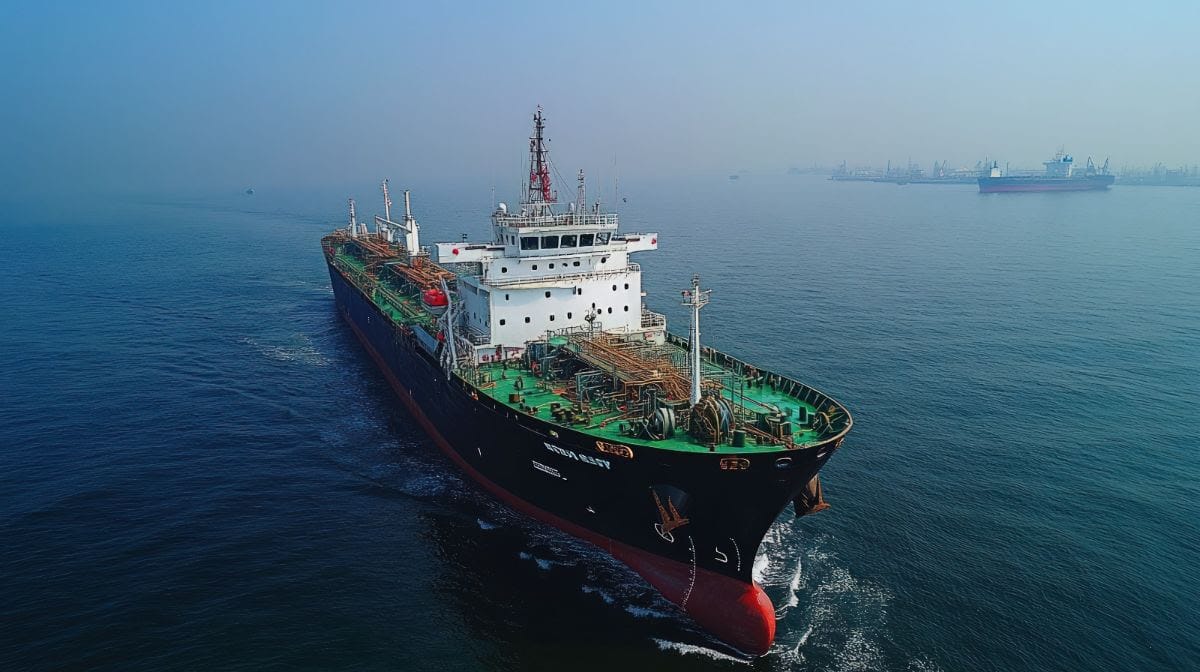
It highlights how disruptions to energy trade have been the most immediate macroeconomic shock. Oil markets are under acute stress, with Gulf hydrocarbon exports falling by 75 to 90% since the start of the war and oil prices surging above $112 per barrel due to the near-closure of the Strait of Hormuz. These disruptions are driving inflation, widening fiscal deficits, and sharply increasing transport and insurance costs across the region.
 
Water security risks are equally alarming. The brief notes that nearly 40 million people in Gulf Cooperation Council (GCC) countries depend on desalinated water drawn from the Gulf, making them highly vulnerable to any damage to energy or desalination infrastructure, as well as to marine pollution caused by the conflict. Any prolonged disruption could rapidly escalate into a humanitarian crisis, given  limited household-level  emergency water storage.
 
“These overwhelming figures entail urgent and coordinated regional action to safeguard critical supply chains,” urged ESCWA Acting Executive Secretary Mourad Wahba. “Such actions include deploying early warning systems, ensuring regional storage of strategic reserves, diversifying trade corridors, and accelerating investment in resilient energy, water and food systems.”
 
Food systems are already feeling the strain. The Arab region imports most of its cereals, and reserves remain limited, covering just over three months of consumption in recent years. Rising fuel prices, disrupted shipping routes and higher fertilizer costs are expected to further increase food prices and production costs, disproportionately affecting low-income households and vulnerable groups.
 
“Without swift intervention, the compounding effects of conflict could deepen poverty, fuel social unrest in fragile countries and reverse progress towards sustainable development across the Arab region,” Wahba added.
 
The brief is the second in a series of studies issued by ESCWA on the shockwaves of the conflict, the first having estimated that Arab economic output would be cut by $150 billion in one month.

One of five United Nations regional commissions, ESCWA supports inclusive and sustainable economic and social development in Arab States and works on enhancing regional integration.

CrossFireArabia

CrossFireArabia
Dr. Marwan Asmar holds a PhD from Leeds University and is a freelance writer specializing on the Middle East. He has worked as a journalist since the early 1990s in Jordan and the Gulf countries, and been widely published, including at Albawaba, Gulf News, Al Ghad, World Press Review and others.

Related Posts

‘Journalist Khalil Trapped Under Rubble Left to Die’

Prominent Lebanese journalist Amal Khalil was killed, Wednesday, by an Israeli targeted military attack in the town of Tyre in southern Lebanon. At the time she was on an assignment with her friend freelance photojournalist Zeinab Faraj reporting on recent attacks on the southern village of Bint Jbeil.

The Lebanese Arabic newspaper Al Akhbar daily confirmed  her death on Wednesday night.

Earlier they were covering the aftermath of an earlier terrorist Israeli drone strike in the town of al-Tiri that killed two civilians. After their vehicle was targeted, the journalists sought refuge in a nearby house which was subsequently bombed, trapping Khalil under the rubble.

Israeli gunfire and stun grenades ensued for several hours preventing the Lebanese Red Cross and army from reaching the site. Zeinab Faraj was eventually rescued in serious condition and taken to a hospital according to local reports and after a few hours, rescue teams recovered Khalil’s bodyfrom the debris.

Their killing is not an isolated act of Isaeli terrorism but is a calculated continuation of a decades-long pattern of targeting the press across Palestine and Lebanon. This history of Israeli terrorism against media workers serves a clear, systemic purpose: to assassinate the witnesses and silence the truthreporting on recent attacks on the southern village of Bint Jbeil wrote Mosab Abu Taha on facebook.

Jeremy Loffredo of Drop Site covered the news extensively and the time leading up to her killing. This is what he wrote: Khalil and Zeinab Faraj, a freelance photojournalist, were both on assignment in southern Lebanon, reporting on recent attacks on the southern village of Bint Jbeil. According to Al-Akhbar, which published a timeline of the events, the car they were driving behind was targeted by an Israeli drone at 2:45 p.m, killing two men inside. Khalil and Faraj took shelter in a nearby house.

At 2:50 p.m., Khalil contacted her editors and family, according to Lebanon-based journalist Courtney Bonneau. News of the incident quickly spread, prompting Lebanese President Joseph Aoun to put out a statement calling on the Red Cross to rescue the two journalists in coordination with the Lebanese Army and the United Nations.

At 4:27 p.m., the house where the two journalists were taking refuge was bombed by the Israeli military and contact with the journalists was lost, according to Al-Akhbar.

Israel did not respond to requests for access, obstructing any rescue operation, according to a Lebanese military official speaking to Al Jazeera. The Red Cross was eventually granted limited access to the site, according to the Committee to Protect Journalists, which remained under active fire.

They were able to evacuate Faraj, who reportedly sustained critical head injuries, and to recover the bodies of two other civilians who were killed. But they were forced to withdraw before finding Khalil because of continued shelling and the direct firing on rescue crews and vehicles. The Red Cross vehicle that transported journalist Faraj to Tubnin Governmental Hospital was hit by Israeli gunfire, with bullet marks visible on the vehicle, according to the state-run National News Agency.

The Red Cross was eventually able to return to the area after which Khalil was pronounced dead.

“The repeated strikes on the same location, the targeting of an area where journalists were sheltering, and the obstruction of medical and humanitarian access constitute a grave breach of international humanitarian law,” CPJ Regional Director Sara Qudah said in a statement.

The Israeli military did not immediately respond to a request for comment.

Referred to by Al-Akhbar as their “correspondent of the south,” Khalil grew up in Baysariyyeh, a coastal town in Saida district about a 45-minute drive from the Israeli border. She spent more than a decade and a half covering the cyclical wars and occupations of southern Lebanon by the Israeli military. Founded in 2006, Al-Akhbar’s editorial line is widely seen as supportive of Hezbollah and the Shiite resistance, and it identifies itself as a secular, independent progressive outlet.

Khalil had previously received explicit death threats on her phone in September 2024 from Gideon Gal Ben Avraham, a media commentator who runs a Middle East analysis channel on YouTube, appears on Israeli television, and describes himself as a retired military officer who continues to “help” Israeli intelligence. The messages told her to leave the country “if you want to keep your head on your shoulders” and asked whether her house was “still standing.”

When contacted by Drop Site on Wednesday before news of Khalil’s death emerged, Ben Avraham confirmed he sent the threats in 2024. “Send greetings to all journalists affiliated with Hezbollah, for anyone who works for the organization should know that they are destined for death,” he wrote, later clarifying that he considered Al-Akhbar “Hezbollah-affiliated” and that “only Hezbollah related should be afraid,” while Maronites and Sunnis should face no such threats.

It is not clear what—if any—formal relationship he has to the Israeli military. When pressed about Khalil’s predicament being trapped under the rubble of a house that was targeted by the Israeli military, he responded: “We don’t share our intel with journalists.” When asked directly whether he was a soldier when he sent the original threats to Khalil in 2024, Ben Avraham replied: “No comment.”

Last month, the Israeli military openly admitted to assassinating prominent Lebanese journalist Ali Shoeib, a correspondent for Al-Manar TV who had covered southern Lebanon for nearly three decades. The Israeli military falsely claimed that Shoeib was a Hezbollah intelligence operative. Also killed in the March 28 strike in the Jezzine district in southern Lebanon were Al-Mayadeen TV reporter Fatima Ftouni and her brother Mohammed, a video journalist. Their car, which was clearly carrying press equipment, was struck multiple times, with Ftouni initially surviving and attempting to flee, before she was targeted and killed in a strike by Israel.

Israel has killed at least 14 journalists, including Khalil, in Lebanon since October 2023, according to CPJ. In Gaza, the Israeli military has killed over 260 Palestinian journalists since October 2023, making it the deadliest war for journalists ever recorded.

Continue reading

You Missed

‘We Killed Our Own Then Blamed Hamas’

‘We Killed Our Own Then Blamed Hamas’

An Unholy War!

An Unholy War!

‘Journalist Khalil Trapped Under Rubble Left to Die’

‘Journalist Khalil Trapped Under Rubble Left to Die’

Israel Kills 38,000 Women, Girls in Gaza

Israel Kills 38,000 Women, Girls in Gaza

Israel Sets Back Gaza 77 Years – UN Reports

Israel Sets Back Gaza 77 Years – UN Reports

Hormuz: Mines, Strategy or Business?

Hormuz: Mines, Strategy or Business?