ESCWA: War Affects 5 Million in Arab States

ESCWA: Conflict Could Push 5 Million more People into Food Insecurity across Arab Countries

A 20% increase in global food prices could push an additional 5 million people into food insecurity across Arab middle- and low-income countries, the United Nations Economic and Social Commission for Western Asia (ESCWA) warns in a new policy brief released Wednesday 2 April, 2026. The report underscores that this risk is immediate and growing, particularly for fragile and conflict-affected countries with limited fiscal space and high dependence on food imports.
 
The brief, titled “Conflict and its shockwaves: escalating impacts and risks for energy, water and food systems in the Arab region”, cautions that the escalating conflict in the region is triggering severe and interconnected shocks to energy, water and food systems, with potentially devastating consequences for human security and economic stability.
 
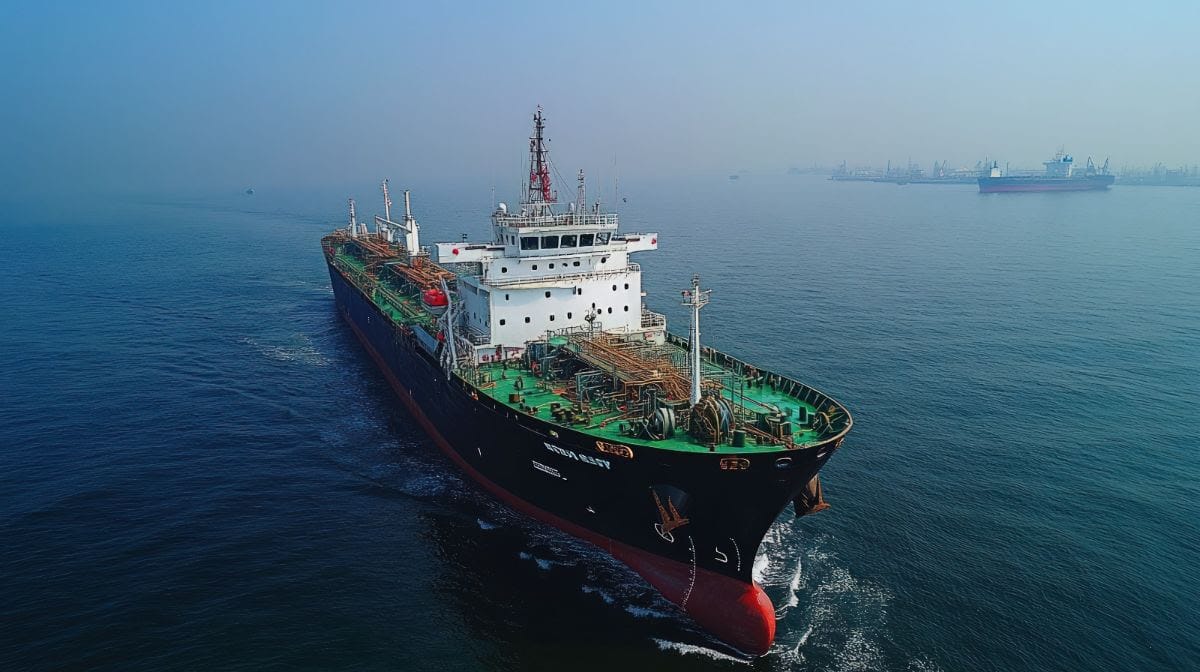
It highlights how disruptions to energy trade have been the most immediate macroeconomic shock. Oil markets are under acute stress, with Gulf hydrocarbon exports falling by 75 to 90% since the start of the war and oil prices surging above $112 per barrel due to the near-closure of the Strait of Hormuz. These disruptions are driving inflation, widening fiscal deficits, and sharply increasing transport and insurance costs across the region.
 
Water security risks are equally alarming. The brief notes that nearly 40 million people in Gulf Cooperation Council (GCC) countries depend on desalinated water drawn from the Gulf, making them highly vulnerable to any damage to energy or desalination infrastructure, as well as to marine pollution caused by the conflict. Any prolonged disruption could rapidly escalate into a humanitarian crisis, given  limited household-level  emergency water storage.
 
“These overwhelming figures entail urgent and coordinated regional action to safeguard critical supply chains,” urged ESCWA Acting Executive Secretary Mourad Wahba. “Such actions include deploying early warning systems, ensuring regional storage of strategic reserves, diversifying trade corridors, and accelerating investment in resilient energy, water and food systems.”
 
Food systems are already feeling the strain. The Arab region imports most of its cereals, and reserves remain limited, covering just over three months of consumption in recent years. Rising fuel prices, disrupted shipping routes and higher fertilizer costs are expected to further increase food prices and production costs, disproportionately affecting low-income households and vulnerable groups.
 
“Without swift intervention, the compounding effects of conflict could deepen poverty, fuel social unrest in fragile countries and reverse progress towards sustainable development across the Arab region,” Wahba added.
 
The brief is the second in a series of studies issued by ESCWA on the shockwaves of the conflict, the first having estimated that Arab economic output would be cut by $150 billion in one month.

One of five United Nations regional commissions, ESCWA supports inclusive and sustainable economic and social development in Arab States and works on enhancing regional integration.

Continue reading
ESCWA: The War Costs $150 Billion in Losses

In an ESCWA report titled “Conflict and its shockwaves: escalation of a crisis in the Arab region” and released on 19 March, it points out if the US-Israel-Iran war continues for one month it would causes have losses for the Arab region amounting to nearly $150 billion, or 3.7% of regional GDP.

ESCWA, a major UN organization, warns that the conflict has causes much economic losses with preliminary estimates of about $63 billion in just two two weeks, pointing out the shock is being transmitted through energy markets, trade routes, aviation networks and financial systems.

It added shipping through the Strait of Hormuz has fallen by 97%, with disrupted cargo flows valued at about $2.4 billion a day and cumulative trade losses estimated at around $30 billion over two weeks. Between 28 February and 12 March, almost 19,000 flights were cancelled across nine major regional airports, generating an estimated $1.9 billion in airline revenue losses. 


“The findings show that the economic effects of the conflict are materialising quickly and across multiple channels at once,” said Mourad Wahba, Executive Secretary of ESCWA. “What begins as a security escalation is being transmitted into the regional economy through trade, energy, transport and finance, with direct consequences for growth, fiscal stability and humanitarian pressures.”
 
ESCWA said the region entered the crisis with limited room to absorb a prolonged shock. Even before the latest escalation, around 210 million people, or 43% of the region’s population, were living in conflict-affected settings, including 82 million people in need of humanitarian assistance. In 2025, GCC countries provided about $4.4 billion in humanitarian aid, accounting for roughly 43% of total aid received by conflict-affected countries in the region.
 
The burden is likely to fall particularly heavily on energy-importing economies. At an oil price of $100 a barrel, the additional annual import bill for Egypt, Lebanon and Tunisia would rise by about $6.8 billion compared with 2026 budget assumptions, adding to fiscal pressure in countries already facing constrained public finances.
 
Lebanon is facing some of the gravest immediate consequences. ESCWA notes that recent escalation that erupted on 2 March took violence by Israel at a new and more intense levels. If escalating strikes continue, economic losses could rise sharply as attacks increasingly disrupt infrastructure, trade and essential services. These shocks hit an economy that has already contracted by nearly 40% since 2019. The latest escalation has also caused severe humanitarian strain, with 634 people killed as of 11 March and nearly one million displaced.
 
“The concern is not only the scale of the immediate losses, but the way in which they interact with pre-existing structural vulnerabilities in the region,” Wahba added. “For countries with limited fiscal space, high import dependence or significant humanitarian pressures, a prolonged conflict could exceed their capacity to absorb further shocks, with serious implications for economic stability, social cohesion, and humanitarian condition.”
 
The ESCWA brief assesses the impact of the conflict through a scenario-based framework covering macroeconomic losses, energy markets, maritime trade, aviation disruptions, financial shocks and Lebanon’s direct exposure to the conflict.

About ESCWA: One of five United Nations regional commissions, ESCWA supports inclusive and sustainable economic and social development in Arab States and works on enhancing regional integration.
Continue reading
ESCWA: War on Gaza Sets Backs Development by 69 Years

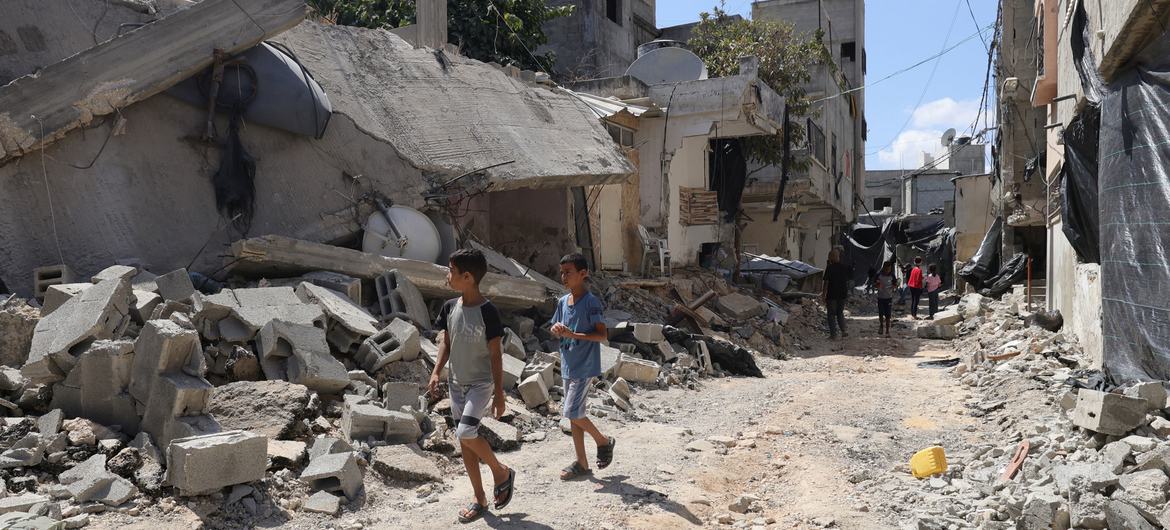
The impact of the year-long war in Gaza and escalations in the West Bank has set development in the State of Palestine back by about 69 years, according to a new UN report released on Tuesday.

“Without lifting economic restrictions, enabling recovery, and investing in development, the Palestinian economy may not be able to restore pre-war levels and advance forward by relying on humanitarian aid alone,” Gaza war: Expected socioeconomic impacts on the State of Palestine, concludes, produced by the UN Development Programme (UNDP) and the UN Economic and Social Commission for Western Asia (ESCWA).

The analysis suggests three recovery scenarios for Palestine. Given that the recovery will be a long-term process, the report assessed both the immediate impact projected for 2025 and the long-term impact anticipated by 2034, a decade after the start of the conflict.

“Our assessments serve to sound the alarm over the millions of lives that are being shattered and the decades of development efforts that are being wiped out,” said ESCWA Executive Secretary Rola Dashti.

“It is high time to end the suffering and bloodshed that have engulfed our region. We must unite to find a lasting solution where all peoples can live in peace, dignity and reap the benefit of sustainable development and where international law and justice are finally upheld.”

Projections estimate that the gross domestic product (GDP) will contract by 35.1 per cent in 2024 compared with a no-war scenario, with unemployment potentially rising to 49.9 per cent.

Three recovery scenarios

Building on findings published in November and May, the report estimates that poverty in Palestine will rise to 74.3 per cent in 2024, affecting 4.1 million people, including 2.61 million people who are newly impoverished.

The assessment also examines the extent and depth of deprivation, employing multidimensional poverty indicators and includes recovery prospects for Palestine after a ceasefire is reached as well as three early recovery scenarios.

The non-restricted early recovery scenario sees restrictions on Palestinian workers lifted and withheld clearance revenues restored to the Palestinian Authority.

In addition to $280 million in humanitarian aid, $290 million is allocated annually for recovery efforts, resulting in an increase in productivity by one per cent annually, enabling the economy to recover and putting Palestinian development back on track.

Unrestricted aid can help

The assessment suggests that a comprehensive recovery and reconstruction plan, combining humanitarian aid with strategic investments in recovery and reconstruction along with lifting economic restrictions, could help put the Palestinian economy back on track to realign with Palestinian development plans by 2034.

But, this scenario can only play out if recovery efforts are unrestricted, said UNDP Administrator Achim Steiner.

Projections in this new assessment confirm that amidst the immediate suffering and horrific loss of life, a serious development crisis is also unfolding – one that jeopardises the future of Palestinians for generations to come,” he said.

“The assessment indicates that, even if humanitarian aid is provided each year, the economy may not regain its pre-crisis level for a decade or more.”

As conditions on the ground allow, he said, the Palestinian people need a robust early recovery strategy embedded in the humanitarian assistance phase, laying foundations for a sustainable recovery.

Humanitarian situation deteriorating

The humanitarian situation is catastrophic and deteriorating daily, said UNDP’s Chitose Noguchi, briefing reporters in Geneva from Deir Al-Balah, Gaza, where many displaced people are currently living.

“The State of Palestine is experiencing an unprecedented setback in development to the year 1955,” she said.

“Restrictions that are currently stifling the economy must be lifted,” she stressed, underlining the new assessment conclusion’s importance for the region. Currently, assessments are being conducted in Lebanon and Syria.

Read the full report here.

UN News

Continue reading