CrossFireArabia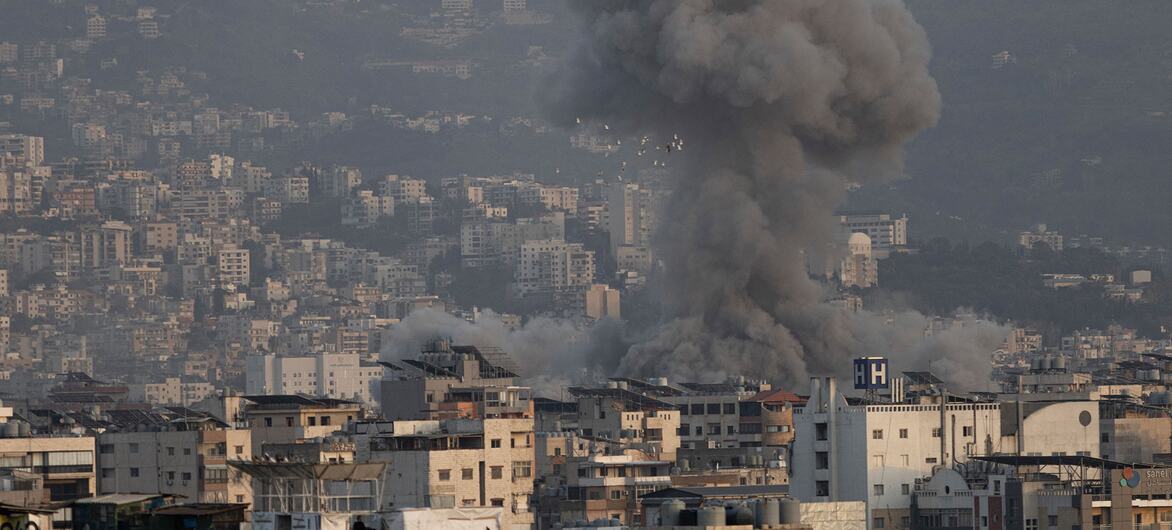
Editor’s Note: The final death toll of the mass Israeli massacre stands at 303 people killed and 1,150 injured as per the Lebanese Health Ministry, Thursday
The large-scale Israeli attack on Lebanon, which caused heavy civilian casualties and extensive damage to civilian objects, warrants investigation for war crimes and crimes against humanity, given their apparently indiscriminate or disproportionate nature and indications of a systematic attack on the civilian population.
Preliminary field data on Israel’s intensive airstrikes on Beirut and other areas on Wednesday, 8 April, indicate that more than 1,300 people were killed or injured, with dozens still trapped or missing under the rubble. The attacks reflect a pattern of using highly destructive, indiscriminate force in densely populated civilian areas, in violation of international humanitarian law.
Israeli airstrikes hit densely populated residential areas in Beirut and its southern suburbs, as well as parts of the Beqaa Valley and southern Lebanon, killing and injuring civilians in their homes and other civilian settings. The attacks caused widespread destruction of residential buildings and civilian infrastructure. Civilian gatherings and social events were also struck, indicating indiscriminate and excessive use of force in violation of the principles of distinction, proportionality, and precaution.
This escalation came shortly after the announcement of a ceasefire agreement between the United States and Iran, suggesting a pre-emptive attempt to derail meaningful de-escalation and impose facts on the ground through force. It also undermines political and diplomatic efforts and increases the risk of wider escalation and violence in the region.
The Israeli attacks may give rise to criminal responsibility for war crimes, given the strikes on densely populated residential areas and civilian gatherings, the high number of civilian casualties, and the extensive damage to civilian objects and infrastructure.
Moreover, the use of highly destructive weapons in densely populated civilian areas, combined with the apparent failure to distinguish effectively between military targets and civilians, the inability to limit the attacks’ effects as required by international humanitarian law, and civilian harm that appears excessive in relation to any anticipated direct military advantage, provides serious grounds to conclude that direct attacks on civilians or indiscriminate or disproportionate attacks may have occurred. It also suggests a failure to take required precautions in attacks. These acts may constitute grave breaches of international humanitarian law and war crimes, warranting investigation and accountability.
The recent Israeli attacks must be viewed in their broader context as part of an ongoing pattern of strikes on civilian areas that have caused death, injury, destruction, and forced displacement, placing Lebanon’s civilian population under coercive conditions that threaten their lives, safety, and stability.
The scale and repetition of these attacks across a wide geographic area, including strikes on infrastructure and hospitals, the killing of journalists and medical personnel, and the use of white phosphorus, indicate that these are not isolated incidents but may form part of a widespread or systematic attack directed against civilians. Accordingly, these practices, including killing, forced displacement, and other inhumane acts, warrant investigation as crimes against humanity.
The continued commission of such attacks without accountability entrenches a long-standing pattern in the international response to Israeli violations, marked by the absence of effective deterrence despite the gravity and scale of harm to civilians. This fuels impunity and encourages further violations by keeping political and legal costs low. It also weakens international protection frameworks, threatens world peace and security, and underscores the need for urgent, decisive action to halt the attacks, ensure effective civilian protection, and hold those responsible accountable.
The international community must act immediately and effectively to stop Israeli military attacks that target civilians or expose them to grave danger, and adopt concrete, practical measures to protect civilians and civilian objects, rather than limiting its response to political condemnations or calls for de-escalation.
Independent, impartial, and effective international investigations are needed into all alleged Israeli violations, including attacks on residential areas, civilian gatherings, and civilian infrastructure, to establish individual responsibility and ensure accountability for anyone who ordered, carried out, facilitated, or concealed these crimes, and to prevent impunity.
It is essential to adopt tangible punitive measures against Israeli officials implicated in serious violations, including targeted diplomatic and economic sanctions, asset freezes, and travel bans, and to halt any cooperation or support that could directly or indirectly enable these violations or provide political or practical cover for them.
Euro-Med Human Rights Monitor calls for an immediate halt to the export and transfer of weapons, ammunition, and military equipment to Israel, where there is a clear indication they may be used to commit serious violations of international humanitarian law or other international crimes against civilians. Continuing to supply such materiel, or to engage militarily, despite a documented record of violations, increases the legal exposure of the states concerned and risks making them complicit in facilitating or sustaining these crimes.
Additionally, Euro-Med Monitor stresses the need to activate all available international and national accountability mechanisms, including supporting domestic jurisdiction over international crimes and backing investigations and prosecutions before relevant courts and mechanisms, to ensure accountability for all those responsible for these violations.
Unimpeded access must be ensured for rescue teams and humanitarian and medical aid to affected areas, along with the protection of health and humanitarian workers. Necessary measures should also be taken to evacuate the wounded and recover those trapped or missing under the rubble. Euro-Med Monitor urges the establishment of international mechanisms to monitor violations, document them, and preserve evidence in line with international standards, thereby safeguarding victims’ rights and supporting future justice processes.