Israel Kills 26 Gazans Over Eid Festivities

At least 26 Palestinians were killed in the Gaza Strip since Tuesday – the eve of one of the most important holidays in Islam – the UN human rights office, OHCHR, reported on Friday.

The information was provided by its monitors in the Occupied Palestinian Territory (OPT) who condemned the increase in Israeli attacks as families prepared to observe Eid al-Adha. 

They said 12 Palestinians were killed in three airstrikes on 26 May, while a teenage girl died of injuries sustained in a strike the previous day that also killed a woman and a young girl, initial reports indicated.

One airstrike killed four men in a camp in Middle Gaza, reportedly after they resisted attempts to search their homes by armed gangs allegedly supported by the Israeli military. Two other men were killed when a strike hit a car in Khan Younis.

The third airstrike, against an apartment in Gaza City, killed a newly appointed commander of the Hamas Al Qassam Brigades, his wife and three children, as well as a woman passerby.

Ten people allegedly affiliated with Al Qassam Brigades were reportedly killed in a strike on 27 May.

Death, displacement and deprivation 

The office noted that Israeli forces have killed 922 Palestinians in attacks since the announcement of the ceasefire in October, bringing the overall death toll since the 7 October 2023 Hamas-led attacks to nearly 73,000, according to local authorities. 

At least 32 children and eight women have been killed in attacks since the truce. 

Meanwhile, Palestinians are still being deprived of adequate shelter, essential medicines, food and other necessities as the blockade on Gaza continues, it said.  

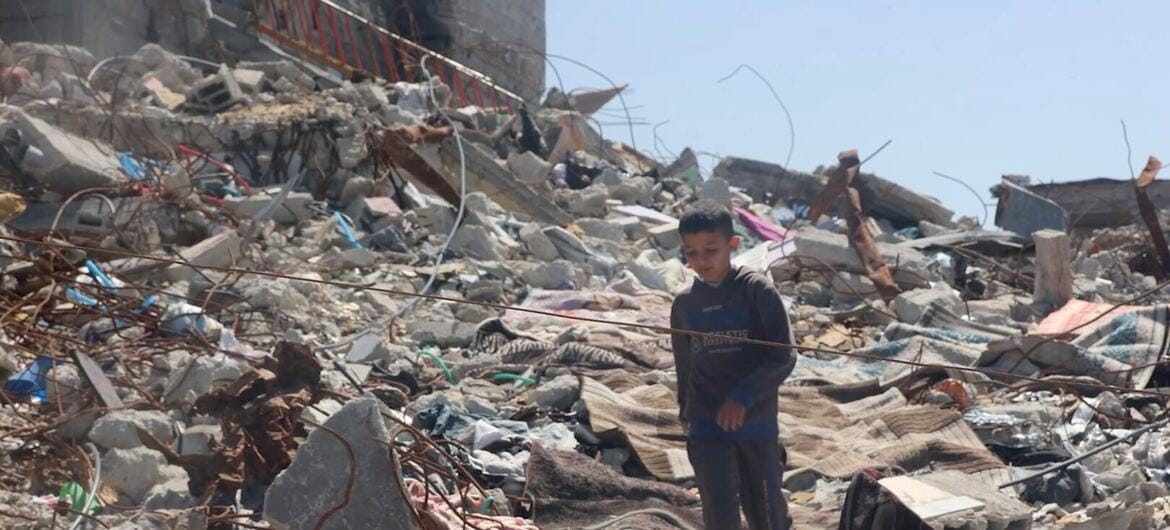
Nearly the entire population remains displaced and concentrated “into a progressively narrower strip of land”, with multiple displacement orders issued in recent days. 

Dire conditions, ‘unthinkable’ attacks 

The rights investigators also addressed the announcement on Thursday by Prime Minister Benjamin Netanyahu who has directed Israeli forces to expand their deployment to cover 70 per cent of Gaza’s territory. 

They said the continued contraction of areas available to civilians raises questions around access to humanitarian assistance and finding safety. 

Ajith Sunghay, head of the human rights office in the OPT, said its concern over the commission of war crimes in Gaza has not stopped. 

“It is difficult enough to navigate life in chronic displacement in the ruins of Gaza, under blockade, and after Israeli attacks virtually destroyed every essential system: healthcare, education, food production, law enforcement and civil order,” he said. 

Continuing military attacks on a population living under these conditions is unthinkable.”  

Airstrike near aid facilities 

Separately, UN aid coordination office OCHA said that an airstrike on Thursday hit a residential area near five humanitarian facilities in Deir al-Balah, central Gaza.  No casualties were reported. 

The development followed an order from the Israeli military to shelter in place shortly before the strike. 

OCHA continues to call for the opening of more crossings into Gaza for humanitarian aid and commercial supplies to be let in as only one, Kerem Shalom, remains operational. 

Humanitarian partners provided mental health and psychosocial support, as well as other protection, to more than 10,000 people between 11-17 May.     

These services – including recreational activities, art and drama sessions, counselling and parenting support – were provided in shelters, camps, schools and displacement sites.   

“Partners reiterate that to continue these services – particularly for children and adolescents – fuel, safe spaces, staff and other basic resources are needed,” OCHA said. UN News

  • CrossFireArabia

    CrossFireArabia
    Dr. Marwan Asmar holds a PhD from Leeds University and is a freelance writer specializing on the Middle East. He has worked as a journalist since the early 1990s in Jordan and the Gulf countries, and been widely published, including at Albawaba, Gulf News, Al Ghad, World Press Review and others.

    Related Posts

    Tough Battles: 26 Israelis Killed, 1,180 Injured in Lebanon

    CROSSFIREARABIA – The latest Israeli soldier to be killed in southern Lebanon means that the Israeli army is fighting a tough battle with Hezbollah forces. The Israeli army says the soldier serves in the Maglan Unit. He was killed while three of his colleagues were injured.

    Meanwhile Israeli media reports says the soldier was killed as a result of Hezbollah drones launched on Israeli forces in the Yahmar village in Al Shaqeef area in southern Lebanon, near the Litani River which Israel is trying to reach and control.

    The army admitted that 137 officers and soldiers were wounded in fighting with Hezbollah over the last two weeks.

    Meanwhile, it says 26 soldiers were killed and 1,180 injured since the fighting resumed in the southern part of the country as of early March.

    Meanwhile Israeli forces are seeking to bomb the southern neighborhood of Beirut and wants to get a green light from Washington.

    News sources point to the fact that Israeli Prime Minister Benjamin Netanyahu has ordered his army to strike the Hezbollah stronghold in the southern part of the Lebanese capital. Israel’s Channel 14 says Netanyahu has already got the green light to start bombing.

    Continue reading
    Stories of Sufferings in Gaza

    “Failure to meet children’s basic needs in Gaza is trapping them in an endless cycle of suffering.

    “The experiences of the desperate parents I met this past week can illustrate this better than I could:

    “Hind hasn’t slept since her four-year-old daughter, Masa, was bitten by a rat during the night.

    “Like many families, they sheltered wherever they could – in their case, the second floor of a building block where sewage water leaks through the ceilings, and rodents crawl through the cracks in the building and climb the exposed pipes.

    “Amani’s daughter, Lemar, she’s 7, has developed deep lesions and sores on her head, back and legs due to a bacterial infection. Amani tries to clean her wounds each day with the little, hard-to-get, clean water she has, as her daughter screams in agony.

    “Abdallah’s mother told me that he has developed a skin infection as they live in a tent next to sand contaminated with faeces. His mother has spoken to doctors and desperately needs the medication and enough clean water and hygiene products to help him heal and protect him from exposure to more infections.

    “Abdel Aleem said that his 8 months old son, Ahmad, and his pregnant sister-in-law were both bitten a couple of weeks ago. They have layered sandbags around the outside of the tent to try to protect themselves, but the rats simply chew through it – stopping them is futile.

    “The common thread running through every one of these conversations is the sheer heartbreak of parents who no longer feel able to do the thing most innate to them – protect their children’s health and safety.

    “One look at the conditions that people are being forced to live in is enough to understand why.

    “We know that Gaza was already one of the most densely populated places in the world. Now, people have been crammed into around 40 per cent of the space left to them – sheltering among broken buildings, rubble and mounting solid waste.

    “Families across Gaza do not have enough clean water, they are forced to choose between drinking, washing and cooking with what little they have.

    “UNICEF is trying to reach as many people as possible with clean water– up to one and a half million people a month – but there are significant obstacles:

    “Firstly – deadly attacks on water operations, including recently at Al Mansoura filling point, where two UNICEF-contracted truck drivers were killed whilst trying to collect water. Now, this main water filling station – which more than a quarter of a million people rely on – is inaccessible.

    “Secondly, items needed to sustain water systems and repair damaged water infrastructure – including: lubricant oil, water treatment chemicals and spare parts – are not being allowed in at the scale needed, meaning we cannot repair systems as quickly as needed to reach more children with clean water, and existing systems risk failure due to lack of maintenance and overuse. If we cannot repair systems, then we have to rely solely on water trucking which is much more expensive and doesn’t reach populations as effectively.

    “Thirdly, solid waste is piling up by the day. This, alongside rubble, needs clearing at a scale that is currently impossible because there is no accessible space left to clear it to.

    “The effects of this are now widely apparent: children with respiratory infections, acute watery diarrhea, and more than half of all households reporting skin diseases. Fleas, lice, and scabies are commonplace. Increasing numbers of children are requiring hospitalization. All without a single fully functioning hospital across Gaza.

    “The picture is similarly stark when it comes to children’s nutrition. While we have managed to reverse the famine, the number of malnourished and vulnerable children remain extremely serious. More than two years of food insecurity, poor housing, limited water, terrible sanitary conditions and regular disease outbreaks has left the population extremely vulnerable. Without enough clean water and fuel to cook proper meals, even children who recover with treatment will quickly fall back in a cycle of malnutrition – the effects of which can last a lifetime.

    “No parent should be in a position where they cannot provide their child with the basic needs to keep them healthy. No parent should have to watch as their child writhes in pain from lesions or buckle from weakness because of entirely preventable diarrhoea. That this is happening should be – to everyone – entirely unconscionable.

    “Access to water, adequate nutritious food, and health care should not be conditional for any child, anywhere.

    “UNICEF is calling for safe unfettered access to deliver humanitarian operations, the lifting of restrictions on items needed to quickly repair and sustain water and sanitation systems, and for international humanitarian law to be upheld.

    “Only then will children in Gaza start to break free from the cycle of suffering they are trapped in.” Reliefweb

    Continue reading

    Leave a Reply

    Your email address will not be published. Required fields are marked *

    You Missed

    Tough Battles: 26 Israelis Killed, 1,180 Injured in Lebanon

    Tough Battles: 26 Israelis Killed, 1,180 Injured in Lebanon

    Stories of Sufferings in Gaza

    Stories of Sufferings in Gaza

    Gaza Death Toll Hikes to 72,939, With 172,927 Injured

    Gaza Death Toll Hikes to 72,939, With 172,927 Injured

    Israel Kills 26 Gazans Over Eid Festivities

    Israel Kills 26 Gazans Over Eid Festivities

    Football and Borrowed Boots!

    Football and Borrowed Boots!

    UN Puts Israel on Its ‘Black List’ For Sexual Violence

    UN Puts Israel on Its ‘Black List’ For Sexual Violence





