CrossFireArabia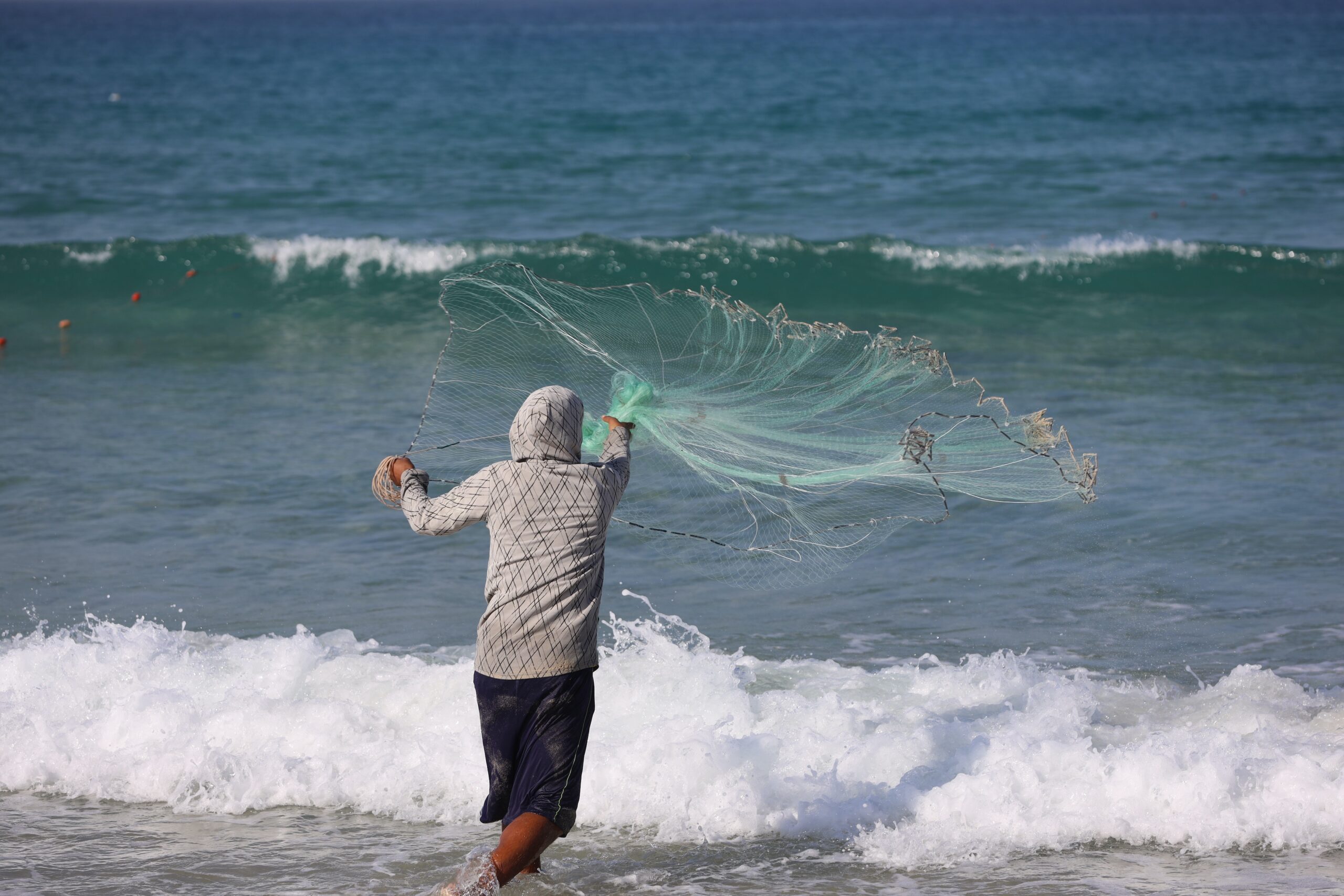
CROSSFIREARABIA – The fishing industry, once a pillar of the Gaza economy, now stands in total devastation due to Israel’s continuing war on the 364-kilometer Strip that doesn’t seem to stop despite the fact that a ceasefire was signed on 10 October, 2025.
Zakaria Bakr, General-Secretary of the General Union of Workers in Fishing and Marine Production affirmed that the Gaza fishing sector — which for decades has been a primary source of income for thousands of families and a key pillar of food security — is now in ruins because of the more than two and a half years of Israeli bombing on the Gaza Strip, including on its beaches and coastal areas. Its a narrative of devastation.
Bakr said the systematic targeting of the fishing industry by Israeli occupation forces has lead to its near-total collapse.
Speaking to Quds Press, Bakr said that this targeting has included an almost complete ban on fishermen and preventing them from going a few hundred meters after the shoreline; a situation made with vehemence soon after 7 October, 2023 when Israel launched a destructive war on the Strip and with no let up.
Bakr added that lethal force started to be used against fishermen not to step even meters into the Gaza blue shorelines. They still take the risk because of the miserable economic situation they have been reduced to. But this has proved costly for more than 230 of them have been shot dead at point blank range.
The union chief says hundreds have been arrested as well, explaining the fishing sector has been subjected to mass destruction affecting up to 95 percent of its infrastructure, with fishing boats ruined and warehouses struck either by Israeli gunboats and/or missiles from the air.
UN figures as well testify to this fact, stating the fishing infrastructure include ice factories, storage facilities, maintenance workshops and wholesale fish markets which have been destroyed over the past two-and-a-half years of slaughter.
This has led to the near-total collapse of the fishing industry, depriving thousands of families of their only source of income. Today, it’s a stark contrast. Prior to October 2023, there were 4200 registered fishermen with 6000 support workers on the boats and the fishing sector sustained around 100,000 people in Gaza but no more.
The destruction of the sector has created an additional food security crisis. Before October 2023, the fish total annual tonnage production stood at 5,410 according to the UN Food and Agriculture Organization. Today, its less than 7.3 percent.
It is indeed a hard life for fishermen. Before October 2023 Gaza fishermen used to catch between them, 15,000 to 20,000 kilos, daily. Now, it is down to a trickle with UN feeds reporting a mere 2 to 5 kilograms of fish daily, and I dare say, if they can pass the Israeli gunboats and snipers who are waiting near the coast.
Bakr added that what Gaza’s fishermen are going through from the Israeli gunboat harassment is a blatant violation of the Universal Declaration of Human Rights, particularly the rights to work, life, and dignified living. It directly contradicts the core principles established by the International Labour Organization regarding safe working conditions and the protection of workers, he pointed out.
Bakr said despite the hopelessness of the sector, his union continues to be active, recently sending letters to several international organizations to present them with the grim reality facing the fishing sector in Gaza. These organizations included the United Nations, the International Labour Organization, the UN Food and Agriculture Organization (FAO), International Committee of the Red Cross, as well as other international and human rights institutions.
“We informed these institutions, on behalf of the fishermen of the Gaza Strip, of the scale of the catastrophe facing this labor-intensive sector, which represents one of the oldest and most important economic, social, and cultural components of Palestinian life and society, and which today, is facing one of the harshest humanitarian and professional crises of modern times,” he added.
He noted that the union has called on international institutions to take a number of urgent measures, most notably providing immediate international protection for fishermen while working at sea, pressuring for the lifting of restrictions on access to fishing areas in a safe and unrestricted manner, and halting all forms of targeting against fishermen and their equipment.
He also called for support in rehabilitating the fishing sector, including boats and related infrastructure, providing urgent assistance programs for affected families, and dispatching fact-finding missions to document violations against fishermen and issue official reports on them.
Bakr stressed that what Gaza’s fishermen are enduring today represents “a stain on the conscience of the international community,” which remains powerless in the face of depriving civilian workers of their most basic rights to work and life.
He called on international institutions to assume their legal and humanitarian responsibilities and to take urgent action to put an end to this tragedy, ensuring that Gaza’s fishermen can safely return to the sea and restore their legitimate right to work and live with dignity.
A once proud fishing industry, today, it is not, thanks to the Israeli bombardment that topped over 100,000 tons of explosives and dynamite. Fishermen and their families will never forgive the hateful and vengeful Israelis who today reduced their sector to 50 small boats for the entire 40-kilometer coastline that stretches from Rafah in the south to Israel in the north.
The Gaza fishing industry once used to have 2000 fishing vessels with more than a 1000 motorized boats and 900 rowboats generating $10-15 million to Gaza’s local economy, 3 percent of the entire Palestinian GDP.
“All my money is gone. Out of my big 17-meter boat and 10 smaller boats, nothing remains but metal sticking out of the water. The sea was an integral part of the Gazan economy; fishermen would feed their families with their catch and could make a good living. Now, everything is in ruins,” says Jamal Al Moodi, a once proud Gaza fisherman.
Dr Asmar is a writer based in Amman and is the editor of www.crossfirearabia.com

 Heba
Heba
 Saleem Ayoub Quna