Saleem Ayoub Quna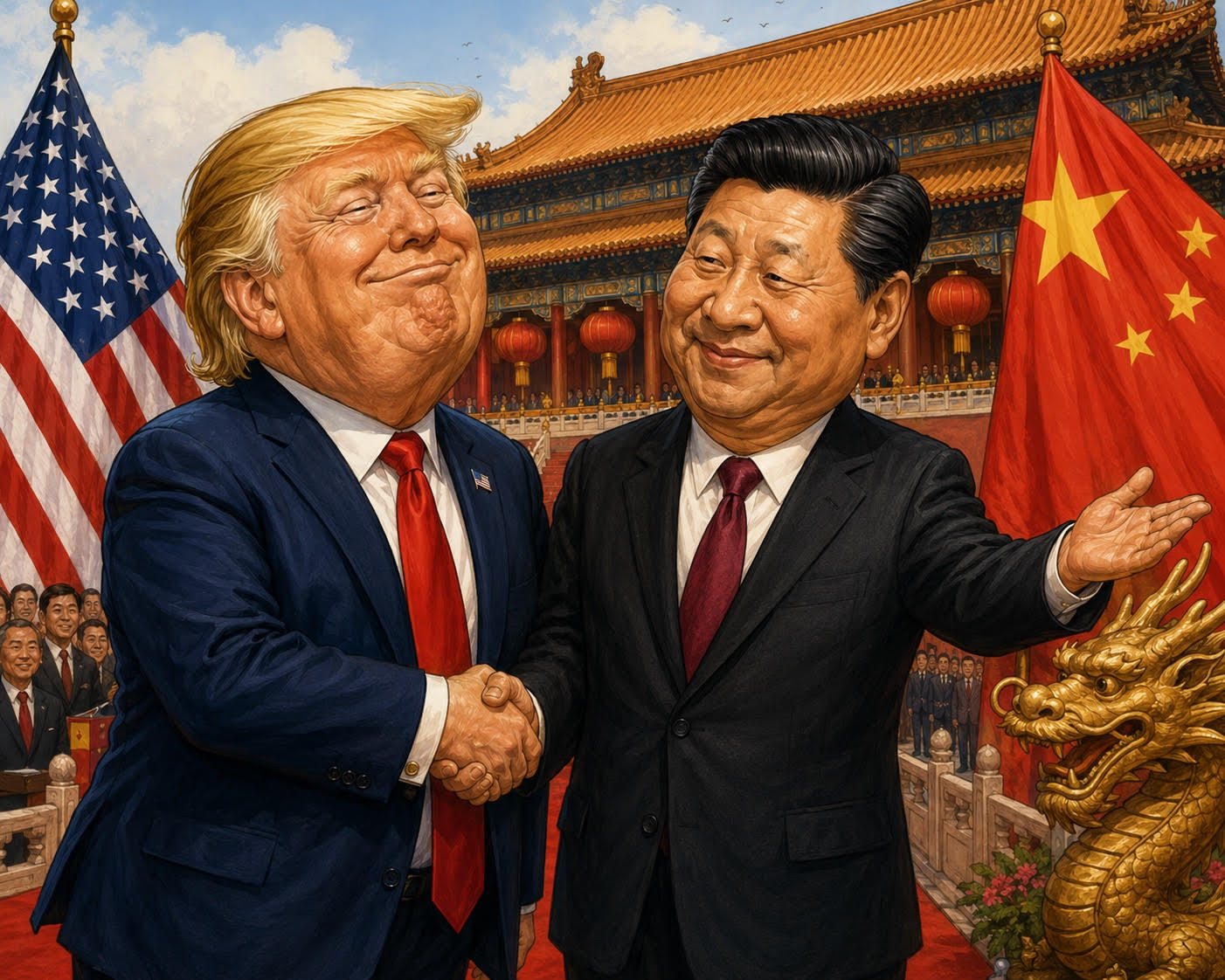
By Saleem Ayoub Quna
Nearly 2000 years ago, there lived a prosperous Empire in ‘Athens’ which dominated the whole region of ancient Greece, along the hundreds of islands in the Aegean Sea. It was situated approximately 200 kilometers away from another military strong city, an empire called ‘Sparta’.
The advisors of the Emperor of Athens started warning their leadership of the growing power of this relatively distant neighbor, which could pose an imminent threat to its supremacy, and even to the existence of their empire in Athens as well.
In one of the ancient Greek ‘think-tanks’ in Athens also, lived a general and philosopher, who was monitoring the evolution of relations between the two city states. His name was ‘Thucydides’. He foresaw disaster and advised his fellow Athenians to resist the temptation to go after the Spartans, in order to quell the possibility that their power might expand and grow bigger in the region, and threaten and challenge the actual supremacy of Athens.
He begged them not to fall to such an illusionary trap. Sparta seemingly was minding its own business and was not fully aware of Athens’ fears and phobia of the unknown.
‘Thucydides’ kept warning his own people about such eventuality, but to no avail. The war finally broke out and it was called the “Peloponnesian war” that lasted for nearly three decades. Its endgame was a humiliating defeat for Athens, and a decisive victory for Sparta.
In the first decade of this century, a certain Graham Allison, a professor of political science at Harvard School for International Studies, was studying and analyzing this pattern of hostile relations between nations, built on suspicion and mistrust.
Out of 16 wars in the world, big and small, he found out, 12 wars erupted between nations, precisely because of, not similar, but identical circumstances, where a certain nation would fear the rising power and influence of another nation, and decides to go to war to eliminate this imaginary threat, so the former would keep its clout and domination.
While studying and tracking back cases of war from modern times such as WWI and WWII and other older conflicts, and when he reached the “Peloponnesian War, 431-404 BC” in Greece, he came up with a simple conclusion that causes such wars between nations, which is the fear of a nation of another nation’s power and ill-intentions! And he brilliantly dubs it the “Thucydides Trap” thus emulating the first experienced and documented war of this kind in ancient Greece, nearly 2000 years ago!
Now we come back to our present day and astonishingly hear Chinese President Xi Jinping warning his powerful visitor, US President Trump, and himself not to submit to the “Thucydides Trap” which many nations in the past did!
What is also amazing in this regard, is first, that the Chinese leader alluded to that ancient lesson which happened in Greece that lies thousands of miles away from China, and second, is how the smart and knowledgeable Xi Jinping’s speech writers, were as they inserted Graham Allison’s most famous political coinage in connection with today’s issues of war and peace!
In conclusion, I would like to list two questions and one footnote:
- Does not the name “Thucydides” phonetically rhyme with the word “suicide”, especially if you could listen to its pronunciation in Greek!
- Does not the “War of choice” launched against Iran on the pretext that it is posing a threat to Israel, squarely fall under the category of “Thucydides Trap” wars?
- When Sparta won the war against Athens, it was significantly due to Persian support against Athens, bearing in mind that the Persians were the forefathers of present-day Iranians!


 Heba
Heba