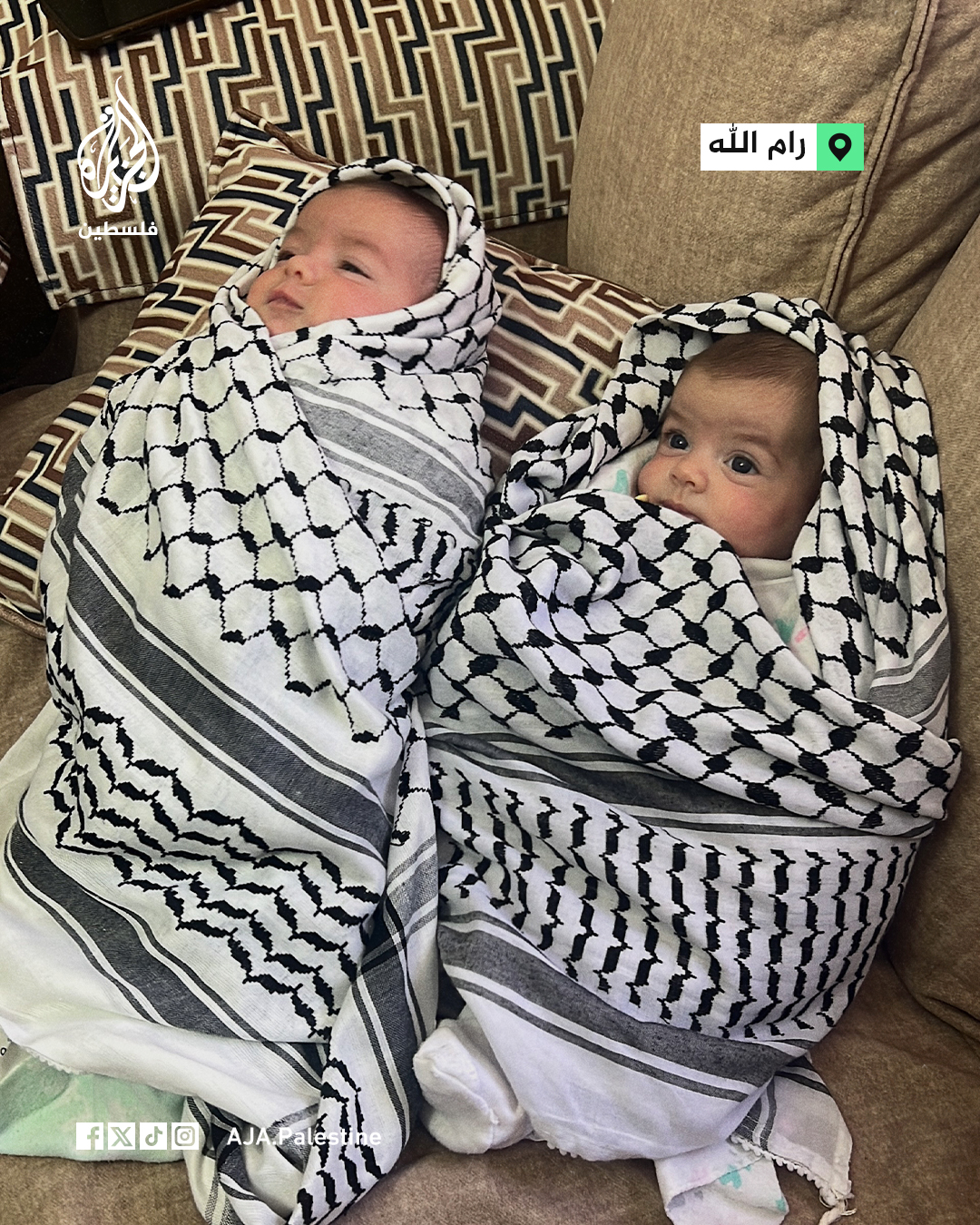
Aya and Qamar, the twins of martyr Awda Awawda, were born two months ago, and today they bid farewell to their father, a martyr killed by settlers’ bullets in the town of Deir Dibwan, east of Ramallah, West Bank, Palestine.

 CrossFireArabia
 Aya and Qamar, the twins of martyr Awda Awawda, were born two months ago, and today they bid farewell to their father, a martyr killed by settlers’ bullets in the town of Deir Dibwan, east of Ramallah, West Bank, Palestine.
 CrossFireArabia
Israel has advanced 153 plans for illegal settlements in the occupied West Bank, including East Jerusalem, since the beginning of 2026, targeting the construction of more than 18,000 housing units, a Palestinian government body said Sunday.
The Palestinian Colonization and Wall Resistance Commission said its monitoring showed a “high level of planning activity aimed at expanding settlements.”
Israeli authorities advanced 100 plans targeting the construction of 12,300 housing units across the West Bank between the beginning of the year and Sept. 13, it added.
Another 53 plans target 5,783 housing units in occupied East Jerusalem within the boundaries set by the Israeli municipality, the commission said.
In September alone, Israeli authorities advanced 12 new plans for 2,340 housing units covering a total area of 1,761 dunams, it said.
In an earlier report, the commission said Israeli planning bodies had considered 524 structural plans for illegal settlements between Oct. 7, 2023, and June 30, 2026.
The government of Prime Minister Benjamin Netanyahu has accelerated illegal settlement expansion in the occupied West Bank since taking office in late 2022, approving the establishment of 104 new illegal settlements since then.
Israel has occupied the West Bank, including East Jerusalem, since 1967. Israeli settlements built on occupied Palestinian land are considered illegal under international law. Anadolu
CrossFireArabia
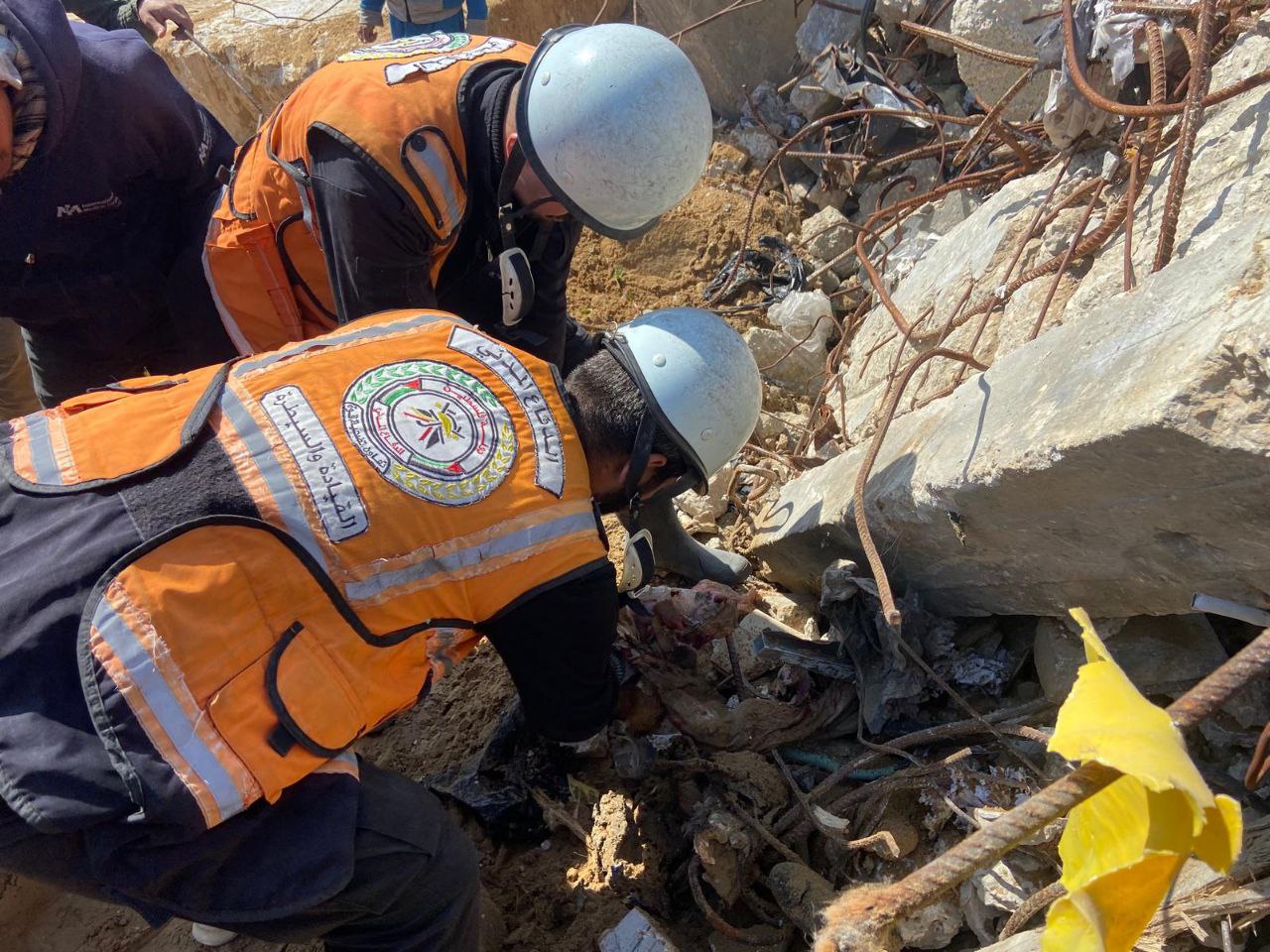
Gaza’s civil defense said Sunday that it recovered the bodies and remains of 17 Palestinians who had been missing beneath the rubble of homes destroyed in Israeli attacks during the genocide in the enclave.
The recoveries were made as part of the second phase of the “Recovery of Martyrs’ Bodies” project, launched on July 19 to locate Palestinians buried under the rubble of buildings destroyed by Israel, despite limited equipment and machinery available to rescue teams.
The second phase includes searches beneath destroyed homes in Gaza City in the north and the Nuseirat refugee camp in central Gaza.
The civil defense said in a brief statement that its teams recovered the bodies of 16 missing Palestinians from the rubble of homes belonging to the Hajji and Al-Nadeem families in the Zeitoun and Yarmouk neighborhoods of Gaza City.
The remains of one other missing person were recovered from the rubble of a home belonging to the Al-War family in the Nuseirat refugee camp, it added.
Recovery operations are proceeding slowly because of a shortage of heavy equipment, despite the Gaza ceasefire agreement in effect since Oct. 10, 2025, which Palestinian authorities say provides for the entry of machinery to remove rubble and recover victims.
In October 2025, Gaza’s government media office said around 9,500 Palestinians had been reported missing since the start of the Israeli war, including people whose bodies remain under destroyed buildings and others whose fate is unknown.
The second phase of the recovery project is scheduled to involve 800 working hours and searches beneath 147 destroyed homes in the Gaza, North Gaza and Central governorates, where 1,072 bodies are believed to remain buried, according to previous civil defense figures.
The first phase began in late November 2025 and resulted in the recovery of around 333 bodies and human remains out of 559 missing people believed to be beneath the rubble of 54 homes and buildings.
Israel’s genocide in Gaza has killed more than 73,000 Palestinians and injured over 174,000 others, while causing widespread destruction to civilian infrastructure.