Bint Jbeil: Town of Heroic Resistance

By Mohammad Jaradat

Weaker than a spider’s web. This is a slogan used by the late martyr Sayyed Hassan Nasrallah, from here in Bint Jbeil that represents the crucible of southern Lebanese geography intertwined with a history of resistance from the last century against the French occupation, and the crown jewel of northern Palestine in the face of the British occupation. Here, some of Sheikh Izz ad-Din al-Qassam’s men received their training and ammunition for the battlefield.

The Litani River, with its proud craned neck, peering from its geographical depression into the nearby hills, eastward towards Ainata and southward opposite Maroun al-Ras and Ain Ebel peers in fervor. Here, the Israeli occupation army finally declared its encirclement after 50 days of war and nearly a month of intermittent ground incursions by their two fully equipped divisions.

The 98th Division, with over 15,000 soldiers, advanced from the east, and the 162nd Division, with a similar strength, advanced from the west. The spokesperson of this “army” boasted that the sports stadium had been captured. It was here that the complex of “weaker than a spider’s web” took root in the Israeli psyche, beginning in 2000 with the victory speech by Nasrallah, then general secretary of Hezbollah, delivered in this very stadium. This complex solidified in 2006, becoming deeply ingrained in the Israeli psychological and political landscape and surfacing.

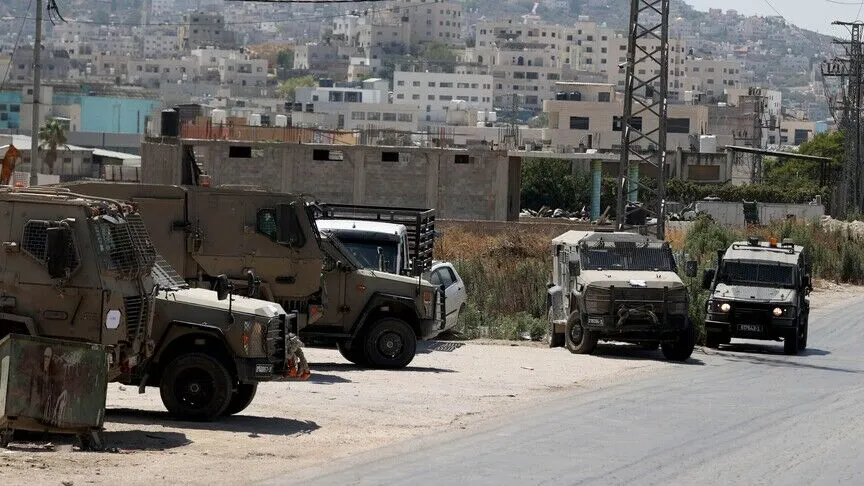
Today Bint Jbeil, a southern town with a population of 25,000 and an area exceeding 10 square kilometers, is besieged. The encirclement is now complete, and the Israeli army intends to storm it, as they did in 2006 for four weeks. Then, Brigadier General Gal Hirsch repeatedly announced its capture in three consecutive false claims. Israeli soldiers attempted a takeover 2024, but Bint Jbeil remained defiant against the invaders, even under the cover of the world’s most powerful air force and accompanied by the most advanced and sophisticated tanks.

Bint Jbeil sits peacefully in its low-lying geographical area, just 3 kilometers from the northern Palestinian border. Only Mount Maroun al-Ras separates it from this border, being fraught with tension and pride. This time the Israeli occupation army traversed its roads, advancing towards the outskirts of Bint Jbeil. Channel 14 of the Israeli entity, albeit through circuitous means, circumvented the military censor’s scissors to reveal the hell of war in Bint Jbeil, where the tank of the commander of Battalion 52 had just been blown up by an anti-tank missile.

The Israeli occupation army is pushing towards Bint Jbeil, fully aware of the symbolic and strategic importance of this town. It is the geographical neck that separates the eastern and western branches of the Litani River. Israel cannot claim to have complete control over the southern Litani without Bint Jbeil. However, its past experiences with the town have been bitter. While it may have studied its reality and learned from those experiences, its people and their resistance have surpassed even the lessons learned and the harshness of the confrontation.

The alleys and lanes of Bint Jbeil bear witness to the footsteps of dozens of resistance fighters and commanders who have fallen within its walls in previous battles. Dozens of Israeli soldiers and commanders have also fallen there. Today, in the Battle of Asif al-Ma’kul (Operation Protective Edge), Bint Jbeil opens its arms not to welcome invaders, but to shelter some of them as prisoners, after the promise made by today’s Secretary-General of the Resistance, Sheikh Naim Qassem. He, a man of action rather than oratory, and he would not have made such a vow unless the men of God, under his guidance, had prepared themselves for the present fight. There are resistance prisoners whom the November 2024 agreement left unfulfilled, and the resistance does not abandon its prisoners in prisons.

A picture of victory.

Through this, Benjamin Netanyahu seeks to market his empty slogans here, even at the cost of dozens of the lives of his soldiers. What he failed to achieve in his aggression against Iran, he now aims to accomplish here in Lebanon, even through direct negotiations with a government that represents only a small minority of subservient individuals. He arrogantly insists on negotiations under fire, hence his insistence that his Chief of Staff, Eyal Zamir, rush to Bint Jbeil, just as Ehud Olmert did previously when he insisted on his Chief of Staff, Dan Halutz, and persisted until some officers, according to Olmert’s later admissions, disobeyed orders and withdrew without permission from some of the areas they had seized in Bint Jbeil, leaving in a worse state than when they had entered.

The concentrated targeting of Bint Jbeil, amidst the rush to resolve the battle, even if only by attempting to stage a photo opportunity in some of its neighborhoods, points to several important aspects, most notably:

First: The quagmire of the Israeli army in southern Lebanon is becoming increasingly entrenched, especially as Israeli political ambitions have begun to outweigh its military achievements on the ground. This is due to the composure of the resistance leadership, its effective management, and its mobile control over key areas in southern Lebanon. It is also due to the pressure of Iranian steadfastness and the interconnectedness of the various fronts, which has driven Netanyahu to seek a preemptive escape by jumping into direct negotiations with the Lebanese government lead by Nawaf Salam in Washington.

Second: This serves to cover up the Israeli-American failure on the Iranian front. This failure, on the one hand, is what prompted the Israeli army to commit Wednesday’s massacres against hundreds of civilians. On the other hand, it indicates the frenzied behavior that gripped Netanyahu after the US agreed to the Iranian condition of halting the aggression against Lebanon, just as it halted the aggression against Iran—a condition that remains a thorn in Israel’s side.

Third: Exploiting the official Lebanese rush towards Israel through direct negotiations—negotiations devoid of any real possibility of agreement. The Lebanese government lacks the necessary realities and is negotiating to secure a ceasefire agreement, separate from any Iranian gains, in exchange for Israel’s insistence on disarming Hezbollah. Hezbollah’s weapons are used to bombard Israeli settlements in northern Palestine day and night, and to destroy invading tanks and vehicles with alarming regularity.

Fourth: Attempting to resolve the stalemate on all fronts south of the Litani River through a decisive battle in Bint Jbeil. This battle is seen as capable of dismantling the entire stalemate. Herein lies the Israeli spirit of adventurism, which might sometimes suit the resistance forces. Israel would not lose much if its gamble failed. However, in the approach of conventional armies, such reckless actions break their backs and cause them to lose their overall balance. This is precisely the situation the occupation army might find itself in if its adventurism backfires on it at the gates of Bint Jbeil or within its shadowy environs.

It is no exaggeration to say that the state of enticement that the Israeli occupation army is pursuing in Bint Jbeil may decide the fate of the aggression against Lebanon as a whole, especially with the insistence of Netanyahu and his war minister Israel Katz and their exertions on the army commanders in the field, at which point continuing to run away since October 7, 2023 will not be of any use.

Mohammad Jaradat is a Palestinian researcher who contributed this article to Al Mayadeen and this article is presented in translation form and reprinted in crossfirearabia.com

Continue reading
100,000 Perform Friday Prayers in Al Aqsa

About 100,000 performed the Salat prayers in Jerusalem’s Al Aqsa Mosque on the second Friday during the holy month of Ramadan. Palestinians from the occupied city of Jerusalem and the West Bank flocked to the mosque compound despite the severe restrictions imposed by the Israeli occupation forces. Despite the checkpoints – Qalandia and the one leading to Bethlehem – 1000s of Palestinians began to assemble in the city since the early morning. Israeli soldiers checked the ID cards of those attempting to enter the city, banning men below the age of 55, and 50 for women from going through the checkpoints. It was reported that anyone below those ages – reportedly 100s of Palestinians – were turned back.

Continue reading
Top Writer Says ‘No’ to Berlinale

Top Indian writer Arundhati Roy has pulled out of the Berlin International Film Festival (Berlinale) after criticizing “unconscionable statements” by members of the festival jury, who said that art should not be political when asked about the Israeli genocide in Gaza.

Roy had been scheduled to attend a screening of her 1989 film In Which Annie Gives It Those Ones in the Classics section of Berlinale 2026.

In a strongly worded statement, Roy said the selection of the film had initially filled her with warmth and nostalgia. She noted that she had long felt disturbed by the positions of the German government and several cultural institutions on Palestine. Still, she said she had consistently received solidarity from German audiences when speaking about Gaza, which encouraged her to consider attending the festival.

However, Roy said she changed her decision after hearing comments from members of the Berlinale jury earlier that day.

“Like millions of people across the world, I heard the unconscionable statements made by members of the jury of the Berlin film festival when they were asked to comment about the genocide in Gaza,” Roy wrote.

She described labeling the genocide a political issue then insisting that art should remain separate from politics as “jaw-dropping.” She added that such framing shuts down urgent conversations about a crime against humanity.

Roy stated clearly in her message that she believes events in Gaza amount to genocide against Palestinians by Israel. She further added that the United States and Germany, along with several European governments, support and fund Israel and therefore share responsibility.

“If the greatest film makers and artists of our time cannot stand up and say so, they should know that history will judge them,” she wrote, adding that she felt “shocked and disgusted.”

Roy concluded her statement by confirming that, “with deep regret,” she would not attend the Berlinale.

The controversy emerged after journalists asked Berlinale jury members to comment on the genocide in Gaza and Germany’s support for Israel, which also funds the festival.

Polish producer Ewa Puszczyńska, a member of the jury, refused to answer.

“There are many other wars where genocide is committed, and we do not talk about that,” Puszczyńska said. She described the issue as “complex” and claimed that it was unfair to ask jury members to comment on government policies.

Roy’s withdrawal adds to rising tensions within European cultural spaces over the Israeli genocide in Gaza. Artists, writers, and filmmakers have increasingly debated whether cultural platforms should take political positions. – Quds News Network

Continue reading