Palestinians Remember The Eveil Nakba

Dozens of Palestinian women at a displacement camp in central Gaza marked the 78th anniversary of the Nakba (Catastrophe) on Thursday, reliving scenes of displacement and loss they said continue to define Palestinian life decades after 1948.

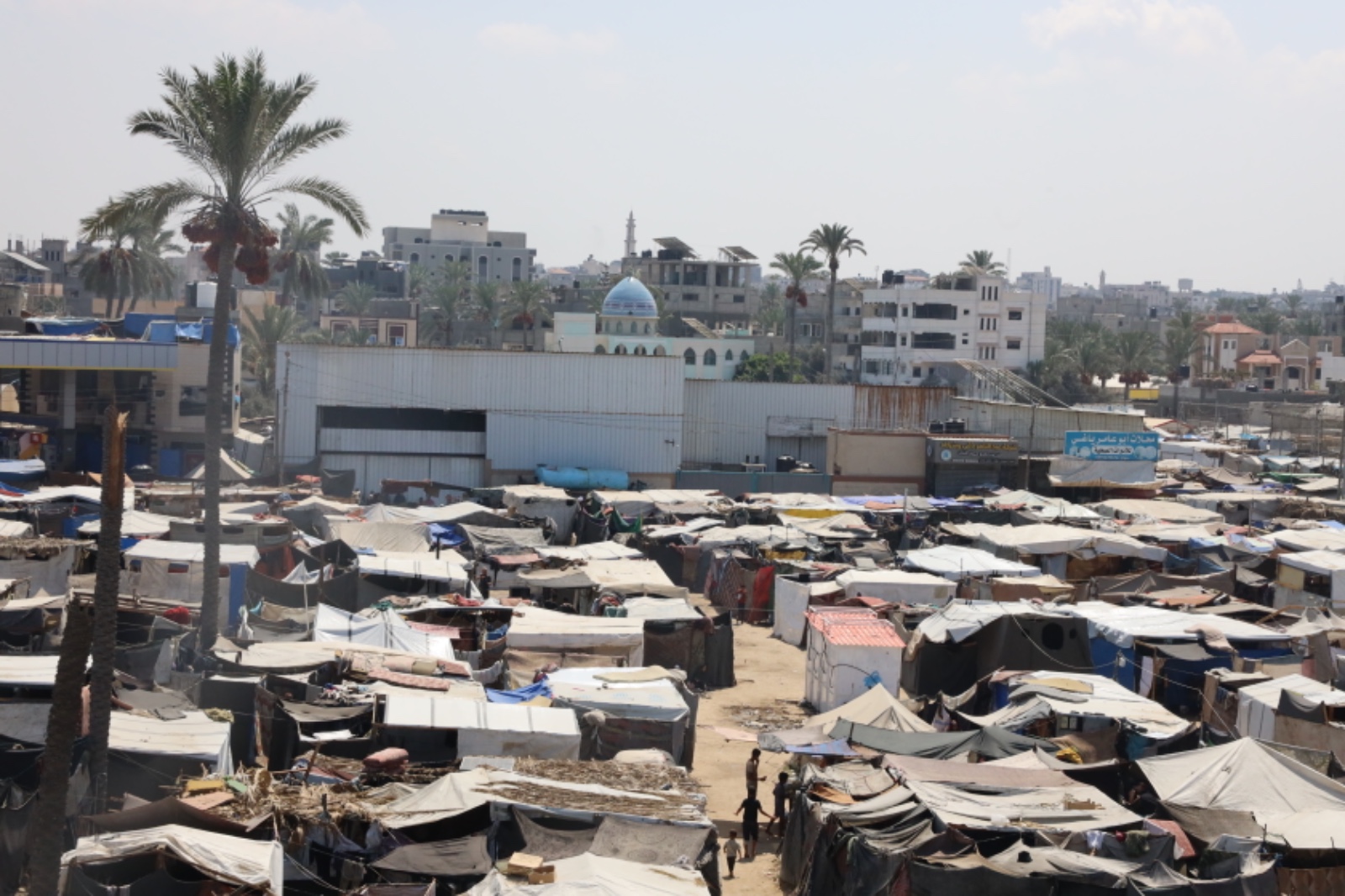
Held at the Refaat Alareer camp in the Al-Zawaida area, the event linked memories of the historic Palestinian displacement with the reality of the ongoing Israeli war on Gaza, as participants said the suffering of exile and forced displacement had never truly ended.

The event was organized by the Sameer Project, a relief initiative led by Palestinians in the diaspora, and featured heritage performances, traditional dabke dancing and symbolic scenes highlighting Palestinian identity and the right of return.

Women and children raised Palestinian flags, symbolic keys, and images reflecting displacement and attachment to the land. Several participants wore traditional Palestinian dresses and chanted songs and national hymns invoking Palestinian memory and what they described as an ongoing Nakba.

Palestinians commemorate the Nakba every year on May 15 through marches, exhibitions and public events in the Palestinian territories and around the world, calling for rights, including the return of millions of refugees.

The Nakba refers to the mass displacement of Palestinians in 1948 during the events surrounding the creation of Israel, when hundreds of Palestinian towns and villages were emptied and their residents forced to flee.​​​​​​​

Reliving displacement

Ibtisam Abu Muailiq, a displaced Palestinian now living in Al-Zawaida, said Palestinians are still living through the Nakba today.

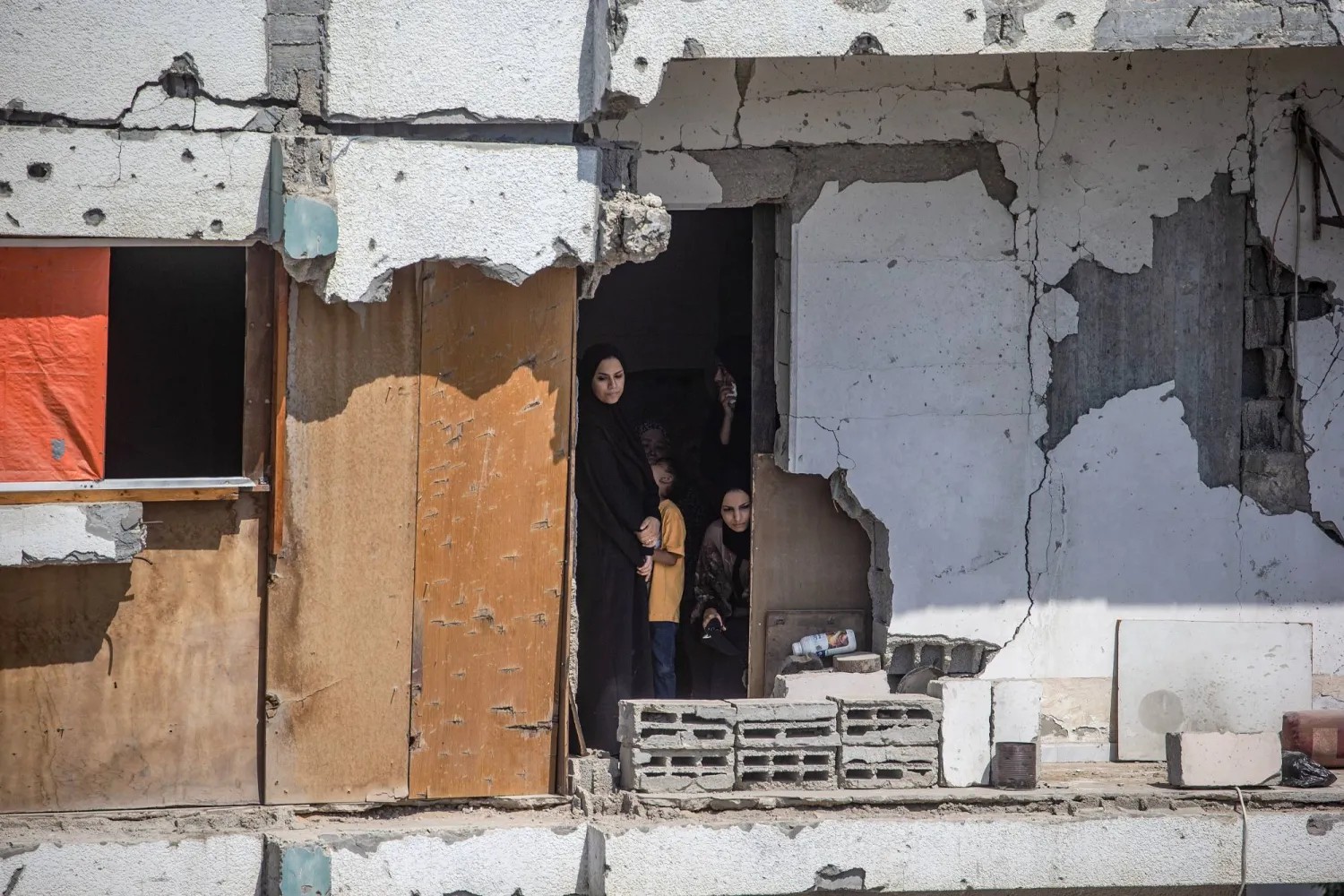
The current war, she told Anadolu, had brought back scenes of displacement and tent life that previous generations described after the events of 1948.

“Our home was destroyed, and we lost loved ones, some killed and others still missing, but we remain steadfast on the land of Palestine,” she said.

She called on people around the world to show compassion toward Palestinians and support them amid their suffering.

For Umm Mohammed Abdullah, the Nakba never ended.

Palestinians, she said, have endured repeated cycles of hunger, thirst, displacement and loss but continue to hold on to their land.

“No matter how severe the suffering becomes, we will not leave our homeland,” she added.

Steadfast despite war

Event coordinator Iman Al-Khatib said holding the event inside a displacement camp carried a message that Palestinians remain steadfast despite wars and catastrophes.

“We wanted to tell the world that Palestinians remain resilient and that the right of return will continue to live in the conscience of future generations,” she told Anadolu.

The Israeli army has killed more than 72,000 people, mostly women and children, and injured over 172,000 in a two-year war on the Gaza Strip since October 2023.

Despite a ceasefire that took effect on Oct. 10, 2025, the Israeli army has continued its attacks, killing at least 856 people and injuring 2,463 others, according to Gaza’s Health Ministry.

  • CrossFireArabia

    CrossFireArabia
    Dr. Marwan Asmar holds a PhD from Leeds University and is a freelance writer specializing on the Middle East. He has worked as a journalist since the early 1990s in Jordan and the Gulf countries, and been widely published, including at Albawaba, Gulf News, Al Ghad, World Press Review and others.

    Related Posts

    The Women of Jerusalem

    CROSSFIREARABIA – This painting on the Women of Jerusalem was painted this year, 2026 by Rawan Al Anani. Its made in bright, vivacious colors of women in embroidered dresses. Some are sitting sipping tea at a leisurely pace while others attending the olive tree. All this against a Jerusalem background of homes, mosques and churches which speaks of a rich Palestinian community and a society. The details in the brush stroke speaks of a diversified but integrated.

    Continue reading
    A Wedding in Ruin: Israel’s Answer to Happiness!

    Shattered Dreams: The Bridal Dress Story  

    By Palestine Information Center

    Aya Matran’s morning became like no other. She was to be a bride preparing to put on her white wedding dress and begin a new life. However, In Al-Maghazi refugee camp in central Gaza, she stood beside her father on the rubble of the home that was supposed to welcome the first days of her married life. She stood in a daze searching through stones and dust of the remains of her dreams buried in an instant by an Israeli airstrike only hours before her wedding.

    Nothing remained of the house except piles of concrete and twisted metal. Buried beneath the rubble were her wedding dress, gold jewelry, bridal belongings, and everything the bride and her family spent years working to prepare for. What was meant to be a day of joy became yet another encounter with loss.

    Five Hours…

    The family had chosen the wedding day on what was thought to be a period of relative calm, hoping the celebration would take place at a time when there would be no bombing. But just five hours before the ceremony, the groom’s family was forced to evacuate the house after receiving a phone call from the Israeli forces. Shortly afterward, an Israeli airstrike targeted the house and completely destroyed it. Everything went up in smoke!

    Aya says that everything was ready for the beginning of her new married life. All that remained was for her to put on her wedding dress. Instead, the bombing destroyed everything she had prepared and turned what should have been the happiest night into a painful memory.

    She says her dreams were not extravagant. She simply wanted to begin her married life just like other young women. But the war took away her home, her bridal belongings, her personal possessions, and even the wedding dress that remained buried beneath the rubble.

    Dad Relives the Memories Among the Ruins

    Her father, Shadi Matran, stood beside her, looking at the place that was supposed to be filled with celebration but had instead become a scene of destruction and silence.

    He says the family was shocked to learn that the house had been bombed only a few hours before the wedding, after they had completed all the preparations despite the severe economic conditions facing the Gaza Strip.

    He adds that his daughter had left almost nothing behind at the family house, as she had already moved all her belongings to her future marital home. But within moments, everything disappeared beneath the rubble.

    He explains that returning to the site each day feels like reliving an endless nightmare. From time to time, family members search through the debris, hoping to find anything that might remind them of what once stood there—or anything that can be salvaged from the memory of the home.

    Wedding Dress Under The Rubble

    Aya says she is no longer asking for much. She simply hopes to recover some of what she lost and retrieve some of the belongings buried beneath the rubble, especially the wedding dress she never had the chance to wear.

    She stresses that the war did not merely postpone her wedding. It shattered a beginning she had waited years for and turned happiness in Gaza into a deferred dream, at a time when thousands of Palestinians are experiencing similar losses—the loss of homes, loved ones, and hopes for the future.

    A Plea…

    The bride’s father concludes by appealing to the international community and humanitarian organizations to work towards ending the war, so that the daughters of Gaza can celebrate their weddings away from continuous bombing and destruction.

    In Gaza, the rubble no longer conceals homes alone. It also buries postponed stories, shattered memories, and dreams beneath the concrete. Among them lies a bride’s wedding dress that was waiting to see the light of day, but instead remains a silent witness to a war that did not even leave joy a chance to be complete.

    This article was originally written in Arabic and appeared in the Palestinian Information Center. Here it is translated in AI format and appears in crossfirearabia.com

    Continue reading

    You Missed

    Dr Nada Abu Alrub: ‘…No Language of Surrender Here’

    • By marwan
    • August 9, 2026
    • 12 views
    Dr Nada Abu Alrub: ‘…No Language of Surrender Here’

    The Women of Jerusalem

    The Women of Jerusalem

    Gaza Sea: A Time Bomb in Waiting

    • By marwan
    • August 9, 2026
    • 5 views
    Gaza Sea: A Time Bomb in Waiting

    Group Photo of a Palestinian Family, 1922

    • By marwan
    • August 9, 2026
    • 2 views
    Group Photo of a Palestinian Family, 1922

    ‘So We Don’t Forget’

    ‘So We Don’t Forget’

    19 Bodies Uncovered in Gaza City

    19 Bodies Uncovered in Gaza City