Israel Sets Back Gaza 77 Years – UN Reports

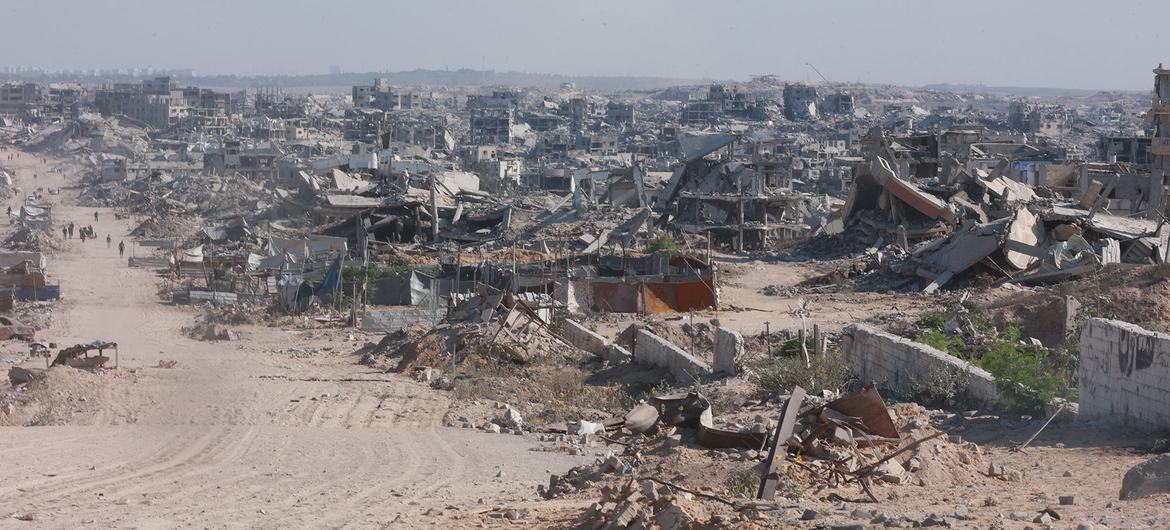
The UN and European Union issued a joint warning on Monday that human development across Gaza has been set back by a staggering 77 years, with $71.4 billion needed over the next decade for recovery and reconstruction.

That’s according to the final Gaza Rapid Damage and Needs Assessment (RDNA), jointly conducted with the UN-partnered World Bank.

The assessment says $26.3 billion will be needed in the first 18 months to restore essential services, rebuild critical infrastructure and support economic recovery.

Since full-scale war erupted in Gaza following the Hamas-led attacks on southern Israel in October 2023, the physical damage in the Strip is estimated at $35.2 billion, with a further $22.7 billion in economic and social losses.

Entire sectors have been devastated, including housing, health, education, commerce, and agriculture. 

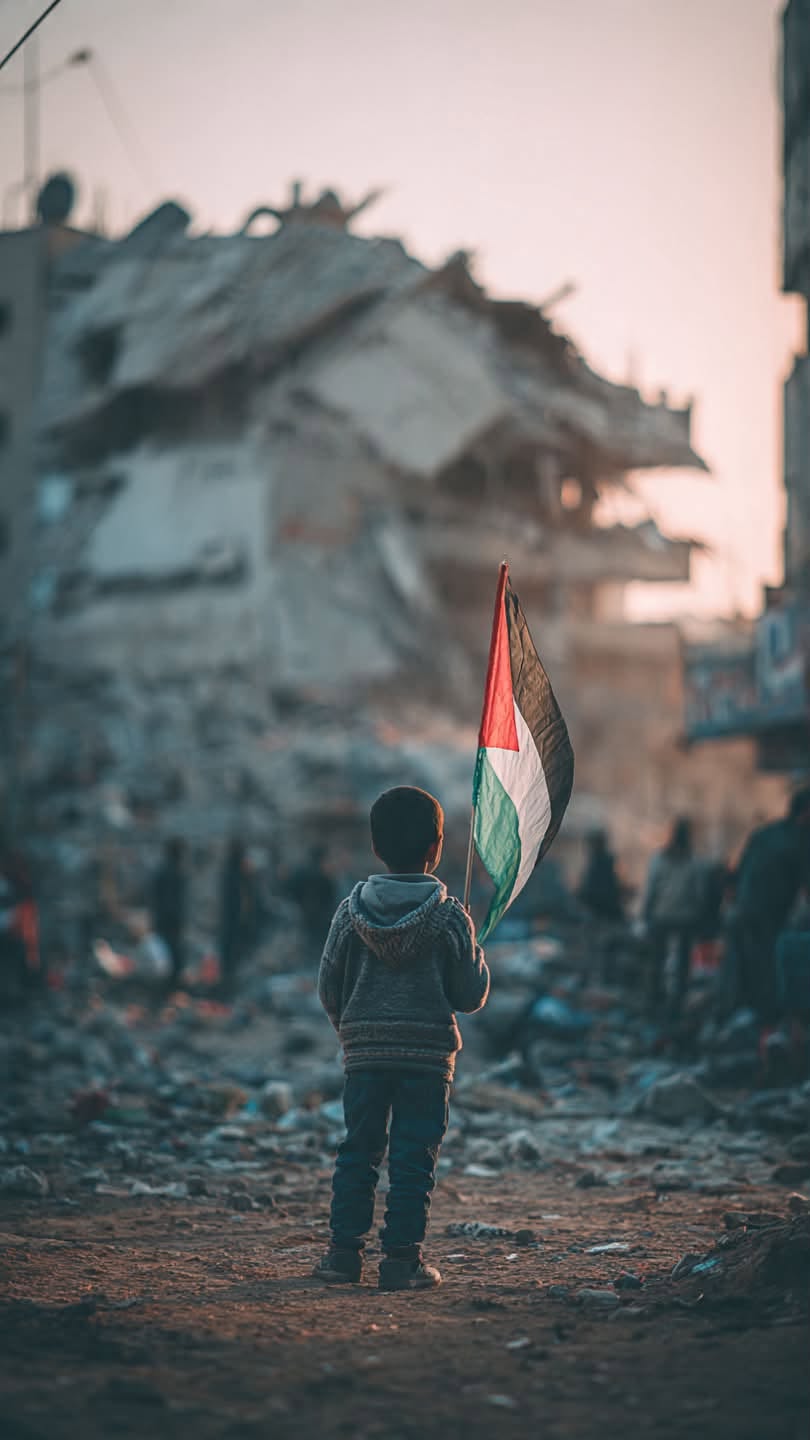
Over 371,888 housing units have been destroyed or damaged, more than 50 per cent of hospitals are non-functional, and nearly all schools have been destroyed or damaged. The economy has contracted by 84 per cent.

Devastating human toll 

The impact on the lives of Gazans is just as devastating: more than 60 per cent of the population having lost their homes and 1.9 million people displaced, often multiple times. Women, children, persons with disabilities, and those with pre-existing vulnerabilities bear the greatest burden.

Over two years of conflict has resulted in more than 71,000 Palestinian fatalities and over 171,000 injured, according to local authorities, with many still missing under the rubble. 

Framework for reconstruction

The report provides the foundation for early recovery planning and reconstruction, stressing it must must run in parallel with humanitarian action to ensure an effective transition from emergency relief toward reconstruction at scale in both the Gaza Strip and West Bank.

The assessment is framed in line with Security Council adopted resolution 2803 (2025) of the US-backed Comprehensive Plan to End the Gaza Conflict, which welcomed establishment of the Board of Peace led by President Trump as a transitional administration to set the framework for redevelopment and authorised the mechanism to set up a temporary International Stabilisation Force (ISF). 

The EU and UN emphasise that recovery and reconstruction should be Palestinian-led and should support the transition of governance to the Palestinian Authority, while advancing a durable political settlement based on the two-State solution.

Planning and implementation should be inclusive, transparent, and accountable, with particular attention to the needs of women, children, elderly, and persons with disabilities.

Conditions needed

The assessment recognises that a set of enabling conditions are essential for recovery, reconstruction, and implementation of the broader political framework:

  • A sustained ceasefire and adequate security
  • Unimpeded humanitarian access and immediate restoration of essential services
  • Free movement of people, goods, and reconstruction materials, within and between Gaza and the West Bank, and a functional, transparent financial system
  • Clear, accountable governance, including defined mandates and establishment of conditions for the transitional administrative bodies in coordination with the Palestinian Authority (PA)
  • A credible pathway for the PA’s future governance across the entire Occupied Palestinian territory, including Gaza, the West Bank and East Jerusalem, is essential
  • Debris clearance, explosive ordnance management, and resolution of housing, land, and property rights are prerequisites for reconstruction.
  • The international community must mobilise resources in a targeted, sequenced, coordinated manner 
  • All obstacles to the deployment of expertise and equipment must be removed rapidly

UN News

CrossFireArabia

CrossFireArabia
Dr. Marwan Asmar holds a PhD from Leeds University and is a freelance writer specializing on the Middle East. He has worked as a journalist since the early 1990s in Jordan and the Gulf countries, and been widely published, including at Albawaba, Gulf News, Al Ghad, World Press Review and others.

Related Posts

Israel Kills 200 Lebanese Children – UNICEF

More than four children have been killed or injured every day on average in Lebanon in the first 25 days of a temporary ceasefire with families still unable to return to their homes, said Save the Children.

New data from Lebanon’s Ministry of Health on Tuesday showed that 22 children have been killed and 89 injured since the temporary ceasefire started on 17 April. This brings the number of children killed in Israeli strikes since renewed escalation in hostilities in Lebanon on 2 March to almost 200 with about 2,900 people killed.

The violence and renewed displacement orders have forced more than one million people – or one in six of the population – from their homes with many now living with relatives, in host communities or in collective shelters.

The number of families living in collective shelters has increased 5% since the conditional ceasefire due to renewed displacement orders by Israeli forces and as families return home to find destroyed houses and damaged farmland so move back the collective shelters. There are now 44,800 children among about 125,000 people in collective shelters.

Thousands of children have been living in collective shelters for over two months in overcrowded conditions with inadequate water, sanitation and hygiene facilities leading to reports of scabies and growing health concerns.

Parents are reporting widespread behavioural changes among children living in collective shelters due to a lack of routine and reduced school engagement including loss of appetite and trouble sleeping. Many children are struggling to continue learning with some schools used as collective shelters and also difficulties accessing online learning due to limited electricity, and poor connectivity.

Tala*, 10, has been living in a collective shelter after being displaced from southern Lebanon, said:

“I just want the war to end so I can go home to my village and sleep in my own bed. I really miss school, I want to see my teachers and be with my friends, and study and play again.”

Nora Ingdal, Save the Children’s Lebanon Country Director, said:

“This ‘so called’ ceasefire that still sees more than four children killed or injured every day is not a ceasefire for children. Attacks on civilians have not stopped – it has simply continued under another name. Colleagues have told me that the airstrikes feel more intense in some areas than they ever did before. Children are not safe until there is a permanent and definitive ceasefire with no violations.”

With further peace talks set to take place on Thursday to determine next steps between Lebanon and Israel, Save the Children is calling on the international community to urgently work toward a permanent and definitive ceasefire and ensure flexible and sustained funding to protect children and allow families to return home to resume their lives.

Save the Children has worked in Lebanon since 1953. In collaboration with partners and local authorities, we are distributing essential items in hard-to-reach areas in the south, provide psychosocial support for children, educate families and children about the risks of unexploded ordnance, ensure access to safe water and sanitation facilities, and distribute essential items for those displaced.

ENDS:

Sources:

Lebanon Ministry of Health

Israeli strikes have killed 380 in Lebanon since truce: Health ministry

Lebanon Ministry of Health

Lebanon-Emergency-Sitrep-23-2026.pdf

Continue reading

You Missed

The Chinese Fortune Cookie and The “Thucydides Trap”! A  View From Amman

The Chinese Fortune Cookie and The “Thucydides Trap”! A  View From Amman

Israel Kills 200 Lebanese Children – UNICEF

Israel Kills 200 Lebanese Children – UNICEF

Nakba – 78 Years of Occupation Misery

Nakba – 78 Years of Occupation Misery

Palestinians Remember The Eveil Nakba

Palestinians Remember The Eveil Nakba

Nakba – 78 Years On

Nakba – 78 Years On

An Egyptian House in a German Town

An Egyptian House in a German Town