CrossFireArabia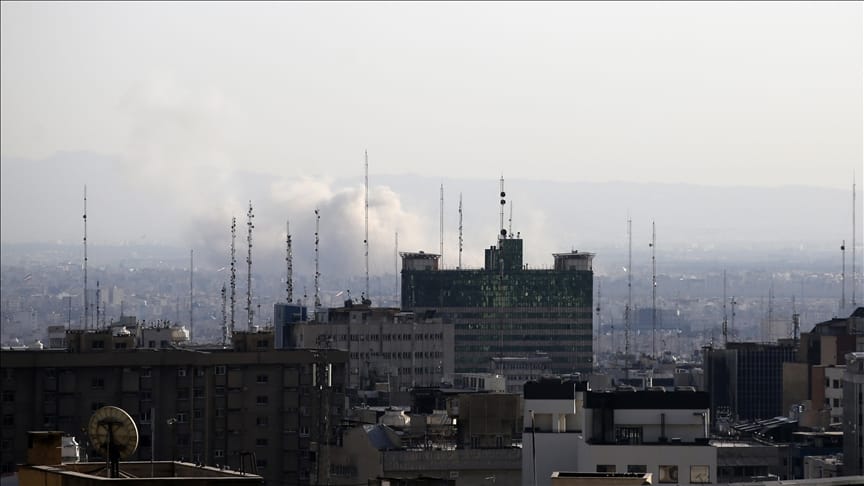
TEHRAN—Like many fathers in Iran, Nariman, a 57-year old teacher, is trying to protect his family from a war that feels closer than ever.
On Monday, he arranged with his two daughters to pack their things immediately and flee Tehran for the relative safety of the northern region of the country near the Caspian Sea where U.S. and Israeli strikes have been less frequent.
Nariman, who did not want to share his last name for safety, made the fraught decision to leave after U.S. President Donald Trump posted an ultimatum on TruthSocial on Sunday: “Tuesday will be Power Plant Day, and Bridge Day, all wrapped up in one, in Iran. There will be nothing like it!!! Open the Fuckin’ Strait, you crazy bastards, or you’ll be living in Hell – JUST WATCH! Praise be to Allah,” Trump wrote.
In a separate post, Trump later added a specific deadline: “Tuesday, 8:00 P.M. Eastern Time.”Most Iranians don’t have access to the global internet because of blackouts, but news travels fast through domestic intranet platforms. Nariman saw the updates and realized the scale of the threat.
“I panicked when I saw this. He wants to ‘blow everything up’ and ‘take the oil?’ He is gonna hit bridges?” Nariman told Drop Site News over the phone, his voice shaking. “I must get my family to safety before things go wrong.”
The family is packing to prepare for a long drive up north, bracing for huge traffic from Tehran of people who have made a similar calculation to flee the capital in the face of Trump’s threat of widespread destruction. When they will return is unclear. But their car is packed with enough clothes and other supplies for what may be an extended time away from home.
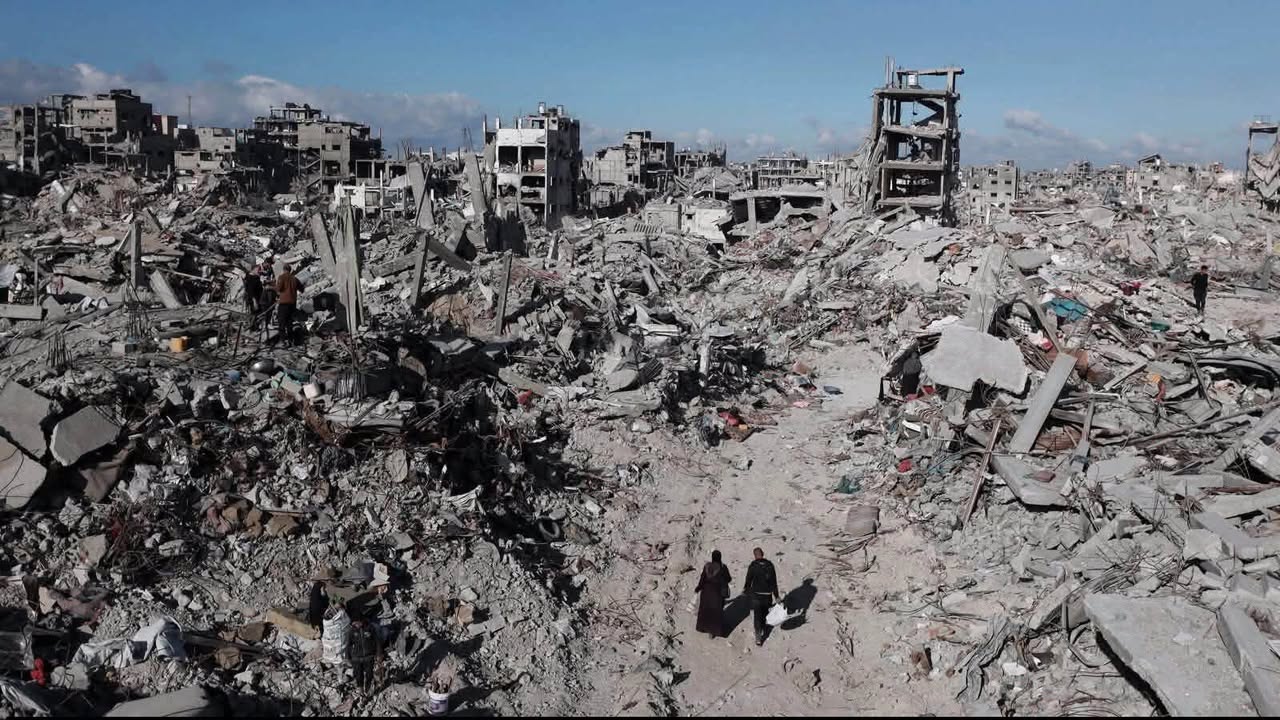
Several neighborhoods of Tehran have transformed into scenes of devastation after over a month of Israeli and U.S. airstrikes targeting major public buildings and residential areas of the city. The terrifying rumble of airstrikes has become a regular feature of life in major cities like Tehran, Shiraz, and Isfahan. At least 2,076 people have been killed by US-Israeli attacks since the war began according to the country’s Health Ministry.
Figures from the Human Rights Activist News Agency, a monitoring group funded in part by the U.S. government, put the number at over 3,500 killed, including 1,600 civilians, and several hundred children.
According to figures from the United Nations High Commissioner for Refugees, as many as 3.2 million Iranians had already been internally displaced by the conflict as of mid-March. That number is believed to have risen significantly as the U.S. and Israel have continued to heavily target urban centers in the country.
The war against Iranian infrastructure has already been going on for weeks. Last week, a major bridge connecting the cities of Karaj and Tehran was destroyed in U.S. aerial attacks. The attack killed at least 8 people and wounded dozens more, including in “double tap” attacks after the original bombing that killed several rescuers. Trump later posted footage of the bombing on social media, stating that there would be “much more to follow.”
Israel has also carried numerous strikes targeting steel, petrochemical, and energy targets, as well as pharmaceutical companies and medical centers across Iran—attacks aimed at destroying the country’s substantial industrial base and limiting its ability to recover after a conflict.
Major universities and hospitals across Tehran and other parts of the country have been hit in Israeli and U.S. attacks, raising the fear—even among Iranians opposed to the government—that the war is really about destroying Iranian society rather than achieving its stated aim of stopping the Iranian nuclear program, or diminishing the capabilities of the Islamic Revolutionary Guards Corps.
On Sunday night, U.S. and Israeli airstrikes targeted Sharif University of Technology, one of the most famous engineering schools in the country, in an attack that drew condemnation not just from the government but anti-government activists both in the country and abroad. ”We are caught between two evils: a vengeful Islamic Republic and a deranged, war-loving president,” Nariman said. “I am responsible for my family’s safety, I cannot let them live in peril. I have no choice but to flee Tehran.”
The recent comments by Trump about destroying Iranian power plants and bridges come amid a steady stream of volatile comments by the U.S. president about his intentions for Iran and its people. By now, many Iranians have noticed a pattern: Trump often issues threats while the markets are closed, only to pull back just before they open. There is a widespread hope that his latest ultimatum is simply another bluff.
But for some the situation feels different, owing to recent events. Tehran has been hit increasingly hard by U.S. and Israeli strikes in recent weeks, as the targeting priorities of the two countries shifts from police stations or military sites on the periphery of the city to famous landmarks and infrastructure familiar to all Tehran residents.
“We just have to stay here and hope the Tuesday deadline is another market day bluff.
”The attack on the Tehran-Karaj bridge has alarmed many that fleeing the city may even become impossible if attacks on civilian infrastructure escalate as Trump has promised. While some like Nariman and his family have taken to the road in the wake of his threat, others, however, have no way out even as the air war against Iranian civilians escalates. For those without family outside the capital or the means to travel, the only option is to wait.
“We’ve been sitting in our room just staring at the phone,” said Parisa, a 21-year-old university student living with her roommate in central Tehran to Drop Site News. “My roommate is from a small village in southern Iran and her city is under continuous bombardment; there is no way for us to leave. We don’t have a car, and we don’t have anywhere to shelter. We just have to stay here and hope the Tuesday deadline is another market day bluff.” “I am not panicking because we might lose electricity. We are very well-prepared for that,” she added.
“We bought canned food and hygiene supplies in the first days of the war, and we have been refilling our stocks since.” When asked what she is concerned over, however, she said: “The infrastructure. So many years and countless efforts went into building these things for us. I am afraid we will suffer a major setback. I am young; I don’t want to spend the next five or ten years of my life struggling just to take a hot shower.”
Last-ditch diplomatic efforts are under way to avert further escalation. On Monday, following a Pakistani-mediated proposal for a temporary ceasefire, Iran reiterated its own demands for an agreement setting out a permanent end to the war—trading concessions on its nuclear program for sanctions relief and recognition of its ability to exercise control over the Strait of Hormuz.
The current talks have not resulted in any brisk progress to a final diplomatic agreement that could end the war before Trump’s threat comes into effect.Parisa, like many of her friends, believes that a negotiated solution is unlikely, Iranians are in this for the long haul, and that she must keep her morale high as she stays in Tehran.
Other Iranians who are weighing whether to flee or tough out the war at home are making similar calculations. “I don’t even look at my suitcases anymore,” Elnaz, a 34-year-old painter in Tehran, told Drop Site News. “To flee, you need a destination and the money to get there. I have my brushes and my canvases, and that’s about it. I’m staying because I have nowhere else to go.”
While many are focused on the Tuesday deadline laid out by Trump, Elnaz is also bracing for a longer war. “People act like the world ends or resets on Wednesday morning, but this isn’t going to be over in a weekend,” she said. “Looking at how things are escalating, I think we’re looking at another month or two of this.” “It’s going to be a long, slow process,” she added, referring to the course of the war. “We’re just stuck here waiting.” Drop Site