Is There a New Regional Order Emerging?

By Mohammad Abu Rumman

The trilateral Saudi-Turkish-Pakistani agreement, signed in Mecca last Friday and already being referred to as the “Mecca Mutual Defense Agreement,” should not be seen as just another diplomatic event in the region’s long history of security arrangements. What took place at Al-Safa Palace—where Saudi Crown Prince Mohammed bin Salman, Turkish President Recep Tayyip Erdoğan, and Pakistani Prime Minister Shehbaz Sharif agreed that an armed attack against any one of their countries would be considered an attack against all three—may signal the beginning of a new phase in Middle Eastern politics: one that could reshape regional alliances and, more importantly, the region’s relationship with the major powers.

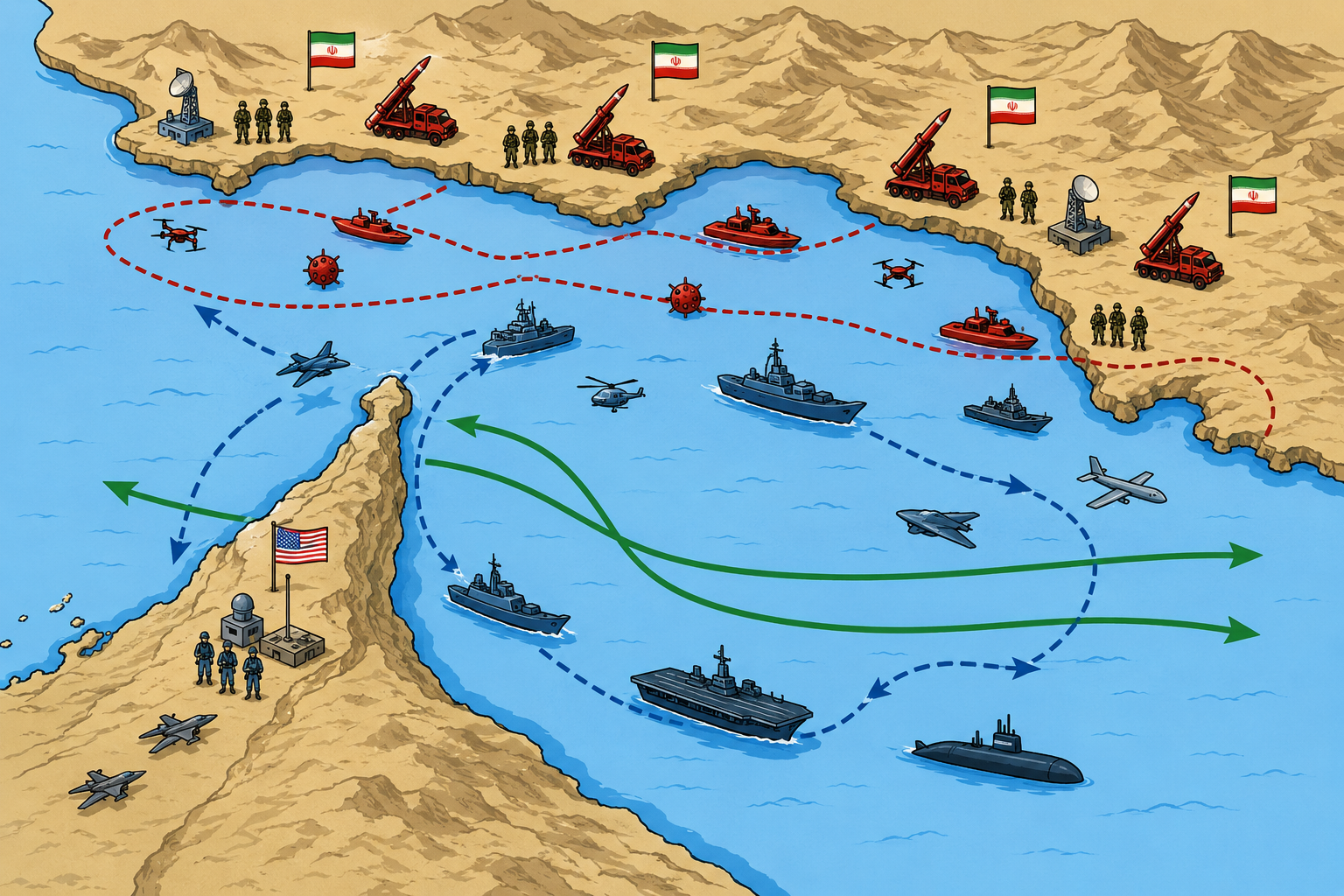
The immediate context is clear. The agreement comes amid renewed US-Iranian tensions and escalating Houthi threats. But interpreting it simply as an attempt to “protect Saudi Arabia from Iran” misses the larger strategic picture. What is emerging goes beyond the immediate Iranian question. It points toward an effort to construct a regional order that is less dependent on the binary that has dominated Middle Eastern geopolitics for years: the US-Israeli axis on one side and Iran and its network of allies on the other.

There is another important dimension. The agreement effectively redraws the geopolitical boundaries of the Middle East by bringing Pakistan more directly into its security architecture while consolidating Turkey’s role as a central regional actor. This represents a departure from the conventional understanding of the regional system as primarily comprising the Arab states, Iran, Israel and Turkey. It comes, moreover, at a moment of profound transformation following the fall of Bashar al-Assad’s regime and the weakening of the old division between the Iranian-led “Axis of Resistance” and the traditional Arab “moderate camp.

In practical terms, the new arrangement offers a different model—one that could provide regional powers with greater strategic and security autonomy. In that sense, it differs fundamentally from the regional vision advanced by President Donald Trump through the Abraham Accords, in which Israel occupies a central position in a US-backed regional security architecture. After the Gaza war, that model increasingly raises another question: whether integration with Israel means accepting not only normalization, but also an Israeli claim to military primacy in the region.

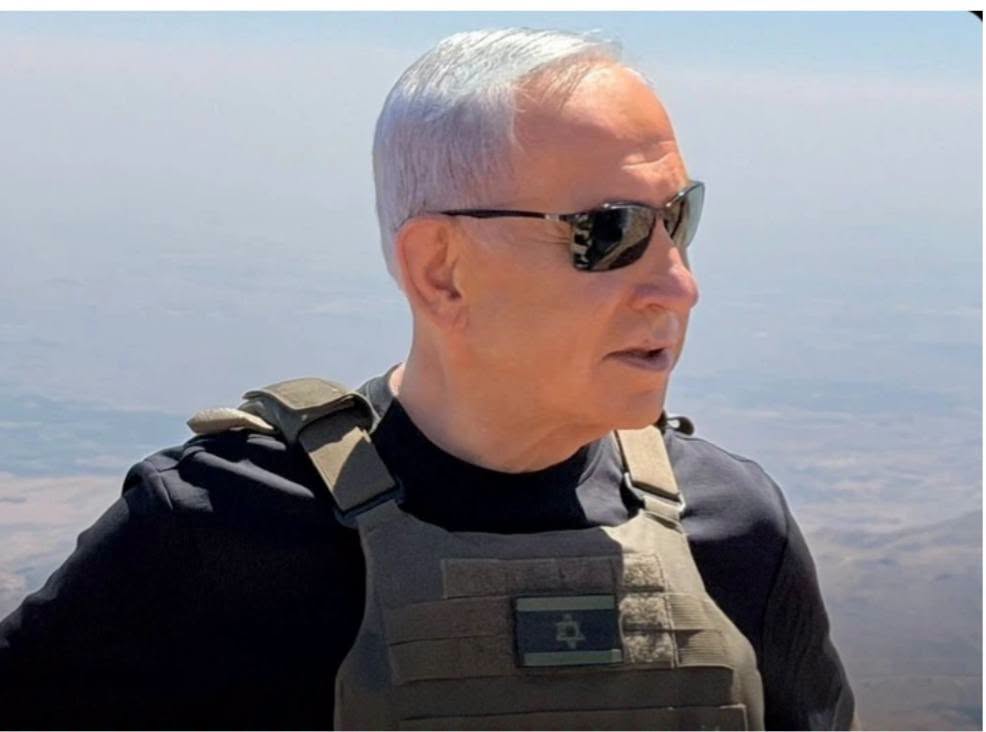
Seen from this perspective, the trilateral alliance may be less about confronting Iran than about challenging the underlying logic of the Abraham Accords.This may also explain Benjamin Netanyahu’s warnings several months ago about the emergence of what he described as a “radical Sunni axis.” Israel, meanwhile, has been pursuing its own countervailing network of partnerships. India—Pakistan’s historic rival—has become increasingly important in this calculus, alongside Israel’s strategic relationships with Greece and Cyprus and, more recently, Argentina. These relationships serve strategic purposes of their own, but they also help Israel counter the growing perception of regional isolation in the aftermath of the Gaza war.

Nor should the Saudi-Turkish-Pakistani framework necessarily be viewed as a closed alliance. It has the potential to evolve into a broader regional umbrella centred on the Middle East’s increasingly influential middle powers. Other Arab states could eventually find a place within such a framework, including Jordan, Qatar and Egypt, and perhaps even Syria, which now faces Israeli military encroachment and the occupation of additional territory in its south following the collapse of the Assad regime.

Barry Buzan’s theory of regional security complexes provides a useful lens through which to understand the significance of this development. From this perspective, the emerging alignment represents change on three interconnected levels.

First, it expands the geopolitical boundaries of the Middle Eastern regional security complex, particularly by integrating Pakistan more directly into its strategic calculations. Second, it intensifies competition over the hierarchy of regional power: which states will emerge as the principal poles of influence within this enlarged security system? And third, it forces a reconsideration of the familiar categories of alliance, rivalry and cooperation that have shaped our understanding of Middle Eastern politics for decades.

The significance of the Mecca Agreement, therefore, lies not only in what the three countries have formally committed themselves to, but in what the agreement potentially represents: the search for a regional security architecture that is neither entirely dependent on Washington nor organized around Israel, while at the same time avoiding subordination to an Iranian-led regional order.

Yet this is precisely where the real questions begin. The agreement faces three major tests. The first is whether it can move beyond political declarations towards credible institutional and military mechanisms. The second is whether Saudi Arabia, Turkey and Pakistan can develop a sufficiently coherent strategic agenda despite their different interests, alliances and regional priorities. The third—and ultimately decisive—test will come when one of the three countries faces an actual security crisis and collective commitments collide with the national calculations of the other two.

The Mecca Agreement may indeed mark an important turning point in the architecture of Middle Eastern security. But regional orders are not created by communiqués alone. Between declaring an alliance and proving that it exists lies the most difficult test of all: what its members are prepared to do when their commitments carry a real political and strategic cost.

By Mohammad Abu Rumman is a columnist in The Jordan Times

  • Related Posts

    Kareem Khan – Chronology of a Scandal: A View From Amman

    By Saleem Ayoub Quna

    Another somber episode in the ongoing Middle East saga is about to be quietly scrapped by manipulative overt hands and emerging developments, that are no less than disappointing!

    The story of the main character of this episode began long time ago in Edinburgh, Scotland, in 1970, when a child was born to a dermatologist Scottish mother and a Pakistani father of the same trade!

    The child was named Kareem Asad Ahmad Khan, who grew up to educate himself in Law, later to pursue a judicial career, until he landed as top job in The Hague, the Netherland, in 2021, and eventually becoming the Chief Persecutor of the International Criminal Court (ICC).

    It was at this juncture that he replaced Ms. Fatou Bensouda, a lady of Gambian origin, who was seeking to investigate the never-ending tragic situation in Gaza and the West Bank under the Israeli military occupation.

    Scuffle With Mossad

    Bensouda stepped down after 17 years of service at the ICC, including the last nine years as Chief Prosecutor. On her point of departure, she made it clear that the Israeli head of intelligence, Yossi Cohen, met her more than once and told her to drop the charges she was making against Israel’s actions in the two Palestinian territories, but she would not bow, until she officially resigned on 15 June, 2021.

    And so since the beginning of his new appointment the new chief prosecutor, and like his predecessor, Khan was charged of continuing to investigate cases, situations and/or individuals suspected of offenses such as genocide, war crimes, crimes against humanity and aggression, where and whenever, they occurred, whether in Ukraine, Darfur, Belarus, Afghanistan or in Gaza and which indeed become his nightmare, magnified by an Israeli genocide on all accounts that began on 7 October 2023 and lasted for 2 years, 9 months and more, and was declared ‘De Jure’ in October 2025.

    No one warned Mr. Khan that he was stepping into a thick minefield, or if they did, he would only listen to his heart and conscience! For that, he must have been bracing for the worse, for himself, and probably for the thousands of war victims he was investigating.

    The war in Gaza led to the death and injury of hundreds of thousands of Palestinians, (nearly 75,000 dead and more than 200,000 injured), whereas for the Israelis, they suffered 1200 dead and at least over 5000 injured.

    So, in May 2024, Khan adopting a “balanced” position despite the flagrant disparity between the two sides on all levels, announced the arrest warrants for five main individuals directly involved in Gaza war: Israeli Prime Minister Benjamin Netanyahu and his Defense Minister Yoav Gallant, and the top three leaders in Hamas: Yehya Sinwar, Mohammd Dief and Ismail Haniyeh.

    Days after the issuance of these arrest warrants, the name of a certain local female employee (known only as Sarah) suddenly popped up at the ICC, as the alleged victim of sexual harassment at the hands of non-other than the honorable Chief Prosecutor, Kareem Khan!

    In an orchestrated follow up, the US Treasury Department in February 2024 imposed sanctions on Khan, after President Donald Trump sanctioned the ICC judges for issuing the said arrest warrants against Netanyahu and Galant.

    And in May 2025 Khan stepped down as Chief Prosecutor due to the said allegations of sexual misconduct, and was suspended pending a vote by the state members of the ICC.

    In July 2026 Khan was ousted from his post as 82 out of 125 ICC member states voted, in secret, in favor of his dismissal!

    As for the Palestinian leaders who were also involved in that war, Israel took things in their hands and ended the life of the three Hamas leaders: Mohammd Deif was killed in Khan Younes on 13 July 2024, Yehya Sinwar killed in the same city on 16 October, 2024 and Ismael Haniyeh was assassinated in faraway Tehran on 31 July, 2024.

    The question now is whether the candidate for the Chief Prosecutor post at the ICC, will follow suit in the footsteps of his two predecessors, regarding the unfinished business of atrocities and war crimes around the globe, or will he/she be somebody of a new breed of international prosecutors?

    Soon we may have a clue! But personally, I am not optimistic!

    Continue reading
    West Bank: A Ticking Time-Bomb

    By Ismail Al Sharif

    Imagine you are sitting with your children at home when a violent knock shakes the door. You open it to find a blond, European-looking man holding a weapon in one hand and a Torah or Talmud in the other, with soldiers behind him.

    He orders you to leave the house, saying: “God gave me this house 3000 years ago.” You reply, “But it’s my home; I was born here, and my father and grandfather were born here before me.”

    They push you aside, storm into your house, and throw your furniture outside. Your children cry, they throw your wife out, and your blood boils. You wrest the weapon from the blond man and shoot him. They kill you, and then a bulldozer comes to demolish your house.

    The next day, the world’s newspapers headline: “Army kills terrorist after he tried to attack occupation soldiers.”

    You might go out in the morning to graze your sheep, and in the distance, you see a few fair-haired young men who have pitched a tent on a fenced-off plot of land on a hill. At first, the scene seems fleeting, but soon you see them approaching your land, wandering among your olive trees and your flock, then attacking you, stealing your livestock, and burning your trees.

    After that, they seize part of your land and annex it to the area they have taken over. The fence extends day by day, growing longer and wider. Over time, your land, and the land of your relatives, friends, and all the people of your village, becomes part of the nucleus of a new settlement.

    Roads change, streets are closed, and checkpoints are erected, until reaching a place only a few hundred meters away becomes a journey that takes hours.

    These scenes are repeated daily in the West Bank, where settlers terrorize, assault, and kill Palestinians under the protection of the occupation army, while ministers from the occupation government appear in the background of these attacks. The goal is clear: To empty the West Bank of its original inhabitants, both Muslims and Christians, and uproot them from their land, paving the way for its seizure and Judaization.

    All of this is happening in full view of the world, amidst President Donald Trump’s objections and the condemnation of the international community, at a time when his 20-point peace plan was announced in a celebratory atmosphere on September 29th of last year.

    However, time has revealed that this plan was nothing but ink on paper. The occupation continues to control over 60% of the Gaza Strip, demolishing buildings and bulldozing agricultural lands in the areas under its control. It also continues its daily bombardment of the Strip, which, since the plan’s launch, has resulted in the deaths of approximately 1,200 Gazans and injured more than 3,600 others. This is while the siege continues and humanitarian aid is prevented from entering.

    As for the West Bank, settlement outposts have expanded, and the occupation government recognized 19 additional settlements after the plan’s launch. This coincides with an unprecedented escalation in settler attacks, the continued demolition of homes and displacement of their residents, as well as the ongoing incursions into Palestinian cities, villages, and refugee camps.

    The government of war criminal Benjamin Netanyahu makes no secret of its plans to annex the West Bank and thwart any attempt to establish a Palestinian state, while its leader orders the occupation army to launch continuous military campaigns in West Bank cities, villages, and refugee camps.

    The West Bank today sits atop a powder keg, fueled by accumulated feelings of anger, fear, frustration, and resentment, awaiting a spark that could ignite the situation. Then, the sporadic confrontations could transform into a widespread popular uprising, which could very well extend beyond the borders of the West Bank.

    No one knows how wide the circle of confrontation might widen, where it might spread, or the extent of the repercussions it might have in Jerusalem, the Palestinian territories within Israel, and neighboring countries. Arab governments and their armies may find themselves facing mounting popular and political pressure, pushing them either to engage in a confrontation they do not want, or to take positions and actions they have long sought to avoid.

    This article was originally written in Arabic by Ismail Al Sharif and published in Jordan’s daily newspaper Ad Dustour and is reprinted in crossfirearabia.com. Mr Al Sharif long worked in newspaper management and publishing in Amman. 

    Continue reading

    Leave a Reply

    Your email address will not be published. Required fields are marked *

    You Missed

    Is There a New Regional Order Emerging?

    • By marwan
    • August 10, 2026
    • 4 views
    Is There a New Regional Order Emerging?

    Dr Nada Abu Alrub: ‘…No Language of Surrender Here’

    • By marwan
    • August 9, 2026
    • 14 views
    Dr Nada Abu Alrub: ‘…No Language of Surrender Here’

    The Women of Jerusalem

    • By marwan
    • August 9, 2026
    • 16 views
    The Women of Jerusalem

    Gaza Sea: A Time Bomb in Waiting

    • By marwan
    • August 9, 2026
    • 7 views
    Gaza Sea: A Time Bomb in Waiting

    Group Photo of a Palestinian Family, 1922

    • By marwan
    • August 9, 2026
    • 3 views
    Group Photo of a Palestinian Family, 1922

    ‘So We Don’t Forget’

    ‘So We Don’t Forget’