CrossFireArabia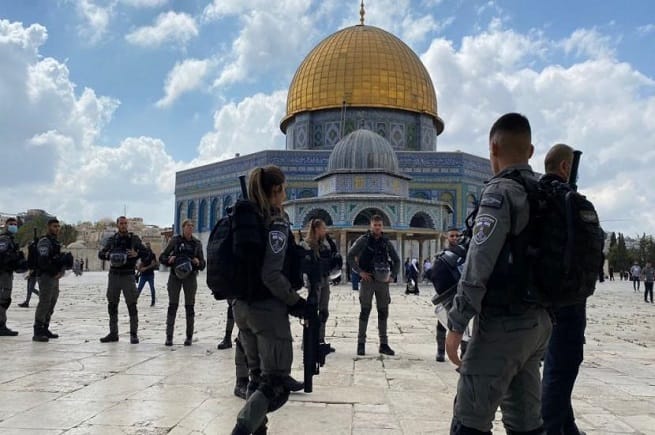
The Israeli occupation continues its closure of the Al-Aqsa Mosque for the 35th consecutive day. This is a move that is described as unprecedented in decades and comes amid escalating calls for mass mobilization and protests in support of the mosque.
The continued closure comes amid warnings of attempts to impose a new reality on the Al-Aqsa by enshrining a temporal and spatial division of the site and coincides with the increased activity of extremist Israeli settler Temple Mount groups who want to storm the mosque and perform Talmudic rituals in its courtyards.
These settlers intensified their incitement to storm the mosque in the Jewish Passover holiday and calling for the “sacrifice of animals” on its grounds and demanding its reopening in the holiday period, which extends from 2-9 April. Meanwhile, the Israeli occupation is exploiting the current state of emergency to consolidate its control over the mosque, while Jerusalemites and the wider Palestinian public are calling for mass mobilization towards the nearest military checkpoints and barriers surrounding it to break the Israeli military siege and force the reopening of the mosque.
In parallel, the Israeli occupation authorities are preparing to open the Western Wall on 5 April to dozens of rabbis for the Priestly Blessing, a move seen as part of attempts to solidify their Jewish presence, including religious rituals in the vicinity of Al-Aqsa Mosque.
Jerusalem affairs researcher Abdullah Marouf warned of the seriousness of the current situation. He noted the mosque has not been closed in this way since the liberation of Jerusalem in 1187. He believes that these Temple Mount groups are seeking to exploit the holiday period to impose a reality that paves way for their plans.
Meanwhile, there are calls for escalation to transform the coming days into a widespread wave of anger. Hamas is calling for general mobilization under the slogan of “Friday of the Night Journey and the Prisoners,” in light of the ongoing violations against the mosque and Palestinian prisoners. An international campaign titled “Al-Aqsa is Crying for Help” has also been launched, with the participation of Arab and Islamic institutions to mobilize public opinion and pressure for an end to the violations.
Jerusalemite activists warned that the continued closure of Al-Aqsa Mosque represents a “dangerous escalation,” stressing that it falls within attempts to impose realities that are difficult to change, and are calling for increased presence and vigilance around the mosque to emphasizine its Arab and Islamic identity.


 marwan