Trump’s Nightmare Triangle

By Dr Khairi Janbek

For all intents and purposes, US President Donald Trump is presenting himself as the arbiter of Arab-Israeli relations, and/or Arab-Israeli conflict and showing his presence as the patron for the time being, of the Gaza agreement. Therefore, no one, including Israel will be allowed to make him look bad in this multi-phased accord.

Most likely, his intention to reign in Prime Minister Benjamin Netanyahu and rejecting the Israeli rejection of the West Bank, boils down to keeping the Arabs on board in terms of money and influence for the success of his Gaza plan, as well as keeping his hopes alive for the Abrahamic Accords especially the red apple, Saudi-Israeli normalization.

Indeed Trump’s ambiguous stand of rejecting a Palestinian state while at the same time, rejecting Israeli annexation, either means giving the positive nod to Tel Aviv to create facts on the ground and create de facto annexation without the fanfare, and start the gradual population transfer, if we take Gaza as a precedence for his words, to Jordan and probably also to the wider Arab world, or, it could also be, that the future of the West Bank is intended to be united to the East Bank of River Jordan.

In the mean time, the world press talks about the continuous shuttle diplomacy of high-ranking Washington officials to Israel, and Trump’s warnings to Netanyahu, veiled as well explicit not to attempt to jeopardize the Gaza peace, to the extent of saying that Israel would lose all US support.

But what about the other side of this presumed potential rift? Netanyahu after two years of war, has nothing to show for it to the Israelis except barbarism, murder and destruction, in addition to gaining the status of becoming a fullyfledged international war criminal.

The war which he declared to finish off Hamas is increasingly controlled by the American plans, now, face a big failure with him reluctantly having to put up with. However it does not necessarily mean there are no other parties in his government, whose messianic fervour does not override the risk of losing American support, which indeed means, Netanyahu is now stuck between the rock and the hard place.

Indeed one cannot predict his longevity as the prime minister for Israel, but all what can be said is that, the alternative to him, is neither likely to be more peace loving, or more liberal in political outlook.

Dr Janbek is a Jordanian writer based in Paris, France

Continue reading
Hamas, Trump and The Gaza Gamble

By Dr Khairi Janbek

One can only have a distant view of the current developments regarding the war on Gaza, and consequently in all honesty, a bird’s eye view of the situation. For all intense and purposes, one assumes the Hamas acceptance of plan presented by US president Donald Trump would represent extremely high-stakes gamble for them.

On the one hand it offers a pathway to end the bloodshed and set the road for reconstruction of the bludgeoned Gaza Strip. On the other hand, the plan demands existential concessions, loss of armaments, leverage, and an an end to the movement’s future. If Hamas accepts with sincerity, and the plan is implemented faithfully, it could mark a turning point towards stabilization, but also with risks of breakdown, backlash, internal splits, and which carry the warnings of a precarious road ahead.  

It is important in the meantime to advise against the search for victors and/or the vanquished, because in this time and age, wars do not seem to be launched in order to be decisive, and the view of the Gaza war is no different.  Essentially it is to be believed and cardinal to the Trump administration, the issue of arms pertaining to Hamas and Hezbullah are seen as obstacles to peace and to Israel’s normalization with the Arab world. Therefore, the objective, one imagines, is to eliminate those arms to the American administration which has wider objectives in this crucial region of the world.

Here, as well, one has to be careful with words. Is Hamas supposed to surrender all of its weapons, or will there be an accommodating plan for the Islamic movement to keep some of its weapons, so long as it is not seen to constitute any future threat?

On the other side of the equation, are we really at the juncture of seeing the total end of Hamas as an organisation? In other words, are we about to see an amnesty for the Hamas fighters, especially those who surrender their weapons and are willing to partake in the future plans for Gaza away from those who wish to leave and to be provided with a safe passage outside the Gaza enclave?

Or is there a plan within the plan. if indeed, the Trump plan is not in essence a diktat, will there be long and tedious negotiations that will accept a form of political participation for a future-transformed Hamas into less than a political organization and more than an NGO?

Then what about the role of the Arab and Islamic countries, whose leaders met with Trump during the last UN General Assembly and who subsequently welcomed Hamas acceptance of the Trump plan? After all, there is the supposition that Arab and Islamic countries will provide, if not brain, then money and brawn. Essentially, without Arab and to a lesser extent Islamic involvement, no plan will have a leg to stand on. But to what extent the Arabs are willing to get involved still remains to be seen.

Dr Janbek is a Jordanian writer based in Paris.

Continue reading
Palestine – The Story Begins

By Dr Khairi Janbek

Regarding the recognition of a Palestinian state, the Montevideo Agreement of 1933 stipulates that a recognized state must have a permanent population, defined boundaries, a government, and the ability to enter into relations with other states. 

Now one feels responsible, at least responsibility to oneself to say that the Arab people felt being let down for decades and generations filled with disappointments, which led to their constant skepticism as the result of their modern history and perpetual doubt as well as self-doubt. 

When it came to the Palestinian issue, they forgot their own contribution also to the transformation of the problem from being a political question par excellence into a humanitarian crisis, human rights and refugees. 

Somehow, it appears to me, that many in the Arab world are stunned by the recent developments of recognizing Palestine, to an extent to not knowing how to deal with the question of Palestine restored to its rightful place as a political question after so many years of outbursts of emotions, wailing and crying.

We are all now at the beginning of the beginning and not the end of the story. Therefore, a qualitative leap in Arab and Palestinian consciousness is required in order to be able to cope with both, extreme challenges and immense opportunities. 

History indeed cannot be denied, but the new circumstances carry within themselves the seeds of a new history which is primarily, the responsibility of the Palestinian people in the first order, and then the Arab, because if the attitude of helplessness prevails and the question of what can we do; if we are collectively helpless, don’t expect others to do your job for you like adolescents expecting adults to sort out things for them.

Now, is the recognition of the Palestinian state significant?

Well, one is baffled that the question is even raised by Palestinians as well as Arabs, simply because one doesn’t excuse such an attitude by the catalogue of horrors one listed above. We are at the junction now of correcting historical imbalances, addressing bluntly the historical injustice of first, the legacy of colonialism and by and large, the consequences of the wars of 1948 as well as 1967.

There are also legal and diplomatic implications for this recognition, it bolsters Palestinian position in international fora opening the pathway to legal challenges against Israel’s actions in the occupied territories, while shifting diplomatic alliances in the Middle East and beyond. 

Essentially the recognition of Palestine, affirms the Palestinian right to self determination, sovereignty, and validating Palestinian claims to establishing a state alongside Israel. Ultimately, we can all look now at the Palestinian issue not from the sole perspective of being a humanitarian and refugees issue, but from the perspective of national independence.

Dr Janbek is a Jordanian writer living in Paris, France.

Continue reading
Cobwebs and Impotence! 

By Dr Khairi Janbek

A few personal reflections which certainly don’t resolve the Middle East puzzle, and one hopes don’t add to the already existing puzzle.

In any case, the Arabs tend to be a vocal people of tradition, consequently, all that can be done, is limited to the terms of providing the best description to circumstances rather than providing practicable and working solutions.

One can’t say that at times there are in fact idealistic solutions which can work only in the imagination, and indeed there is plenty of that, but to face other nations’ aggression; specifically Israel’s self-proclaimed defense of its national security, Arabs tend to counter that with competition between themselves as who is the most eloquent electronically.

Essentially and apparently, the Rabs are currently in a weak state, and weakness does corrupt, and if the current circumstances persist, will lead to absolute impotence. 

For generations the Arabs have followed the so-called western path to development, while some, in order to spite the West, followed the socialist path to development, the mirage was the same, and failure no different, and with international relations, the policy has been habitually leaning on the Americans to fend off Iranian threat, leaning on Russia to fend off American threat, and leaning on Israel to fend of the threat coming from each other, which prompts the logical question: Why don’t they lean on each other?

Well, part of the answer comes from an incident from my pre-retirement days, as one was looking out of the window of the airplane passing over an area in Turkey full of dams, the VIP I had the honor of accompanying said the prophetic words which stayed with me “good luck to them, all what we did, we conspired against each other.” 

The fact remains, that a form of catharsis is needed in inter-Arab relations, which probably requires more of psychological analysis than political, because the phenomenon of seeking allies from the presumed enemy lines, as opposed to allies from the so called brethren camp, requires plenty of reflection. The ethos of common culture, religion, geography are nothing but folklore the doesn’t have the idea of common interest in its composition.

Alas, a folkloric nation that derives its strength from rhetoric can only remain a reactive nation, and in order to become an active nation, it has to clean up from its mind, the cobwebs of memory and start acting to the basis of common Arab interests.

Dr Janbek is a Jordanian writer based in Paris, France

Continue reading
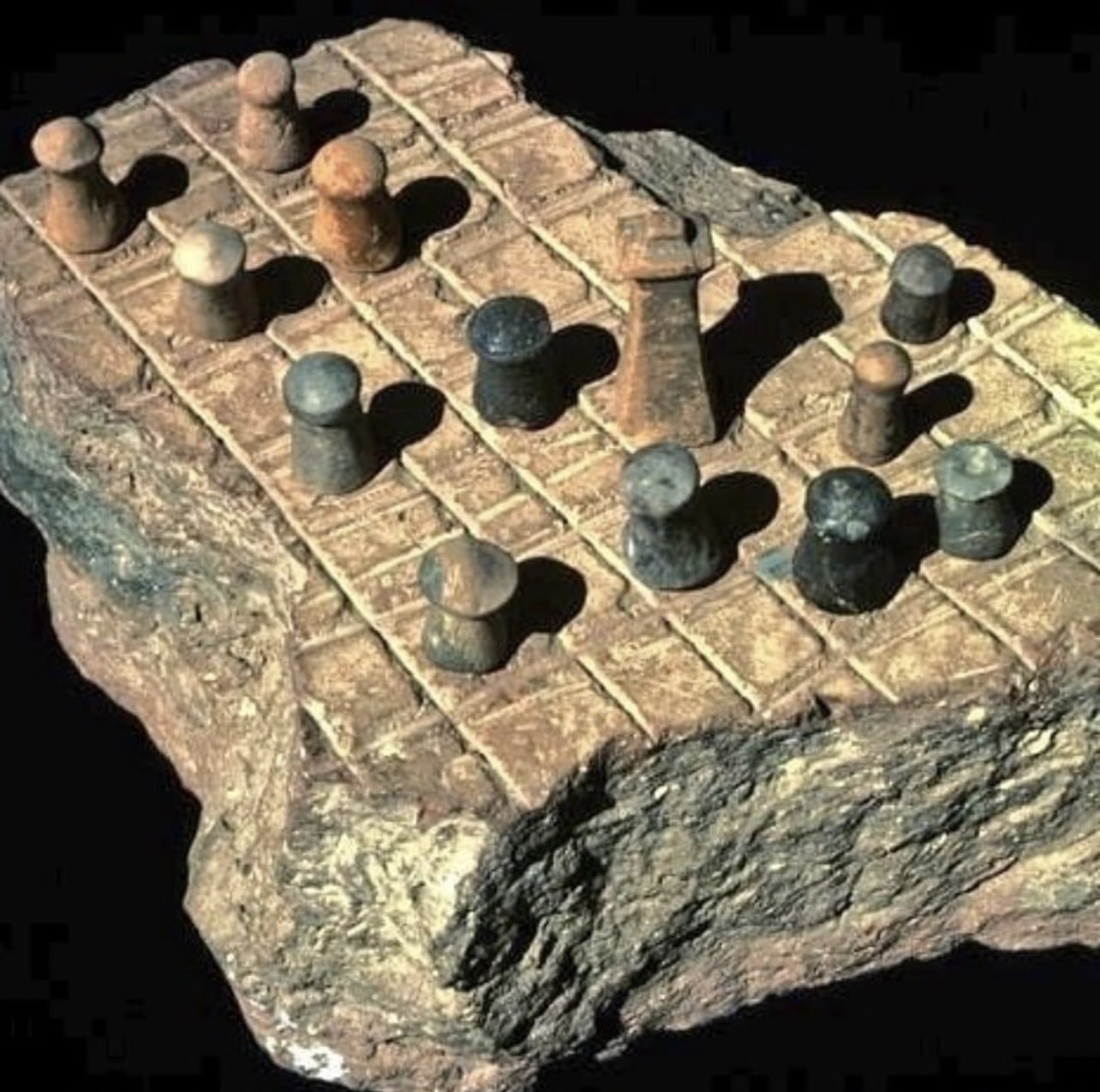
Chessboard Middle East

By Dr Khairi Janbek

When the British conquered the territory, they didn’t exactly know where to draw the borders of Palestine. British Prime Minister Lloyd George conferred with his French counterpart Clemenceau and suggested that the borders of Palestine be defined on biblical basis; in accordance with its ancient boundaries from “Dan to Beersheba”.

But what about the sparsely populated territory east of the River Jordan? Although in 1915 the British promised the territory to the Sharif of Mecca in the McMahon correspondence, in the early years of the British control, it remained part of Palestine, and not until 1922 did the British separate it from the rest of Palestine and named Emir Abdullah of the Hashemite dynasty as the ruler of the new country Transjordan.

Even when the borders of Palestine became clear to the British, the borders of the future Jewish National home remained open to dispute. Lord Balfour’s letter, spoke vaguely of the establishment ‘ in Palestine of a National home for the Jewish people’ he did not refer to the whole of Palestine or any specific part of it.

Among the Zionists, the borders of Palestine were just as blurred. The ideal borders, as mapped by the Zionist delegation at the Paris Peace Negotiations, included south Lebanon (Northern Galilee) and a stretch of land east of the River Jordan as far as the line of the Hijaz Railway.

Chaim Weizmann continued to believe that the land east of the River Jordan should be part of the Jewish National Home. Thus reiterated in his Congress speech in 1921: “The questions of borders will be answered when Cis-Jordan will be so full of Jews that we will have to expand to Transjordan.”

The right-wing Israeli revisionists continued to claim until the 1950s, the whole of Palestine on both sides of the Jordan River.

However, there was a brief glimmer of hope that an Arab-Jewish understanding might in fact be possible when Emir Faisal, later King of Iraq, and Chaim Weizemann signed an agreement in 1919, recognizing the right of the Jews to immigrate to Israel, but reality on the ground created a different set factors, when Faisal’s condition of far reaching Arab independence in the region was not fulfilled, he declared the agreement no longer valid, in any case, the agreement did not include representatives of the Palestinian Arabs.

Also in the post-World War I, another claim on Palestine was made in March 1920, when the General National Syrian Congress, declared that Palestine was nothing but the southern part of the Greater Syria State.

Dr Janbek is a Jordanian writer based in Paris, France

Continue reading