Knesset Condemns Palestinian Prisoners to Death

Israel’s Knesset voted Monday evening to pass a law to allow the execution of Palestinian prisoners, in a move that has triggered outrage from human rights groups.

A contentious bill, introduced by the far-right Jewish Power party led by National Security Minister Itamar Ben-Gvir, was approved in second and third readings in the Knesset by 62-48 votes.

According to Israeli media, Prime Minister Benjamin Netanyahu voted in favor of the bill.

The bill passed its first reading in November.

What does the bill propose?

The law would permit Israeli courts to impose the death penalty on individuals convicted of carrying out deadly attacks. Supporters argue the measure is aimed at deterrence and combating what they describe as “terrorism.”

However, critics say the bill’s scope would, in practice, apply almost exclusively to Palestinian prisoners, raising concerns over discriminatory enforcement.

Controversy in Israel

Before its passage, Israeli opposition lawmakers and rights groups have warned that the bill introduces a legal framework that could institutionalize unequal treatment.

Ofer Cassif, a Knesset member from the Democratic Front for Peace and Equality, called the proposal “legislation for genocide,” arguing it targets Palestinians specifically.

“The death penalty, beyond being state-sanctioned killing, corrupts society and entrenches extremism,” he said during a parliamentary debate.

Sameer Bin Said of the Hadash-Ta’al alliance also opposed the bill, warning that capital punishment is irreversible and carries risks of judicial error.

The law “raises serious concerns regarding its discriminatory nature and does not provide a real solution, but may instead contribute to further complicating the existing situation,” Bin Said added.

He said Arab lawmakers and opposition members who oppose this law “will turn to the Supreme Court to challenge it, in a step aimed at safeguarding fundamental values and protecting human rights.”

The debate comes amid heightened tensions and scrutiny over Israel’s treatment of Palestinian detainees.

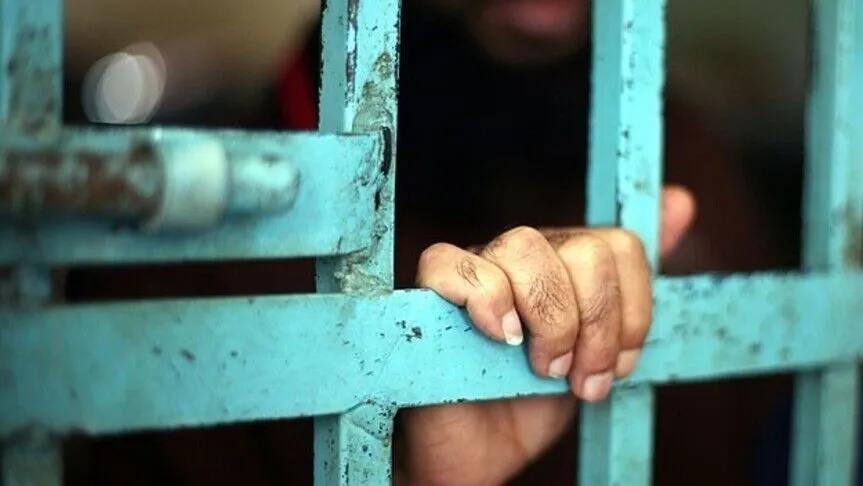
According to Palestinian figures, more than 9,300 Palestinians are currently held in Israeli prisons, including women and minors. Numerous deaths were reported among Palestinians in Israeli custody due to torture, starvation, and medical neglect, according to human rights groups. Anadolu

  • CrossFireArabia

    CrossFireArabia

    Dr. Marwan Asmar holds a PhD from Leeds University and is a freelance writer specializing on the Middle East. He has worked as a journalist since the early 1990s in Jordan and the Gulf countries, and been widely published, including at Albawaba, Gulf News, Al Ghad, World Press Review and others.

    Related Posts

    Did Little Malak Deserve Death?

    Palestinian child Malak Qaddoum has succumbed to injuries she sustained in an Israeli strike west of Gaza two days ago.

    She is the third member of her family to be murdered after her father and sister were also murdered.

    Continue reading
    Occupied Palestinian Territories in Crisis

    The Occupied Palestinian Territory is facing a severe humanitarian crisis, with both Gaza and the West Bank experiencing unprecedented levels of violence and deprivation.

    In Gaza, following the collapse of a brief pause in hostilities in March 2025, Israeli forces resumed intensive bombardment while maintaining a complete blockade that has now entered its eighth week, preventing all humanitarian aid and commercial supplies from entering.

    This has left Gaza’s 2.2 million residents facing starvation as food stocks deplete, bakeries cease operations due to lack of flour and fuel, and nearly 90% of the population remains displaced with critical infrastructure almost entirely destroyed.

    A new U.S.-backed peace plan led to a pause in hostilities agreement coming into effect on 10 October 2025, raising cautious hopes for increased humanitarian access and a potential reduction in hostilities after months of relentless violence. However, despite the pause in hostilities, sporadic violations, limited aid entry, and continued displacement highlight the fragility of the pause in hostilities and the deep humanitarian strain that persists across Gaza.

    Meanwhile, the West Bank has seen a dramatic escalation in military operations, particularly since the launch of “Operation Iron Wall” in January 2025, which has resulted in mass displacement of Palestinians and widespread destruction across refugee camps. Israeli forces have displaced approximately 40,000 people, with officials stating that residents will not be allowed to return for at least a year, while expanded checkpoints and military presence severely restrict movement between Palestinian cities.

    International organisations and UN bodies have expressed increasing concern about systematic violations of international humanitarian law in the West Bank, including accelerating settlement expansion, land reclassification and forced displacement that multiple observers warn are driving de facto annexation dynamics.

    These concerns have intensified following the International Court of Justice’s 2024 advisory opinion on the illegality of the prolonged occupation and the Israeli authorities’ security cabinet decisions of 8 February 2026 expanding civil and administrative control over West Bank land and governance.

    Reliefweb

    Continue reading

    You Missed

    Did Little Malak Deserve Death?

    Did Little Malak Deserve Death?

    Handala in Ireland

    Handala in Ireland

    Occupied Palestinian Territories in Crisis

    Occupied Palestinian Territories in Crisis

    Palestinian Journalists Under Attack – 55 Israeli Violations in May

    Palestinian Journalists Under Attack – 55 Israeli Violations in May

    Jordan Footballers Delighted For World Cup Matches

    Jordan Footballers Delighted For World Cup Matches

    World Cup: Trump, Political Footballing and Iran – A View From Amman

    World Cup: Trump, Political Footballing and Iran – A View From Amman