An Unholy War!

By Robert Stephen Ford

Presidents and popes have disputed wars in the past. Pope Paul VI criticized the American war in Vietnam, saying that America was losing its moral standing. Pope John Paul II called the American invasion of Iraq in 2003 unjust and illegal. However, the clash between US President Donald Trump and Pope Leo XIV, who are the two most influential Americans in the world, about the war against Iran is without precedent.

The rift that preceded the war

The relations between the Vatican and the Trump administration were difficult even before the Iran war. Before the appointment of Pope Leo, Pope Francis in 2025 criticized Donald Trump’s restrictions against immigration and the treatment of refugees and immigrants in American detention centers. In January 2026, three top Catholic Church leaders in the United States issued a report stating that American foreign policy was immoral. They pointed to reduced assistance to world health programs that have harmed tens of millions of people worldwide.

The American surprise attack on Iran on February 28 sharpened the dispute between the Vatican and the White House. The Trump administration portrays the war as a kind of holy crusade blessed by God. In his April 7 social media message threatening to destroy Iranian civilization, Trump exclaimed, “Glory to God!” while also saying that God ensured the success of the mission to rescue an American pilot whose plane was shot down over Iran. On March 26, US Defense Secretary Pete Hegseth told a press conference that military strikes against Iran enjoyed protection from God, and at a religious service in the Pentagon on April 1, he quoted from the Old Testament, asking God to “break the enemy’s teeth.”

The Pope responded on April 6 that Jesus called for peace and reconciliation, and he rejected politicians using God to justify war. His rebuke generated sharp counterattacks from Trump and some Republican Party leaders. Vice President JD Vance and Speaker of the House of Representatives Mike Johnson said the pope appeared not to understand the Catholic Church theory of just war. Several American bishops close to Pope Leo responded that it was ridiculous to suggest that the pope did not understand the theology and the theory of just war since Leo himself is from the branch of the Catholic Church founded by Augustine, the Christian thinker who, 1,600 years ago, first set down the principles of a just war. The surprise American attack in the middle of negotiations, the American failure to avoid striking civilian targets and the ambiguous American government goals of the Iran war did not meet the standards of a just war, they noted.

Politics dressed as theology

Trump and the Republicans are politicians, not theologians. They portray the war against Iran as holy because they understand that the war is unpopular in the United States and they need the support of Christian conservatives in their political base. Notably, most Catholics, who are about 20% of the American population, voted for Trump in 2024. Opinion polls since late March have shown that most Americans doubt the war is in America’s national interests. After Trump’s threat to destroy Iranian civilian infrastructure and civilization on April 6-7, the pope called the threats “unacceptable” and would violate international law. He even urged American citizens to contact their representatives in Congress to demand that the war stop. It was unprecedented for a pope to urge Americans to mobilize this way, and it directly touched a big part of the Republican Party base. Trump responded five days later with his social media message alleging that the pope appears to accept that Iran can have nuclear weapons and does not understand foreign policy. No American president had attacked a pope so personally. With economic damage from the Iran war and opinion polls indicating Democratic Party victories in the November congressional elections, the White House and Republicans are especially sensitive to criticisms towards their war policy.

The pope enjoys a big advantage over Trump in opinion polls in the United States, and Trump over the past four days has retreated a little. He said on April 16 that while he respected the pope’s right to say what he thinks, Trump insisted that he would continue to say and do what he thinks is right. The pope, meanwhile, said on April 18 that he did not want to debate the president. The pope’s role in the end is not to descend to politics but rather to stay on a high level focused on how people should live according to the principles of Christianity. This round of arguments has been winding down, but the Trump administration’s use of Biblical scripture and symbols to justify controversial policies will trigger new fights with the Catholic Church in the months ahead, especially if the war escalates.

The writer is a former US Ambassador to Algeria and Syria and contributed this article to Anadolu

Continue reading
Hormuz: Mines, Strategy or Business?

By Ismail Al Sharif

The US thought that assassinating senior Iranian leaders would bring down the regime, but this did not happen.

Iran’s inability to match American military and technological superiority led it to adopt a number of strategies, most notably what is known in the military literature as the Mosaic Defense Doctrine. This doctrine is based on dismantling its military central command into small, independent units, each operating autonomously and making its own decisions without consulting the higher command.

From Day 1 of the war, Iran adopted this approach. However, the lack of coordination and the disintegration of the military hierarchy led to chaos and confusion which affected the management of its operations. The situation became contradictory; the politicians were declaring one thing and military commanders acting in a completely different manner and direction.

This was reflected on the ground through extremely dangerous behavior. Military units, using small boats, indiscriminately laid naval mines to deter enemy ships. However, the lack of coordination here backfired resulting in the Iranian navy officers losing their ability to pinpoint the coordinates of the mines they planted in the Hormuz Strait with no accurate maps or reliable records. Some of these mines may have been completely displaced by the currents of the sea. This was further complicated by the fact that these mines were not primitive but far from it; they were sophisticated and able to detect sound and pressure, and thus able to track the passage of large ships and submarines, and detonate automatically upon approach.

However, mine removal is not easy task, as history shows. Even today, news reports continue to surface of mines in various parts of the Kingdom, half a century after the last war. Indeed, mines from World War II are still being discovered on land and at sea.

Even with Britain’s pledge to remove mines after the war, and despite possessing the latest specialized technologies in this field, the task remains arduous, protracted, and uncertain. The specter of a sudden explosion looms, reminding us that the danger of mines is not easily eliminated.

But the decisive factor in weakening navigation in the Hormuz Strait is not primarily military, but rather material. Commercial ships are massive investments, with some vessels valued at around $150 million and their cargoes potentially worth hundreds of millions of dollars. Therefore, a single mine explosion can cause catastrophic losses to both the ship and its cargo. Consequently, no ship sails without insurance; ports, banks, and shipping companies refuse to deal with uninsured vessels, and without insurance, global shipping grinds to a halt.

Herein lies the real surprise: the fate of the Strait is no longer dependent on Iran’s pronouncements regarding its opening or closure, but has effectively fallen into the hands of insurance companies. With the escalating risks, insurance costs have skyrocketed; “war risk” premiums have jumped from approximately 0.25% of the ship’s value to nearly 1% or more, exceeding a massive $1 million per voyage. And it doesnt stop there; seven major insurance companies announced their complete withdrawal, issuing notices of coverage cancellation just within just 72 hours.

And here comes the decisive turning point: Once the insurance coverage is lost, maritime traffic ground to a halt. During this 39-war, ships have effectively ceased sailing with the number of vessels transiting the Strait plummeting by more than 80%. Around 150 oil tankers remain anchored offshore, and major shipping companies suspended their operations, as if this vital artery of global trade had been frozen by a financial, rather than a military decision.

The US government attempted to provide alternative insurance coverage, but this effort failed and US President Trump’s pronouncements regarding mine removal were inconsistent with the reality.

The issue of reopening the Strait has once again become a prominent topic, but the deeper truth is that its fate is no longer determined by political statements or military actions, but rather by the decisions of insurance experts. Even if the war were to end immediately, ships would not resume sailing right away. Insurance companies need time to reassess the level of risk, and they base their decisions not on political logic, but on cold, hard numbers and rigorous data.

This article was originally published in Arabic in Addustour daily newspaper and republished in English in crossfirearabia.com.

Continue reading
Analysis: Middle East in Iranian Eyes

CROSSFIREARABIA – During the Israeli Genocide on Gaza Benjamin Netanyahu used to stand up and say with a smirk: ‘We are changing the face of the Middle East’.

Upbeat about murdering the women and children of Gaza from the late 2023 onwards, he was talking about the further normalization of the Arab world as established by the Abraham Accords, establish an economic order under Israel’s hegemony and end Hamas, Hezbollah and Houthis while clipping the wings of Iran.

Of course, Netanyahu’s face soon changed, albeit two-and-a-half years later, when Iran and Hezbollah were forced into a war generated by Israel and the USA on 29 February, 2026. While Iran got a battering, in the next 39 days, US ships and military bases in the Gulf and Jordan received such a hammering that soon forced US President Donald Trump to plead for a ceasefire.

In this war, Israel received a great shock, being attacked literally on an hourly and daily basis with its buildings, military basis and infrastructure taking directs hits while its millions of people living in underground shelters around-the-clock. 

To use a metaphor Tel Aviv’s nose was being rubbed in the sand in a way that has never been imagined by Netanyahu nor his ilk of extremist right wing fascist politicians who started calling for the expulsion of Gaza Palestinians from their homeland ever since the Israeli genocide on them since 7 October, 2023. 

Today’s Netanyahu’s vision of a new Middle East has been drastically changed, thrown in his face in fact! Iran’s political stances and its missiles have changed things around. The US and Israel were not able to change the current Iranian government in Iran despite killing the country’s spiritual leader Ali Khameini, have not ended the country’s nuclear program nor ended its ballistic missiles. 

So what is Netanyahu talking about? Yes, today there is clearly a new Middle East emerging but it is not according to Netanyahu’s eyes nor his wishful thinking. If anybody should be ‘celebrating’ it is clearly Iran, it’s government, revolutionary guard, its Generals, officers and soldiers who are very probably changing the face of the Middle East and may even be setting the map of how the region should look like in form from now on. 

From day one of the war, Trump started running scared despite his outlandish mutterings! He came to realize quickly that Netanyahu and the Mossad pushed him against Iran, convincing him it would be an easy fight and the government there would fall like a pack of cards. Trump since, started kicking himself as he finally fell to Netanyahu’s squinted prism to go after that country. Netanyahu kept pushing for this wild step since the 1990s through previous US presidents from Bill Clinton, George W Bush, Barack Obama and Joe Biden.

But they did not listen to him however, Trump fell into the trap and maybe this is why he is now privately kicking himself because he basically sent the globe into an economic tailspin and soaring exorbitant oil prices, a potentially deep recession and financial chaos.

In this war Netanyahu may have shot himself in the foot. His alliance with the USA  juxtaposed by Hezbollah whose fighters laid dormant since November 2024 when it stopped firing at Tel Aviv was a big surprise to the latter. Israel had previously thought that Hezbollah agreed to a ceasefire out of weakness and thus their entry into military action was unexpected. Hezbollah kept the military pressure on for six more days after Washington signed off with Iran and beating the Israeli army into submission.

On day 46 Trump intervened calling on the Israeli army to stop fighting Hezbollah. He had ulterior motive, he wanted to extract a normalization agreement between the Lebanese government and Israel; their ambassadors had just started meeting in Washington at the invitation of the US State Department in an upbeat atmosphere and inline for a final agreement to establish an accord between Tel Aviv and Beirut alongside the ones signed between Israel and four Arab states, the UAE, Bahrain, Sudan and Morocco starting September 2020. 

Thus a normalization agreement would be a feather in Trump’s cap, a sort of prestige move for the US president. But his pressure may have been seen as a life-saving formula. Trump was saving Israel from Netanyahu’s insistence that his army to keep fighting in southern Lebanon. Its fight has already cost Israel at least 13 soldiers who were killed, more than 500 injured and more than 100 topnotch Merkava tanks destroyed. Israeli towns and cities were being hammered from the north.

Israel was being beaten from the north. Its towns, cities and military bases again were wide-open to incoming rockets from Lebanon and were not being deflected. It was a war that had to be stopped. This time Trump insisted. If a ceasefire with Iran was going to stick, then Netanyahu had to be forced to make his soldiers stop their fight in Lebanon. 

Thus for the time being Netanyahu’s hand lie in check. Yet in the long run his dream for a new Middle East with Israel playing a central part in it may have been halted. After all, no Gulf or even Arab states now would think of normalizing with Israel despite the fact that Lebanon is being forced into it, but even for then its early days.

Netanyahu can kiss goodbye his long-life attempt to sign a normalization accord with Saudi Arabia for instance, a kingdom which is seen as a “major puller” in the Arab and Muslim world. It has already said that normalization is off the table with Israel. The Gulf has been disappointed in this war because it showed that America were not able to protect them from Iranian missiles that targeted their infrastructure as well the US military bases strewn across the region.

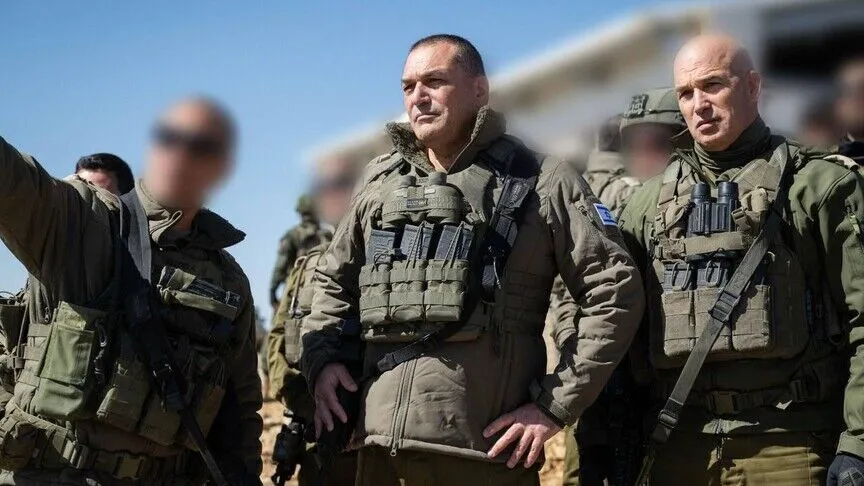
Netanyahu has lost on the economic level as well. His country stands economically devastated, army in ruins as admitted to by the Israeli chief of staff Eyal Zamir, and the dream of opening an ‘economic Middle East’ is definitely dashed for the time being.

America, as Trump knows, is left to pick up the pieces of a tattered world caused by war any choas in a region that is vital to the global system.

Continue reading
Trump Threatens to Leave NATO But Can He?

US President Donald Trump on Thursday urged the members of NATO to gather the courage to send naval vessels to the Strait of Hormuz, again disparaging the longtime military alliance.

Asked why he had not mentioned NATO in his Wednesday night address to the nation, Trump said it was not a NATO speech but that he had referenced the strait and those who were absent. “They gotta get guts and go in and just send your ships up there and enjoy it,” he told Politico.

Pressed on whether he was frustrated with the alliance, Trump said: “I couldn’t care less. I didn’t need them.”

He added: “But if I ever did need them, they wouldn’t be there.”

NATO has invoked Article 5 – its collective defense clause – just once in its history, after the 2001 terrorist attacks on the United States. NATO allies have criticized Trump for starting the war on Iran without consulting them.

The remarks are the latest in a string of pointed criticisms Trump has directed at NATO over its response to the Strait of Hormuz crisis. He has previously called alliance members “cowards” and, in a separate interview with British daily The Telegraph, described NATO as a “paper tiger” and said leaving the alliance was “beyond reconsideration.”

Leaving NATO unilaterally – a move Trump has hinted at since his first term – would face significant legal hurdles. A 2023 law bars any US president from withdrawing from the alliance without the backing of a two-thirds majority in the US Senate.

The strait, through which roughly 20 million barrels of oil pass daily, has been effectively disrupted since early March following Iranian measures taken in retaliation for the US-Israeli offensive on Iran that began on Feb. 28.

Trump has repeatedly urged European allies and Gulf states to take a more active role in securing the strait, arguing that countries dependent on its oil should bear responsibility for reopening it.

Trump will meet with NATO chief Mark Rutte in Washington next week, according to The Wall Street Journal. Anadolu

Continue reading
How Will Trump Get Out of This War?

By Ismail Al Sharif

“We are in an advanced position, and we will decide when the war will end,” said Kazem Gharibabadi, Iranian Deputy Foreign Minister.

President Donald Trump, in coordination with the Zionist entity, is igniting a regional war with Iran which is an unprecedented event in the region. Analysis of the true motives behind this fateful decision vary. One school of thought believes the strategic objective lies in controlling Iranian oil wealth and containing growing Chinese influence. Another links this to the Epstein affair, based on claims of Zionist pressure threatening to expose him to sensitive information.

A third school believes that Trump is tied to political commitments made to Miriam Adelson, who generously funded his election campaign. Some go even further, alleging that Trump, known for his transactional negotiating style, received substantial financial compensation for engaging in this war. In a related context however, recent reports indicate that Trump himself has blamed his son-in-law, Jared Kushner, and several close advisors for instigating this latest military adventure.

Whatever the true motives behind igniting this war, one path seems almost certain to end it: Trump will hold a press conference declaring a unilateral and absolute victory. The precise timing of this declaration remains uncertain.

But the decision to cease hostilities does not rest with Trump alone; it is contingent upon the agreement of two other key parties: Tehran and Israel.

Israel shows no desire to end this war, as it is the primary beneficiary of its continuation. It systematically seeks to dismantle the structure of the Islamic Republic and sees no harm in the regime’s collapse leading to widespread chaos engulfing Iran and the entire region.

If Trump fails to restrain Netanyahu, the latter will not hesitate to continue his military operations even after any official American declaration of a ceasefire. This may explain why Trump declared that any settlement to end the conflict would only be possible with Netanyahu’s consent and explicit blessing.

However, the Zionist entity might feign acceptance of a ceasefire while its Mossad intelligence apparatus works behind the scenes to fuel separatist and rebellious sentiments among ethnic minorities within Iran, such as the Kurds and Balouchis, potentially threatening the cohesion of the Iranian state from within. In response, Tehran would have no choice but to continue targeting the entity, which would then retaliate swiftly, potentially drawing Trump back into a cycle of military confrontation.

Adding to Trump’s predicament is the possibility that he might ultimately declare a ceasefire unilaterally, without any fundamental change to the structure of the Iranian regime, and without extracting any genuine concessions from Tehran regarding halting uranium enrichment, dismantling its missile program, or severing its ties with regional allies—the very pretexts used to launch the war.

Even more dangerous is the fact that the Islamic Republic’s resilience and its emergence from this crisis with its system intact will make it a unique and exceptional model: The first country to challenge American hegemony and emerge unscathed. This could encourage other countries suffering under the weight of Trump’s policies or ambitions—such as Venezuela and Greenland—to adopt resistance as a path, even if they lack Iran’s military capabilities.

It seems to me that President Trump may be following in the footsteps of his predecessor, George W. Bush, when he famously declared victory in 2003 from the deck of the aircraft carrier USS Abraham Lincoln, which was then—as it is today—at the eye of the American military storm. It is worth recalling here that Bush’s speech was a highly symbolic and premature declaration, one that was quickly contradicted by events, as the war on Iraqi soil continued for nearly a decade afterward.

The war has exhausted Iran and burdened it with immense hardships, making it seriously seek a cessation of hostilities. However, it simultaneously finds itself in direct confrontation with American will. Iranian officials have made it clear that any agreement to a ceasefire and the resumption of negotiations is contingent upon receiving firm guarantees from Washington and Tel Aviv that the aggression will not be repeated. Should Tehran manage to withstand and overcome this phase, it is likely to add to its list of demands one of which is the lifting of some of the sanctions imposed upon it.

Therefore, it appears that the Iranian strategy is essentially based on a policy of systematic attrition; simultaneously exhausting the United States and Israel by driving oil prices to high levels and closing the Strait of Hormuz, the world’s vital energy artery. This would impose heavy economic burdens that might ultimately compel Washington to reconsider its calculations and agree to a ceasefire.

In short, Trump will not be in a position to deliver a victory speech in the next week or two, and any such declaration without genuine cooperation from Israel and Iran will amount to nothing more than empty rhetoric devoid of any real substance on the ground. There is no doubt that President Trump has put himself, his country, and the entire region in a very complex strategic predicament, from which the way out may not be as easy as those who made the decision to go to war imagine.

This analysis was originally written in Arabic and reprinted in crossfirearabia.com

Continue reading