‘Journalist Khalil Trapped Under Rubble Left to Die’

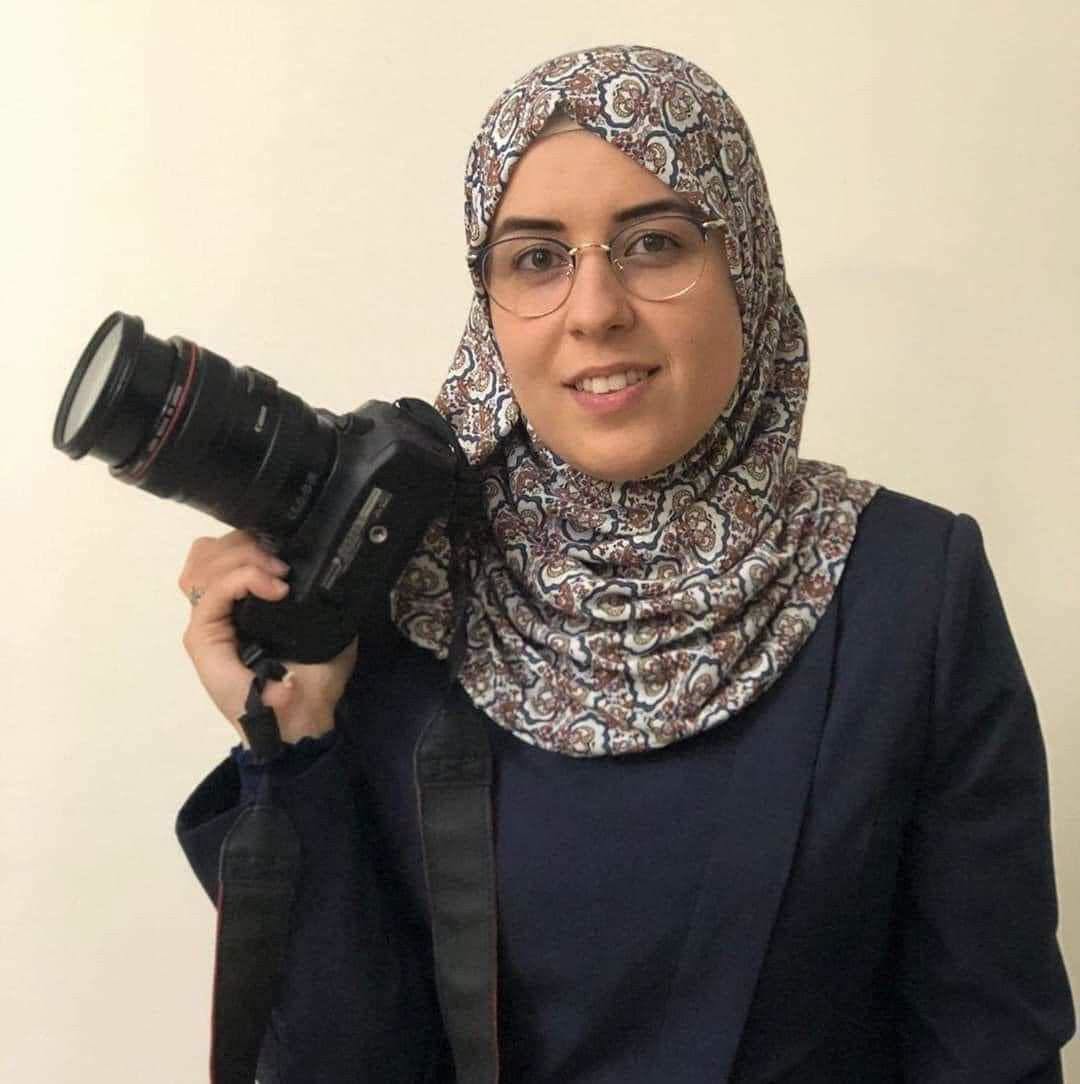
Prominent Lebanese journalist Amal Khalil was killed, Wednesday, by an Israeli targeted military attack in the town of Tyre in southern Lebanon. At the time she was on an assignment with her friend freelance photojournalist Zeinab Faraj reporting on recent attacks on the southern village of Bint Jbeil.

The Lebanese Arabic newspaper Al Akhbar daily confirmed  her death on Wednesday night.

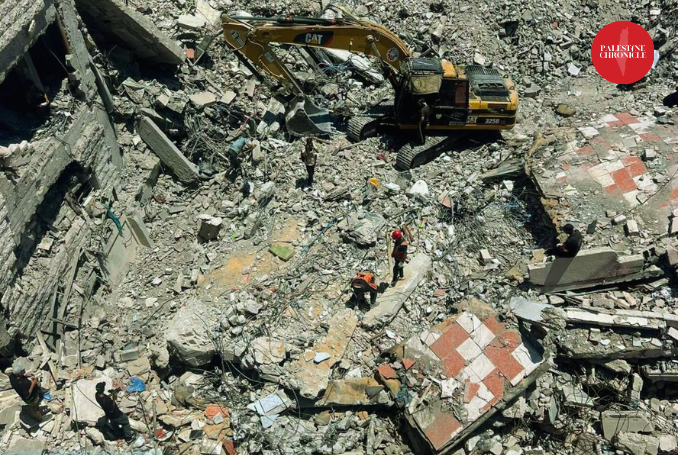
Earlier they were covering the aftermath of an earlier terrorist Israeli drone strike in the town of al-Tiri that killed two civilians. After their vehicle was targeted, the journalists sought refuge in a nearby house which was subsequently bombed, trapping Khalil under the rubble.

Israeli gunfire and stun grenades ensued for several hours preventing the Lebanese Red Cross and army from reaching the site. Zeinab Faraj was eventually rescued in serious condition and taken to a hospital according to local reports and after a few hours, rescue teams recovered Khalil’s bodyfrom the debris.

Their killing is not an isolated act of Isaeli terrorism but is a calculated continuation of a decades-long pattern of targeting the press across Palestine and Lebanon. This history of Israeli terrorism against media workers serves a clear, systemic purpose: to assassinate the witnesses and silence the truthreporting on recent attacks on the southern village of Bint Jbeil wrote Mosab Abu Taha on facebook.

Jeremy Loffredo of Drop Site covered the news extensively and the time leading up to her killing. This is what he wrote: Khalil and Zeinab Faraj, a freelance photojournalist, were both on assignment in southern Lebanon, reporting on recent attacks on the southern village of Bint Jbeil. According to Al-Akhbar, which published a timeline of the events, the car they were driving behind was targeted by an Israeli drone at 2:45 p.m, killing two men inside. Khalil and Faraj took shelter in a nearby house.

At 2:50 p.m., Khalil contacted her editors and family, according to Lebanon-based journalist Courtney Bonneau. News of the incident quickly spread, prompting Lebanese President Joseph Aoun to put out a statement calling on the Red Cross to rescue the two journalists in coordination with the Lebanese Army and the United Nations.

At 4:27 p.m., the house where the two journalists were taking refuge was bombed by the Israeli military and contact with the journalists was lost, according to Al-Akhbar.

Israel did not respond to requests for access, obstructing any rescue operation, according to a Lebanese military official speaking to Al Jazeera. The Red Cross was eventually granted limited access to the site, according to the Committee to Protect Journalists, which remained under active fire.

They were able to evacuate Faraj, who reportedly sustained critical head injuries, and to recover the bodies of two other civilians who were killed. But they were forced to withdraw before finding Khalil because of continued shelling and the direct firing on rescue crews and vehicles. The Red Cross vehicle that transported journalist Faraj to Tubnin Governmental Hospital was hit by Israeli gunfire, with bullet marks visible on the vehicle, according to the state-run National News Agency.

The Red Cross was eventually able to return to the area after which Khalil was pronounced dead.

“The repeated strikes on the same location, the targeting of an area where journalists were sheltering, and the obstruction of medical and humanitarian access constitute a grave breach of international humanitarian law,” CPJ Regional Director Sara Qudah said in a statement.

The Israeli military did not immediately respond to a request for comment.

Referred to by Al-Akhbar as their “correspondent of the south,” Khalil grew up in Baysariyyeh, a coastal town in Saida district about a 45-minute drive from the Israeli border. She spent more than a decade and a half covering the cyclical wars and occupations of southern Lebanon by the Israeli military. Founded in 2006, Al-Akhbar’s editorial line is widely seen as supportive of Hezbollah and the Shiite resistance, and it identifies itself as a secular, independent progressive outlet.

Khalil had previously received explicit death threats on her phone in September 2024 from Gideon Gal Ben Avraham, a media commentator who runs a Middle East analysis channel on YouTube, appears on Israeli television, and describes himself as a retired military officer who continues to “help” Israeli intelligence. The messages told her to leave the country “if you want to keep your head on your shoulders” and asked whether her house was “still standing.”

When contacted by Drop Site on Wednesday before news of Khalil’s death emerged, Ben Avraham confirmed he sent the threats in 2024. “Send greetings to all journalists affiliated with Hezbollah, for anyone who works for the organization should know that they are destined for death,” he wrote, later clarifying that he considered Al-Akhbar “Hezbollah-affiliated” and that “only Hezbollah related should be afraid,” while Maronites and Sunnis should face no such threats.

It is not clear what—if any—formal relationship he has to the Israeli military. When pressed about Khalil’s predicament being trapped under the rubble of a house that was targeted by the Israeli military, he responded: “We don’t share our intel with journalists.” When asked directly whether he was a soldier when he sent the original threats to Khalil in 2024, Ben Avraham replied: “No comment.”

Last month, the Israeli military openly admitted to assassinating prominent Lebanese journalist Ali Shoeib, a correspondent for Al-Manar TV who had covered southern Lebanon for nearly three decades. The Israeli military falsely claimed that Shoeib was a Hezbollah intelligence operative. Also killed in the March 28 strike in the Jezzine district in southern Lebanon were Al-Mayadeen TV reporter Fatima Ftouni and her brother Mohammed, a video journalist. Their car, which was clearly carrying press equipment, was struck multiple times, with Ftouni initially surviving and attempting to flee, before she was targeted and killed in a strike by Israel.

Israel has killed at least 14 journalists, including Khalil, in Lebanon since October 2023, according to CPJ. In Gaza, the Israeli military has killed over 260 Palestinian journalists since October 2023, making it the deadliest war for journalists ever recorded.

Continue reading
Israel Kills 38,000 Women, Girls in Gaza

The war in Gaza has inflicted a far higher toll on women and girls than in previous conflicts in the Palestinian enclave, with more than 38,000 killed by Israeli air bombardment and land military operations since Hamas-led terror attacks in Israel sparked the war in October 2023, UN Women said on Friday.

The overall total includes at least 22,000 women and 16,000 girls and amounts to an average of at least 47 women and girls killed every day, the agency’s Sofia Calltorp, Chief of Humanitarian Action, told journalists in Geneva.

Those killed were mothers, they were daughters, sisters, and friends, deeply loved by those around them,” she noted, adding that the killings have continued in recent months, despite a ceasefire between Hamas fighters and the Israeli military.

Data also indicates that nearly 11,000 women and girls have been injured and that many have life-changing disabilities. The true toll is likely higher because many bodies are still trapped under rubbleUN Women said. According to the Gazan health authorities, more than 72,315 Palestinians have been killed in the Gaza Strip and another 172,137 injured since October 2023.

This has created a chronic humanitarian emergency in Gaza where many households are now headed by women facing increased economic hardship and protection risks.

Families clinging together

Six months since the ceasefire began in Gaza last October, women and girls continue to face severe and persistent risks, as humanitarian needs remain critical and recovery conditions remain fragile. 

“This war has reshaped families. Tens of thousands of households are now headed by women,” UN Women’s Ms. Calltorp insisted. “Having lost their husbands, they are sustaining their families without income, without support or access to essential services.”

In addition, “there is a complete lack of most services”, Ms. Calltorp continued, highlighting an urgent need for “the basics”, including sexual and reproductive health and access to sanitary pads. She recalled visiting Gaza in November and meeting two women who had to deliver their babies in the street, “because there were no transportations to bring them to any functional hospitals”.

UN Women is calling for full respect of the ceasefire, adherence to international law, and scaled-up humanitarian assistance, stressing that women and girls must be at the centre of recovery and peacebuilding efforts.

The agency remains on the ground in Gaza partnering women-led and women’s rights organizations. 

Together with the UN system, aid partners and women’s organizations, UN Women works to reach all women and girls with lifesaving assistance and to ensure that women’s organizations are funded and represented in decision-making and reconstruction.

UN News

Continue reading
Israel Sets Back Gaza 77 Years – UN Reports

The UN and European Union issued a joint warning on Monday that human development across Gaza has been set back by a staggering 77 years, with $71.4 billion needed over the next decade for recovery and reconstruction.

That’s according to the final Gaza Rapid Damage and Needs Assessment (RDNA), jointly conducted with the UN-partnered World Bank.

The assessment says $26.3 billion will be needed in the first 18 months to restore essential services, rebuild critical infrastructure and support economic recovery.

Since full-scale war erupted in Gaza following the Hamas-led attacks on southern Israel in October 2023, the physical damage in the Strip is estimated at $35.2 billion, with a further $22.7 billion in economic and social losses.

Entire sectors have been devastated, including housing, health, education, commerce, and agriculture. 

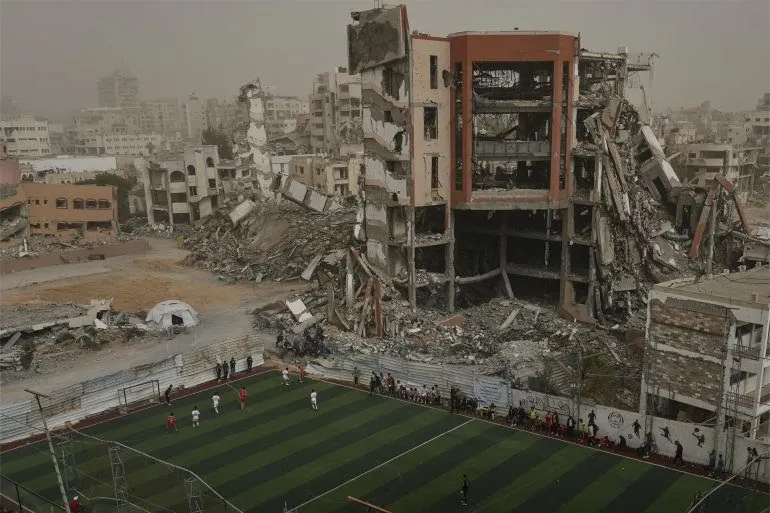
Over 371,888 housing units have been destroyed or damaged, more than 50 per cent of hospitals are non-functional, and nearly all schools have been destroyed or damaged. The economy has contracted by 84 per cent.

Devastating human toll 

The impact on the lives of Gazans is just as devastating: more than 60 per cent of the population having lost their homes and 1.9 million people displaced, often multiple times. Women, children, persons with disabilities, and those with pre-existing vulnerabilities bear the greatest burden.

Over two years of conflict has resulted in more than 71,000 Palestinian fatalities and over 171,000 injured, according to local authorities, with many still missing under the rubble. 

Framework for reconstruction

The report provides the foundation for early recovery planning and reconstruction, stressing it must must run in parallel with humanitarian action to ensure an effective transition from emergency relief toward reconstruction at scale in both the Gaza Strip and West Bank.

The assessment is framed in line with Security Council adopted resolution 2803 (2025) of the US-backed Comprehensive Plan to End the Gaza Conflict, which welcomed establishment of the Board of Peace led by President Trump as a transitional administration to set the framework for redevelopment and authorised the mechanism to set up a temporary International Stabilisation Force (ISF). 

The EU and UN emphasise that recovery and reconstruction should be Palestinian-led and should support the transition of governance to the Palestinian Authority, while advancing a durable political settlement based on the two-State solution.

Planning and implementation should be inclusive, transparent, and accountable, with particular attention to the needs of women, children, elderly, and persons with disabilities.

Conditions needed

The assessment recognises that a set of enabling conditions are essential for recovery, reconstruction, and implementation of the broader political framework:

  • A sustained ceasefire and adequate security
  • Unimpeded humanitarian access and immediate restoration of essential services
  • Free movement of people, goods, and reconstruction materials, within and between Gaza and the West Bank, and a functional, transparent financial system
  • Clear, accountable governance, including defined mandates and establishment of conditions for the transitional administrative bodies in coordination with the Palestinian Authority (PA)
  • A credible pathway for the PA’s future governance across the entire Occupied Palestinian territory, including Gaza, the West Bank and East Jerusalem, is essential
  • Debris clearance, explosive ordnance management, and resolution of housing, land, and property rights are prerequisites for reconstruction.
  • The international community must mobilise resources in a targeted, sequenced, coordinated manner 
  • All obstacles to the deployment of expertise and equipment must be removed rapidly

UN News

Continue reading
Hormuz: Mines, Strategy or Business?

By Ismail Al Sharif

The US thought that assassinating senior Iranian leaders would bring down the regime, but this did not happen.

Iran’s inability to match American military and technological superiority led it to adopt a number of strategies, most notably what is known in the military literature as the Mosaic Defense Doctrine. This doctrine is based on dismantling its military central command into small, independent units, each operating autonomously and making its own decisions without consulting the higher command.

From Day 1 of the war, Iran adopted this approach. However, the lack of coordination and the disintegration of the military hierarchy led to chaos and confusion which affected the management of its operations. The situation became contradictory; the politicians were declaring one thing and military commanders acting in a completely different manner and direction.

This was reflected on the ground through extremely dangerous behavior. Military units, using small boats, indiscriminately laid naval mines to deter enemy ships. However, the lack of coordination here backfired resulting in the Iranian navy officers losing their ability to pinpoint the coordinates of the mines they planted in the Hormuz Strait with no accurate maps or reliable records. Some of these mines may have been completely displaced by the currents of the sea. This was further complicated by the fact that these mines were not primitive but far from it; they were sophisticated and able to detect sound and pressure, and thus able to track the passage of large ships and submarines, and detonate automatically upon approach.

However, mine removal is not easy task, as history shows. Even today, news reports continue to surface of mines in various parts of the Kingdom, half a century after the last war. Indeed, mines from World War II are still being discovered on land and at sea.

Even with Britain’s pledge to remove mines after the war, and despite possessing the latest specialized technologies in this field, the task remains arduous, protracted, and uncertain. The specter of a sudden explosion looms, reminding us that the danger of mines is not easily eliminated.

But the decisive factor in weakening navigation in the Hormuz Strait is not primarily military, but rather material. Commercial ships are massive investments, with some vessels valued at around $150 million and their cargoes potentially worth hundreds of millions of dollars. Therefore, a single mine explosion can cause catastrophic losses to both the ship and its cargo. Consequently, no ship sails without insurance; ports, banks, and shipping companies refuse to deal with uninsured vessels, and without insurance, global shipping grinds to a halt.

Herein lies the real surprise: the fate of the Strait is no longer dependent on Iran’s pronouncements regarding its opening or closure, but has effectively fallen into the hands of insurance companies. With the escalating risks, insurance costs have skyrocketed; “war risk” premiums have jumped from approximately 0.25% of the ship’s value to nearly 1% or more, exceeding a massive $1 million per voyage. And it doesnt stop there; seven major insurance companies announced their complete withdrawal, issuing notices of coverage cancellation just within just 72 hours.

And here comes the decisive turning point: Once the insurance coverage is lost, maritime traffic ground to a halt. During this 39-war, ships have effectively ceased sailing with the number of vessels transiting the Strait plummeting by more than 80%. Around 150 oil tankers remain anchored offshore, and major shipping companies suspended their operations, as if this vital artery of global trade had been frozen by a financial, rather than a military decision.

The US government attempted to provide alternative insurance coverage, but this effort failed and US President Trump’s pronouncements regarding mine removal were inconsistent with the reality.

The issue of reopening the Strait has once again become a prominent topic, but the deeper truth is that its fate is no longer determined by political statements or military actions, but rather by the decisions of insurance experts. Even if the war were to end immediately, ships would not resume sailing right away. Insurance companies need time to reassess the level of risk, and they base their decisions not on political logic, but on cold, hard numbers and rigorous data.

This article was originally published in Arabic in Addustour daily newspaper and republished in English in crossfirearabia.com.

Continue reading
Health Crisis: 18,000 Await to Leave Gaza

The Palestinian Red Crescent Society stated, Sunday, that only 700 patients were able to depart the Gaza Strip, to receive outside health care as of last 2 February, 2026 when the Rafah Crossing was partially opened.

The PRCS added that more than 18,000 patients and those that are injured are still waiting for permission to leave for medical reasons, amidst tight Israeli restrictions.

Raed Al Nims, PRCS spokesman told “Sawt Falestine” the current pace of evacuation is “very slow and does not match the growing needs,” whilst warning that the health crisis in the sector is worsening.

He added about 700 patients left the Gaza Strip for treatment, while more than 18,000 wounded and sick individuals are awaiting urgent medical care.

Al-Nims explained thousands of critical cases are at risk of death due to the lack of medical resources, adding: “Lives are at stake, and some patients have already died while waiting on long waiting lists due to the absence of life-saving medical services.”

He clarified that patient selection is based on medical criteria that takes into account the severity of their condition, but procedures related to security approvals delay their departure, exacerbating their health problems.

This comes amidst Israel’s control over the Gaza Strip crossings, including the Rafah crossing on the Palestinian side, while it continues to occupy more than 50 percent of the Strip’s area. This further restricts the movement of patients and limits their access to treatment outside Gaza.

Al-Nims called on the international community to intervene urgently to ensure the permanent opening of the crossings and to keep medical cases separate from any political or security considerations, while also stressing the need to provide safe and sustainable corridors for medical evacuations.

Since the reopening of the Rafah Crossing, Palestinians returning to Gaza have reported as being subjected to Israeli mistreatment, including detention and harsh interrogations lasting for hours, before being allowed to continue their journey into the Strip.

Before the war, hundreds of Palestinians left Gaza daily through the crossing, and hundreds more returned to the Strip in a normal flow of traffic. The crossing’s operations were managed by the Gaza Interior Ministry and the Egyptian authorities, without Israeli interference.

With American support, Israel launched a two-year war of genocide against Gaza on October 8, 2013, leaving more than 72,000 Palestinians dead and over 172,000 wounded, most of them children and women, and destroying 90 percent of the civilian infrastructure.

Despite the ceasefire agreement in effect since October 10, Israel continues its campaign of genocide through a persistent siege and daily bombardments, resulting in the deaths of 773 Palestinians and injuries to 2,171 others, mostly children and women, in addition to widespread material destruction. Israel is also preventing the entry of agreed-upon quantities of food, medicine, medical supplies, shelter materials, and prefabricated homes into Gaza, where some 2.4 million Palestinians, including 1.5 million displaced people, live in catastrophic conditions. Anadolu

Continue reading