Report: Strike on US Embassy Causes More Damage Than Previously Thought

An Iranian drone attack on the US Embassy in Saudi Arabia last month caused more damage than previously disclosed, the Wall Street Journal reported on Friday, citing US officials.

The attack occurred on March 3, when a drone bypassed air defenses at Riyadh’s Diplomatic Quarter and struck the American compound. A second drone followed, hitting the same spot and causing another explosion.

The strikes, which took place at night, breached a secure part of the embassy where hundreds of employees would typically work, severely damaging three floors. The CIA station was among the affected areas.

According to the report, Saudi officials initially downplayed the attack, calling it a minor fire with limited damage, but the US officials said the fire lasted for hours and caused significant, irreparable damage to parts of the embassy.

Later that night, more drones were intercepted, with debris landing near a preschool. One drone appeared to target the residence of the top US diplomat in Saudi Arabia, only a few hundred feet from the embassy.

Had the attack occurred during working hours, it could have resulted in mass casualties, officials noted, underscoring the message that Iran can strike at US assets once thought to be secure.

“It was able to produce an indigenously made weapon, fire it across hundreds of miles and put it into the embassy of their top opponent, which means they could have hit anything they wanted in the city,” said Bernard Hudson, a former CIA counterterrorism chief with extensive experience in Persian Gulf states, including Saudi Arabia.

“There’s been a complete blackout on the actual amount of damage done to these places,” he said about US embassies and bases. “That feeds suspicions that a lot more damage may have actually happened.”

Regional tensions have escalated since the US and Israel launched a joint offensive on Iran on Feb. 28, killing more than 1,340 people to date, including then-Supreme Leader Ali Khamenei.​​​​​​​

Tehran has retaliated with drone and missile strikes targeting Israel, as well as Jordan, Iraq, and Gulf countries hosting US military assets. Anadolu

  • CrossFireArabia

    CrossFireArabia

    Dr. Marwan Asmar holds a PhD from Leeds University and is a freelance writer specializing on the Middle East. He has worked as a journalist since the early 1990s in Jordan and the Gulf countries, and been widely published, including at Albawaba, Gulf News, Al Ghad, World Press Review and others.

    Related Posts

    Albanese Calls For World Force to Protect Civilians in Gaza, West Bank

    UN Special Rapporteur Francesca Albanese called Sunday for an “international protection presence” in the occupied West Bank, East Jerusalem and Gaza, saying such a deployment was “absolutely urgent.”

    “Third states have an obligation, per the ICJ, to act to end Israel’s unlawful occupation,” Albanese wrote on the US social media platform X, referring to a July 2024 advisory opinion by the International Court of Justice that deemed Israel’s occupation of Palestinian territory unlawful and said states must not assist in maintaining it.

    Albanese also questioned whether UN Secretary-General Antonio Guterres’ diplomatic efforts and the General Assembly’s “Uniting for Peace” mechanism could overcome the Security Council’s deadlock on the conflict.

    The mechanism allows the General Assembly to consider international peace and security issues when the Security Council cannot act because of a lack of unanimity among its permanent members. The council has repeatedly been unable to take action on Gaza and the West Bank amid vetoes by the US. Anadolu

    Continue reading
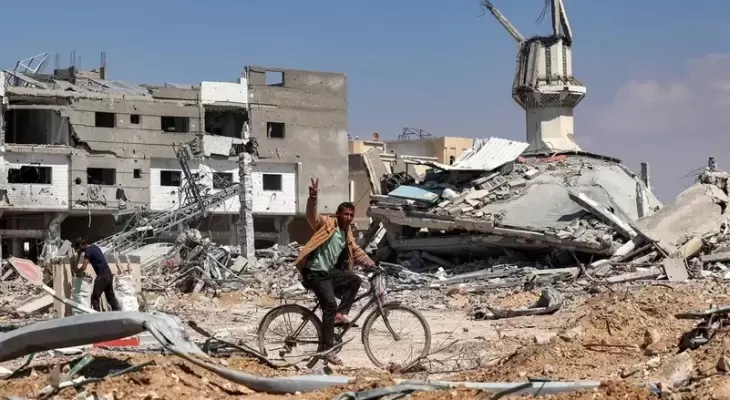
    40 Million Tons of Rubble: Gaza Ministry Faces Challenges in Removing it

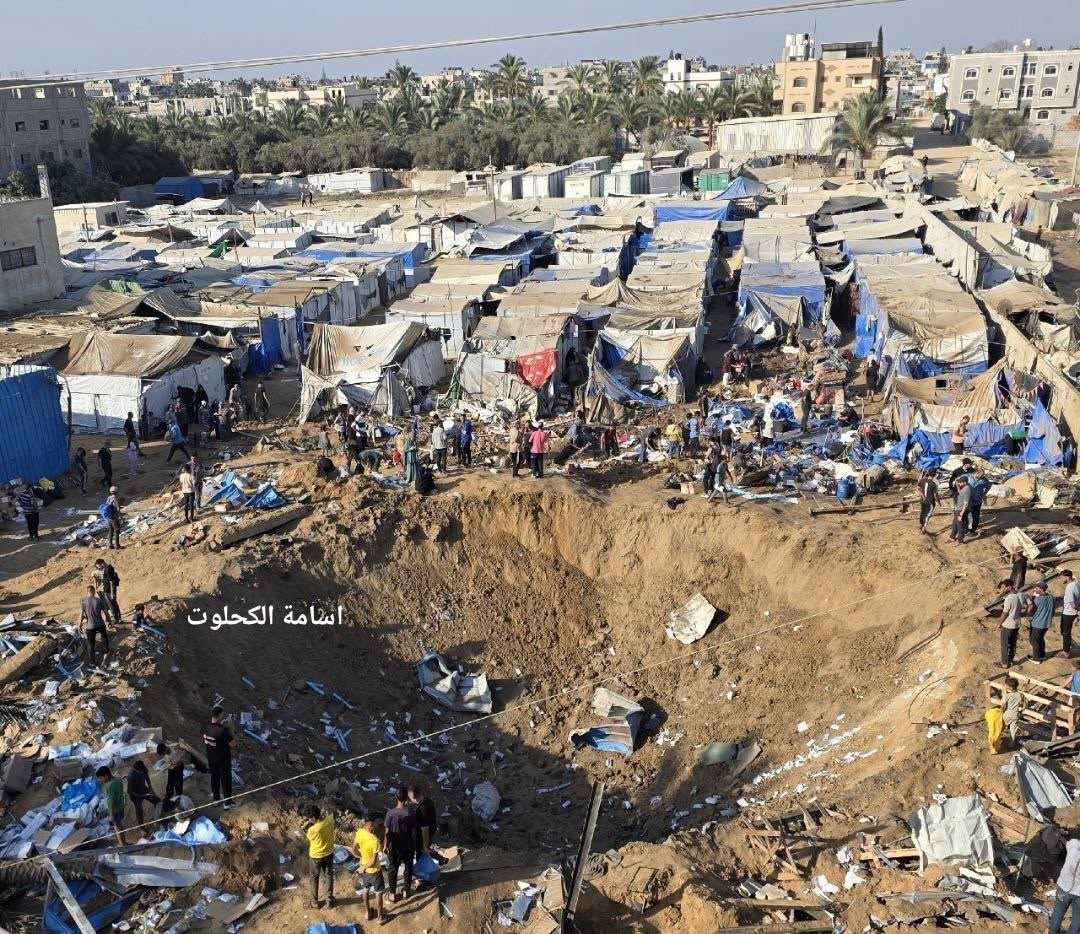
    Gaza’s Ministry of Public Works and Housing confirmed that Israel’s ongoing targeting of tents and shelters of displaced people in the enclave is a systematic policy of destroying the basic necessities of life. It noted the amount of rubble that has piled up in the various regions of the Strip has exceeded 40 million tons.

    Ministry spokesman Najla Hammad told the Sanad News Agency, Monday, the ministry is facing unprecedented challenges in removing the rubble because of the severe shortage of heavy machinery due to the Israeli-imposed blockade and the closure of crossings.

    Hammad pointed out that the recent Israeli aggression has displaced more than 80 families, leaving them homeless and exposed, noting the ministry received widespread appeals to replace the tents that have been damaged and/or completely destroyed.

    Read also: “Public Works”: Only 5% of shelter supplies enter Gaza

    She added what is making things worse is that the Israeli occupation is preventing the entry of tents, tarpaulins, and shelter supplies and the reduction of usable land in the Gaza Strip to less than 30%.

    Hammad explained that crews are continuing to work on opening main roads and providing alternative spaces for service facilities and educational centers but tough going. However, she announced the completion of the removal of the rubble at the site of the Hijazi Clinic in northern Gaza, in cooperation with the United Nations Development Programme (UNDP), and its handover to the Ministry of Health for reconstruction.

    She indicated that the demolition and clearing of rubble is currently limited to only 4 out of the 10 sites previously identified, due to security restrictions and a lack of heavy equipment. The teams are operating with only one excavator and a very limited number of trucks.

    Hammad noted the use of local alternatives and solutions, such as recycling crushed rubble to level roads and areas threatened by flooding, and melting plastic and aluminum to recycle supplies for health units in the camps is also moving.

    UN reports confirm that the scale of destruction and rubble in the Gaza Strip surpasses that of major wars and conflicts in modern history. International organizations warn that preventing the entry of machinery, engineering equipment, and shelter materials exacerbates the humanitarian, environmental, and health catastrophe, hindering the provision of even the most basic services to more than two million displaced people lacking safe shelter.

    The Ministry of Public Works and Housing in Gaza previously warned in August of the severe deterioration in the housing sector due to the widespread presence of tons of rubble. It emphasized that the aid and tents permitted entry by the Israeli occupation amount to no more than 5% of the actual needs of the displaced, given the strict restrictions at the crossings and the repeated forced displacement.

    Recently, the Ministry of Public Works and Housing launched an emergency program to repair and renovate partially damaged homes in the Gaza Strip, a step aimed at persuading and facilitating the return of displaced families to their homes and original areas.

    Last June, Hammad, announced a comprehensive plan for managing, storing, and crushing rubble for reuse, as part of the ongoing efforts to address the issue of debris resulting from the conflict.

    Hammad said that the Ministry is presently working with the UNDP and have to-date  constructed more than 15 shelters that have accommodated over 1,700 displaced families in the Gaza Strip, including five centers in the south that alone have housed approximately 700 families.

    Continue reading

    You Missed

    Morocco-Israel: Normalization Stops at The Top

    • By Heba
    • August 24, 2026
    • 2 views
    Morocco-Israel: Normalization Stops at The Top

    Albanese Calls For World Force to Protect Civilians in Gaza, West Bank

    Albanese Calls For World Force to Protect Civilians in Gaza, West Bank

    40 Million Tons of Rubble: Gaza Ministry Faces Challenges in Removing it

    40 Million Tons of Rubble: Gaza Ministry Faces Challenges in Removing it

    Join The Queue For The Drops

    Join The Queue For The Drops

    ‘My Way Out of Insanity’

    ‘My Way Out of Insanity’

    The Child, Tree and The Dark

    The Child, Tree and The Dark