Sea of Tragedy and Life

By Ibrahim Isam

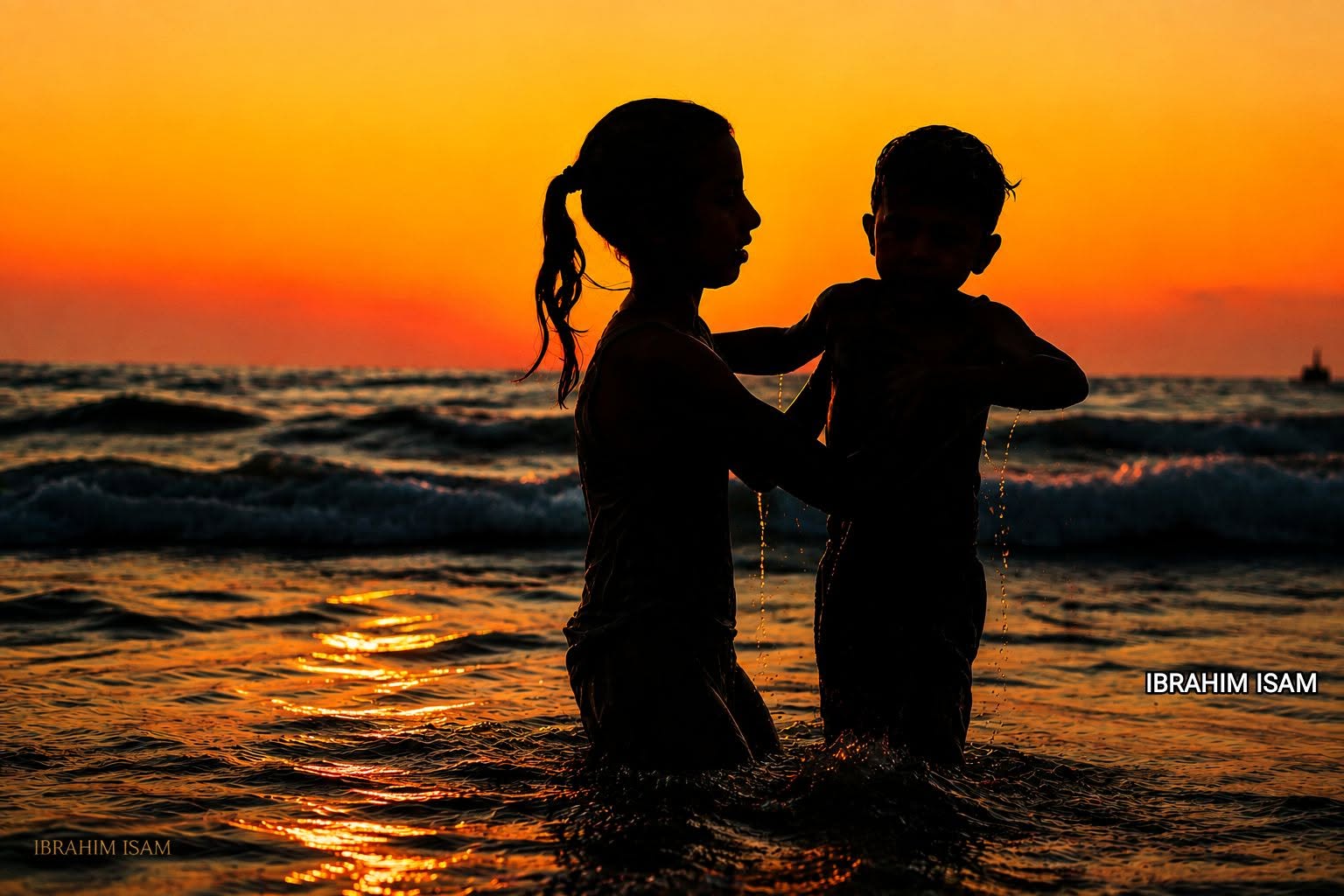
They did not go to the sea in search of pleasure.

They went because water—the simple thing we once turned on at the tap without giving it a thought—had become, somehow, too precious to be spent on the body. Every drop had acquired its own reckoning, every washing its own question, and cleanliness itself had become an act of life.

The sand became the loofah, the sea became the water, and their hands became all that was missing.

A person rubs the sand against their body, not merely to rid themselves of the day’s fatigue, but as though trying to erase from their skin the mark of a heavy age that has clung to it. Then they wash with whatever seawater they can bear, salty or cold, as though the body, after all it has endured, asks no more of life than to be left, for a little while, clean.

Perhaps the sea understands these things better than we do.

It does not ask those who come to it: Who are you? What have you lost? Where have you come from?

It simply takes the body as it is, and washes it.

Since the earliest days, humankind has known water as something more than water. It was seen as a threshold between two states; a small death followed by rebirth, a passage from darkness into another darkness, slightly less deep. In ancient stories, water washed away sin and returned something of its clarity to the soul, until it sometimes seemed that a person did not enter the water merely to cleanse the body, but to remember who they were before life grew heavy upon them.

Here, in the sea of Gaza, the baptism seems to continue.

But this is a baptism without a church, without a priest, without any preserved ritual.

The sea alone is the priest.

And the children are the ones who know the secret.

They enter it as one enters the presence of something before which there is nothing left but silence. They allow the water to pass over their bodies, and emerge carrying the salt of the sea—and something else the camera cannot see: the small, quiet feeling that, despite everything, they are still capable of doing something for themselves.

To wash.

To wipe the dust of the day from their bodies.

To choose, if only for a little while, how they wish to be.

Perhaps this is why the sea in Gaza seems so strange these days; not merely beautiful, but wise.

Like an old man who does not speak much, but knows that however tightly the world may close around a human being, they still need somewhere to return to themselves.

The wave comes and goes.

Then another comes.

And so, since the moment humanity first came to know water, it has repeated the same ritual: washing its hands, its face, its body, and then trying to wash something deeper that water cannot reach.

Memory.

Fear.

The night.

And all that has clung to the soul from days that refuse to end.

Perhaps this is the secret of the children in the photograph.

They are not merely bathing.

Without knowing it, they are restoring to the world one of its oldest truths: that purity is not always found in the water we possess, but in the desire that makes us search for it.

In a world where water has become a privilege, washing becomes an act of philosophy.

And in an age that seeks to make human beings accustomed to filth, keeping the body clean becomes a quiet form of defiance.

And the sea remains there.

Salty. Vast.

Unable to give them fresh water, yet offering them something they may have needed even before water itself:

the feeling, if only for a moment, that their bodies still belong to them.

And that the sky, despite everything that has happened beneath it, has not entirely closed its door.

That is why I choose to believe that every wave reaching the shore of Gaza carries with it something of the ancient promise:

Wash yourselves, then return to life.

For water does not always save the body.

Sometimes, it is enough for it to remind the body that it is still alive.

  • CrossFireArabia

    CrossFireArabia
    Dr. Marwan Asmar holds a PhD from Leeds University and is a freelance writer specializing on the Middle East. He has worked as a journalist since the early 1990s in Jordan and the Gulf countries, and been widely published, including at Albawaba, Gulf News, Al Ghad, World Press Review and others.

    Related Posts

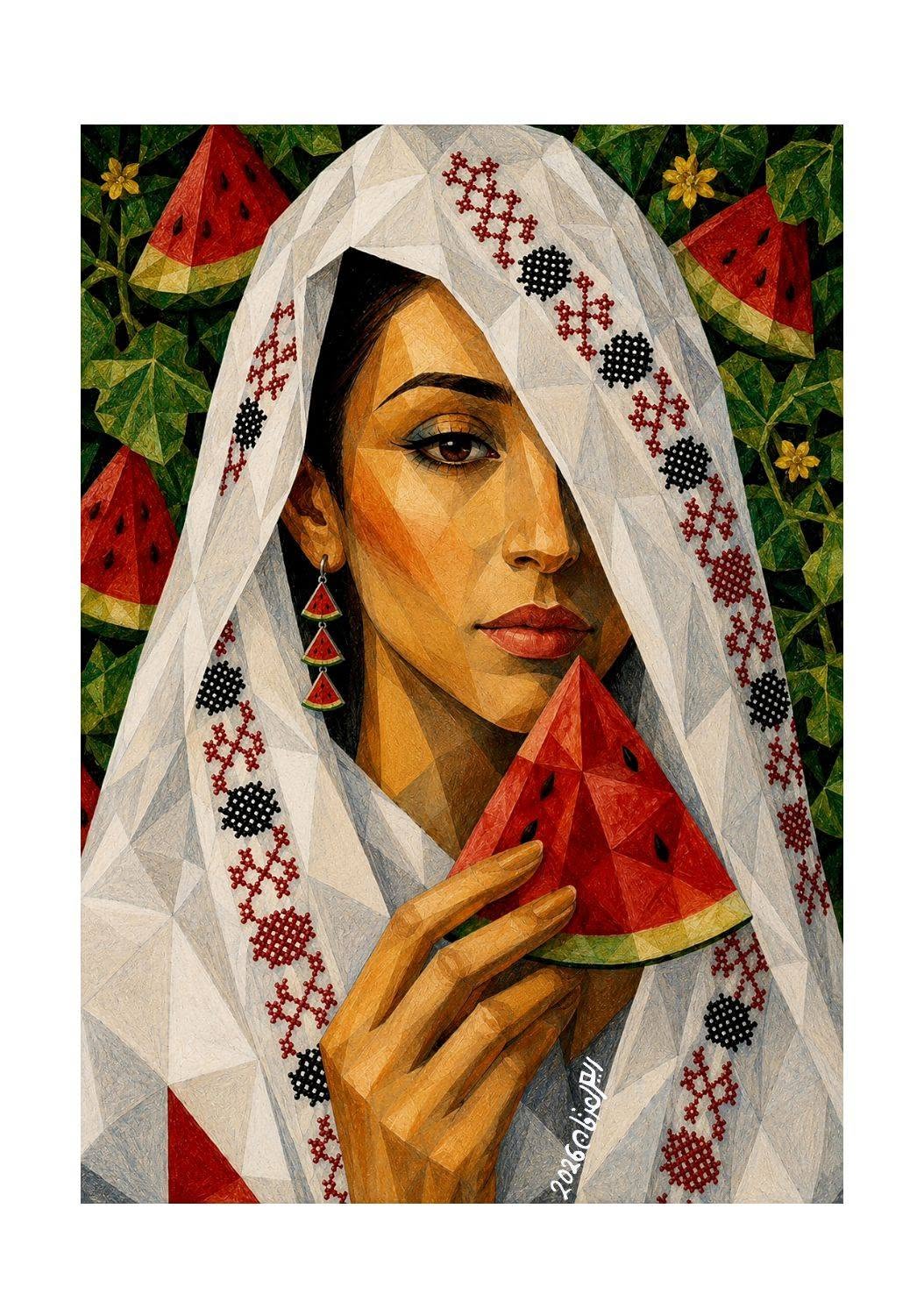
    Reem Arkan’s ‘Red Homeland’

    Reem Arkan writes:

    “This is my new painting. It is titled “In Her Hand, a Red Homeland”. She explains in her eyes you can see Palestine; in the palm of her hand there is a watermelon; And the red, is the story of a land that will never die. She clutches the watermelon as if it were a homeland, And she guards in her heart the olive tree of memories.

    O girl of the land, O color of Palestine,
    You and the watermelon are the story of a people… and the story of steadfastness.”

    Arkan is from Gaza, she is a teacher and has graduated from Al Aqsa University, hence the beautiful style in painting and words.

    Continue reading
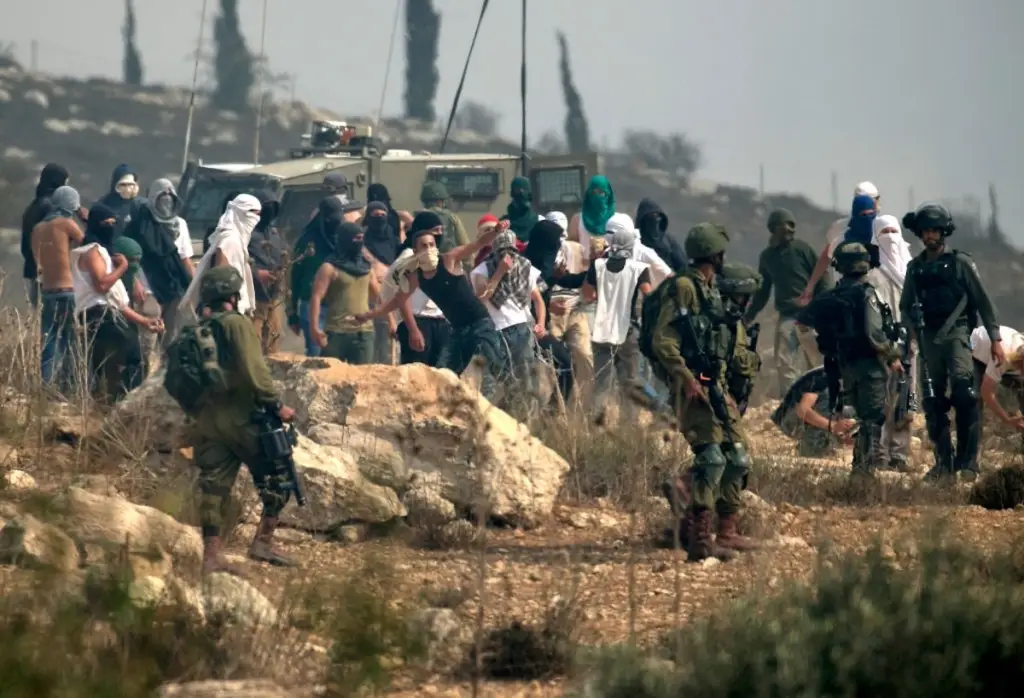
    Israeli Army Seizes 16 Homes in The West Bank

    The Israeli army seized 16 Palestinian homes in and around Qusra in the northern occupied West Bank and converted them into military posts, a local official said Thursday.

    Abdul Azim al-Wadi, head of the Qusra village council, told Anadolu that the army was continuing its military offensive in the town, south of Nablus, and had informed the council that it would last until Sunday morning.

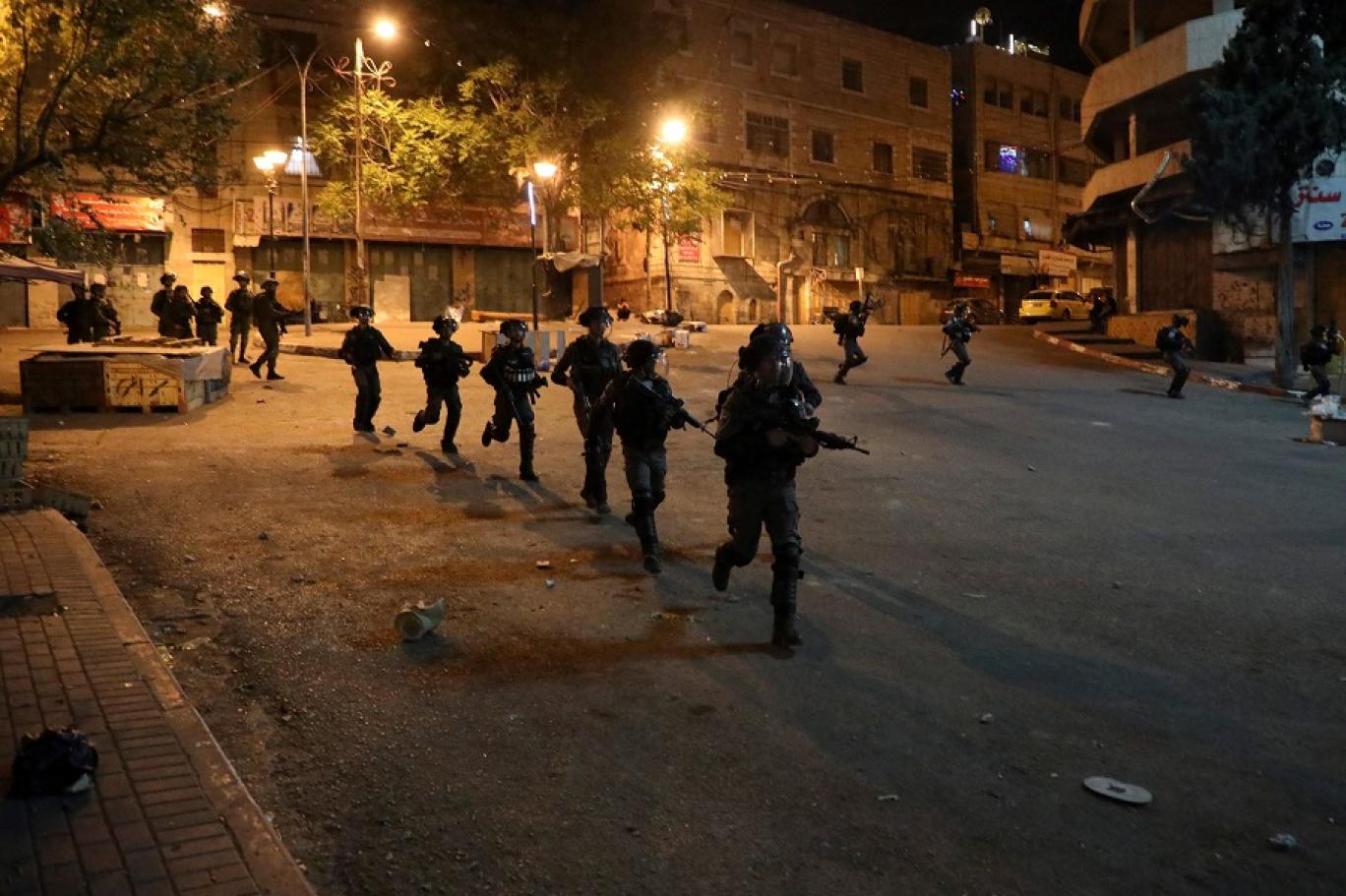
    Large Israeli forces, accompanied by infantry troops, military vehicles and bulldozers, entered Qusra and deployed across the town and its outskirts, he said.

    Al-Wadi said the Israeli army told the council it was seeking to dismantle an illegal outpost established by occupiers near the town amid escalating tensions in the area. He said three Palestinian families, including one with US citizenship, remained trapped inside their homes for a 4th consecutive day.

    An Anadolu correspondent saw Israeli troops stationed inside several homes, while some families left their houses to stay with relatives.

    Since Sunday, Israeli occupiers have erected a tent and temporary structures among Palestinian homes in the Ras al-Ain area on the outskirts of Qusra, according to the Palestinian Colonization and Wall Resistance Commission.

    The occupiers also blocked roads leading to the area with rocks and surrounded three homes, the commission said.

    It warned that the attacks could develop into a prolonged siege intended to isolate the families and force them from their homes.

    The occupiers have obstructed the delivery of food, water and medicine to the homes, while water and electricity lines have also been cut, it added.

    Earlier Thursday, large Israeli forces raided Qusra, imposed a curfew and ordered businesses to close amid a widespread deployment of infantry troops, military vehicles and bulldozers.

    The developments come amid escalating occupier attacks in the area and Palestinian concerns that attempts to establish the outpost could become permanent and lead to the seizure of Palestinian homes and land.

    The commission said occupiers had attempted eight times to establish an outpost in the Jabal Ras al-Ain area, citing its strategic location on high ground overlooking a large area.

    Attempts to raid and seize the homes began about four months ago, prompting family members to take turns staying in them to prevent their takeover, it added.

    The commission warned of a repeat of events in the nearby village of Jalud, where it said occupiers seized a home belonging to Mahmoud al-Tubasi’s family on July 22 after besieging it for more than three months.

    According to the commission’s latest figures, occupiers carried out 12,506 attacks from October 2023 through June 2026, killing 52 Palestinians and setting 890 fires that damaged Palestinian property and farmland.

    It also documented 2,256 attacks across the occupied West Bank in July, including 1,458 by Israeli forces and 798 by occupiers. Anadolu

    Continue reading

    Leave a Reply

    Your email address will not be published. Required fields are marked *

    You Missed

    Sea of Tragedy and Life

    Sea of Tragedy and Life

    UN: Humanitarian Access Blocked by 900 Israeli Checkpoints

    UN: Humanitarian Access Blocked by 900 Israeli Checkpoints

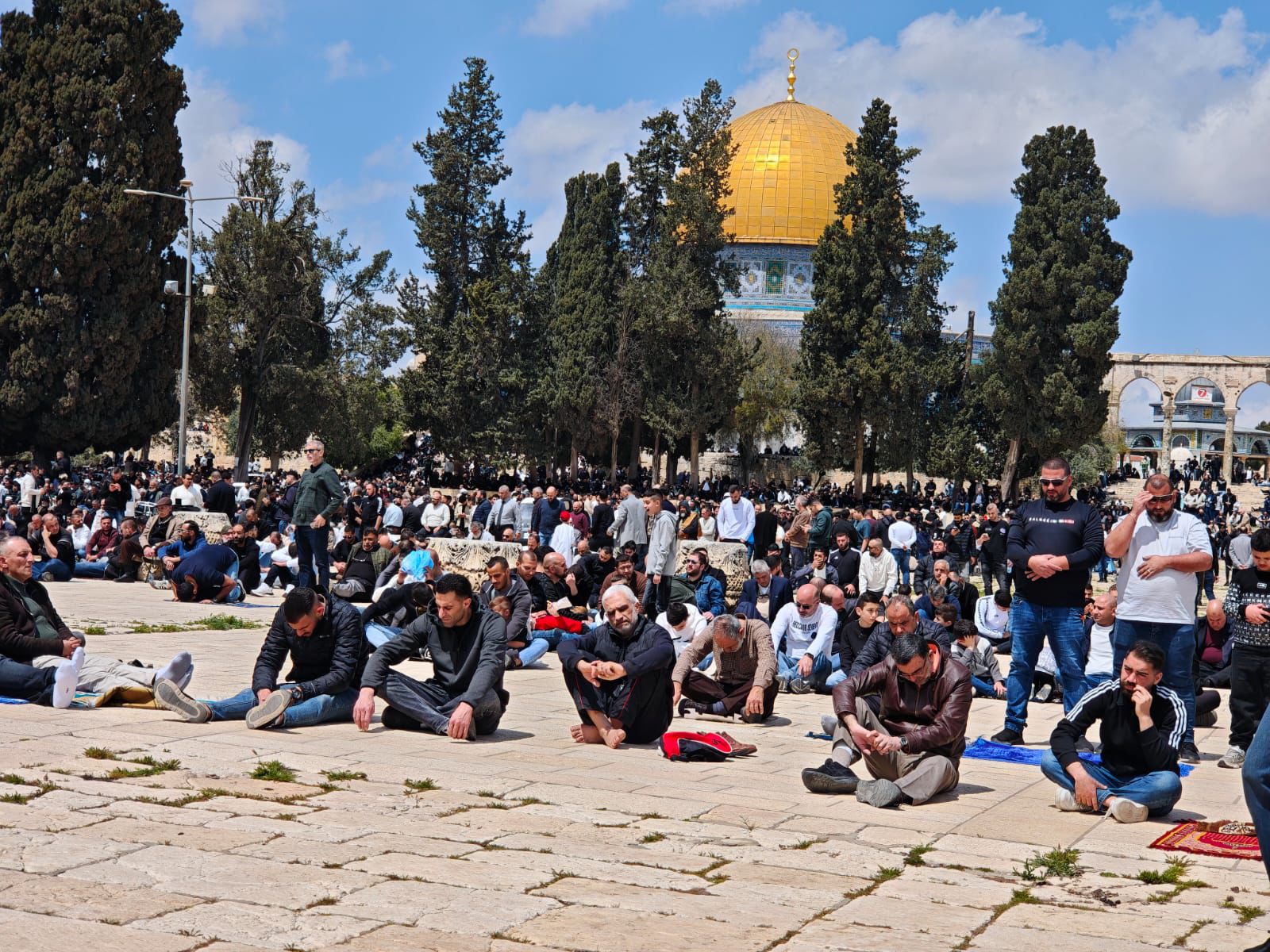
    70,000 Perform The Friday Prayers in Al Aqsa

    70,000 Perform The Friday Prayers in Al Aqsa

    90% of Gazans Displaced in Tattered Tents, Living on Rubble

    90% of Gazans Displaced in Tattered Tents, Living on Rubble

    Glorious Yemen

    • By Heba
    • August 14, 2026
    • 11 views
    Glorious Yemen

    Say Cheese!

    Say Cheese!