Trending News:Israel Continues to Target Children – UN Report‘We Must Resist The Israelisation of Our Societies – Francesca AlbaneseKier Starmer Quits The Labour Party LeadershipIsrael Killed Raghad on The Way to SchoolTrump, Netanyahu Rift Hits Rock Bottom: View From AmmanYoungest Palestinian Doctor Gets GuinnessPalestine: 70 Killed Since The Start of 2026All For Gaza: Susan Sarandon With Misan HarrimanIn Gaza: Israel Kills 9, Wounds 41 in 24 HoursWorld Cup: Egypt Makes Ever Win Against New ZealandMeet Karimeh Abbud – First ‘Lady Photographer’ of PalestineMarriage Among The Ruins‘Displacement Steals a Person’s Life’ – Camp Palestinians in Lebanon Face Israeli BombsPoll: 92.1% of Israelis Say Iran ‘has won’ The WarIsrael is ‘Killing’ The Ceasefire on LebanonAl Jazeera Demands Israeli Officials be Punished For Killing its ReportersOlmert: Its a ‘Campaign of Ethnic Cleansing’‘Sneeze and You Might Well Get Shot’ – UNICEF Man in GazaAl Jazeera Cameraman Among 10 Palestinians Killed in GazaAl Rimawi Freed After 25 Years in JailIsraeli Battalion Officer Linked in The Killing of Little Hind Tank-Torched in Lebanon 60,000 Hold Friday Noon Prayers in Al AqsaBreaking: Four Israeli Soldiers Killed in Southern Lebanon, 17 Injured according to Hebrew mediaAmidst War 50,000 Lebanese Return HomeOn ‘Average 12 Children Are Killed…Maimed Every Day,’ – UNICEF Chief in LebanonLebanon: Israel Kills 3,884 Civilians, Injures 11,856Belgium Lawsuit: Israeli Soldiers Will be Hunted DownAll on Video: This is What Israeli Soldiers Did in Gaza!Occupation and Israeli Violence“Hay Mr Trump Israel is ‘Eating’ Into Gaza”Sheikh Naim Qassem in Defiant Mood, Calls For Israeli Withdrawal…Third Year: Israel on UN ‘Black List’ Because of Child Atrocities1 Israeli Killed, 10 Injured in South LebanonLama Khater Speaks of Abuse, Torture, in Israeli JailsOde to a HomelandThe Little Ball Unites The Big Globe!Will The US-Iran Deal Last?The Wedding, Our Wedding…Traditional Palestine‘No You Can’t See MoU With Iran’ – TrumpGuterres Praises US-Iran DealIsraeli Targeting: Euro-Med Office in Gaza Shuts DownAt 73,008 Killed Gaza Buries Its DeadTrump Ticks Off Israel in Rebuke…Three-year-old Rayan Shot Point-blankWorld Cup Through Gazan EyesYaffa 1934The A, B, C of a Post-Sanctions IranThe Orange SellerTaleb Al-Rifai No Longer a KuwaitiCeasefire And Defeat: Iran Won The War Breaking: Trump Announces Reopening of Hormuz StraitBreaking: Iran-US Reach a DealThe First Palestinian FilmmakerThe Nation Story…In Memory of Sakakini and FamilyAsma Toubi: 1st Female Voice on Radio JerusalemGuterres Condemns Israeli Strikes on BeirutLimited Iran Strike: Concept and International DimensionsArabism From The Skies?Crisis in Yemen: I in 3 Women Die in Childbirth984 Palestinians Killed Since The CeasefireUS-Iran: Deal Today, Deal Tomorrow!Hassan Al Karmi: The Dictionary-MakerIbn Batuta: ‘Prince of Muslim Travelers’Fatima Cates: First British Muslim in LiverpoolLayali Al Khatib: First Palestinian Contender Into SpaceEisenkot: Netanyahu Fails in His Wars on Gaza, Lebanon and IranAnadolu Launches ‘Gaza Trilogy’ WebsiteImprisoned For Refusing to Leave His PatientsSuleiman Mansour: A Painter For PalestineFrancesca Albanese Picks Olives For PalestineTrump: No Plans to Seize Iran’s UraniumCeasefire No: Israel Seeks to ‘Eat’ Into GazaDr. Hassan Ahmadian: Trump Forced to Seek a Deal on IranPalestinian Flag Raised Slovenia Presidential PalaceGaza Holds Collective Wedding For AmputeesIsrael Denies Entry of French JournalistDr Hussam Abu Safiya: Before and AfterIsraeli Attacks on Christians Spike to 88 CasesUN Red Alert LebanonLast Wedding in TanturaBattle of Wills: Resistance V. Israeli SettlementsA Public Letter: Stop Smearing Euro-MedIsrael on Gaza Killing Spree as World Looks AwayDid Little Malak Deserve Death?Handala in IrelandOccupied Palestinian Territories in CrisisPalestinian Journalists Under Attack – 55 Israeli Violations in MayJordan Footballers Delighted For World Cup MatchesWorld Cup: Trump, Political Footballing and Iran – A View From AmmanA Red Flower And a Little LoveDiving in a War ZoneNetanyahu, Iran and The ‘Destructive’ Israeli PersonalityIran Anounces End of Israel Attacks, Warns of More If…31 Missiles Fired on Israel From Iran, Yemen‘I Hate Israel’Confrontation: Iran-Israel Trade Fresh Military Strikes…Single Bullet! Dutch Report = European Press Prize = GazaYemeni Missile Fired on Israel
Nearly 70,000 Palestinians have been trapped for two months without access to food or medicine, as Israeli occupation forces continue to pursue them throughout the northern Gaza Strip. This ongoing situation has resulted in numerous deaths and forced displacements in what many consider one of the most horrific campaigns of genocide in modern history.
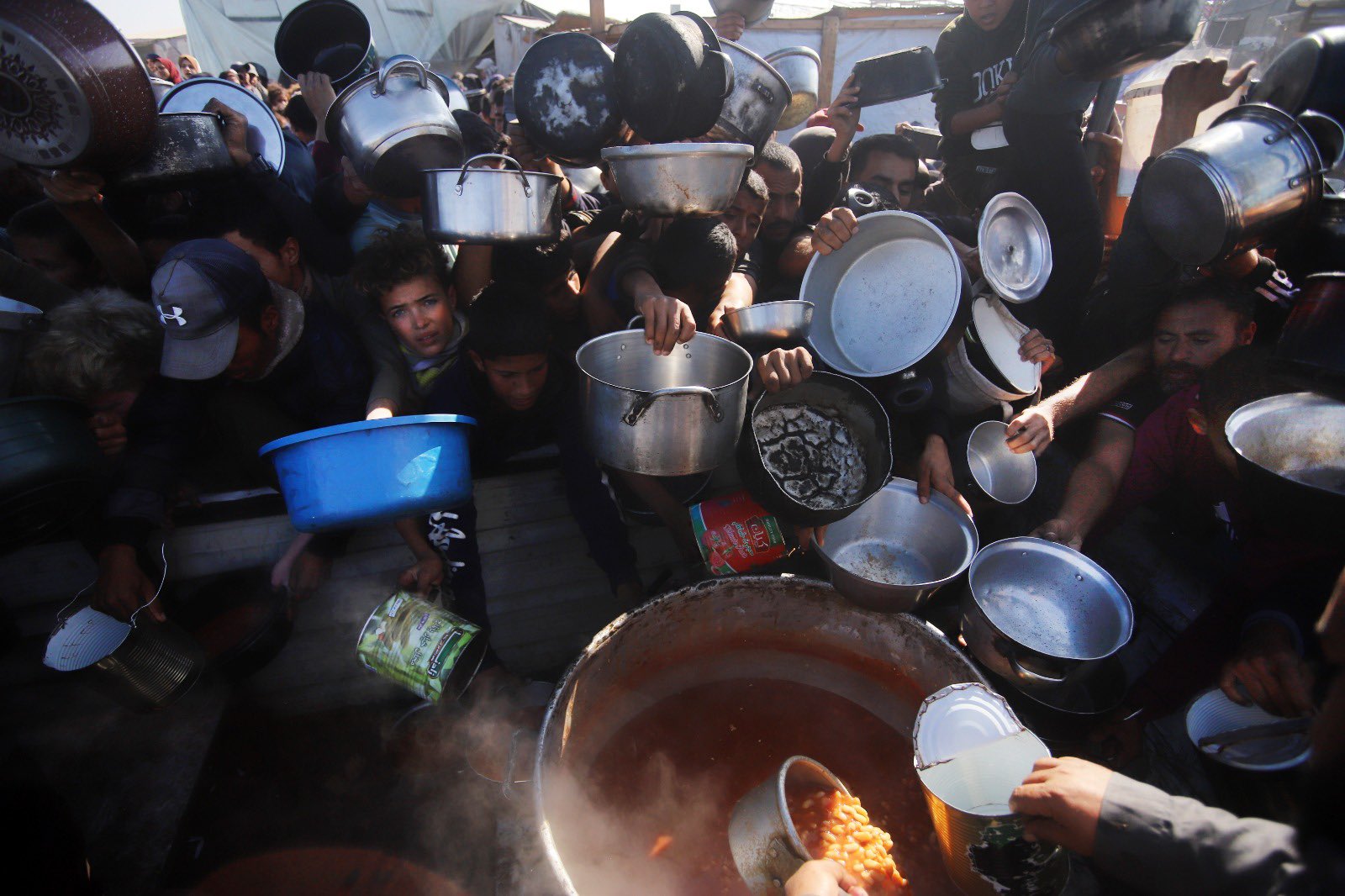
Euro-Med Human Rights Monitor has received alarming reports about the dire situation facing the nearly 70,000 Palestinians who are trapped in the northern Strip. This follows the displacement of more than 150,000 people by the Israeli army since the onset of its most recent military operation in the north on 5 October 2024. Euro-Med Monitor notes that those who remain besieged are experiencing severe famine, as they have run out of all types of food and lack access to clean water. Many have gone days without eating or drinking anything. Meanwhile, Israeli bombings and other military operations continue, targeting shelters as well as what remains of previously destroyed homes.
No one can rescue those stuck under the rubble due to the Israeli bombings, as Israel has been blocking civil defense teams from operating
Deliberate bombing
The Israeli army has deliberately bombed homes where civilians sought refuge. The most recent incident occurred on Sunday, when the occupation army targeted the Labad family home in Beit Lahia, resulting in the killings of 25 family members. Just two days earlier, Israeli forces also bombed three residential buildings in Jabalia and Beit Lahia, which belonged to the Baba, Al-Araj, and Ahmad families. This attack killed more than 120 residents, leaving an unknown number of victims still trapped under the rubble.
70 thousand Palestinians trapped in northern Gaza face starvation, extermination in one of the largest genocidal campaigns in modern history. People are dying horribly – an unknown number trapped under rubble, and the injured dying of their wounds. https://t.co/GolQMlJhil
No one can rescue those stuck under the rubble due to the Israeli bombings, as Israel has been blocking civil defense teams in the northern section of the Strip from operating for 41 days now. Consequently, the injured are slowly dying without medical assistance, as they cannot be transported to hospitals, which are unable to function properly under such dire conditions and are frequently subjected to bombings. Furthermore, those who manage to survive their injuries and reach partially operational hospitals face the risk of being targeted by Israeli drones. Even if they do make it to a hospital, they may still die due to a lack of adequate treatment and insufficient medical personnel.
Numerous incidents have occurred in which Israel has used drones, including quadcopters, to target Palestinian civilians who were compelled to leave their homes or shelters in search of food or water.
The Israeli occupation army is committing severe crimes against civilians. Its attempts to completely eliminate the residents of the Jabalia refugee camp have included destroying homes using robots and booby-trapped barrels, in addition to dropping powerful American bombs. Despite Israeli forces’ awareness of the presence of residents in many of the homes and residential blocks, these sites are still being targeted.
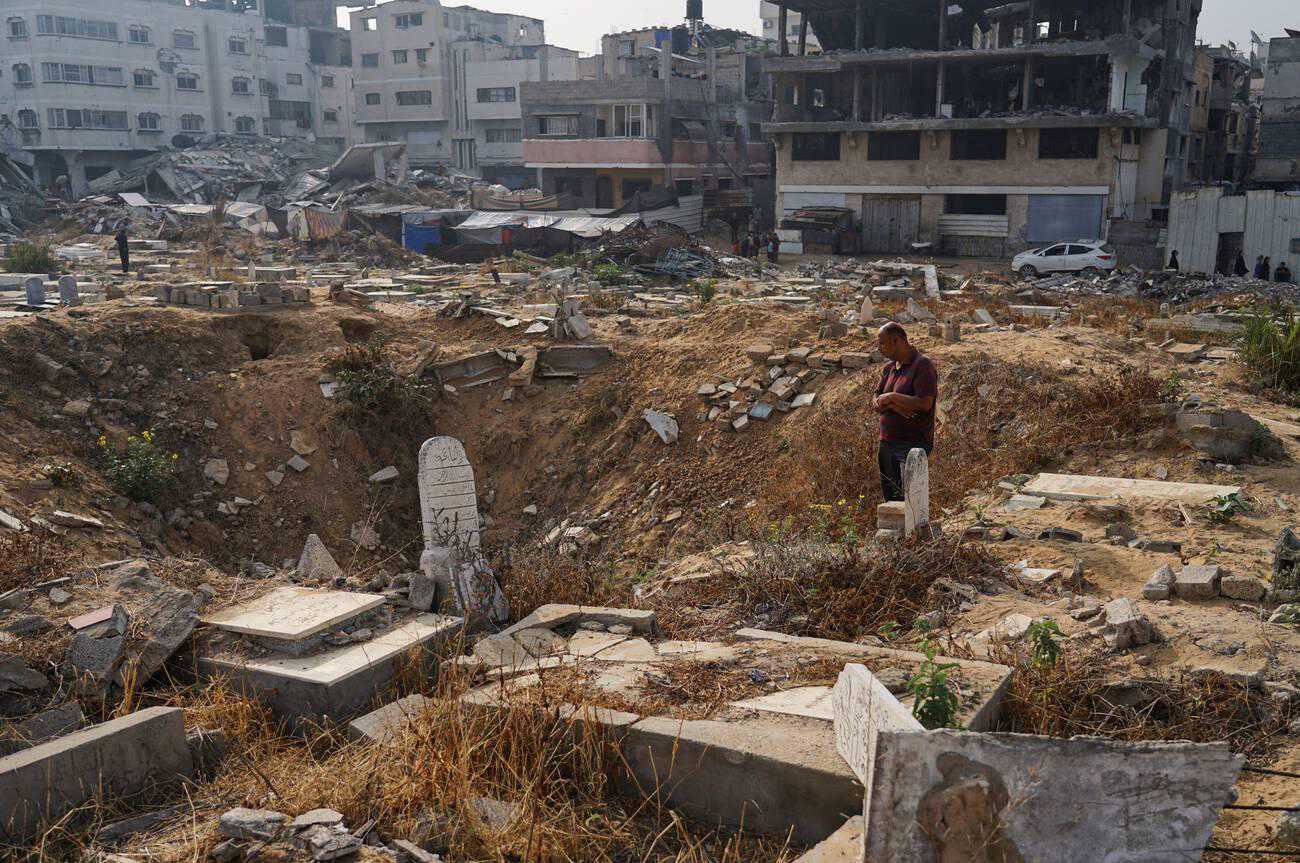
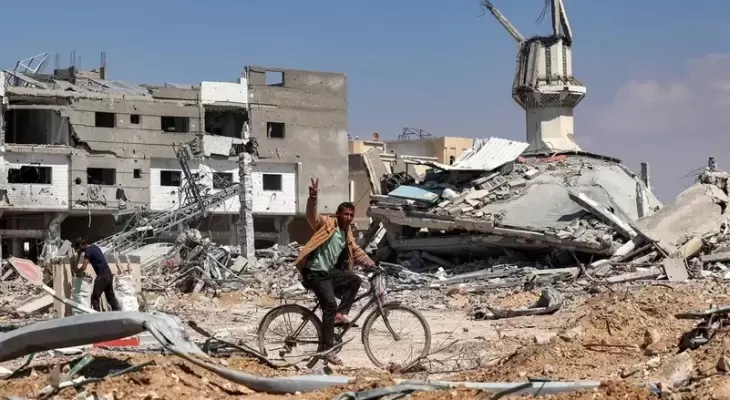
The Israeli army has turned Jabalia Camp, the city of Jabalia, Beit Hanoun, and Beit Lahia into piles of rubble, devastation, and total destruction, by wrecking, demolishing, and burning homes and shelters, and targeting all aspects of Palestinian life. As a result, even if the Israeli army withdraws from these areas, it will be nearly impossible for Palestinian civilians to return and live there safely.
The world witnesses these horrific crimes, yet no serious action has been taken to stop what is now considered to be one of the largest genocidal campaigns and humanitarian tragedies in modern times.
This international disregard for the victims constitutes an indelible stain on the forehead of the international community, which continues to exclude Palestinians from the protection of international law and its executive mechanisms. These mechanisms have failed to be applied effectively, due to political biases and international pressure. This situation reflects a global hypocrisy regarding the principles that the international legal system is built upon, demonstrating shameful double standards and a blatant violation of justice and humanity.
The international community’s hesitation to take decisive action in response to Israel’s violations in the Gaza Strip, particularly in the Strip’s northern regions, makes it complicit in these crimes. This inaction serves as a tacit approval for Israel’s actions, allowing it to continue escalating its campaign of genocide, and demonstrates a shocking disregard for the lives and dignity of Palestinians.
It is imperative that the United Nations and the international community intervene immediately to protect 10s of thousands of residents of northern Gaza who are in imminent danger, plus stop the ongoing genocide being perpetrated by Israel across the entire Gaza Strip for the second consecutive year. Actions should include imposing sanctions on Israel, implementing a comprehensive arms embargo, holding the country accountable for its actions, and taking all necessary measures to safeguard Palestinian civilians. Additionally, the enforcement of the arrest warrants issued by the International Criminal Court against the Israeli Prime Minister and Minister of Defense must be prompt, ensuring their surrender to international justice.
Dr. Marwan Asmar holds a PhD from Leeds University and is a freelance writer specializing on the Middle East. He has worked as a journalist since the early 1990s in Jordan and the Gulf countries, and been widely published, including at Albawaba, Gulf News, Al Ghad, World Press Review and others.
17-year-old Raghad Hussein Ashour left her home, Monday morning, carrying her books and dreams, heading to an educational center in the Rimal neighborhood of Gaza City. She was preparing for her secondary school exams and clinging to her right to education despite the war, displacement, and destruction that has affected schools and all aspects of life in the Gaza Strip.
But her path to knowledge was cut short. Raghad was killed in an Israeli airstrike that targeted a vehicle in the Rimal neighborhood as she was passing near the site of the attack on her way to the educational center. Her academic dreams turned into a new tragedy reflecting the reality for thousands of students in Gaza.
According to her mother, Raghad was an outstanding student and one of the top performers in her studies. She refused to let the war sever her connection to education.
After the destruction of schools and the disruption of the educational process, she had become accustomed to moving between the streets of Gaza and cafes in search of electricity and internet access to continue her studies and complete her assignments.
From Beit Hanoun to Displacement
Raghad comes from the town of Beit Hanoun in the northern Gaza Strip, but she and her mother were forced to flee to Gaza City to escape the relentless bombardment there. They settled in a displacement camp near the Saraya area in the Rimal neighborhood, where the young woman continued her studies amidst extremely difficult humanitarian conditions.
Raghad’s suffering wasn’t solely due to the war; she had been orphaned since childhood, losing her father when she was just two years old. She was raised by her mother, who dedicated her life to her upbringing and care.
As the years passed, the only daughter became her mother’s support and companion in facing life’s burdens and losses.
“Who will replace her?”
Standing before her daughter’s body, the grieving mother was unable to comprehend the magnitude of the tragedy. Her words, heavy with anguish, uttered, “My daughter was my only child… my rose was taken from me in an instant. Who will ever replace her?”
She added bitterly, “I used to move her from place to place during the war so she wouldn’t be taken from me. We slept together on the same pillow.”
The mother recounted years of fear for her only daughter, how she tried to protect her from death during repeated displacements and the harsh days of war, before losing her on her way to school.
In poignant scenes captured in widely circulated videos, the mother embraced her daughter’s body, weeping for dreams unfulfilled. She spoke of the joy of success that awaited her, and the future she had envisioned for her despite all the hardships, before those dreams were extinguished by the bombing.
Her death sparked widespread grief and reactions on social media, where many saw in her story a poignant illustration of the suffering of Gaza’s students who cling to education despite displacement, destruction, and the lack of basic necessities. For some, their books have become the final testament to dreams that were never meant to be fulfilled.
The Israeli occupation forces continue to violate the ceasefire agreement and the end of the war of aggression on the Gaza Strip for the 256th consecutive day. This agreement was signed on October 10, 2015, in Sharm El Sheikh, Egypt, under Arab and American mediation. Sanad news agency
Late Israeli prime minister Golda Meir once unashamedly said the Palestinians don’t exist and Israel was established on empty lands.
It was a view repeated time and again to justify the Israeli occupation of Palestinian lands and their subsequent grab of more Arab territories.
The photographs of Karimeh Abbud (1893-1940), the first Palestinian woman photographer, debunks that view and makes Israelis like Meir eat their words.
Google honoured her legacy by celebrating Abbud’s 123rd birthday with a Google doodle in 2016 two years before this article was first published.
“Abbud captured vast landscapes, many of which don’t exist today. Through her art, we’re able to experience the beauty of these regions as she saw them nearly 100 years ago,” said Google on November 18, 2016. “Thank you, Karimeh, for making art that endures.”
Only upon closer inspection it is clear that the tree is in fact painted on the negative, curving around her head and through her hands
Google also dwelled on her “photographs of family, friends and the surrounding landscape of Bethlehem, Palestine.”
Darat Al Funun of the Khaled Shoman Foundation in Amman presented the first comprehensive exhibition of photographs by Karimeh Abbud in late 2018 to continue January 11, 2019.
Documentary
The exhibition also included a short documentary on Karimeh’s life and work by Mahasen Nasser-Eldin.
Many art critics have commented on the impressive nature of her photography. In a tribute to Abbud Palestinian art critic Tammam Al Akhal said “she is friend of the light and sun… there is an artistic sense of the equilibrium inside her pictures. She was a true artist when taking a photograph.”
Al Akhal was giving a short presentation on the artistic poise in Abbud’s photographs as the Karimeh Abbud Photography Competition Prize was being launched by Dar Al Kalima University College of Arts and Culture in Bethlehem, Palestine, in 2016. The competition has since become an annual event designed to encourage young talent in art, culture and photography.
The Lady Photographer of Palestine
In her time, she established herself amongst the great photographers of the time with Al Akhal referring to her as standing as “tall as the skyscraper.”
Abbud was born in Bethlehem on November 18, 1893, in a Christian family which had settled in Palestine in the latter half of the 19th century. Her father was Said Abbud, an Anglican-Lutheran priest, who used to travel all over Palestine and take Abbud with him wherever he went.
Ivana Peric wrote that when Abbud was little she would accompany her father on his travels to distant places to serve his congregations in Jerusalem, Bethlehem, Haifa and Nazareth “and this constant travel to Palestinian cities and villages allowed [Abbud] to see the diverse landscape of her homeland first-hand. She wanted to see more and capture the beauty she encountered.”
Reverend Mitri Al Raheb — who became a sort of unofficial biographer of Karimeh Abbud and her family — said when he came to Palestine, her father travelled to many places from Gaza in the south to Shaffa Amer in the north and then finally settled in Bethlehem in 1890. However, the family finally put down roots in Nazareth and this is where Abbud grew up, going to primary school there, then to Jerusalem and later to the American University in Beirut where she studied Arabic literature.
However her true passion was photography. She was merely 17 when her father gave her a camera and she started clicking there and then and didn’t stop until her death. She was buried in the Bethlehem Church where her father preached from the early 1900s until 1947 when he retired and left Palestine in January 1948 because of the troubles in Palestine and returned to Marj Ayoun in southern Lebanon where he originally came from.
During this period, however, the second of his six children quickly established herself by becoming a highly competent photographer, competing in a man’s world alongside such old hacks as Khalil Raad, Hanna Safieh and Fadil Saba and a handful of Armenian photographers who dominated the profession.
Ahmad Mrowat, the director of the Nazareth Archive Project devoted to collecting the works of the “Lady Photographer”, said Saba, the local photographer, moved to Haifa in the early 1930s and this made the emerging photographer a household name. He was invited to cover events all over Palestine, including one celebration in Hebron.
Social revolution
Abbud created a social revolution in photography. Unlike the male photographers who worked out of their own studios, Abbud did much more. She had two studios, one in Nazareth where she also had a laboratory for processing the photos and keeping the negatives in a safe place and adding colour to some of them, and a studio in Haifa. However, she visited homes to take photographs of women and children which male photographers could not do.
Abbud went into the homes of well-to-do and middle class families as Al Raheb points out. Increasingly, these people wanted her to come to their homes because of prevailing social constraints that made it inappropriate for them to venture outside their houses, especially to be photographed in studios.
So Abbud photographed women and children at different social occasions, during parties and marriage ceremonies. Her reputation was quickly cemented in the 1920s and 1930s when she took up the profession full time. In Al Carmel, a local newspaper, she advertised herself as “the only national photographer in Palestine [who] learned this beautiful art by well-known photographic personalities and is specialist in the service of women at reasonable prices…”
There are two points here to consider that could actually be inter-related. Jinan Abdo stresses the national element in this advertisement. She states in a 2012 documentary on Abbud made by Mahasen Nasser-Eldin: “when she calls herself a national photographer that feeds into the national context that was present at the time. In the 1920s, after the British Mandate began, Muslim and Christian associations started to counter the idea that we are sectarian groups and not a nation and to support the idea of the unification of our nation, so the rational element was essential and I think we can look at Karimeh through this national context,” Abdo says.
Dr Issam Nassar, an academic at Illinois State University who teaches Middle East history, focuses on the “micro” element in her photography. “Taking portraits in studios at that time required preparations” whilst “in the clients’ homes… it was more relaxing because people felt at ease in their natural sorroundings.”
Hani Hourani, a social science researcher who studied art and photography, says: “If we look at the family and group photos [taken by Karimeh Abbud] the viewer doesn’t see the traditional style of the setting, the background décor and the fixed distribution of light but the onlooker sees such marked diversity in all these elements.
“The home was an opportunity for more improvisation and diversity in the styles captured by the photo leading many to suggest Karimeh Abbud was a non-traditional photographer calling for change in the way she clicked photos.”
Abbud’s photographs on show at Darat Al Funun were recently acquired accidentally after much cajoling.
Mrowat answered an advertisement placed in an Arab newspaper by an antiquarian Jewish collector named Boki Boazz calling for more information about Karimeh Abbud. That was in 2006.
Mrowat says at first the collector was not willing to divulge any information but after being pressed, it turned out that he had 4,000 photographs which he got hold of in one of the houses in the Qatamon district in Jerusalem after their owners fled in 1948; the photographs, he adds were of Karimeh Abbud because her name was initialled on each of the photographs — the first signed picture postcard belonging to her was dated October 1919.
Mrowat says his heart was set on obtaining the collection which he felt were a very important part of Palestinian heritage, finally persuading Boazz to give up his collection by offering him an old edition of the Torah printed in the Palestinian city of Safad in 1860.
The photos on show form only a part of the collection at Darat Al Funun and are only a fraction of the huge number of photographs said to number 9,000 still believed to be in the possession of the Israeli army as an article in the Haaretz newspaper stated.
The photos present a narrative of the Palestinian society and travel before 1948. Abbud took photos of cities and villages that flourished in the early part of the 20th century.
It was easy for Abbud to get around, Mrowat says, as she was probably the first woman to have an automobile and a driving licence in Palestine and the Arab world. She used to travel frequently to photograph Bethlehem, Jerusalem, Tiberias and Haifa. Many photos were taken of beaches, markets, mosques and churches, providing a unique glimpse of Palestinian life.
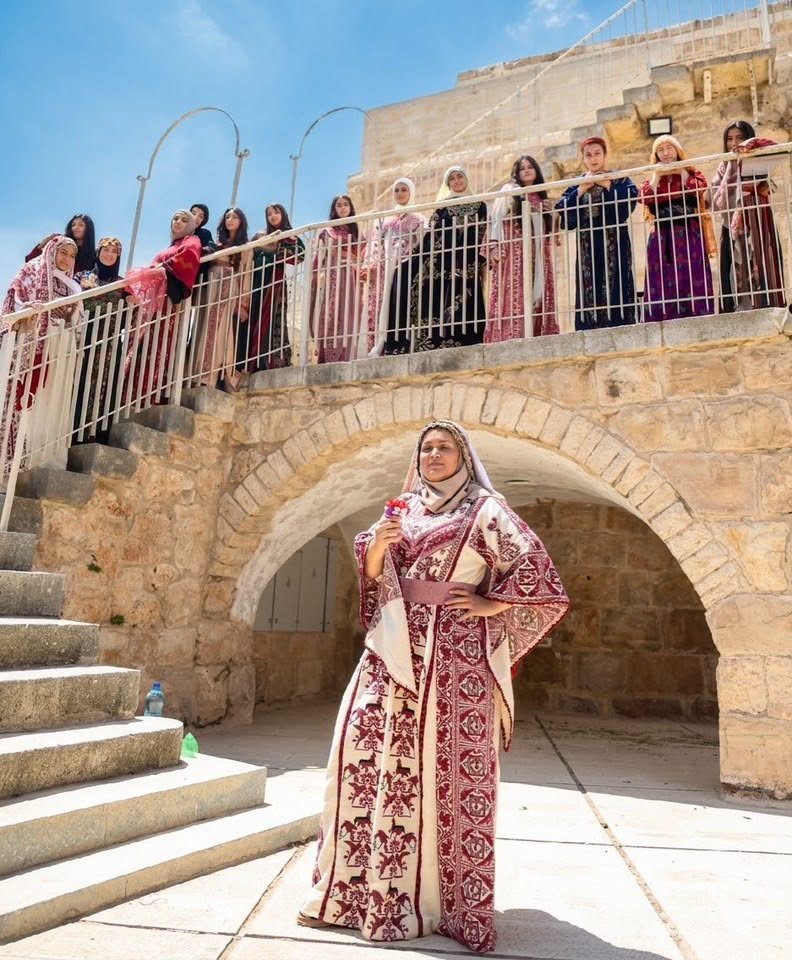
Mrowat, Dr Nassar and others suggest she would act, at times, as a tour guide, accompanying visitors to many tourist locations including the Jordan River and Yarmouk River as well as many other places. In between these, she was interested also in photographing the daily lives of Palestinian women, the different stitches they would make as they embroidered their garments which represented different villages, farming, women carrying water and wood as well as other scenes in both the countryside and in towns and cities.
Nassar puts it in another way when he says that Abbud was able to bring out the human aspects of the personalities she was photographing and this added value to her work and individuality because she succeeded in preserving the modesty and humanity of the Palestinian existence “through what professional photographers call the “aura” of the photograph and its phantasmical imagination.”
Al Akhal agrees, saying this is why Abbud’s photographs surpassed time. It was the “professionalism”, “creativity” and “high quality” that produced good negatives and in turn excellent photographs that “allowed her work to continue to be seen long after,” she says. “Through these pictures she [Karimeh Abbud] talks to us in silence, we build a dialogue with her, become friendly with her and construct strong relations with her.”
Through her images, Abbud provided a pictorial documentation of Palestinian life.
Nasser-Eldin, also coordinator of the the Karimeh Abbud Photograph Competition Prize, says “Abbud started what we can call ‘documentary photography’ documenting the lives of people through her studios and through her movement in the country carrying her bulky tripod and her camera wherever she went.
“Through her lens we got to know the forms of Palestinians living in Palestine before 1948. Her photos give us a change concept, a new picture of windows and images of Palestine and Palestinians, totally different from the pictures of orientalists who showed our country [Palestine] was empty of people and/or showed images of people spread out and not as an integrated community with civilisation and culture living in towns and cities and in modernity at that time,” Nasser Eldin added.
Her photos were well-taken and are a vital part of history, so at various times Israel has sought to adopt her as one of its own. This is what one book, published in 2011, titled Karimeh Abbud: Israeli Portrait and Wedding Photography by Monica Millian tried to do. Many have questioned its credibility as it is primarily sourced from Wikipedia and other online resources.
It can easily be understood why Israel would want to “cash in” on such an historic cultural figure, but Abbud is a Palestinian through and through as judged by historical evidence.
Marwan Asmar is a commentator based in Amman. He has long worked in journalism and has a Phd in Political Science from Leeds University in the UK. This article originally written for and appeared in Gulf News and is now reprinted in crossfirearabia.com.