CrossFireArabia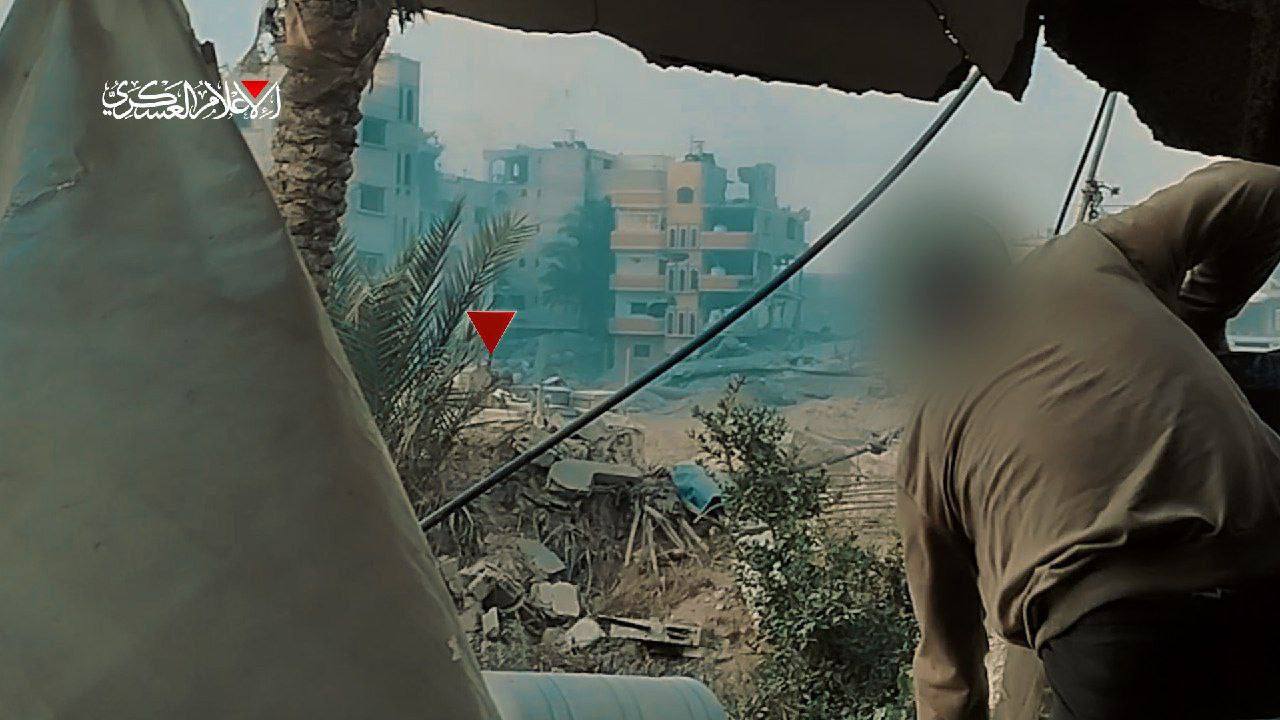
Footage of the resistance operations carried out against Israeli forces in Khan Yunis, southern Gaza Strip, not only reveals accurate information about the movements and positions of these forces, but also demonstrates a consistency between the execution and the plans laid out for them. They exceed the standards established in military science.
Al Jazeera published exclusive footage on Saturday of two ambushes carried out by the Hamas Qassam Brigades in central Khan Yunis. These ambushes were part of the “Stones of David” series, during which Israeli soldiers were killed and tanks and military vehicles destroyed.
The footage showed the detonation of vehicles and clashes with forces at point-blank range and in open areas. The fighters’ conversations during the operations also revealed a clear understanding of the unit to which these forces belong and their operations.

The Israeli Broadcasting Authority (IBA) reported that Palestinian fighters have become familiar with the movements and positions of Israeli forces and are attacking them.
However, military expert Major-General Fayez al-Duwairi says that what the IBA is saying is not new, as it was clear in all the operations that took place throughout the months of the war. He points out what is important in these operations “is the implementation of plans with a success rate of up to 99%, while the global consistency rates start at 70%.”
Effective Command and Control
Al-Duwairi says this consistency “confirms the great effectiveness of the command and control system of the resistance factions, which possess accurate information about the occupying forces and base their plans on it.”
The issue is not limited to the high success rates in implementation, but extends to its method which the military expert says has not occurred in any previous war and should be studied in armies and technical colleges, especially those involved in special forces tasked with highly dangerous missions.
Moving a Qassam fighter in an open area while carrying a Shawaza bomb weighing more than 20 kilograms toward a slowly moving 60-ton tank “is not an easy task because this mechanism causes anxiety in the fighter, even if it is stationary,” al-Duwairi says. The world has never witnessed such progress, with the operation being filmed from three directions, as the Qassam Brigades do. This confirms the resistance’s reliance on the weaknesses of this highly advanced mechanism, namely its ability to surprise the enemy from a blind spot, from which it cannot detect the approaching person. This is evidenced by the fighter advancing toward the tank while its commander stood in the turret.
However, advancing toward the vehicle from its blind spot does not mean the operation is easy, as the fighter is required to move quickly in a very limited space. Furthermore, according to the military expert, the time between defusing the explosive device and its detonation does not exceed 10 seconds.
Footage obtained by Al Jazeera showed Qassam fighters raiding Israeli vehicles and soldiers in Khan Yunis on Friday and Thursday. They targeted Merkava tanks and armored personnel carriers with Shawaze explosive devices and Yasin 105 rockets at point-blank range, and clashed with an Israeli rescue force as reprinted in Jo24.