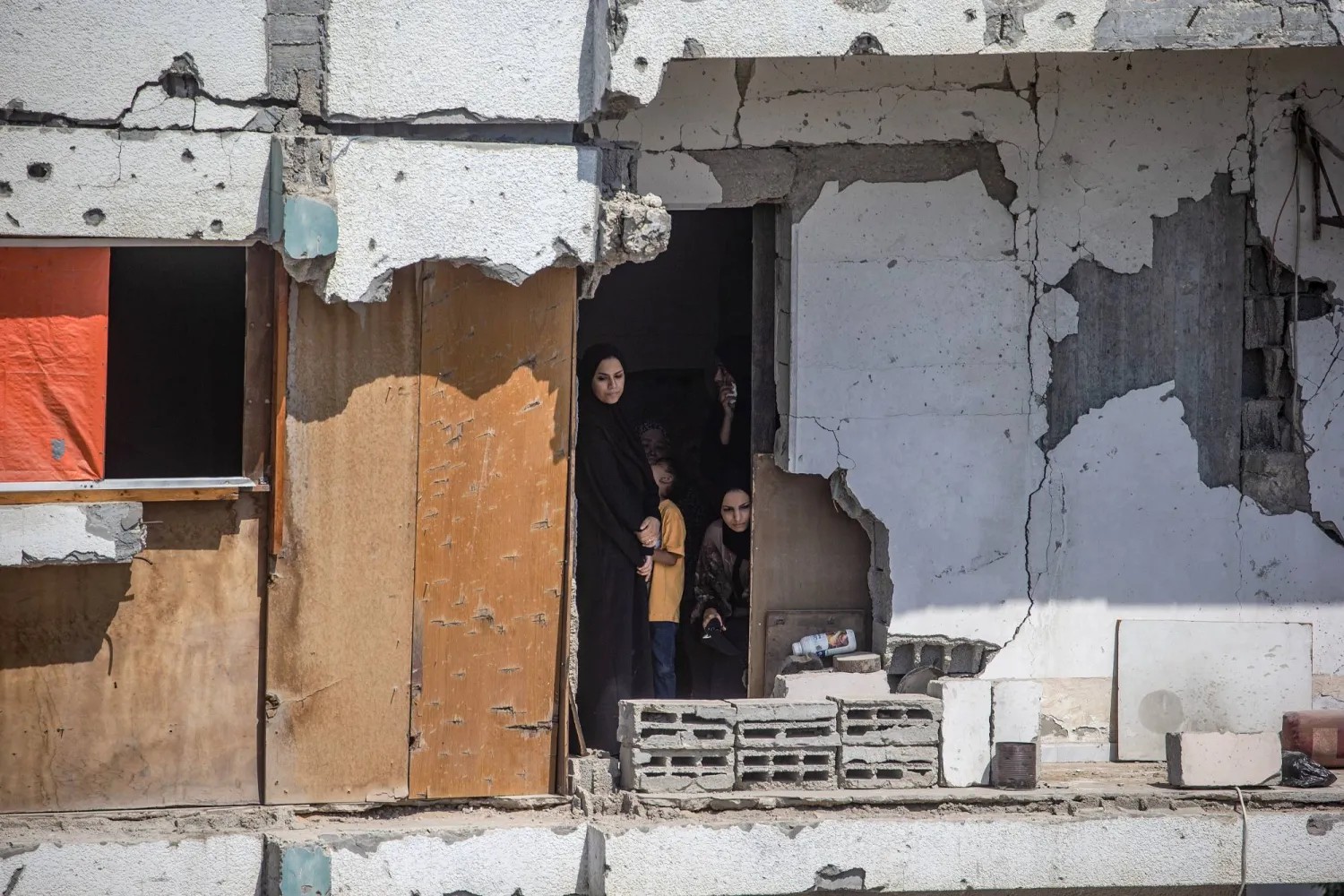
Analysis: Tactics on The Gaza Battlefields

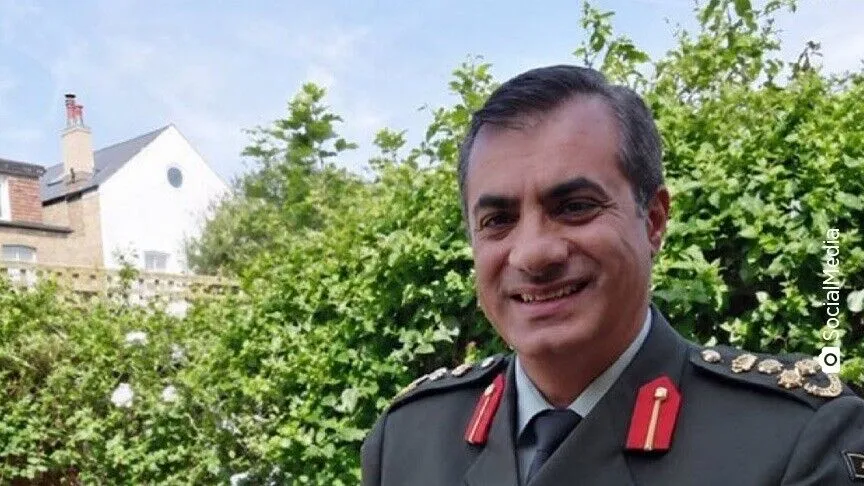
Maj-Gen Wasef Erekat from Ramallah talks about the military details and tactics used by the Palestinian fighters to confront the Israeli army in Gaza.

The killing of Israeli soldiers and the destruction of tanks in Gaza after eight months of war on the enclave means the Palestinian resistance is strong, dynamic and holds the initiative with professional ability says military and security analyst Maj-Gen Wasef Erekat.

He described the Palestinian fighter in Gaza as one having courage, is valiant and who is fighting in battles using his quick thinking and swiftly moving in the field according to the dictates of the environment. 

As Israeli soldiers try to carry out their military plans and tactics in the different battlefields of Gaza, Palestinian resistance fighters lie in wait for them, forming boobytraps, drawing the soldiers forward and forcing them to enter the houses which they have wired by explosives and which are subsequently blown up as was the recent case in a refugee camp in Rafah, the retired Major-General recently told Al Jazeera from Ramallah.

There, the house was wired with explosives and eight Israeli soldiers who entered were struck, leading to the immediate deaths of three of them and the injury of others according to the Israeli army.

Today and after eight months and as the Israeli army promises to enter Rafah on a wide scale, the Palestinian resistance is involved in more than  one battle on the field of offense and that is the battle of the picture, the image and the videos of Palestinian rockets and missiles as seen on television and the social media.

Erakat emphasizes such images have great influence on Israeli soldiers, the Jewish public and the Israeli decision-maker, saying when these videoclips of missiles on tanks and towards Tel Aviv and are seen by Israelis it slams their spirits down and sends more negative messages to their soldiers.

‘Day After’

These missiles’ messages speaking of ill-forebodding for the soldiers that Gaza is indeed becoming a quagmire and a graveyard for them. This is why the Israel Chief of Staff Herzi Halevi and the Israeli Defence Minister Yoav Gallant are imploring Benjamin Netanyahu to start planning for the so-called “day after”, the retired Palestinian military general maintains.

But Erakat said Netanyahu can’t do that because he “has nothing in his bag” because when we talk about 7 October Israel was defeated on three basic levels by the Aqsa flood:

First, the army – military might, intelligence, rules of engagement and fighting doctrine – was defeated by the Palestinian resistance; and even today after 236 days, it did not achieve anything. Second, today there are 500,000 settlers in occupied Palestine who left their homes and will not return back unless the Palestinians return back to their homes in Gaza. Thirdly, there is now a new trend today of people emigrating out of Israel. Hebrew newspapers have recently reported 5000 Israelis have applied to the German Embassy to enter that country, he added.

Because of this Netanyahu can’t talk about the day after. “The ‘day after’ will be dictated by the Palestinian fighters who remain steadfast in the battlefield and the great Palestinians people who are bearing the pain and tears and whose young children appear from beneath the tunnels and send messages to the whole world that whoever wants to see pride and dignity should come to Palestine and Gaza.” 

  • CrossFireArabia

    CrossFireArabia
    Dr. Marwan Asmar holds a PhD from Leeds University and is a freelance writer specializing on the Middle East. He has worked as a journalist since the early 1990s in Jordan and the Gulf countries, and been widely published, including at Albawaba, Gulf News, Al Ghad, World Press Review and others.

    Related Posts

    Did Little Malak Deserve Death?

    Palestinian child Malak Qaddoum has succumbed to injuries she sustained in an Israeli strike west of Gaza two days ago.

    She is the third member of her family to be murdered after her father and sister were also murdered.

    Continue reading
    Occupied Palestinian Territories in Crisis

    The Occupied Palestinian Territory is facing a severe humanitarian crisis, with both Gaza and the West Bank experiencing unprecedented levels of violence and deprivation.

    In Gaza, following the collapse of a brief pause in hostilities in March 2025, Israeli forces resumed intensive bombardment while maintaining a complete blockade that has now entered its eighth week, preventing all humanitarian aid and commercial supplies from entering.

    This has left Gaza’s 2.2 million residents facing starvation as food stocks deplete, bakeries cease operations due to lack of flour and fuel, and nearly 90% of the population remains displaced with critical infrastructure almost entirely destroyed.

    A new U.S.-backed peace plan led to a pause in hostilities agreement coming into effect on 10 October 2025, raising cautious hopes for increased humanitarian access and a potential reduction in hostilities after months of relentless violence. However, despite the pause in hostilities, sporadic violations, limited aid entry, and continued displacement highlight the fragility of the pause in hostilities and the deep humanitarian strain that persists across Gaza.

    Meanwhile, the West Bank has seen a dramatic escalation in military operations, particularly since the launch of “Operation Iron Wall” in January 2025, which has resulted in mass displacement of Palestinians and widespread destruction across refugee camps. Israeli forces have displaced approximately 40,000 people, with officials stating that residents will not be allowed to return for at least a year, while expanded checkpoints and military presence severely restrict movement between Palestinian cities.

    International organisations and UN bodies have expressed increasing concern about systematic violations of international humanitarian law in the West Bank, including accelerating settlement expansion, land reclassification and forced displacement that multiple observers warn are driving de facto annexation dynamics.

    These concerns have intensified following the International Court of Justice’s 2024 advisory opinion on the illegality of the prolonged occupation and the Israeli authorities’ security cabinet decisions of 8 February 2026 expanding civil and administrative control over West Bank land and governance.

    Reliefweb

    Continue reading

    You Missed

    Did Little Malak Deserve Death?

    Did Little Malak Deserve Death?

    Handala in Ireland

    Handala in Ireland

    Occupied Palestinian Territories in Crisis

    Occupied Palestinian Territories in Crisis

    Palestinian Journalists Under Attack – 55 Israeli Violations in May

    Palestinian Journalists Under Attack – 55 Israeli Violations in May

    Jordan Footballers Delighted For World Cup Matches

    Jordan Footballers Delighted For World Cup Matches

    World Cup: Trump, Political Footballing and Iran – A View From Amman

    World Cup: Trump, Political Footballing and Iran – A View From Amman