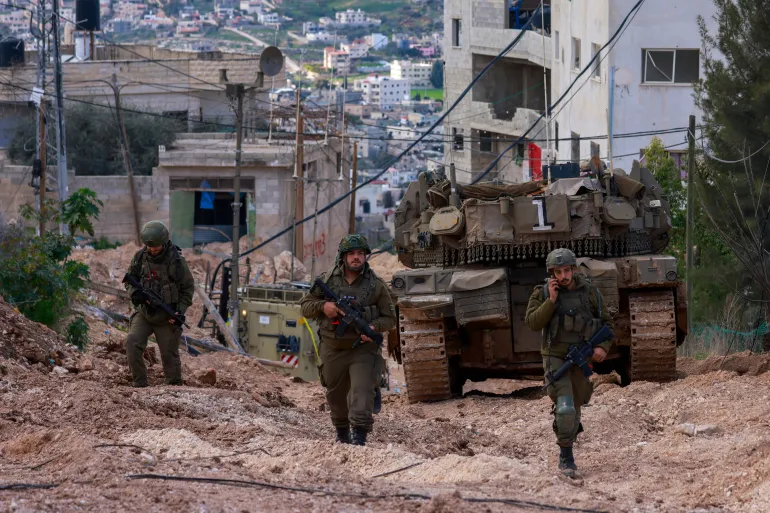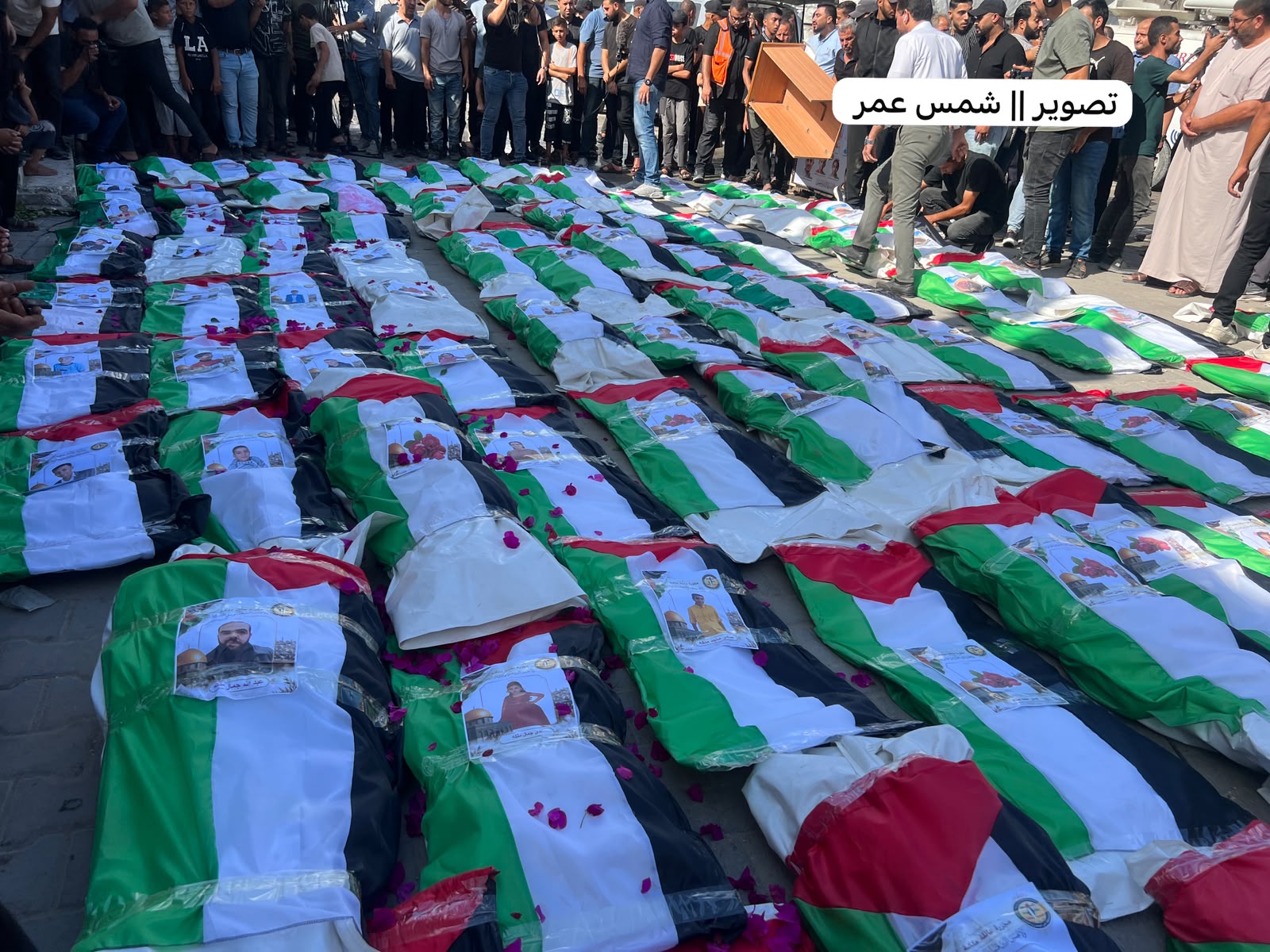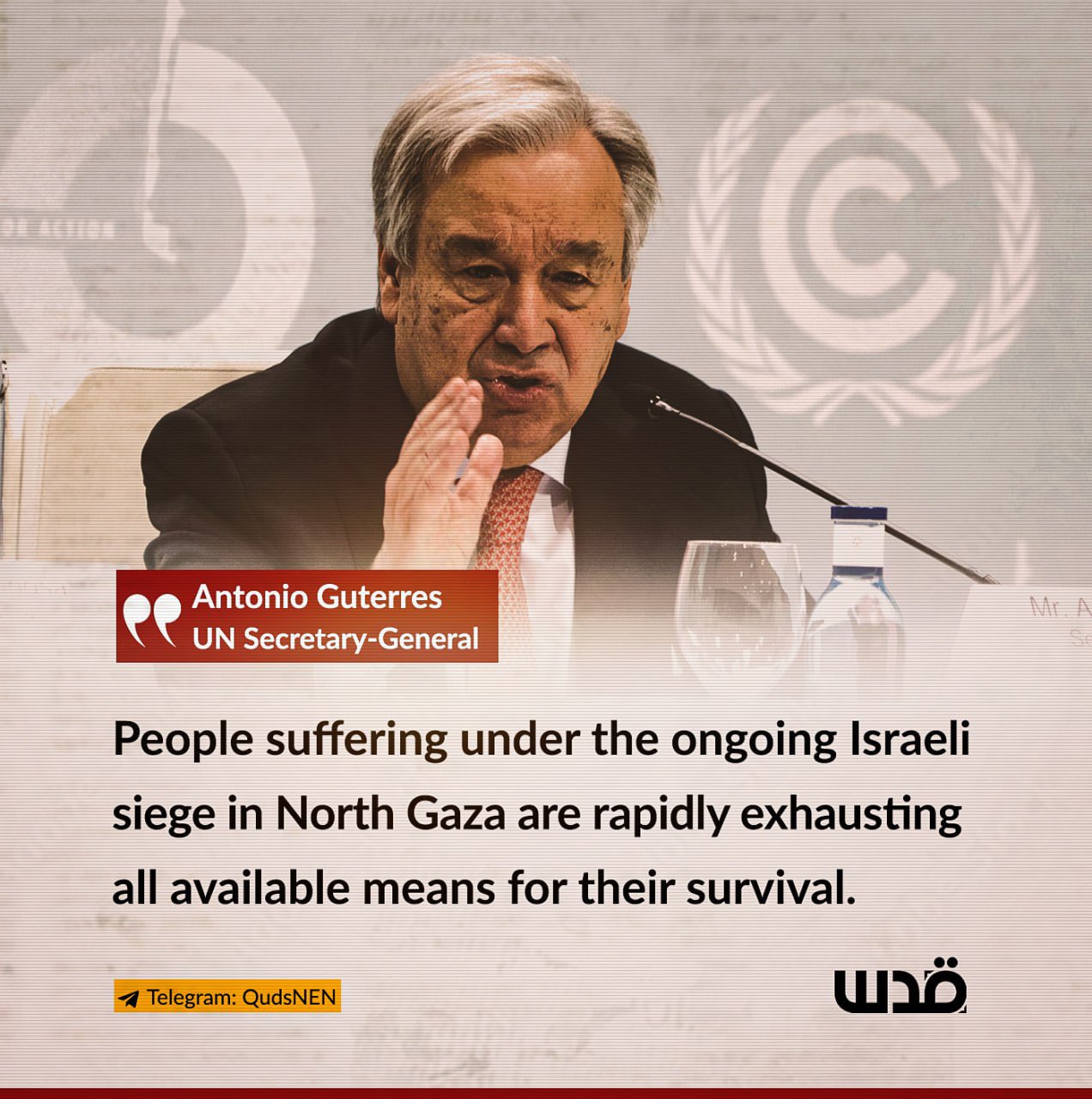
UN Secretary-General Antonio Guterres has called on the international community to protect civilians in northern Gaza and provide them with humanitarian aid, highlighting their deep suffering for survival amid the Israeli siege in the north.

 CrossFireArabia
 UN Secretary-General Antonio Guterres has called on the international community to protect civilians in northern Gaza and provide them with humanitarian aid, highlighting their deep suffering for survival amid the Israeli siege in the north.
 CrossFireArabia
About 1,369 doctors left Israel between 2023 and 2025 for at least one year. That is an increase of 94% increase compared to the same period a decade earlier. This exodus is raising concern about the growing repercussions on the Israeli healthcare system, particularly because of the high portion of experienced doctors among those leaving.
According to a study by researchers at Tel Aviv University, based on data from the Israeli Central Bureau of Statistics, only 705 doctors left Israel between 2013 and 2015, compared to 1,369 in the last three years.
The year 2024 saw the highest number of departures, with 530 doctors leaving, compared to 419 in 2023 and 420 in 2025, according to preliminary estimates.
The study indicates that approximately 20% of the doctors who left in the last three years are 45 years of age or older, compared to 14% a decade ago. The number of doctors in this category rose from approximately 100 to nearly 270, reflecting a significant increase in the emigration of experienced physicians.
Professor Itai Ater, one of the study’s authors, stated that the departure of this group poses a particular risk, given that many are at the peak of their careers, including senior physicians and department heads. He warned of the impact this could have on the quality of medical services and the healthcare system’s ability to train new doctors in Israel.
These figures coincide with data from the Israeli Ministry of Finance indicating that approximately 24% of specialist physicians in public hospitals are nearing retirement age, exacerbating concerns about the anticipated shortage of medical personnel.
The study revealed that the phenomenon encompasses several medical specialties, with particularly high rates among physicians under 60 years of age.
Surgery saw the departure of 188 doctors, while internal medicine experienced the exit of 215. A total of 116 doctors specializing in otolaryngology, dermatology, and ophthalmology, along with 94 pediatricians, left Israel, in addition to doctors specializing in anesthesiology, radiology, psychiatry, intensive care, and emergency medicine.
The Tel Aviv area recorded the highest number of departures, with 429 doctors leaving over the past three years, followed by the central, Haifa, Jerusalem, and southern regions.
According to the study, the problem is not limited to the high number of departures. Israel lost a net 509 doctors during 2023 and 2024, averaging about 255 doctors annually, compared to an average annual loss of only 54 doctors between 2010 and 2019.
Researchers believe that the decline in the number of doctors returning from abroad, coupled with the increase in the number leaving, is accelerating the depletion of the medical system.
Ater warned that the continuation of this trend could lead to what he described as a “snowball effect,” whereby political, economic, and security developments push even more skilled professionals to leave Israel.
He said that the surge in doctors emigrating began in 2023, before the events of October 7, noting that part of the phenomenon is related, in his estimation, to the developments that Israel has witnessed in recent years according to Al Jarmaq News.
CrossFireArabia
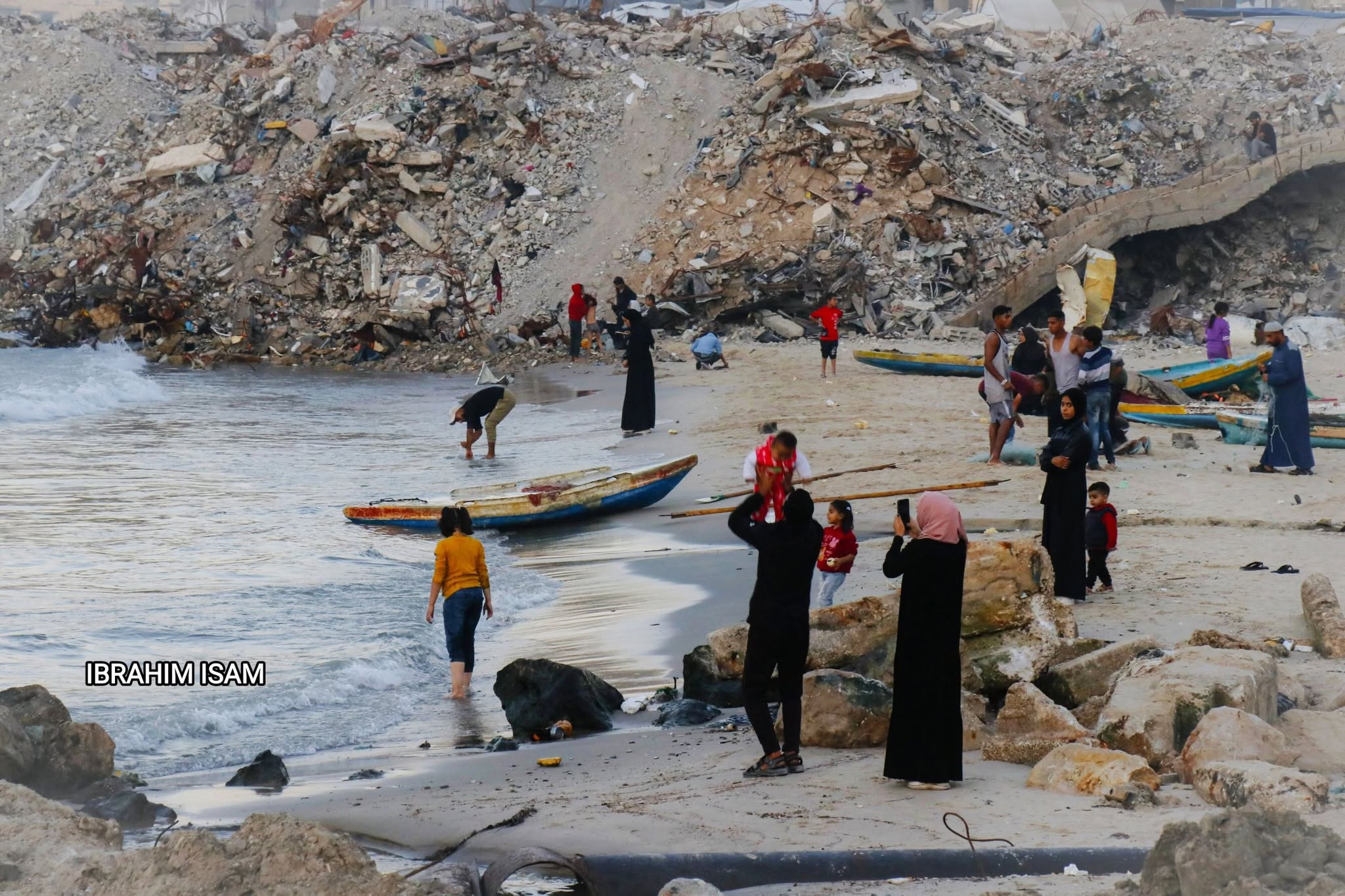
SHATI REFUGEE CAMP, GAZA – The sea here no longer separates life from ruin. They have come to share the same shore, walking side by side, as they have perhaps done since a time whose beginning we can no longer remember. Children approach the water. Women gather a fleeting moment from the day. Fishermen return to their boats. And a young man bends toward the waves as though listening for something ancient that has fallen from his memory, but not from the memory of the sea. Behind them, an entire city lies beneath the rubble.
Yet the sea does not change its face. For thousands of years, it has received the footsteps of those who pass, carried their voices, and allowed the waves to erase their footprints with the same quiet tenderness. Countless faces have passed this way. Harsh ages have come and gone. People built their homes and then lost them. They loved and then parted. They fought, and later sat together before the same water, searching for something that resembled peace.
Perhaps the sea alone knows that history is not an uninterrupted story of ruin. That the earth which has witnessed fear has also known quiet days. And that those who crossed these shores did not always carry weapons. Some carried bread. Some carried a child. Some simply sat beside the water and listened to the waves. And some reached out a hand to another whose name they did not know.
That is why we do not ask the sea what happened.
The waves know that the human being is older than his wounds, and that what breaks within us is not necessarily the last thing left within us. Perhaps life, from the very beginning, has always known its way toward the light, even through the smallest cracks.
Here, on this shore, we do not possess very much. Yet we still walk. We laugh when we can. We touch the water with our feet. And we leave a small window open for tomorrow.
Not because we have forgotten what happened, but because memory itself should not become a prison.
For the sea, which has witnessed all of this and still returns every morning, may be quietly reminding us of something we so easily forget: That beyond every long age of suffering, there was another age that knew stillness; that beyond every season of violence, there were people who simply lived, loved, shared, and dreamed.
And perhaps the world, no matter how long it remains troubled, was never created for war alone.