
 CrossFireArabia
  CrossFireArabia
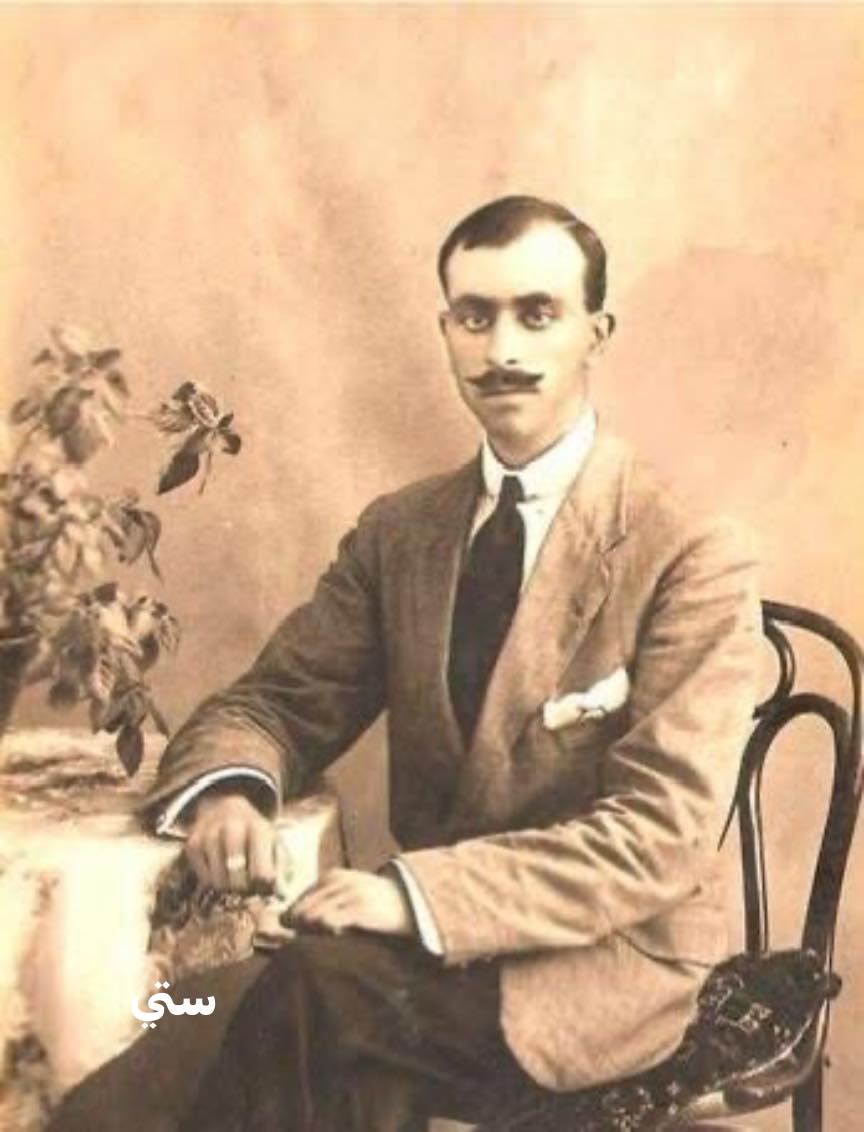
He is a playwright and author of 12 plays, nearly 20 novels, and numerous translations. Jamil Habib Afara (al-Bahri) was known as the “Father of Theater.” He was born in 1895 in Haifa and his family name dates back to the mid-18th century, as his ancestor owned a merchant fleet that sailed the Mediterranean between Haifa, Acre, and Tripoli. This is where his family name originated.
He showed early interest in literature and writing. He and his brother, Hanna, were keen to revitalize the literary and intellectual scene in Haifa, establishing the National Library there in 1922. He first published the “Zahrat al-Jamil” (The Beautiful Flower) and later “al-Zahra” (The Flower) which was initially a weekly publication that later became a bi-weekly and continued publication for about nine months after his death in 1931. His last piece was
a journalistic investigation into the execution of the three martyrs: Muhammad Jamjoum, Fuad Hijazi, and Ata al-Zeer, in the city of Acre in 1930. He dedicated his time and his newspaper that day to the souls of these martyrs, leading with: “The terrible hour in Haifa and all of Palestine: Let us commemorate those who gave their lives for the homeland.” A large funeral was held for him, and poems and eulogies were recited and published in the Palestinian press, such as the “Al-Karmel” and “Falastin,” newspapers.
The Department of Culture of the Palestine Liberation Organization posthumously awarded him the Jerusalem Medal for Culture and Arts in 1990, and the Palestinian Ministry of Culture reprinted his first book, “The History of Haifa,” in 2022.
CrossFireArabia
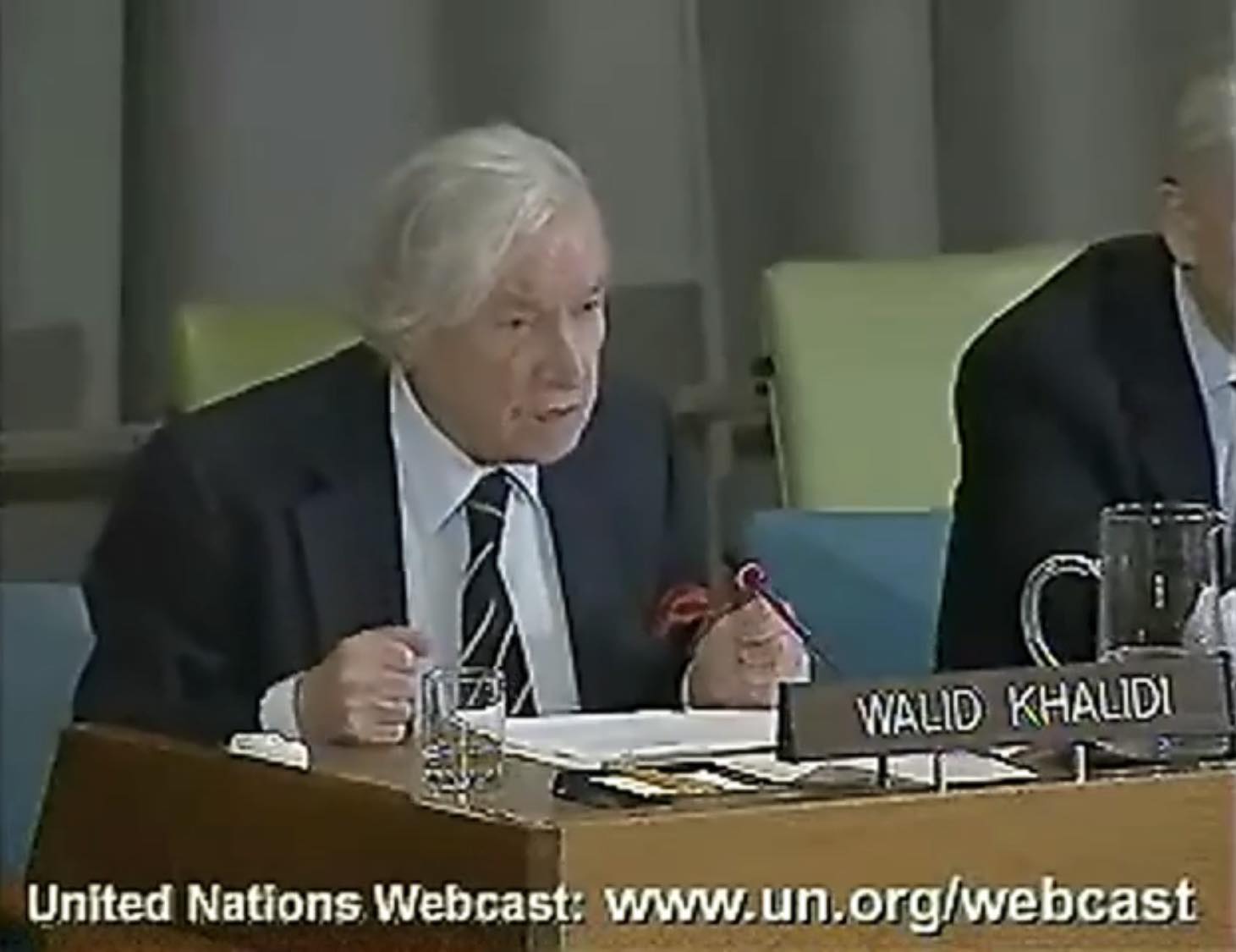
We bid farewell to Dr. Walid Khalidi — a national treasure, a guardian of memory, and a mentor to generations.
Born in Jerusalem in 1925, he was one of the most commanding Palestinian voices of the modern era. For more than seven decades, he dedicated his life to bearing witness — documenting what happened to Palestine in 1948 with unflinching honesty and scholarly precision, and ensuring that new generations understand Palestine as it was, as it is, and as it must one day be again. He was the teller of our history and the keeper of our collective memory.
I first had the honour of meeting Dr. Khalidi in 2008 in Cambridge, Massachusetts, where I was a Visiting Scholar at Harvard University. By then, he had long made Cambridge his home after decades of teaching and research at institutions including Oxford, the American University of Beirut, and Harvard.
Over the years that followed, his home in Cambridge became a place of refuge and reflection. We would sit for hours speaking about Palestine — its past, its wounds, and its future. He gave generously of his time, wisdom, and spirit. Even through the darkest years — and none have been darker than these last two — he remained a source of steadiness and moral clarity. His emails, arriving with the care and weight of a mentor who never stopped believing, were a lifeline. The last came only weeks ago.
Dr. Khalidi’s extraordinary impact was not only in his scholarship but in his refusal to allow Palestine to be erased. Through landmark works such as Before Their Diaspora and All That Remains, and through the institutions he helped build — most notably the Institute for Palestine Studies — he ensured that the story of our people would be preserved with rigour and dignity for generations to come.
He devoted his life entirely to Palestine — through scholarship, diplomacy, and mentorship. To countless Palestinian researchers, students, and public servants, he was a teacher and a guiding light.
Today, as news of his passing reaches us, I was honoured to speak with his son, Dr. Ahmed Khalidi — himself a distinguished Palestinian scholar — to share my condolences and memories. What I felt most was a proud sadness: proud of everything Dr. Khalidi gave to Palestine and to all of us who followed his path, and sad because the world is immeasurably diminished without him.
Today, Jerusalem mourns one of its most distinguished sons, as it once mourned Edward Said. Jaffa mourns as it did with Ibrahim Abu-Lughod. Nablus mourns as it did with Fadwa Tuqan. Palestine mourns a giant.
We shall honour Dr. Walid Khalidi in the only way he would have wanted — by continuing the struggle for truth, for justice, and for liberation, until the day scholars walk freely through the gates of a great university in Jerusalem that bears his name, and the Palestine he devoted his life to documenting stands free.