CrossFireArabia
“Lost” Generation of Children in Gaza at Risk of a Decade Without Education Amid Israeli Genocide: Cambridge Study
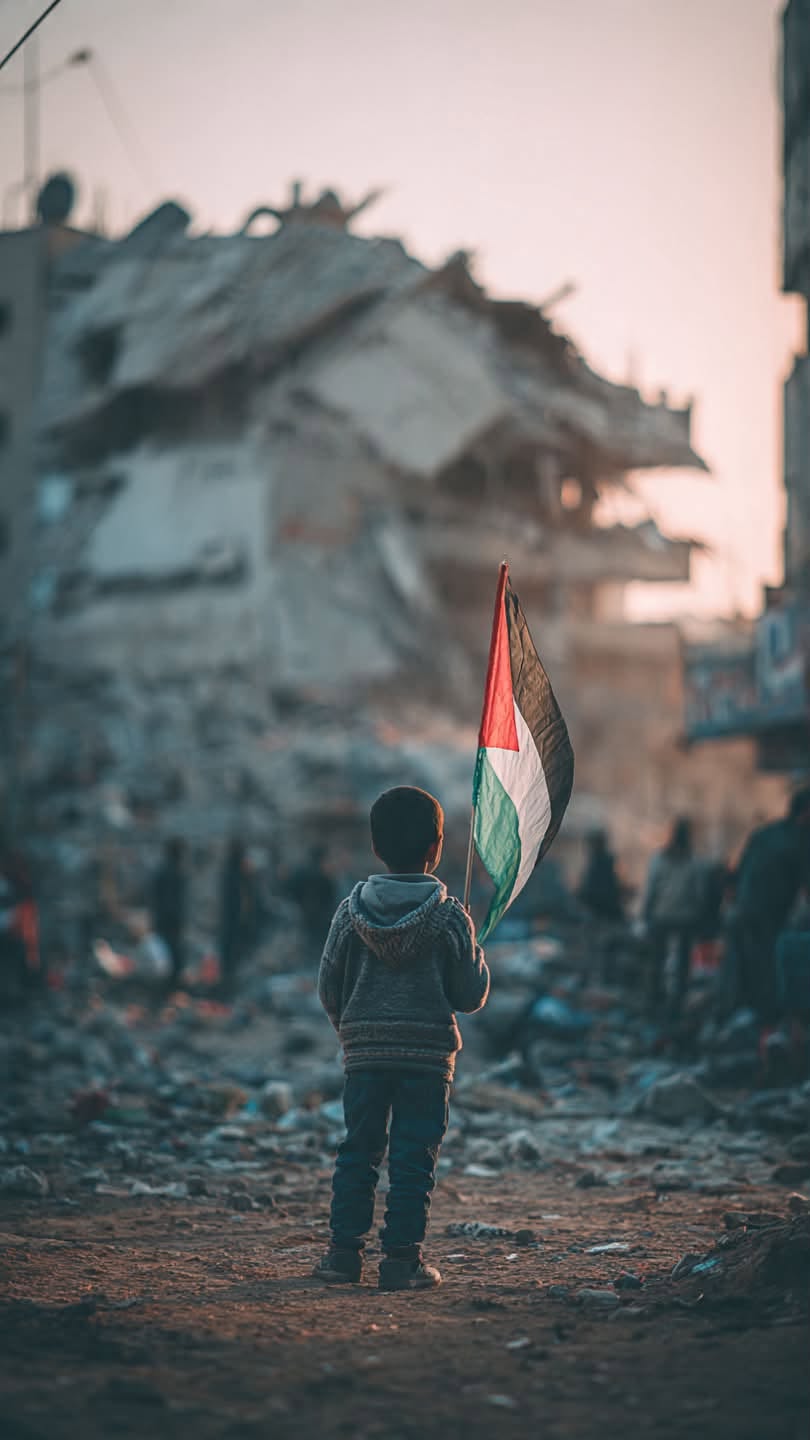
A new study has warned that there is a severe risk of a “lost” generation emerging in Gaza, after two-year Israeli genocide through a combination of the assault’s physical and psychological effects, as well as the destruction of schools. The study found that children in Gaza will have lost the equivalent of five years’ worth of education.
The genocide has come close to erasing children’s right to education, researchers from Cambridge University found.
The report, which follows a similar study in 2024, provides an analysis of the impact of more than two years of Israeli genocide in Gaza, as well as escalating Israeli attacks in the occupied West Bank.
There are about 1.5 million children aged six to 15 in Gaza and the Occupied Palestinian Territories. The report said the schooling of more than 740,000 pupils had been severely disrupted and the lives of 27,000 teachers affected.
It warns that there is a severe risk of a “lost” generation emerging in Gaza, through a combination of the war’s physical and psychological effects, as well as the destruction of schools.
Despite the ceasefire that took effect in October, “learning recovery” would take longer than simply replacing the time lost due to the compounding effects of trauma and starvation, the researchers said.
The study estimates that children in Gaza will have lost the equivalent of five years’ worth of education due to repeated school closures since 2020, first through Covid-19, and then Israeli genocide.
Although temporary and distance-learning measures were introduced by the UN agency for Palestinian refugees, UNRWA, and the Palestinian Ministry of Education, these have been impeded by continuing Israeli attacks, damaged infrastructure and chronic resource shortages.
The authors calculate that if schools remain closed until September 2027, many teenagers will be a full decade behind their expected educational level.
They also estimate that children in the West Bank have lost a minimum of 2.5 years of education as schools have also been sporadically closed.
There is also urgent need for education-related international aid in Gaza to address both severe learning losses and the assault’s psychological effects, the study said.
It added that Israel is blocking educational and recreational materials from entering Gaza, as it does not classify these as humanitarian goods.
This has made materials available in local markets more expensive, with a single sheet of paper costing $3. Printing materials for pupils to learn at home can cost 10 times the usual amount.
The researchers calculated the cost for education recovery to be $1.38bn. All schools in north Gaza and Rafah have been damaged, 98.4 per cent of school buildings in Khan Younis have been damaged and in Gaza City it is 93.3 per cent. Many school buildings that had not been destroyed were being used as shelter by displaced families.
As the population forcibly displace around Gaza, either south during earlier Israeli attacks or returning north after ceasefire, this also stretches makeshift facilities, meaning learning is done online despite unstable internet connections.
Education will depend on foreign aid for the foreseeable future, the researchers said, adding that, of the US$230.3 million requested by the UN humanitarian office, OCHA, for education in 2025, only 5.7 per cent had been provided by July, equating to about US$9 per child.
The study was conducted by researchers at the Research for Equitable Access and Learning Centre (REAL Centre) at Cambridge University and the Centre for Lebanese Studies, in partnership with the UN agency for Palestinian refugees, UNRWA. It draws on data from UN agencies, charities and NGOs, alongside interviews with aid organisation staff, government officials, teachers and pupils.
Dr. Maha Shuayb, director of the Centre for Lebanese Studies, said, “Education and children’s services cannot be an afterthought. They are a vital source of stability and care.”
Many children have been left too weak to learn or play, the report warns.
Alongside evidence of a shattered school system, it describes how attacks, starvation and trauma have eradicated any sense of “normal’ childhood.
Prof. Pauline Rose, director of the REAL Centre, said: “A year ago we said education was under attack – now children’s lives are on the brink of a complete breakdown.”
“Palestinians have shown extraordinary desire for education during this terrible war, but the loss of faith and hope that young people are expressing should be a massive red flag for the international community. We must do more to support them. We cannot wait.”
Yusuf Sayed, a professor of education at the University of Cambridge, said teachers and counsellors were displaying steadfastness and commitment to “preserving Palestinian identity through education”, but warned the scale of need was immense according to the Quds News Network.
“Thousands of new teachers will be needed to replace those who have been lost or to support a complete learning recovery. Investing in teachers is crucial to rebuilding and restoring education in Palestine,” he said.
As of October 1, 2025, the OCHA reported 18,069 pupils and 780 education staff killed in Gaza in Israeli attacks. There were also 26,391 pupils and 3,211 teachers wounded. About 13,000 children in the enclave had been treated for acute malnutrition, while 147 died.
The report found evidence of widespread despair. Teachers recounted parents asking: “Why should I care about education for my kids if I know they will die from famine?”


 marwan