Palestinian Filmmaker: From Gaza to Norway

Mohamed Jabaly, Palestinian filmmaker from Gaza, has lived through extraordinary circumstances. Born during the first intifada and raised during the second, Jabaly’s life has been shaped by the relentless turbulence in his homeland.

Now residing in Tromso, Norway, his journey is a testament to resilience, displacement, and the power of storytelling.

Jabaly’s path to Tromso, however, was not a straightforward one. “Tromso and Gaza, in the first place, are twin cities,” he tells Anadolu, referring to the long-standing relationship between the two. In 2013, a Norwegian delegation screened one of his short films in Gaza, marking the beginning of a meaningful connection. “They invited me in 2014 to visit Tromso and be a part of the film festival there.”

However, life in Gaza rarely follows a predictable script. The summer of 2014 brought a 51-day assault on the blockaded enclave, delaying Jabaly’s departure. Amid the chaos, he joined an ambulance unit, capturing the harrowing reality of frontline responders. This footage became his first feature documentary, Ambulance.

“Shortly after the attacks, I traveled to Tromso,” he recalls. “What was supposed to be a one-month visit turned into seven years.”

Two weeks after his arrival, the Rafah border closed, trapping him in Norway. “I decided not to seek asylum. Instead, I applied for an artist visa, and that’s when this whole journey began.”

Starting from below zero

Life in Tromso was a stark contrast to Gaza. Jabaly describes his first winter in Norway with characteristic candor. “It was dark, below zero, and everything was new. I had never touched snow in my life,” he says. Adapting to this unfamiliar environment was not just a physical challenge but an emotional one as well.

“Being far from my family, my friends, my city … that was the biggest challenge,” he says. With limited resources, he relied on the generosity of friends who hosted him. Volunteering at film and music festivals allowed him to contribute to his new community while earning small amounts to survive. “Norway is an expensive country, but I managed to stand on my feet. I started from below zero, not just with the temperature but in life.”

Capturing the human impact of displacement

Jabaly’s second feature documentary, Life is Beautiful, chronicles his experience of being caught between two worlds: the homeland he could not return to and the foreign land he had to call home. “It puts new names and faces into the struggle of displacement and statelessness,” he says. The film not only highlights the challenges of being a Palestinian in exile but also raises awareness about the broader human struggle of stateless individuals worldwide.

“In Palestine, I was always Palestinian. In Gaza, I was always Gazan. Suddenly, I’m considered stateless,” he explains, touching on the complex legal and emotional terrain of his identity. “I didn’t make the film just to make a film. I wanted to shed light on our human struggle and fight the term ‘statelessness.'”

The indelible mark of Gaza

For Jabaly, Gaza is not just a place; it is an integral part of his identity. “You cannot escape from your identity,” he asserts. “Being from Gaza became even more special today with what’s happening. But all Palestinians share the same struggle. We try to raise awareness and insist on our freedom.”

This deep connection fuels his work. “If life had been normal, I wouldn’t need to make films about freedom. But I was born into a struggle, and that’s what drives me to tell our stories.”

Looking ahead

Despite the heavy burden of his past and the ongoing challenges facing Gaza, Jabaly remains hopeful. “I imagine having a film school in Gaza in five years,” he shares. “If life gave me normalcy, I would build things. But for now, I feel compelled to make films about war and our human struggle.”

As for his immediate plans, Jabaly’s work continues to be shaped by the present-day realities of Gaza, where Israel has killed more than 45,000 people since Oct. 7, 2023. “It’s difficult to be creative when your mind is occupied with worry. But we have to insist on our narrative and raise awareness for future generations.”

‘Life is beautiful’

Jabaly’s unwavering optimism shines through, even in the face of despair. “I named my film Life is Beautiful because I hope one day life will be beautiful. If not today, maybe tomorrow, or next year.” It is a sentiment that encapsulates his journey and his vision — a reminder that even amidst the darkest times, hope persists for a new dawn.

CrossFireArabia

CrossFireArabia
Dr. Marwan Asmar holds a PhD from Leeds University and is a freelance writer specializing on the Middle East. He has worked as a journalist since the early 1990s in Jordan and the Gulf countries, and been widely published, including at Albawaba, Gulf News, Al Ghad, World Press Review and others.

Related Posts

Top Writer Says ‘No’ to Berlinale

Top Indian writer Arundhati Roy has pulled out of the Berlin International Film Festival (Berlinale) after criticizing “unconscionable statements” by members of the festival jury, who said that art should not be political when asked about the Israeli genocide in Gaza.

Roy had been scheduled to attend a screening of her 1989 film In Which Annie Gives It Those Ones in the Classics section of Berlinale 2026.

In a strongly worded statement, Roy said the selection of the film had initially filled her with warmth and nostalgia. She noted that she had long felt disturbed by the positions of the German government and several cultural institutions on Palestine. Still, she said she had consistently received solidarity from German audiences when speaking about Gaza, which encouraged her to consider attending the festival.

However, Roy said she changed her decision after hearing comments from members of the Berlinale jury earlier that day.

“Like millions of people across the world, I heard the unconscionable statements made by members of the jury of the Berlin film festival when they were asked to comment about the genocide in Gaza,” Roy wrote.

She described labeling the genocide a political issue then insisting that art should remain separate from politics as “jaw-dropping.” She added that such framing shuts down urgent conversations about a crime against humanity.

Roy stated clearly in her message that she believes events in Gaza amount to genocide against Palestinians by Israel. She further added that the United States and Germany, along with several European governments, support and fund Israel and therefore share responsibility.

“If the greatest film makers and artists of our time cannot stand up and say so, they should know that history will judge them,” she wrote, adding that she felt “shocked and disgusted.”

Roy concluded her statement by confirming that, “with deep regret,” she would not attend the Berlinale.

The controversy emerged after journalists asked Berlinale jury members to comment on the genocide in Gaza and Germany’s support for Israel, which also funds the festival.

Polish producer Ewa Puszczyńska, a member of the jury, refused to answer.

“There are many other wars where genocide is committed, and we do not talk about that,” Puszczyńska said. She described the issue as “complex” and claimed that it was unfair to ask jury members to comment on government policies.

Roy’s withdrawal adds to rising tensions within European cultural spaces over the Israeli genocide in Gaza. Artists, writers, and filmmakers have increasingly debated whether cultural platforms should take political positions. – Quds News Network

Continue reading
Gaza Radio Station Returns to The Airwaves

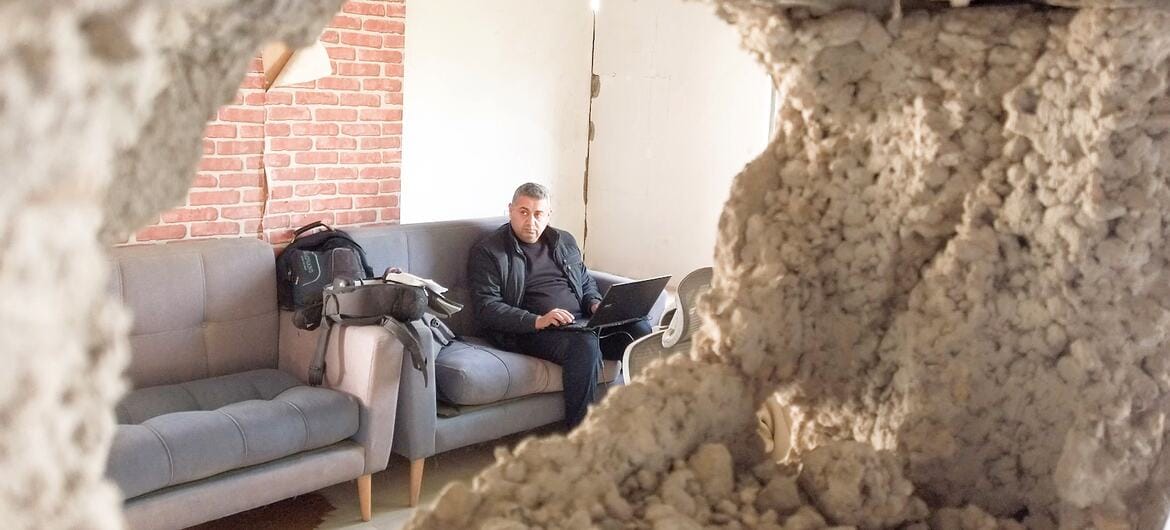
Broadcaster Rami Al-Sharafi works on a laptop inside the damaged Zaman FM radio station building in Gaza, marking what may seem an unlikely return to the airwaves amid the rubble of the deadly two-year Israel-Hamas war.

While 23 local radio stations were operating in Gaza before the conflict erupted, they were all destroyed and ceased broadcasting, he told UN News.

“Today, we are the only radio station broadcasting on FM from within Gaza after this widespread destruction,” he said. “We hope that other local radio stations will resume broadcasting, thus allowing competition in providing media services to the people of the Gaza Strip.”

Ahead of World Radio Day, observed on 13 February, the resumption of broadcasting comes at a time when Gaza’s media infrastructure still faces significant challenges amid local and international calls to support journalism as part of broader recovery and reconstruction efforts in the sector.

A journalist works at a desk in a damaged office in Gaza, viewed through broken pillars. Another person uses a laptop in the background.

UN News

A journalist works in the damaged office of Zaman 90.60 FM radio station in Gaza City.

Digging through the rubble

After a hiatus of nearly two years due to the war, some local radio stations in the Gaza Strip are transmitting again, in a move showing gradual efforts to revive the media landscape in the war-ravaged Strip – much of which has suffered widespread destruction of infrastructure and civilian institutions from Israeli attacks.

Zaman FM operates in the Tel al-Hawa neighbourhood of Gaza City, where Israeli attacks triggered a famine and left mountains of debris in the streets.

The cracked walls of the station’s building tell a story of immense destruction and the scene inside is unlike any other radio studio in the world. 

Employees dig through the rubble to keep the station broadcasting, working with minimal technical resources while behind them, awareness posters warn people of the dangers of dilapidated buildings.

On-air messages of hope

Local radio remains vital in Gaza as humanitarian crises persist, power outages continue and access to other media remains limited. This makes radio one of the most effective ways of getting key messages out to the public, along with health guidance and information about other services.

Gaza is in dire need of professional local radio stations capable of broadcasting awareness messages and guidance bulletins in light of the spread of diseases, the deterioration of the education system and the disruption of many basic services, said Mr. Al-Sharafi, director of the radio station and host of the morning programme, An Hour of Time.

“We need to deliver information to the population and guide them to the services that have stopped and are gradually being resumed,” he said, “especially in light of the difficult health conditions and the spread of epidemics.”

Amid the destruction all around, Mr. Al-Sharafi sits behind his dust-covered microphone and does just that. 

He sends morning greetings to Gaza residents and provides them with important information and updates, bringing some much-needed hope to the airwaves across a devastated landscape that has only just begun to recover – UN News

Continue reading

You Missed

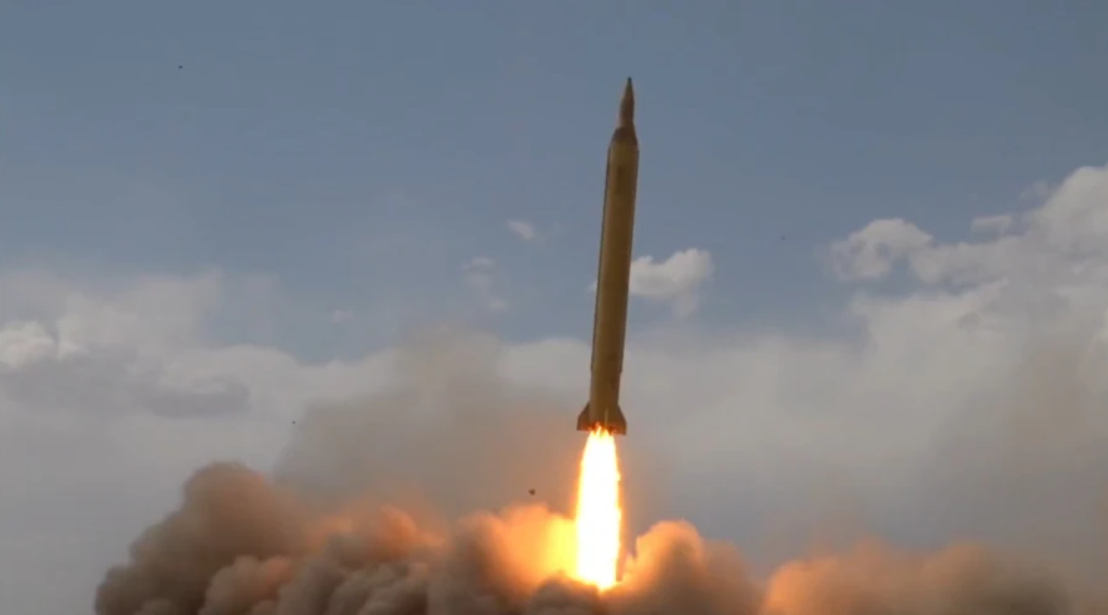
IRGC says Iran started its Operation True Promise 26 by launching missiles and drones against Israel

IRGC says Iran started its Operation True Promise  26 by launching missiles and drones against Israel

Iran Halts Attacks on Neighboring States Unless…

Iran Halts Attacks on Neighboring States Unless…

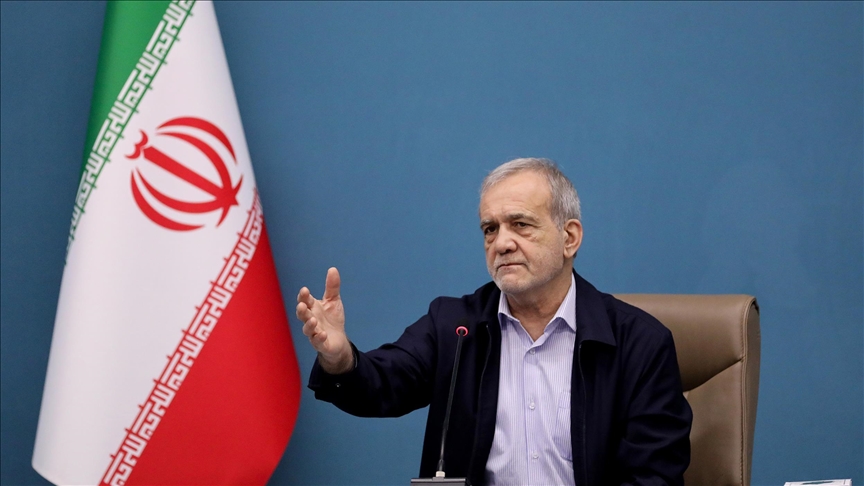
Iranian govt spokesman: 30% of victims are children; 165 of them killed among 1300 civilians who died by US/Israeli bombing

Iranian govt spokesman: 30% of victims are children; 165 of them killed among 1300 civilians who died by US/Israeli bombing

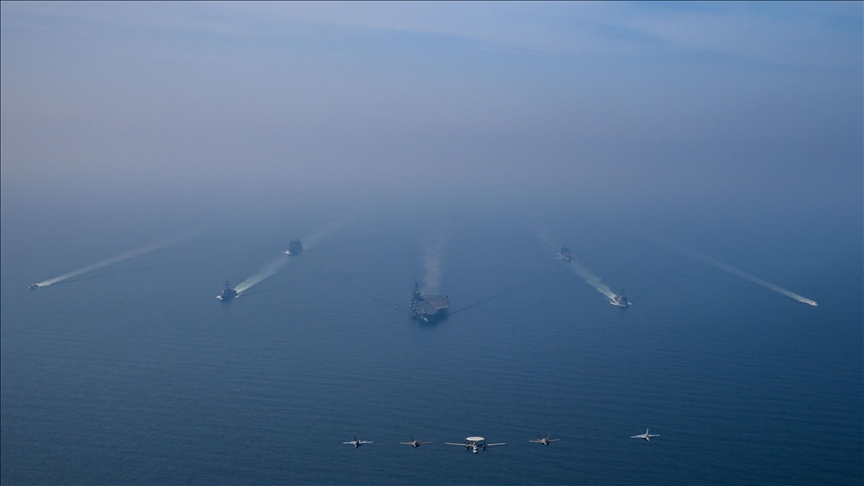
White House: ‘We destroyed more than 30 Iranian ships and are moving to destroying the navy completely’

White House: ‘We destroyed more than 30 Iranian ships and are moving to destroying the navy completely’

White House: ‘We Have 4 to 6 Weeks to End The Military Operations in Iran’

White House: ‘We Have 4 to 6 Weeks to End The Military Operations in Iran’

IRGC: Iran Has Not Closed The Hormuz Strait Except to Ships Linked to Israel/USA

IRGC: Iran Has Not Closed The Hormuz Strait Except to Ships Linked to Israel/USA