Can Netanyahu Reshape The Middle East?

By Mohammad Abu Rumman

What happened on October 7th was not merely a surprise, bloody attack for Israel—it marked a watershed moment that redefined its security doctrine and the limits of its regional project. It was a moment strikingly similar to what the events of September 11th represented for the United States. Immediately after the launch of the Al Aqsa Flood operation, prime minister Benjamin Netanyahu wasted no time in drawing a direct comparison to 9/11.

This comparison was not just rhetorical or meant to rally emotions. It reflects a much deeper strategic vision. Netanyahu is using the shock of the attack to advance an old-new Israeli project: restructuring the region’s security and political landscape in a way that guarantees Israel near-absolute security in a demilitarised environment, free of any threats.

After the 9/11 attacks, US neoconservatives in the White House seized the moment to implement the “Project for the New American Century”—a vision developed by think tanks and figures like Paul Wolfowitz, William Kristol and Robert Kagan. Founded in 1997, the project aimed to reshape the global order and maintain American dominance, with Iraq, Syria, and Iran at the heart of its ambitions. September 11th became the ideal pretext to accelerate this vision through the invasion of Iraq and redrawing the map of the Middle East.

Today, Netanyahu is doing something strikingly similar. He sees the Al Aqsa Flood as a historic opportunity to accelerate his own regional vision—one that is no longer confined to Gaza but extends to southern Syria, Lebanon, Iran, Gaza again, and even the political dynamics in Turkey and several Arab states.

Those following Netanyahu’s rhetoric—and that of his ministers—can clearly see that Israel is no longer content with merely deterring its enemies. It now seeks to re-engineer the entire geopolitical landscape of the region. In southern Syria, Netanyahu stated clearly: “We will not allow any military forces threatening our borders to remain in southern Syria, and we will not return to the old equation.” Defence minister Yoav Gallant added that Israel will reshape the reality there to ensure its strategic security—which essentially means preventing the Syrian army from returning to its previous positions and enforcing a safe corridor between Sweida and the Golan Heights in line with Israeli interests.

In Lebanon, the objective has shifted from merely weakening Hizbollah to explicitly disarming the group entirely and eliminating its missile capabilities, which pose a direct threat to Israel.

In Gaza, the discussion is no longer about reconstruction or humanitarian relief. The conversation centers on the “day after”—meaning the complete removal of Hamas, disarmament of all resistance forces, and transforming Gaza into a powerless entity under full Israeli security control.

Even the proposed Palestinian state mentioned in the recent New York declaration is envisioned as a demilitarized one—to appease Netanyahu. Yet, he still won’t accept it. Israel has already moved past the idea of any sovereign Palestinian state. What’s “allowed”, according to current Israeli thinking, are fragmented cantons and voluntary or forced displacement of Palestinians.

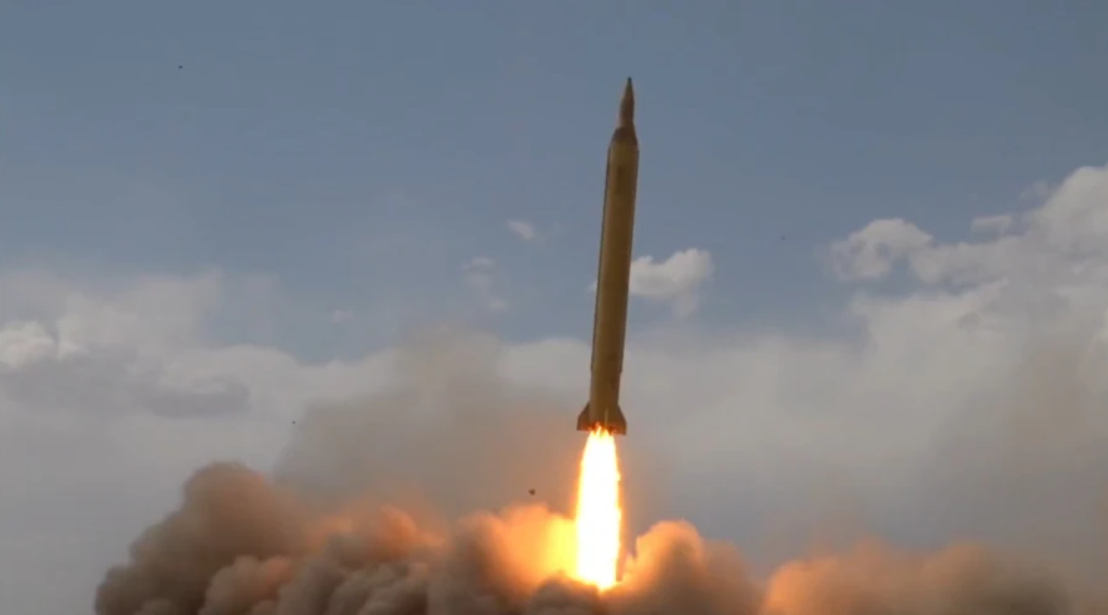
As for Iran, Israel’s confrontation with Tehran is open-ended, aiming to reduce its missile capabilities and eliminate its strategic threat. It is also plausible that Israel’s strategic vision may extend to shaping the political scene in Turkey—possibly by pushing for a government more aligned with Israeli interests—and exerting pressure on certain Arab states, even those officially labeled as “friendly” to Tel Aviv.

This project is no longer tied to Netanyahu’s personal political survival. It has become close to a national consensus among Israeli institutions and political elites. Leaders like Yair Lapid or Naftali Bennett are unlikely to reverse course or return Israel to the pre-October 8th status quo.

What’s unfolding today isn’t a series of short-term security tactics. It’s a long-term strategic plan aimed at reshaping the regional balance of power and cementing Israel’s status as the undisputed regional superpower.

The author is a columnist for the Jordan Times
Continue reading
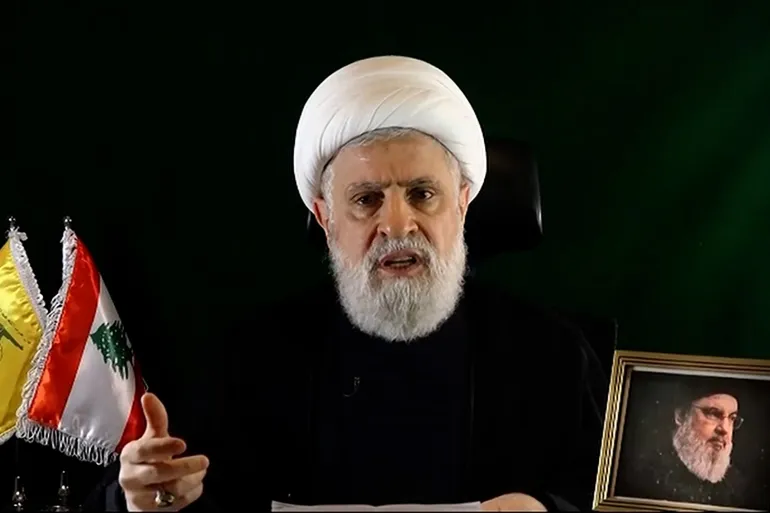
Naim Qassem: Hezbollah ‘Regains Health’, Seeks to ‘Hurt’ The Enemy

Hezbollah Deputy Secretary-General Naim Qassem said that the party is still strong despite the severe blows it suffered. He added it regained its wellbeing in the field and its capabilities, stressing the party set upon, a week ago, to implement a “new equation” to “hurt the enemy.”

He added, his 3rd speech since the assassination Secretary-General Hassan Nasrallah, the resistance’s missiles reached Tel Aviv, disabled Ben Gurion Airport, and forced two million Israelis to take shelters.

He pointed out the party can target any point in the “Israeli entity” and will choose the appropriate point according to his expression.

He stressed that what the resistance achieved in the field in two weeks was better than expected, and its main mission remains to “pursue the enemy and carry out operations against it in any place it enters.”

He also sent a message to the Israeli home front, stressing the only solution is for a ceasefire, adding, “I say to Israelis, do not believe what your officials tell you but look at your dead in the war.”

Ceasefire

He stated Hezbollah called for a ceasefire in the Gaza Strip to stop firing on Israel. This solution is an expression of “a position of weakness”, but if the Israelis do not want this, we will continue.”

He pointed out that after the ceasefire “according to an indirect agreement”, Israeli settlers will be able to return to the north and other steps will be determined after that, the nature of which he did not specify.

However, he warned if the war continues, “the uninhabited settlements in the north will increase and more than two million Israelis will be in danger.”

Al-Aqsa Flood

Qassem pointed out, in his speech, that the “Al-Aqsa Flood” attack came after 75 years of occupation and is a “legitimate right” for the Palestinians.

He added, “the Palestinians have the right for such action to expel the occupation, shakes its presence and prevent it from continuing,” stressing “our support for the Palestinians is support for their right because they are the owners of the right, and must repel the danger from them and prevent the expansion of Israel.”

He also reiterated “Israel is an occupying usurping entity that poses a danger to the region and the world.”

He added, “Israel and those behind it are fighting and committing massacres, and we are in a situation that requires us to take a position,” noting that neither Lebanon nor the entire region can be separated from Palestine.

Expansionist Project

Qassem also stressed that Lebanon falls within an “Israeli expansionist project,” warning that Lebanon and the entire region “are facing the danger of a new Middle East designed in Israeli-American form.”

He added that Israel’s project in the region is “destructive and aim to eliminate the resistance and its people,” and that the world, Britain, France, and America are complicit with this “Israeli criminality.”

Resistance and Iran

Qassem stressed Iran supports the Palestinians in order to liberate Palestine, and this support is “a source of pride for Iran, which is exerting all its capabilities to strengthen and empower the Palestinians.”

He also mentioned that resistance to Israel is “legitimate and defensive” and its goal is to reject the occupation and liberate the land.

He added, “I say to the Mujahideen, you are the hope, so continue fighting and our confidence in you is great.”

A message to the Lebanese

Qassem stressed that the “Lebanese national solidarity” with the resistance is essential and that Hezbollah will remain despite its haters.

He added, “I say to the Lebanese, we must be patient to achieve victory and I promise you to return to your homes that will be rebuilt.. We will not leave you and you will not leave us and everyone will see the resistance with its great people.”

He also stressed that those who cause harm to Lebanon “are not those who defend people but those who kill them,” recalling that the Israeli occupation remained in Lebanon for 22 years and only left through resistance according to Al Jazeera.

Continue reading
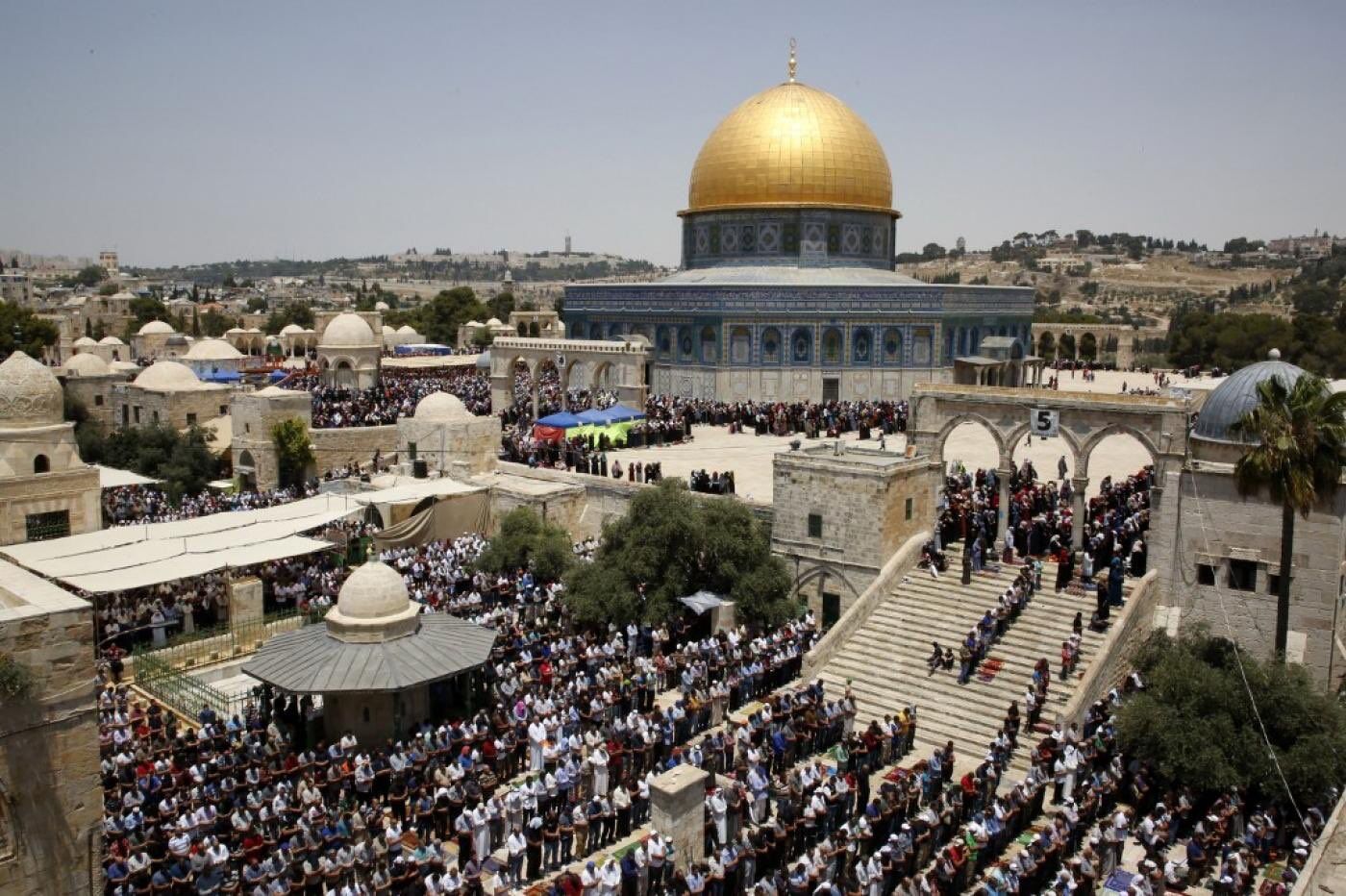
Arabs Livid Over Ben-Gvir Synagogue View in Al Aqsa

In a dangerous provocation to Muslims in the West Bank, Gaza and the Arab and Muslim worlds, Israeli National Security Minister Itamar Ben-Gvir announced that he intends to build a Jewish synagogue within the Al-Aqsa Mosque compound. This is a site that is revered by Muslims worldwide.

The Ben-Gvir statement was reported by Israel’s Army Radio, where he claimed that Israeli law grants equal rights to Muslims and Jews to conduct prayers at the holy mosque as reported in the Quds News Network.

Meanwhile Jordan condemned such a statement. Jordan’s Foreign Ministry called it as “a violation of international law and an unacceptable provocation that requires a clear-cut international position condemning it.”

It stated Ben-Gvir’s statement “fuels extremism and endeavors to change the historical and legal status quo in Jerusalem and its holy sites through imposing new facts and practices driven by a bigoted exclusionary narrative.”

It stressed that the entire Al-Aqsa Mosque site is an exclusive place of worship for Muslims, and the Jordan-run Jerusalem Waqf Department is the legal entity supervising Al-Aqsa Mosque affairs.

As well, Egypt, Monday, denounced Ben-Gvir’s call to build a synagogue inside Al-Aqsa Mosque in occupied East Jerusalem, stating what he says heightens tension in the occupied Palestinian territories.

The country’s Foreign Ministry said Israel is legally responsible for adhering to the status quo at the Al-Aqsa Mosque and preserving Islamic and Christian sanctities.

It also demanded Israel comply with its obligations as an occupying power, and “stop such provocative statements aimed at further escalation and tension in the region.”

The ministry added that Ben-Gvir’s statement against Al-Aqsa Mosque further complicates and aggravates the situation across the Palestinian territories, and hinders efforts to reach a cease-fire in the Gaza Strip.

Meanwhile Israeli Prime Minister Benjamin Netanyahu tried to distance himself from Ben-Gvir. However all he said is that the status quo on the Al Aqsa Mosque remains unchanged.

Continue reading
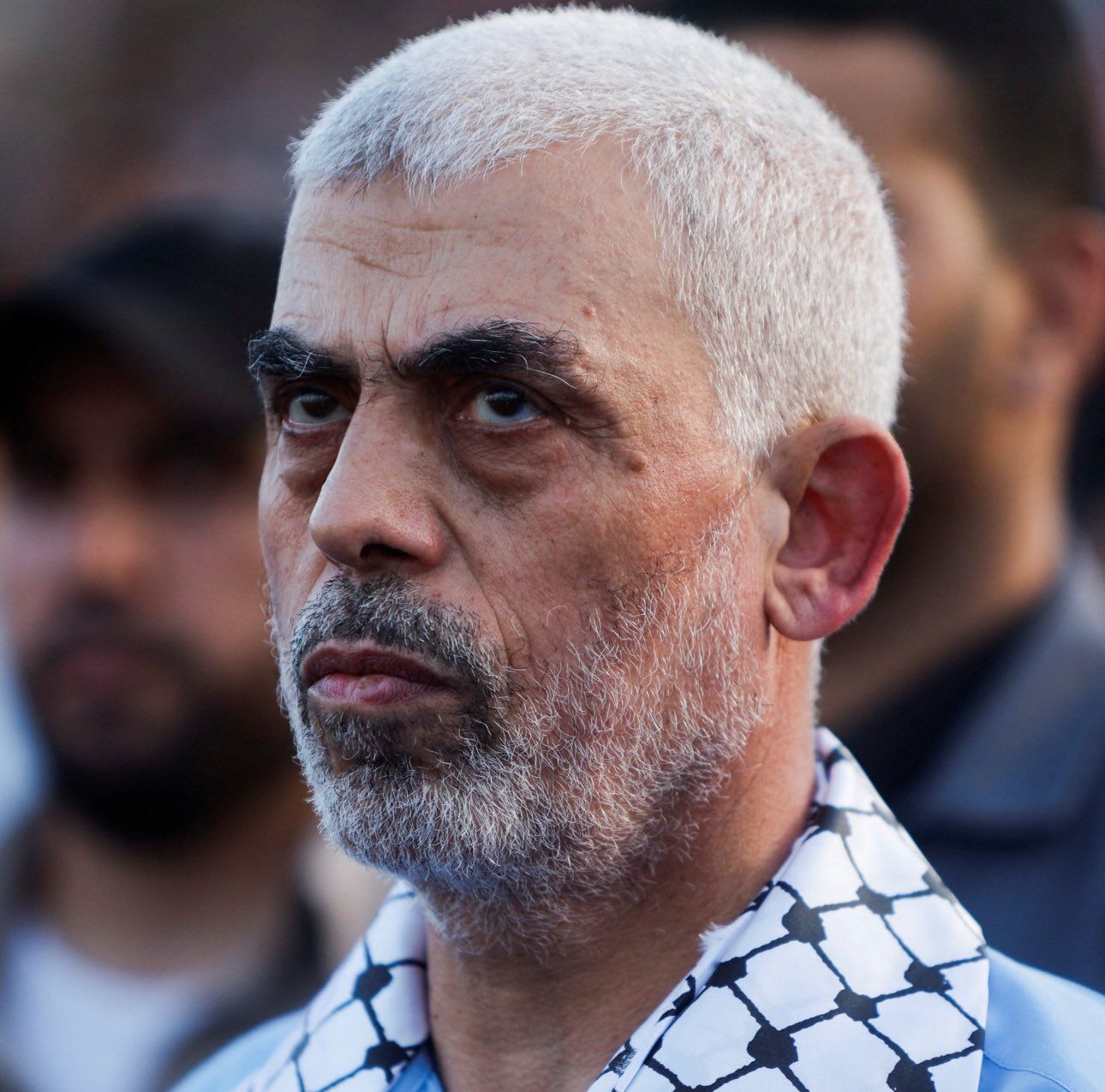
Yahya Sinwar: ‘Israel’s Most Dangerous Man’

The Islamic Resistance Movement, Hamas, has officially announced Yahya Sinwar as the new head of its political bureau. Sinwar succeeds the late Ismail Haniyeh, who served as the leader of the Islamic movement up until Israel assassinated him in Tehran last week.

The social media is buzzing about the news of the selection of Sinwar as the next chief of the political bureau.

Many say the selection of Yahiya Sinwar to lead Hamas is being described as “Israel’s worst nightmare now unfolding.”

Israeli analyst Avi Issachharoff says Hamas has chosen the most dangerous person to lead it while one Israeli officer tweeted “we [Israel] made a mistake in assassinating Haniyeh so Sinwar becomes the head of Hamas.”

Hamas’s quick and unanimous selection of Sinwar as president demonstrates the movement’s vitality, said Osama Hamadan, head of Hamas in Beirut.

Hamas’s message is that it has chosen someone who has been entrusted with the fight on the ground in Gaza for more than 300 days, he added.

The Israeli Walla website stated that sirens went off in Ashkelon and Sderot after Sinwar’s appointment was announced.

Sinwar, a prominent leader within Hamas, is deemed to be the architect of the Al-Aqsa Flood operation on 7 October, 2023, which inflicted significant human and military losses and shook the image of Israel’s intelligence and security agencies before the world, the Quds News Network reported.

And as a result, Israel announced that Sinwar’s elimination is one of the objectives of its offensive in the Gaza Strip.

Sinwar is considered one of Hamas’s most knowledgeable leader about the Israeli mindset. He is also regarded as one of ‘the hawks’ within the movement, which can influence the course of negotiations on a prisoner exchange deal. This comes after Hamas, under Haniyeh, had shown significant flexibility the Quds website reported.

Continue reading