What Will The Future Hold For Palestine in 2025?

In 2024, there were a host of startling developments occurring in the Middle East and the wider world that impacted Palestine, most of them unforeseen 12 months ago: the continuation of the unrelenting Israeli genocide in Gaza, the battlefield defeat of Hezbollah and the devastation in Lebanon, the overthrow of Bashar Assad in Syria, the isolation of Iran, the election of Donald Trump, and a series of seminal rulings by the International Court of Justice (ICJ) and the International Criminal Court (ICC).

All of these seismic events make the assignment of imagining what Palestine’s future will be in 2025 a precarious task. Yet, with caution thrown to the wind, we can make some educated guesses on six leading features.


Leading scenarios for Palestine’s future

Donald Trump’s return to the US presidency will certainly encourage Israel’s accelerating subjugation of the Palestinians. His major appointments on the Middle East – including his secretary of state, his ambassador to Israel, and his two regional envoys – are all diplomatic gifts to Israel’s far-right nationalist government. His political instincts are all about respecting the strong and disparaging the weak. The only restraint that Trump may impose on Israel would result from his quest for a substantive deal with Saudi Arabia, which is publicly demanding a credible path to Palestinian statehood.

A genuine Palestinian state is further away than ever. In 2025, more Palestinian land will be confiscated, more illegal Israeli settlements will be built, and settler violence, already at record levels, will only intensify. While Trump might restrict Israeli Prime Minister Benjamin Netanyahu from formally annexing parts of the West Bank, de facto Israeli annexation will continue unabated. The ability of the Palestinian Authority to shape events in its favor will likely shrink even further. As for the comatose peace process, the Palestinians long ago arrived at a traffic intersection, and the red light never changed. It remains red today, its only color.

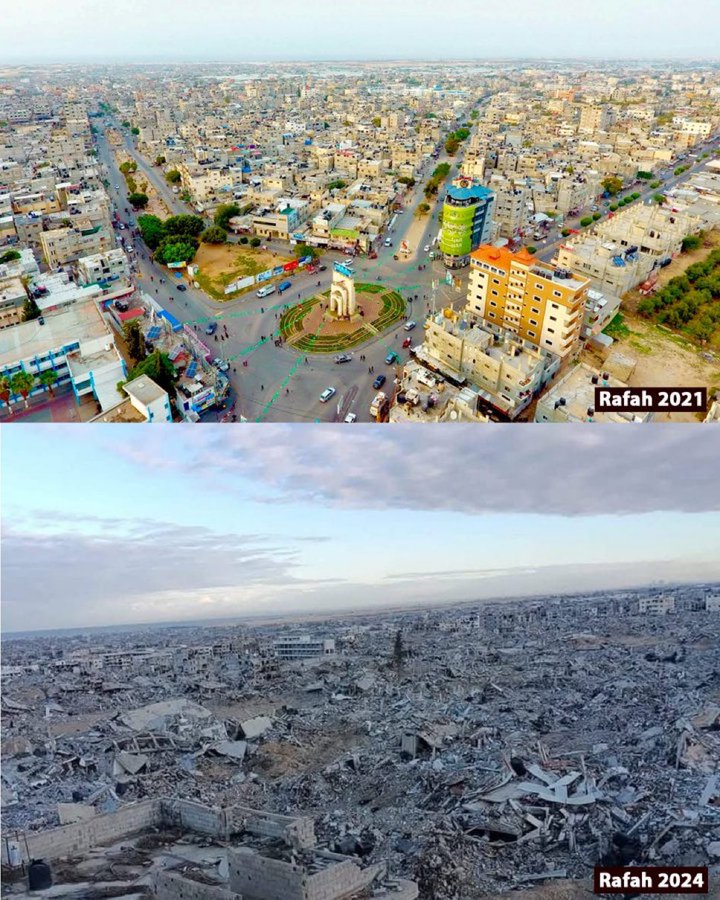
The genocidal war on Gaza will finally end with a formal ceasefire, the release of Israeli hostages, and some Palestinian detainees. However, the unimaginable toll of deaths and suffering among the Palestinian civilians in Gaza will continue, as starvation, infectious diseases, a decimated economy, and a devastated landscape afflict the population. Hamas won’t be completely defeated, but it has suffered a grievous blow in the short run. Israel will push hard to build settlements in the north and for clan warlords to run the rest of Gaza, which Trump might allow. Another great test will be the raising of the $40-60 billion needed for the reconstruction of Gaza; this will create tension between Trump and his Gulf states allies, who will resist paying the lion’s share of the consequences of a war they opposed.

Will the international community face the Palestine issue in 2025?

Respecting Palestine, the United Nations will face some of its most perilous challenges in 2025. The one-year deadline set by the General Assembly for Israel to completely end its occupation of Palestine arrives next September, with Israel and the US committed to defying the obligation. In addition, Israel – with Trump’s backing – is seeking to dismantle UNRWA, the UN agency that delivers education, health, and social services to Palestinian refugees in the Levant. The challenge for Europe and the Arab world will be whether they will defend the UN, its core commitment to successfully resolving the oldest item on its political agenda (Palestine), and the preservation of its largest agency.

Israel’s diplomatic isolation will continue, even as its relationship with its superpower patron will deepen. Its outlier status at the United Nations – particularly at the General Assembly and the Human Rights Council – will see even more lopsided votes against its 57-year-old occupation, its denial of Palestinian self-determination, and its abuse of international law. The arrest warrant issued by the International Criminal Court against Benjamin Netanyahu and his former Defense Minister Yoav Gallant will make him politically radioactive, with heads of state and government that have signed the 1998 Rome Statute refusing to meet him. Pressure will grow within Europe to rethink various trade and cooperation agreements with Israel as a reaction to the war and its horrendous humanitarian consequences.


Role of international law more important for Palestine than ever

The role of international law in pronouncing on the question of Palestine will become even more momentous in 2025. After the signature rulings by the ICJ and the ICC in 2024, we are likely to see a growing movement to insist upon a rights-based approach to peacemaking in Palestine, replacing the discredited (but still very much alive) realpolitik approach of the Oslo process.

The momentum created by the recent genocide reports by Amnesty International and Human Rights Watch will continue to echo through UN corridors and foreign ministries. But there are also headwinds: Republicans in the US Senate are determined to sanction the ICC for issuing the arrest warrant against Netanyahu, meaning that the viability of the court will require a stout defense by the 124 members of the Rome Statute, particularly from Europe.

As we learned from the past year, there will almost certainly be unexpected surprises in 2025. And while there will continue to be dark times for the Palestinians in the year ahead, the war in Gaza has also sparked a global movement of solidarity – particularly among the young – that will continue to inspire courageous thinking and bold acts. Its lasting impact should never be underestimated.

Michael Lynk he author is a professor emeritus of law at Western University, London, Ontario, Canada. He served as the 7th United Nations special rapporteur for human rights in the occupied Palestinian territory between 2016 and 2022. Opinions expressed in this article are the author’s own and do not necessarily reflect Anadolu’s editorial policy.
Continue reading
Israel Continues to Strike Syria Despite ‘Assurance’

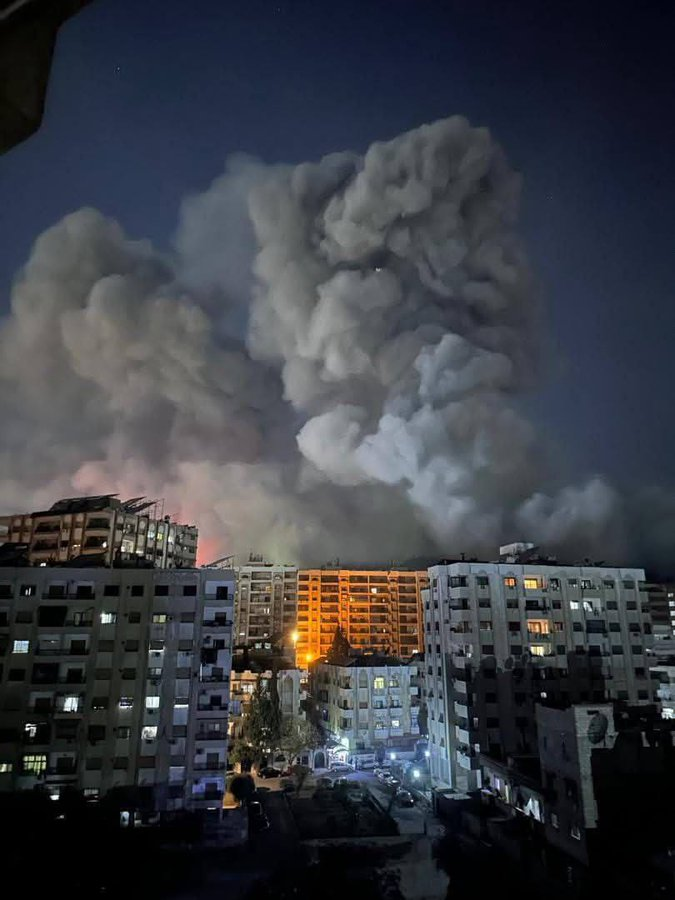
Israel has struck Syria 61 times in less than five hours, Sunday, according to the London-based Syrian Observatory for Human Rights.

The news is trending on the social media with the Israeli strikes reaching Damascus, Homs, Deraa, Suwayda, Sednaya, the so-called torture chamber prison under the Al Assad regime.

However, the Observatory claims 52 of these strikes were conducted on military depots that belonged to the ousted regime inside different areas of Syria.

The Observatory, which is based in the UK, claims that since the fall of Bashar Al Assad last week, Israel conducted 446 airstrikes on Syria on 8 December, 2024.

Syria watchers, including those in the Arab world are condemning the non-stop Israeli attacks as willful destruction of essential security public property that now belongs to the Syrian people.  

The new Syrian leader Ahmad Al Sharaa, known as Mohammad Al Jolani whose HTS (Hayat Tahrir Al Sham) group was mainly responsible for the ouster of the old Baathist regime says he is not interested in a new conflict with Israel.

But despite this the Israelis, who occupy the Golan Heights, continue to bomb Syrian targets

Continue reading
After 33 Years Lebanese Man Describes Horrors of a Syrian Jail

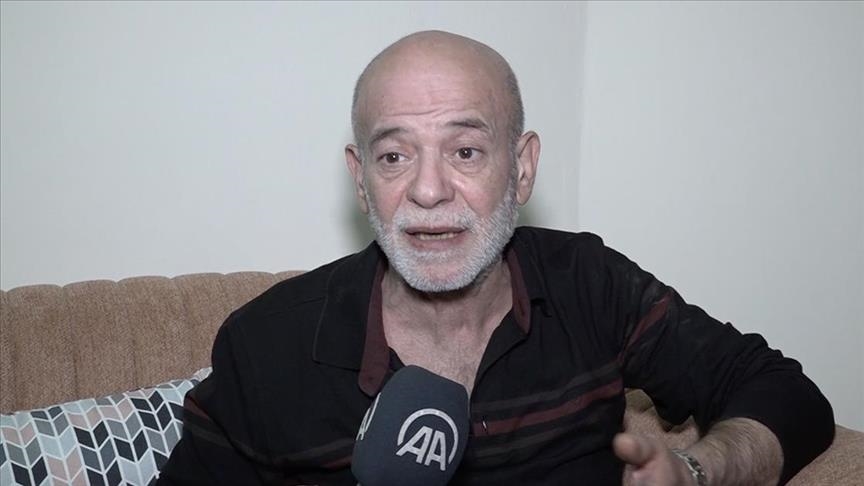
Suheil Hamawi, a Lebanese national who returned to his homeland after opposition groups toppled the Syrian regime and freed detainees from Sednaya and other notorious prisons in Damascus, shared his harrowing ordeal during 33 years of captivity.

The Bashar al-Assad regime operated numerous torture centers across the country referred to as “death hubs.”

Following the regime’s collapse over the weekend and the opposition’s takeover, anti-regime prisoners held in Sednaya and other detention centers were freed.

Among them was Hamawi, who was released from Sednaya, infamously known as a “human slaughterhouse” for its brutal torture practices.

A victim of the Assad regime, which tortured hundreds of thousands of people, he was abducted by Syrian forces in Lebanon in 1991. He was subsequently arrested and transferred to various prisons in Syria.

Accused of opposing the Syrian occupation of Lebanon from 1976 to 2005, Hamawi endured 33 years of inhumane imprisonment.

‘I had no hope of ever returning to my homeland and family’

Speaking to reporters, Hamawi expressed his gratitude for regaining his freedom and returning to Lebanon after more than three decades of captivity.

He recounted being among the hundreds of Lebanese detained by Syrian intelligence in 1991 for opposing Syria’s military presence in Lebanon.

Hamawi described the unimaginable suffering he endured in Syrian prisons.

“I was sentenced to life imprisonment in Sednaya. Today, I am back in my hometown of Chekka, the same place where Syrian forces detained me 33 years ago,” he said.

Initially transferred to the Anjar detention center in the Bekaa Valley near the Lebanese-Syrian border, he was later moved to detention centers in Damascus and Latakia before being sent to Sednaya.

“I spent 15 years in solitary confinement before being placed in a shared cell at Sednaya. Every single day was torture. From the moment I was detained, every breath I took felt like agony. I had no hope of ever seeing my family again. Visits were completely forbidden, and we had no contact with the outside world,” he said.

Hamawi described his imprisonment as a state of constant despair and deprivation, adding that he had lost all hope of freedom. Even as they heard rumors of events outside, the pace of developments gave prisoners little expectation of imminent release.

“When I heard gunfire, I didn’t know who had come to free me. I walked for 15 kilometers before someone took me to Lebanon,” he said.

According to Lebanon’s National News Agency, Hamawi is the first Lebanese national to return home after being released following the fall of the Assad regime.

Lebanese detainees in Syrian prisons

The Association of Lebanese Political Prisoners in Syrian Prisons estimates that 622 Lebanese citizens remain forcibly disappeared in Syrian detention centers. Many were abducted during Syria’s 29-year occupation of Lebanon.

During this period, the regime detained numerous Lebanese citizens, accusing them of opposing Syria’s military presence or collaborating with anti-regime groups.

Many were transferred to Syrian prisons, with families often losing contact with loved ones for decades.

Some detainees are believed to have been released following recent developments in Syria.

The ‘human slaughterhouse’

Reports from international organizations reveal that Sednaya prison, located 30 kilometers (18.6 miles) north of Damascus, became a detention center for anti-regime activists and military opponents after the 2011 uprising. Under the Assad regime’s Ministry of Defense, the prison became infamous for systematic torture and mass executions.

Between 2011 and 2015, reports indicate that as many as 50 detainees were hanged weekly or bi-weekly, with executions conducted in silence and secrecy. Prisoners endured inhumane conditions, repeated torture and deliberate deprivation of food, water, medicine and medical care.

A 2017 investigation by Amnesty International concluded that the crimes committed at Sednaya, including torture and mass executions, amounted to crimes against humanity. These violations were part of the Assad regime’s broader policy of systematic violence against civilians.

Continue reading
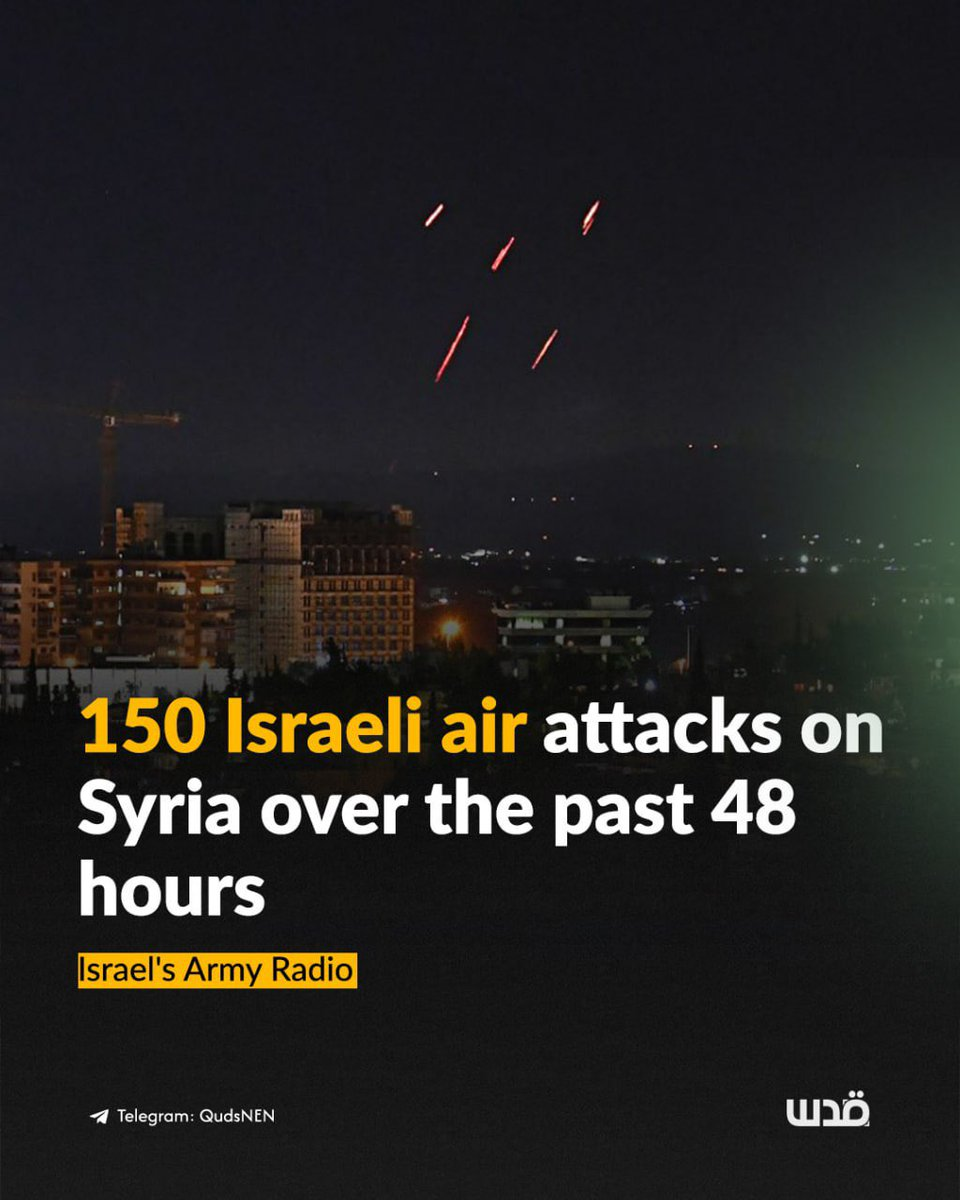
Israel Attacks Syria 150 Times in 48 Hrs

Israel’s Army Radio stated that Israel made 150 air attacks on sites, dubbed military depots, in different parts of Syria during the past 48 hours. Sunday, and in the light of the departure of the Baath regime, lead by the now ex-president Bashar Al Assad, who was given asylum in Moscow with his family, the Israeli occupation army announced that they are fighting in four fronts: Gaza, West Bank, Lebanon, and Syria.

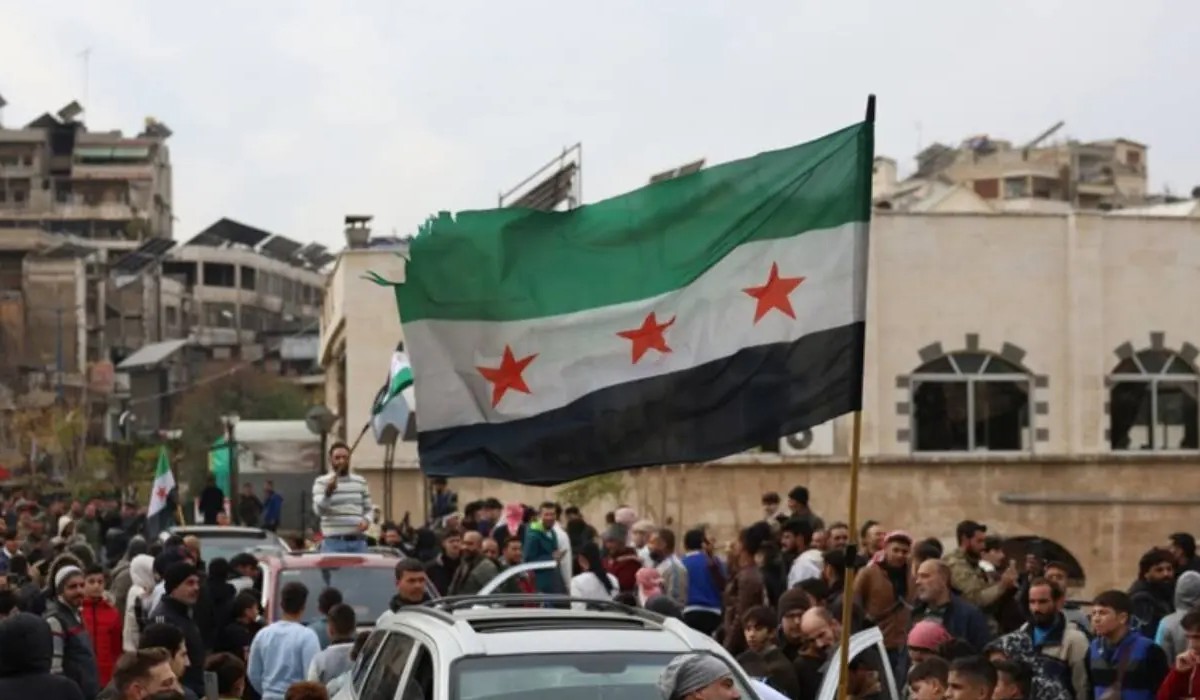
Israel increased its “trigger-happy” approach on Syria once it realized that the Al Assad regime has been deposed and an opposition alliance of at least 30 groups lead by Hayat Tahrir Al Sham (HTS) has taken over the country, starting Saturday, and installed a new government in Damascus.

Continue reading
Syria on Deluge For Arab ‘Regime Change’

In less than a week, the Bashar al-Assad regime and that of this family fell, an era that lasted for more than half a century came to an end.

There is no room here to talk about that era, but the end was expected for a long time, as dictatorial regimes or family-based dynasties must end, just as happened to Hosni Mubarak, Zine El Abidine Ben Ali, Ali Abdullah Saleh and others.

Hours before the fall of Al Assad, I called on Arab rulers to reconcile with their people before the flood comes rushing through. And now the flood has begun to rage from Damascus, and I believe, it will not stop.

It will inevitably sweep away other rulers of this era who accepted humiliation, disgrace, betrayal and throwing themselves into the arms of Tel Aviv, Washington and other capitals of crime.

What happened recently in Syria will be a prelude to the other Arab peoples. I feel very optimistic, and I believe we are facing radical changes that will affect the Arab world, and I do not know who will be the next ruler to be swept away by this deluge?

Thanks to the Al-Aqsa flood that exposed, revealed and disgraced many of the treasonous and collaborating regimes in our Arab world.

This flood will be followed by a flood of another kind, which will sweep away with it every slacker, and everyone who betrayed and conspired against Palestine, its resistance and its people, and threw himself into the arms of the criminal West, and ignored what is happening in Gaza, which will be, God willing, the main reason for uprooting many of the apostate Zionist regimes.

The majority of the Arab peoples are now yearning for change, and even salvation from injustice and oppression, and I do not believe that the Arab situation will continue in this way, and the Syrian situation will constitute an important factor for the peoples to pounce and revolt against rulers who are certainly not of the Arab caliber, and I am certain that this will not last long.

Many of the Arab rulers are feeling their heads today, and perhaps they are working on reconsidering their calculations if they can, and they realize that when the people have their say, the end of the regime will be inevitable.

So will these people learn from what happened recently in Damascus? The wise man is is the one who learns from others. Who will be the next ruler who will follow Mr. Al Assad?

Whoever has the answer, let him tell us, and he will have a great prize presented by the poor servant who wrote this article, which is a kiss on his forehead, and kisses on the foreheads of all the free revolutionaries of the nation, and at the forefront of the heroic revolutionaries of Gaza.

This article was written by Palestinian writer Dr Mohammad Abu Baker for Al Rai Al Youm in Arabic and reprinted in www.crossfirearabia.com

Continue reading