Shin Bet Chief Reveals All Against Netanyahu

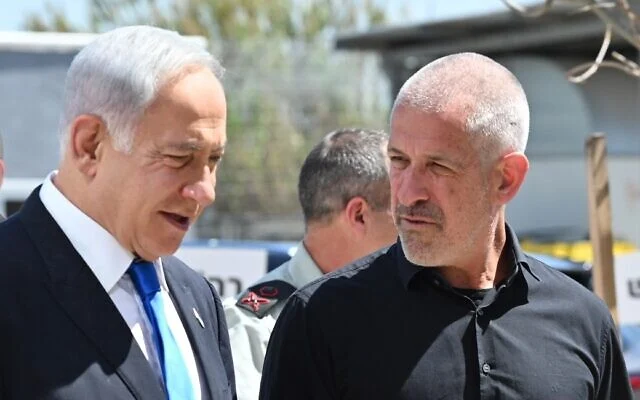
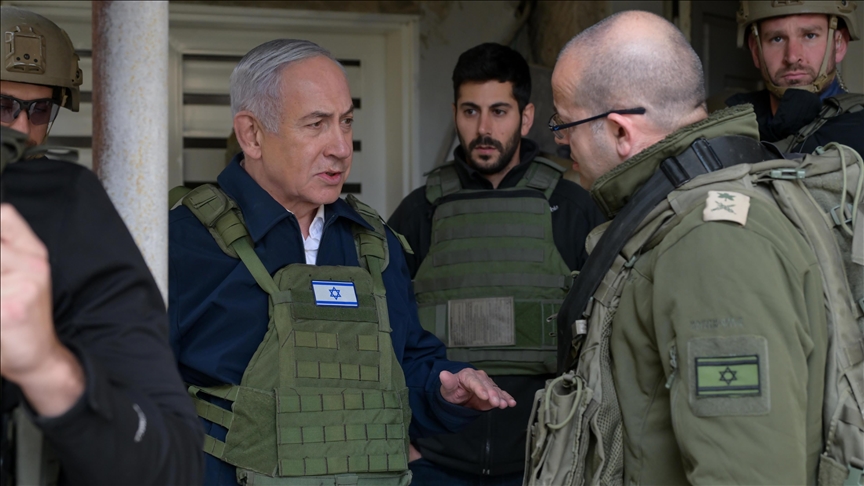
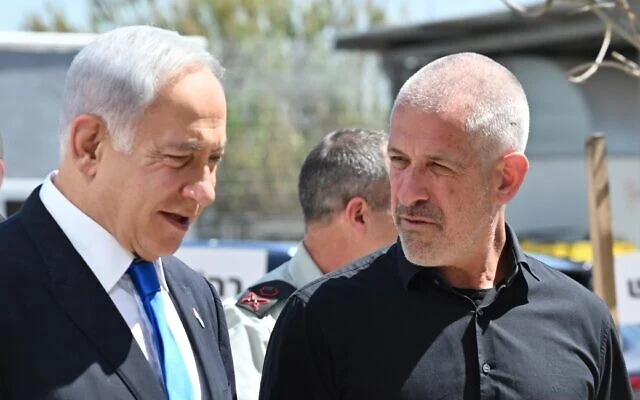
The head of Israel’s Shin Bet domestic security agency accused Prime Minister Benjamin Netanyahu of seeking surveillance of anti-government protesters and demanding his personal loyalty, in a testimony to the Supreme Court on Monday.

Netanyahu had tried to block Ronen Bar from submitting written testimony to the court, which the prime minister is expected to respond to in writing next Thursday.

Amid tensions between Bar and Netanyahu, the government decided on March 20 to dismiss the Shin Bet chief, but the court froze the dismissal order pending a review of opposition appeals.

According to the Israeli public broadcaster KAN, Bar wrote at the beginning of his affidavit that he had no knowledge of the reasons for his dismissal.

He said that the move “was not due to professional performance, but rather stemmed from an expectation of personal loyalty to the Prime Minister.”

“This reason – as I understand it – led to an extraordinary series of actions by the Prime Minister, alongside a media campaign against me on social media.”

The Shin Bet chief revealed that Netanyahu told him that in the event of a constitutional crisis, “I must obey the prime minister and not the High Court of Justice.”

Bar also said that Netanyahu requested Shin Bet to act against protesters opposing his government, calling it “an illegal request.”

According to Bar, Netanyahu told him “on more than one occasion” that he expected the Shin Bet to act against Israeli citizens involved in protests against the government.

Bar also wrote that he was asked to “provide details about the identities of Israeli citizens, protest activists, who had followed security personnel,” with particular emphasis on monitoring “protest funders.”

He disclosed that Netanyahu exerted “unusual pressure” on him to write a professional opinion, authored by Netanyahu or his aides, declaring that the prime minister should not appear in court to face ongoing corruption charges.

Bar added that Netanyahu tried to raise such matters at the end of meetings – after ordering his military secretary and stenographer, who operates the meeting recording device, to leave the room – “to prevent any record of the conversation.”

“I will soon announce the end date of my service,” he said, without specifying further.

Serious accusations

According to the Israeli daily Haaretz, Bar’s affidavit includes serious allegations against Netanyahu.​​​​​​​

In response, Netanyahu’s office said that Bar submitted a “false affidavit” to the court, adding that it “will be refuted in detail in the near future.”

Later, Netanyahu’s office issued a statement rejecting Bar’s testimony to the High Court, calling it “full of lies” and proving that he “failed miserably” in the Oct. 7, 2023, attacks.

Bar falsely claimed that he alerted the entire security system on the night of Oct. 7, 2023, but failed to notify the prime minister or then-Defense Minister Yoav Gallant.

“If he had done so, the massacre would have been avoided,” the statement said.

According to the statement, Bar claimed he ordered the prime minister’s military secretary to be awakened at 5:15 a.m. local time, but his office director only contacted the secretary at 6:13 a.m., minutes before Hamas began its attack, despite having intelligence about a potential attack for more than three hours.

“This confirms what all ministers in the government already agree on: Bar failed catastrophically on Oct. 7,” Netanyahu said. “That alone justifies his dismissal.”

“Bar confirms the determination of all government ministers that he failed miserably on Oct. 7. This reason alone requires his termination,” the statement added.

Netanyahu’s office also accused Bar of concealing a statement issued two days before the attack.

On Oct. 4, 2023, Bar reported that the “renewal of understandings between Israel and Hamas based on the principle of quiet in exchange for concessions reveals the potential for preserving stability in the Gaza Strip.”

Opposition leader Yair Lapid said that the testimony shows that Netanyahu is posing a threat to Israel’s security.

“The Shin Bet chief’s testimony proves that Netanyahu is a danger to Israel’s security and cannot remain Prime Minister,” he added in a statement.

“Netanyahu tried to use Shin Bet to surveil Israeli citizens.”

On Sunday, Lapid warned of possible political assassinations, naming Bar as a potential target, and accused Netanyahu and his ministers of inciting violence.

At the same time, Lapid also criticized Bar, saying he “should have resigned since Oct. 7, 2023,” due to his failure to prevent the Hamas attack.

Meanwhile, Yair Golan, leader of the opposition Democrats Party and former Deputy Chief of Staff of the Israeli army, called Netanyahu “a direct threat to Israel’s security and the rule of law, and must step down immediately.”

In a post on X, Golan said Bar’s affidavit “is not just a warning, but a serious indictment and an emergency alert for Israeli democracy.”

He described Netanyahu as “a failure in security and politics, and deeply entangled legally.”

“Netanyahu is a chaotic leader heading a chaotic government, which is not only a threat to democracy, but a full-blown coup,” he added according to Anadolu.

The Israeli army resumed its deadly offensive on the Gaza Strip on March 18 and has since killed 1,864 people and injured nearly 4,900 others despite a ceasefire and prisoner exchange agreement that took hold in January.

More than 51,200 Palestinians have been killed in Gaza in a brutal Israeli onslaught since October 2023, most of them women and children.

Last November, the International Criminal Court issued arrest warrants for Netanyahu and his former Defense Minister Yoav Gallant for war crimes and crimes against humanity in Gaza.

Israel also faces a genocide case at the International Court of Justice for its war on the enclave.
Continue reading
Middle East Psychosis

By Dr Khairi Janbek

As far as one is concerned, the Middle East has been for a long time a matter of balance of power overlapping with strategic reluctance to change its status quo. But the advent of US President Donald Trump is ushering a new era with all sorts of possibilities.

On the microcosm level for instance, Arafat’s Fateh movement in the PLO was checked in a formula of a balance of power by the leftists organizations as well as the Palestinian organizations sponsored by some Arab countries, the affiliation of all in the PLO created the sense of a balance of power.

However, with the emergance of the PNA and the affiliation of the Palestinian groups in it, albeit with variable influence, created a unit which under the balance of power notion, necessitated the creation of a check and balance on its power.

Consequently Hamas was created, and what seemingly appeared as contradiction between them, turned out to be a symbiotic relationship between them. Now, one cannot say with certainity what will happen next, however, if the objective is to maintain the balance of power by just weakening Hamas, this will require symbiotically weakening the PNA as well, but if the objective is to eleminate Hamas, the next step will be to eleminate the PNA.

As for the macro level, and as one often repeats, the Middle East, has at least for the last five decades was strategically governed by the famous triangle, Iran-Israel-Turkey, with the Arab world having little say in their own affairs , if at all.

However, since the fall of the Shah regime in Iran, the search started for a third angle to replace Iran in governing the Middle East, considering the open hostility of Iran towards West. Consequently some Arab countries jumped into the frey as possible candidates, like Egypt, then Qatar, UAE and Saudi Arabia. But as it seems, a preference for the old triangle was decided upon by the world powers, accepting the inconvenience of having to negotiate with Iran.

Now, we can see a new development that breaks the taboo of the old balance of power in the region.

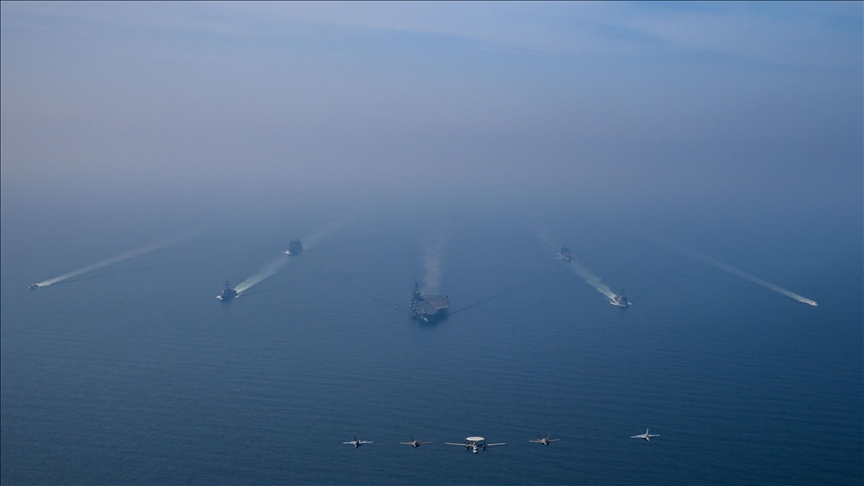
Starting mid-way from the Biden administration, and with the start of the second Trump administration, the notion of balance of power by the usual triangle has turned into a balance of aggressiveness in the region, as Israel and Iran “bombard” each other, Turkey’s involvement in toppling Assad, and now the distinct possibility of confrontation with Israel in Syria, while being threatened itself by Iran if it cooperates in any possible American attack on Persia. Thus the stability which this triangle had sustained itself, is no more.

From appearances, at least how things look like: It seems Israel is being supported by Trump explicitly and by many other international parties implicitly, to be either the major power that has a say in Middle Eastern affairs. This means that Iran’s grip on the region will be curtailed through negotiations at least if not war; and here the symbiotic issue appears again, with Turkey’s role curtailed through pressures and/or and economic threats.

Here, as well, the aim is to designate Israel as only point of compass on the map of the Middle East, which Arabs are expected to flock to and normalise with.

In this case events will inevitably take a nasty symbiotic turn, meaning Iran will have to be attacked and taken out altogether with its surrogates from the power relations of the Middle East, and Turkey forced to take a more insular step from the affairs of the region, even with a regime change if required.

But we will have to wait and see what lies in store!

Dr Janbek is a Jordanian writer based in Paris, France.

Continue reading
Israel Kills Children as World Looks on

By Luigi Daniele 

Mark these words: South Africa is likely to win the genocide case at the International Court of Justice (ICJ), but by then, it will be too late to save a single civilian life. The time for robust action is now.

The resumption of the exterminatory Israeli bombardments on Gaza has killed 174 Palestinian children and toddlers in less than 48 hours, according to Defense for Children International. UNICEF has also denounced the killing of more than 130 children in a single day, representing the largest single-day child death toll among Palestinians in years. This may be the deadliest episode in the history of Israeli military actions in Palestine.

Family members of slain Israeli captives, whose names and faces have repeatedly been used to justify further attacks on Palestinians, condemned their government’s actions as another betrayal of the hostages, with Yarden Bibas writing “military pressure endangers the hostages while an agreement brings them home”, and networks of Israeli families declaring Israeli Premier Benjamin Netanyahu chose Ben-Gvir’s return to the government over the return of the hostages from Gaza.

In the midst of this carnage, Israeli ministers declare “a society that tolerates Hamas sympathizers within it has no right to exist,” or ask the very population they are destroying to “return the hostages and remove Hamas” unless they want to pay a “far more severe price” of “total devastation.”

Ideology of destruction

The ideology of the Israeli leadership is becoming increasingly explicit: It promotes the notion that Palestinians deserve elimination and are responsible for their own destruction. It is a paradigmatically genocidal ideology, typical of all the genocides in history, construing the victim group’s existence as undeserved, its survival as an intolerable threat, brutalities against it inherently justified, ‘called for’, and the forcing of the group into inexistence as a way of restoring the natural order of things as they should have always been. After all, key Israeli ministers declared “there is no such thing as a Palestinian people.” Declaring the inexistence of a people equates precisely to posing the premises for its elimination.

The honesty of the genocidal narratives of the Israeli executive, coupled with the use of hunger, thirst, diseases as weapons of war, reinforces crucially the validity of South Africa’s arguments at the ICJ, and of those states intervening in support of those arguments. As an international lawyer, my guess is that South Africa, even more likely after these renewed atrocities, will win the genocide case at the ICJ.

Despite the all-time record of crimes against children, Western states keep refraining from legal action, even those intervening in other ICJ cases to affirm that, in their interpretation of the Genocide Convention, the victimization of children, as the most vulnerable and crucial component of victim groups, should bring special weight in ascertaining the existence of genocidal intent. Beyond hypocrisy and racist double standards, Palestinian children are portrayed as less human and less worthy of protection than other children.

The irresponsibility of political leaders of third states indeed continues to kill. Silent when not complicit, incapable of acting for a single sanction, some are even offering safe harbors from ICC arrest warrants to their political and business partners wanted for war crimes and crimes against humanity, violating their own obligations as state parties of the Rome Statute.

In sum, the lawlessness unleashed on Palestinians is indeed infecting the world (dis)order, and it is evident that Netanyahu has all the interest in descending the entire region into a state of permanent war to stay in power. The global instability deriving from the winds of regional and global wars (in which the EU is diving rather than shifting its disastrous strategic approaches) will inevitably increase authoritarian repressions against dissidents, oppositions, and alternative visions in many of the countries revolving around this tragic abyss of history. War and authoritarianism always nurture each other. It is therefore not only in the interests of the survival of Palestinians, but a political necessity against the oligarchic shifts in our own countries to demand robust action now.

Protecting lives

Palestinians need a humanitarian intervention of a multilateral coalition to protect civilian lives. This presence alone can tackle an alliance of savage powers devaluing the lives of Palestinians as less than human and extracting profits from their massacres now, while preparing to extract more profits from exterminatory wars globally tomorrow. This would offer an immediate opportunity for world powers genuinely committed to reforming the international order towards a new multilateralism based on sovereign equality, self-determination, and peaceful coexistence to prove that their words are not empty slogans.

In other words, the paradox we face is that even the selfish pursuit of national interests—let alone legal or moral obligations—should be enough to trigger decisive action like the one proposed in this reflection.

A multilateral military presence, under UN auspices, to protect Palestinian civilians appears necessary as never before, since none of them will ever be safe under occupation by forces making clear they consider their existence as a people an offense to be redressed by annihilation. Should a coalition of states promote such an action, it would enjoy the support of masses of citizens across the globe, and gain moral leadership in these dark times, marked by the unchecked rise of international criminality.

Luigi Daniele is a senior scholar at Nottingham Trent University

Continue reading
Israel’s Top Court Says No to Netanyahu

Israel’s Supreme Court on Tuesday rejected Prime Minister Benjamin Netanyahu’s request to lift a freeze on his government’s decision to dismiss Ronen Bar, head of the Shin Bet security agency, official media reported.

The court, the nation’s highest judicial body, ruled that Bar cannot be removed before April 8, when justices will review opposition petitions challenging the dismissal, Israel’s public broadcaster KAN reported according to Anadolu.

However, the court permitted Netanyahu to interview candidates for Bar’s replacement.

Last Friday, Netanyahu’s government decided to end Bar’s tenure on April 10, unless a permanent successor is appointed earlier.

The Supreme Court then issued a temporary injunction halting the move until the April 8 hearing, following petitions from opposition parties and NGOs.

These groups, including Yesh Atid, National Unity, Yisrael Beytenu, the Democrats, and the Movement for Quality Government, argued the dismissal reflects a “serious conflict of interest” tied to Shin Bet investigations involving Netanyahu and the agency’s report blaming the government for the Oct. 7, 2023 Hamas attack.

Netanyahu defended his push to oust Bar, asserting the decision falls within governmental authority and should not be subject to judicial oversight.

He cited a “lack of trust” in Bar, rooted in the fallout from the Oct. 7, 2023 attack. This marks the first time an Israeli government has moved to fire a Shin Bet chief.

Bar himself hinted at political motives, suggesting Netanyahu sought “personal loyalty” he refused to provide. Meanwhile, massive protests have gripped Israeli streets in recent days, decrying the dismissal attempt.

Continue reading
Netanyahu’s Trap!

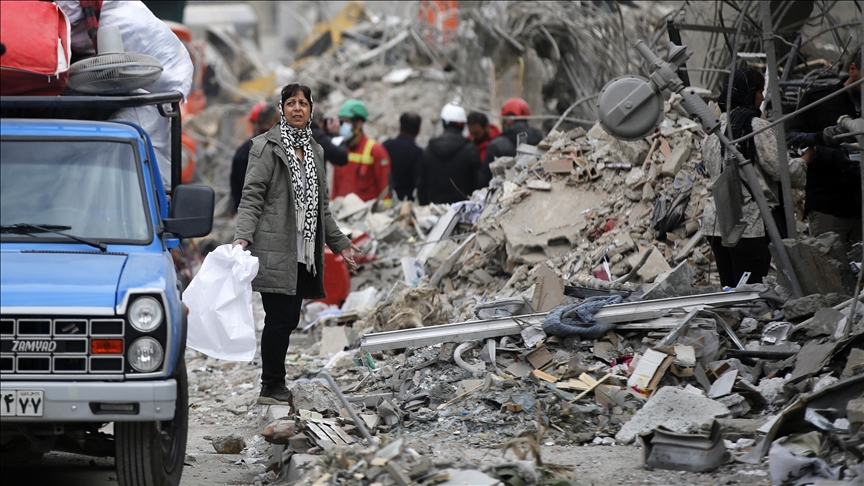
The already fragile ceasefire in Gaza was further shattered as Israeli Prime Minister Benjamin Netanyahu declared that Israel had “resumed combat in full force” against Hamas in the Gaza Strip on March 18, during the Muslim holy month of Ramadan. In the hours following Netanyahu’s announcement, Israeli airstrikes – which had already been routinely violating the ceasefire in recent weeks – killed more than 400 Palestinians, including a significant number of children. Later that day, Israeli forces launched a new ground offensive, reportedly killing at least 48 more Palestinians, according to local health workers.

Vowing to eradicate Hamas, Netanyahu described the renewed phase of state terrorism as “just the beginning”. Meanwhile, Israeli sources confirmed that the assault was conducted in “full coordination” with the United States. Also on Wednesday, Israel carried out an attack on a UN facility in central Gaza City, killing a foreign staffer and wounding five others. Jorge Moreira da Silva, Executive Director of the UN Office for Project Services, condemned the strike, stating: “Israel knew this was a UN compound where people were living and working. It is a well-known location.”

From the outset, Netanyahu’s office has justified the assault by accusing Hamas of preparing new attacks, refusing to release hostages, and rejecting all proposals put forward by US presidential envoy Steve Witkoff and other mediators. At the UN Security Council meeting on Gaza, convened just hours after the renewed Israeli offensive, the US envoy placed exclusive blame on Hamas for the collapse of the ceasefire. According to the Israeli government, approximately 59 Israeli captives remain in Gaza, with fewer than half believed to be still alive. Hamas, however, denied rejecting the US envoy’s proposal, accusing Netanyahu of deliberately resuming hostilities to sabotage the ceasefire agreement. The group characterized Israel’s actions as a “unilateral” annulment of the existing deal.

Arab countries, including Egypt and Qatar – both key mediators in the peace negotiations – have strongly condemned Israel’s latest military escalation. On March 20, the US State Department reaffirmed the “bridge proposal” put forward by the US President Donald Trump’s administration last week. It aims to extend the first phase of the ceasefire and hostage release agreement between Israel and Hamas, and remains on the table. Given this backdrop, the question arises: What is driving Netanyahu’s genocidal ambitions?


A zero-sum game?

Netanyahu appears to be maneuvering to reduce the original multiphase ceasefire agreement to just its first phase, securing the release of all Israeli hostages before resuming his military campaign in Gaza. Hamas, however, recognizes the trap. At present, neither the US nor mediators like Egypt and Qatar can offer Hamas any guarantees that if it releases all remaining hostages – both dead and alive – Israel will commit to entering the second phase of the agreement.

It is worth recalling that Israel had already delayed negotiations for the second phase, which was initially scheduled to begin 16 days after the agreement took effect. By the time phase one was set to conclude on March 1, Israel had refused to advance talks, effectively stalling the diplomatic process.

Since March 2, Israel has taken increasingly punitive measures against Gaza. According to the UN, it has blocked the entry of all lifesaving supplies, including food, medicine, fuel, and cooking gas, affecting 2.1 million people. It has also sealed off all crossing points and, on March 9, ordered a complete shutdown of Gaza’s electricity supply. The blackout has severely impacted desalination plants, which provide clean drinking water to some 600,000 people. Yet, despite these actions, Israel continues to evade accountability for its collective punishment of Gaza’s population.

What is Israel’s endgame for Gaza?

Israel appears to be accelerating efforts to implement what some critics describe as a plan to radically reshape Gaza’s demographic and political future. Netanyahu, frustrated by his failure to eliminate Hamas and achieve clear strategic objectives, is pampered by Trump’s proposal to “take over” and “own” the Gaza Strip. At present, Netanyahu is exploiting the geopolitical status— including high-level talks between Trump and Russian President Vladimir Putin over Ukraine and the US military campaign against the Houthis in Yemen—which have diverted international attention away from Gaza. This distraction provides him with an opportunity to escalate the attacks with fewer diplomatic constraints.

However, Netanyahu’s thirst for blood is not only deepening the humanitarian catastrophe in Gaza but also exacerbating regional tensions, pushing the Middle East toward prolonged instability. His actions risk triggering wider spillover effects, particularly in Lebanon and Syria, and further escalating an already volatile landscape. The pressing question remains: does Israel have a long-term strategy for Gaza, or is it merely waging a campaign of destruction with no viable political exit strategy? Another crucial consideration is, following their emergency summit in Cairo on March 4, how will the Arab League reconcile Egypt’s reconstruction plan with Israel’s relentless aggression?

The urgency of a concerted diplomatic and strategic effort to curb Israeli aggression and expansionism cannot be overstated. Without immediate intervention, the entire region will bear the long-term consequences of unchecked military escalation and political destabilization.

Serhan Afacan is associate professor at Marmara University’s Institute for Middle East Studies and president of Center for Iranian Studies (İRAM).

Continue reading