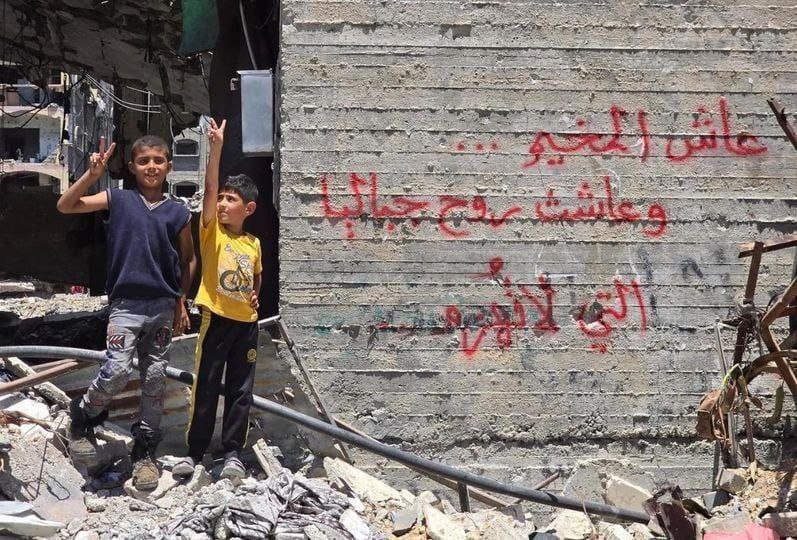
“Jabalia camp will not fall.” This is just one phrase the steadfast Palestinians in the Jabalia refugee camp wrote on the walls of the houses destroyed by the Israeli war machine over a year of genocide. They insist on staying on their refusal to be displaced under the guns of a third military operation that is today continued relentlessly.
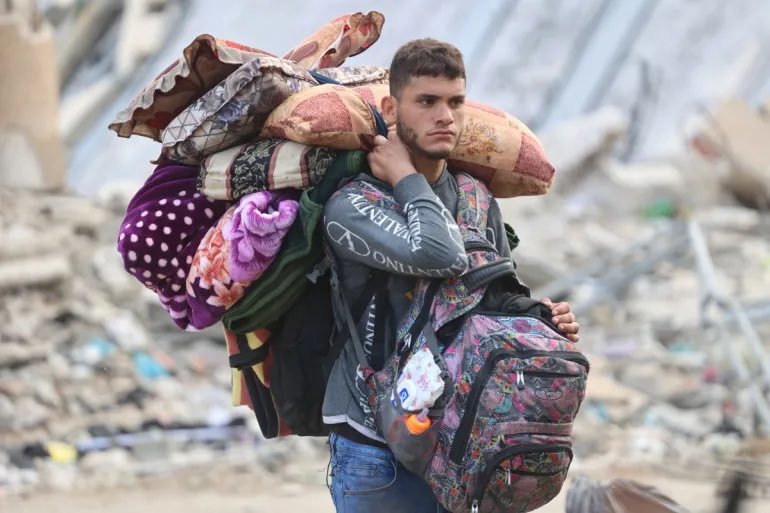
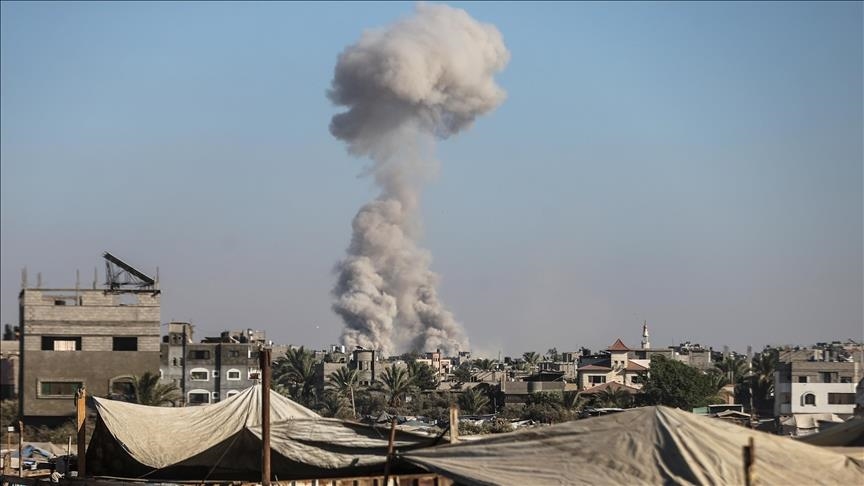
Artillery shells are raining down on the camp from all sides. Jabalia residents are rushing with whatever luggage they can carry, or rather the remnants of their belongings which they lost over the course of a year of genocide, searching for a safe place and shelter that is nowhere to be found.
Gunpowder
Amidst the pain, the camp’s steadfast residents breathe air saturated with gunpowder from rockets and shells but they remain, refusing to submit to forced evacuation orders and attempt to displace them. They say the Israeli occupation will not drive them off the land.
Yousef Abu Qamar insists on staying in the northern Gaza Strip, refusing to leave the camp. He is currently residing in a tent he set up in one of the shelters and says he will not leave Jabalia even if it costs him his life, despite losing his home and dozens of relatives during this ongoing genocidal war on the Strip.
Abu Qamar is staying inside a displacement tent with his wife and children in one of the UNRWA schools, along with hundreds of residents of Jabalia camp who refuse to leave, despite the dangers to their lives and Israeli siege.
He adds the occupation is doing its military best to force them to move to the southern Gaza Strip after a year of steadfastness in the north, “despite the great destruction that befell the camp and our loss of our homes and livelihoods, and the famine we lived under for months and that is being repeated today.”
No safe areas
Abu Qamar says the Israeli occupation army’s call for displacement as an attempt to delude the camp residents into believing there are safe areas in the southern Gaza Strip but the reality is the opposite, as they bombed the tents of the displaced in Mawasi Khan Yunis and Deir al-Balah, and invaded Rafah, which they claimed was a “safe humanitarian area”.
“If we must die, let us die in the camp that has always embraced us in which we have lived, and which has lived in us. Where do we go amidst the devastation that is everywhere? What we rejected at the beginning of the war, we will not accept now,” he added.
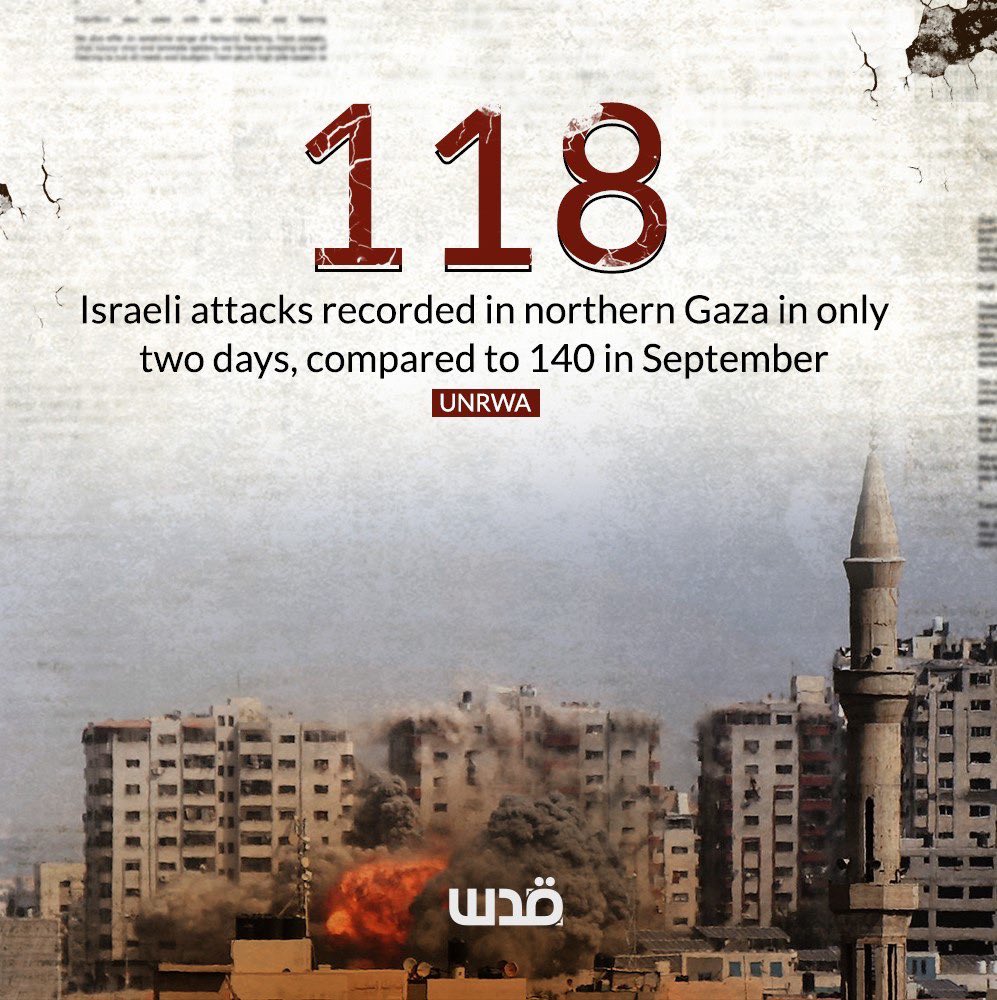
On 6 October, 2024, the Israeli army announced the start of a ground military operation in Jabalia, under the pretext of preventing the Palestinian resistance from regaining its strength in the area, hours after the start of a fierce attack on the eastern and western areas of the northern Gaza Strip, including Jabalia and the most violent since last May.
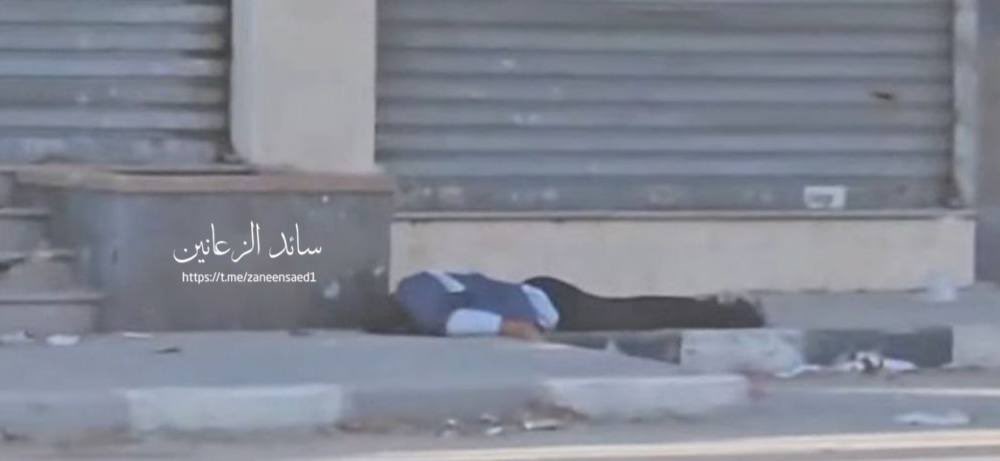
This is the third ground operation carried out by the Israeli occupation army in the Jabalia camp since 7 October, 2023, where hundreds were killed and injured in aerial and artillery bombardment and gunfire inside the camp, in addition to the destruction and burning of hundreds of homes.
Generals’ Pan
With the launch of the new military operation the occupation army began displacing Palestinians from three towns in north Gaza in a move that appears to be an undeclared implementation of what the media has called the “Generals’ Plan,” to empty the northern Gaza Strip and impose a strict siege on it in preparation for settlement with Israeli colonialists.
The “Generals’ Plan” was unveiled in early September, and calls for displacing all Palestinians from the northern Gaza in a week before imposing a siege on the area and giving Palestinian fighters there the choice of death or surrender.
The Israeli government has not announced its adoption of the plan, but the KAN official Broadcasting Channel reported in September that the Ministerial Cabinet for Political and Security Affairs is discussing this plan.
Ghazi Al-Kafarna shares the insistence of his other camp residents to remain in his home despite the destruction of large parts of it. He believes leaving the camp will not provide him with safety or assistance, saying it will not solve the crisis but increase their suffering.
He says that leaving the northern Gaza Strip to the south means death, and not necessarily by missiles. Since the beginning of the war, we have witnessed various forms of death from diseases, epidemics and water pollution, stressing he does not trust the “unsafe” displacement paths determined by the occupation army and the fact the south is not prepared to receive new numbers of displaced people.
Al-Kafarna adds: “It is true we are suffering from near-famine due to the severe shortage of food and lack of vegetables, even if their prices are astronomical, but going to the south means living in tents we do not know for how long plus the south is not prepared to receive new displaced people.”
‘We are staying’
He believes the occupation army relies on the principle of putting military pressure on the Jabalia residents to force them to flee under intense firepower. He pointed out however, this policy has proven its failure, and proof of that is the insistence of people of staying even if they are wrecked.
Thousands of residents of northern Gaza have clung to their homes and brushed aside displaced to the south since 14 October, 2023, when the occupation army issued the first forced evacuation order to them.
Of the 1.2 million people who used to live in the Gaza and North Governorates, there are currently about 700,000 people who have refused to be displaced to the southern Gaza Strip, according to official Palestinian data.
Jabalia Camp has always represented the palm facing the Israeli needle since the years of the first Intifada in 1978. It was the spark that ignited all of the Palestinian territories and erupted to mobilize against occupation.
Days of Rage
In the year 2000 Al-Aqsa Intifada Jabalia Camp witnessed fierce battles, including the “Days of Rage” battle in 2004, in which the enemy tried to storm the camp, but withdrew in defeat after a 17-day battle. This is the battle in which Sheikh Nizar led the fighters to the front lines through his historic statement: “They [Israeli troops] will not enter our camp, meaning they will not enter our camp.”
Today, a year after the Al-Aqsa Flood and attempts to break the resistance in Jabalia, the camp, covering one-and-a-half square kilometers, returns like a phoenix from the ashes to resist a third Israeli military encroachment to remove its residents.
In its first ground attack on the camp on 27 October, 2023, the occupation forces launched thousands of raids and opened the gates of hell with “preliminary fire” on the stubborn camp, most of whose residents refused to leave.
On 12 May, 2024, the occupation army launched a violent attack on Jabalia from several axes, and sent three armored battalions to carry out the mission it had always failed at, thinking that after all these months of crushing and starvation, the camp would kneel and raise the white flag.
Powerful, steadfast
But what happened was that stubborn Jabalia proved once again it was the most powerful and steadfast front in this battle, to the point that the squadrons of helicopters that came to evacuate the dead and wounded soldiers hovered profusely over the skies of the camp throughout those days.
This legendary steadfastness was not built on a sea of sand. Since its inception in 1948 by refugees who sought refuge there after the Nakba, it has been a focal area for the fedayeen who joined the training camps of the “Palestinian Liberation Army” in the 1960s, as hundreds of young men from Jabalia camp rushed to join and participated in fedayeen operations inside the armistice line and the battles of the June 1967 war, as confirmed by Saeed Ziyad, researcher in Palestinian affairs.
The Arab defeat and the occupation of all of Palestine and a large part of the Arab lands did not deter those fedayeen from resisting and joining the new resistance groups that kept the enemy awake and inflicted heavy losses on it. The peak of these operations was between 1968 and 1972, when the then Israeli Minister of the Occupation Army, Ariel Sharon, carried out large-scale targeting on the fedayeen, and demolished a large number of homes in the camp to attempt to crush the armed resistance against the occupation where the enemy tried to raze the camp and displace its people through a large-scale operation that lasted for four years, and ended in abject failure.
Today, the stubborn camp is reformulating its resistance identity well-known in past decades, so that its heirs today continue to write “Long live the camp…long live the invincible spirit of Jabalia.”
This article was translated/edited from the Palestine Information Center.

 CrossFireArabia