Trump, Netanyahu’s Shared Secret!

By Dr Hasan Al Dajah

Since his arrival on the American political scene, Donald Trump has been an exceptional case in the United States’ relationship with Israel. Historically described as a strategic alliance, this relationship has transformed under Trump into a personal partnership between him and Israeli Prime Minister Benjamin Netanyahu. This relationship has deepened to an unprecedented degree, with Trump becoming one of the most biased and supportive American presidents toward Netanyahu, not only in foreign policy decisions but also on issues of a purely Israeli domestic nature, such as the ongoing trials against Netanyahu or calls for early elections.

What drives Trump to this level of involvement in Israeli domestic affairs? And why does he insist on defending Netanyahu despite the criticism and accusations against him? In the current Israeli landscape, Netanyahu faces significant domestic challenges related to multiple corruption trials, in addition to escalating tensions within the ruling coalition, particularly with the religious parties, which have expressed on more than one occasion their desire to dissolve the Knesset and call for early elections. These parties, despite being partners in the government, view continuing under Netanyahu’s leadership as a political burden due to the corruption cases and poor performance in some cases. This recently prompted them to propose a vote within the Knesset to call for new elections.

In this context, Trump’s position was clearly supportive of Netanyahu, expressing his rejection of any attempt to remove Netanyahu from power and considering his continued rule essential to Israel’s stability and its security and political future. Even stranger are the reported interventions by Trump or his circle in the matter of Netanyahu’s trial. It has been reported—through both official and unofficial channels—that he called for a pardon or an end to the legal proceedings against him, arguing that these trials are politically motivated and that Netanyahu is being subjected to an unfair campaign by the Israeli judiciary. This intervention raises many questions, most importantly: What is Trump’s interest in Netanyahu’s survival? Why would he risk his political reputation for the sake of being a foreign leader facing criminal charges?

The answer to these questions requires examining the nature of the relationship between the two men. Since Trump assumed the presidency in 2017, he has pursued an unprecedented agenda in support of Israel, including moving the US embassy to Jerusalem, recognizing Israel’s sovereignty over the occupied Syrian Golan Heights, and supporting the “Deal of the Century,” considered the most biased in the history of US mediation.

All these measures were met with widespread acclaim and celebration by Netanyahu, who used them in his election campaign to bolster his domestic popularity, portraying himself as capable of bringing absolute US support to Israel.

In turn, Trump found in Netanyahu a reliable ally who reflects his vision for the Middle East and helps him win the support of a pivotal electoral base within the United States: evangelical Christians. People must realize that the true backbone of support for Israel in America is not the Jewish community, but evangelicals, who constitute approximately 25% of the population, compared to less than 2% of American Jews.

Therefore, Trump—as he has stated on more than one occasion—considers engaging with evangelicals more effective than appeasing the Jews, because they constitute a formidable lobbying force pushing for American policies aligned with the Israeli right-wing agenda, and view support for Israel as part of the Christian Zionist religious doctrine. These people see Netanyahu as the leader most qualified to preserve the “Jewishness of the state” and advance policies of expansion and hegemony.

Accordingly, Netanyahu’s downfall, or even his trial, represents a threat not only to Trump, but also to the political and ideological system he has meticulously crafted during his presidency. It is impossible to trust that potential Israeli alternatives will maintain the same level of loyalty or pursue the same confrontational approach toward Iran and the Palestinians.

Hence, for Trump, defending Netanyahu becomes a defense of a broader regional project that keeps Israel at the forefront of the confrontation with Tehran and strengthens right-wing populist alliances globally.

Moreover, Trump himself faces investigations and legal prosecutions in the United States, whether related to his attempt to overturn the election results, his retention of classified documents after leaving the White House, or various financial issues. Therefore, his defense of Netanyahu may be implicitly understood as self-defense. He seeks to establish the principle that the trial of political leaders is primarily a selective political process, not a fair judicial process. If Netanyahu is able to escape accountability or obtain a pardon, Trump will see this as a precedent that will strengthen his argument before the American judiciary and domestic public opinion.

Strategically, Trump does not view Israel merely as a traditional ally, but rather as an extension of his global political vision based on isolation from international institutions, undermining the liberal multilateral order, and strengthening bilateral alliances with strong leaders who share his political style and confrontational personality. For him, Netanyahu is the Israeli version of this model: a leader who clings to power despite internal and external pressures, fiercely confronts the media and the judiciary, and relies on a solid right-wing popular base fueled by a sense of existential danger and threat.

From this perspective, Trump’s support for Netanyahu is not limited to domestic issues but extends to regional security issues, most notably the open confrontation with Iran. Trump believes that an alliance with Netanyahu is necessary to sustain the escalation against Tehran and contain its influence in the region. Therefore, any weakening of Netanyahu, whether through elections or trials, is viewed as a direct blow to the axis of pressure on Iran and a threat to the deterrence strategy adopted by Trump during his presidency.

All of this explains why Trump supports Netanyahu and even intervenes in domestic issues, such as seeking a judicial pardon or rejecting early elections that could lead to Netanyahu’s removal from the political scene. It is a deeply mercenary relationship that transcends diplomatic protocol and extends to an ideological alliance between two leaders who each see the other as a mirror to their own selves and a first line of defense for their political and personal futures. Despite the criticism Trump faces for this involvement, he continues this approach without wavering, driven by an overwhelming desire to return to the White House and see a world shaped according to his own vision. In this world, there is no place for trials of political leaders, no room for elections that bring down allies, and only mutual loyalty, no matter the cost.

Dr Dajah is a professor of Strategic Studies at Al-Hussein Bin Talal University. He contributed this article to the Jordan Times.
Continue reading
Israel Returns to ‘Total’ Starvation of Gaza

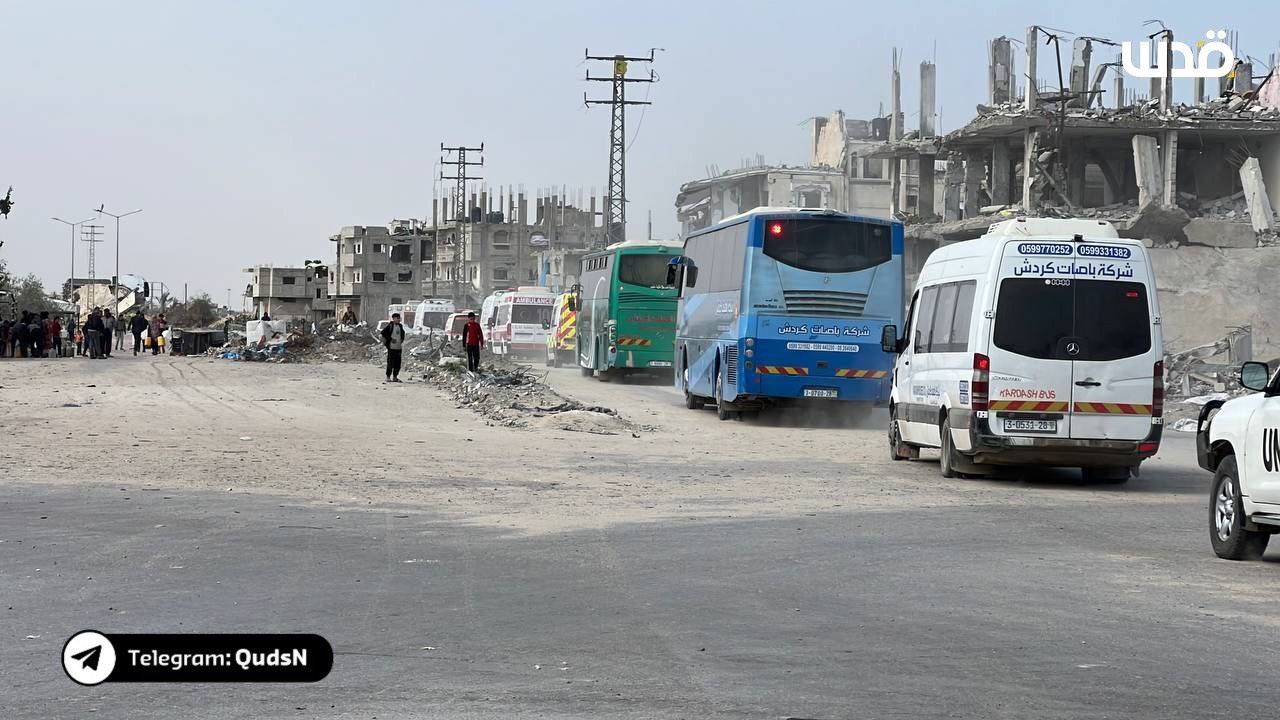
Israel’s decision to cut off all humanitarian aid to the Gaza Strip until further notice is deeply concerning. This dangerous escalation exacerbates the ongoing humanitarian crisis and weaponises starvation as a tool of genocide. The decision coincides with increasingly inflammatory statements by Israeli officials, underscoring a deliberate intent to continue Israel’s crime of genocide by depriving Palestinians of their most basic needs and imposing conditions that threaten their survival.

The Israeli government announced on Sunday a total blockade on humanitarian aid to the Gaza Strip, shutting all border crossings. Prime Minister Benjamin Netanyahu also publicly declared plans for “further consequences,” disregarding the dire humanitarian crisis affecting over two million people.

Humanitarian aid is a fundamental right of civilians under international humanitarian law, with no exceptions, and there is no legal justification for Israel to deny Palestinians access to essential aid. Israel is not only using humanitarian aid as a bargaining chip for political and military gain, but is also deliberately enforcing a policy of systematic starvation, creating life-threatening conditions designed to make survival in the Gaza Strip impossible.

Israel’s repeated statements announcing its full coordination with the United States administration, which has explicitly stated its intention to displace the Strip’s entire population, confirm that the crimes of starvation and blocking of humanitarian aid are not isolated incidents or negotiating tools. Instead, they are part of a deliberate plan aligned with the US strategy to forcefully displace and depopulate the Gaza Strip.

Euro-Med Monitor warns that statements by Israeli ministers and Knesset members reveal a premeditated intent to exterminate the Palestinian population in the Gaza Strip. International silence has allowed Israel and the US to move beyond threats and implement the total cut-off of humanitarian aid, advancing the 16-month genocide through blockade and starvation, with apparent impunity.

Most of the statements made by senior Israeli officials, including one on opening “the gates of hell” on the enclave and blocking all humanitarian aid to its residents, coupled with Israel’s actions on the ground, amount to direct and public incitement to genocide. Israeli Finance Minister Bezalel Smotrich declared that halting the entry of humanitarian aid into Gaza is an “important step in the right direction,” further stating that Israel must “open those gates as quickly and lethally as possible on the cruel enemy, until absolute victory”.

Israeli Foreign Minister Gideon Sa’ar dismissed warnings from the United Nations and international organisations regarding the risk of renewed famine in the Gaza Strip amid the tightened blockade and halting of humanitarian aid. Sa’ar said he considered these warnings to be “just a lie” and affirmed that the Israeli government has no commitment to delivering humanitarian aid.

Additionally, Israeli Knesset member and former Minister of National Security Itamar Ben-Gvir has declared that now is the best time to “open the gates of hell” and cut off electricity and water supplies to the Gaza Strip, urging continued efforts to implement plans for the forcible displacement of its residents. Israeli Knesset member Almog Cohen urged Israeli forces to kill Palestinians in Gaza “with no mercy” during the holy month of Ramadan, saying it “is the best time to kill them because they are weak and tired”.

The intention to commit genocide has been publicly expressed by the Israeli government and members of the mainstream Israeli media since the beginning of the genocide in Gaza on 7 October 2023, and even before that. Israeli Minister of Religious Services, Matan Kahana, previously voiced his wish to be able to “press a button” to expel all Palestinians. Following 7 October, genocidal rhetoric surged and making statements containing such rhetoric became a daily routine for senior Israeli officials, including the infamous statement by former Israeli Defence Minister Yoav Gallant: “We are imposing a complete siege on Gaza. There will be no electricity, no food, no water, no fuel, everything will be closed. We are fighting human animals, and we are acting accordingly.”

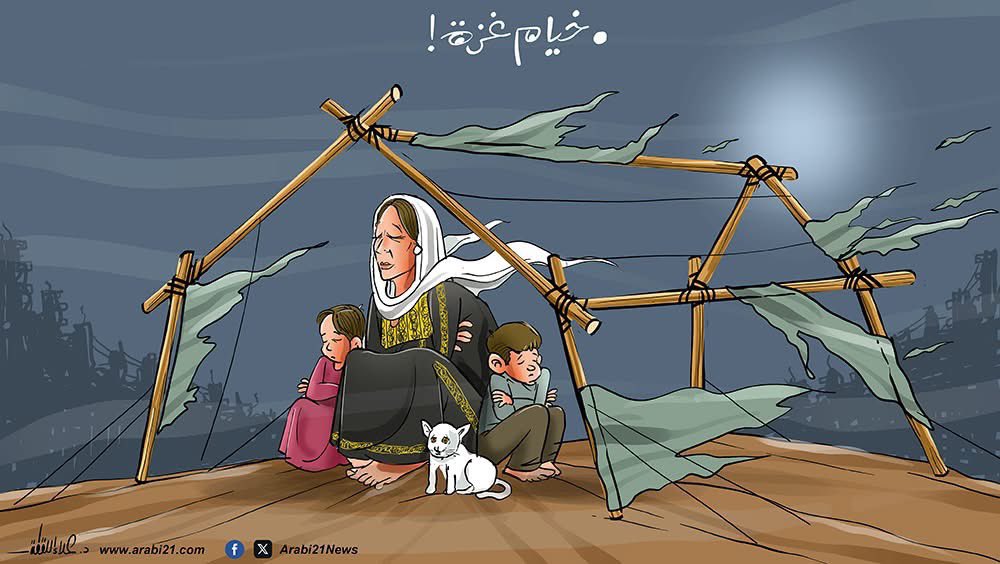
The inflammatory statements by Israeli officials could pave the way for an escalation of the genocide in the Gaza Strip, including in the conditions Israel has created to cause the physical destruction of the Palestinian population in whole or in part. The deliberate worsening of these conditions is being implemented through the ongoing blockade and denial of humanitarian aid, following over 15 months of relentless aggression targeting civilian facilities, infrastructure, hospitals, schools, and all aspects of daily life.

Israel’s blocking of humanitarian aid constitutes a war of starvation against the residents of the Gaza Strip, as they are entirely dependent on this aid for sustenance. Notably, the United Nations confirmed three days ago that there are many difficulties in delivering aid to residents of the Strip, and that the humanitarian conditions there have reached catastrophic levels.

Not only did Israel inflict widespread killing and massive destruction on the Gaza Strip for over 15 months, but it continues to implement policies that will effectively lead to the death of the Palestinian population without swift international intervention. This includes the ongoing Israeli policy of gradual killing of Palestinians through a comprehensive illegal blockade that obstructs the flow of humanitarian aid and essential materials, prevents the repair of vital infrastructure, and halts the provision of basic services necessary for the population’s survival.

Euro-Med Monitor emphasises that this Israeli policy can only be interpreted as a deliberate act of genocide as defined by the 1948 Convention on the Prevention and Punishment of the Crime of Genocide, which prohibits imposing living conditions on a group with the intent to destroy it, in whole or in part. Despite the ceasefire, Israel has continued to create conditions likely to result in the physical destruction of Palestinians in the long term, given the comprehensive nature of its actions, which affect all aspects of Palestinians’ lives, particularly due to the prolonged duration for which they have been subjected to such conditions.

All relevant states and entities must fulfil their legal responsibilities and take immediate action to halt the genocide in the Gaza Strip, compel Israel and the United States to adherence to international law, and implement effective measures to protect Palestinians from US-Israeli plans of slow killing and forced displacement. This includes activating an urgent response to meet the immediate needs of the population, resuming the unrestricted entry of all humanitarian aid, removing any blockades or restrictions that hinder ongoing relief efforts, and ensuring the provision of essential services such as healthcare, water, education, and temporary, adequate housing.

Euro-Med Monitor urges the international community to fulfill its legal and humanitarian responsibilities by ensuring the implementation of the International Court of Justice’s ruling on 28 March 2024. This includes the issuance of precautionary measures requiring Israel to take necessary and effective actions, in cooperation with the United Nations, to guarantee the unobstructed and timely entry of aid into the Gaza Strip, in accordance with its obligations under the Genocide Convention.

EuroMed Human Rights Monitor

Continue reading
Smotrich: Israel Set to Occupy Gaza

Israeli Finance Minister Bezalel Smotrich said Monday that his country’s military is preparing to occupy the Gaza Strip under the leadership of the newly appointed Chief of Staff, Eyal Zamir, in coordination with US President Donald Trump’s administration.

Smotrich made the remarks during a speech at the outset of a parliamentary bloc meeting of the Religious Zionist Party in Israel’s Knesset, according to Israeli media sources including the Israeli Broadcasting Authority (KAN), the Maariv daily and Channel 7.

Speaking about northern Israel’s security situation, he said the Lebanese group “Hezbollah is now at its lowest level in decades. It is isolated within the Lebanese government, distant from power centers, cut off from its overland supply route in Syria, deprived of its leadership, and we have eliminated most of its capabilities.”

https://twitter.com/for_jews_Israel/status/1894086249821987146

He claimed that “the Israeli army holds sovereignty in Lebanon, attacking anything that moves freely, and remains stationed at five military points along the border to protect northern towns, with no intention of stopping.”

Last Tuesday, Lebanon’s National News Agency (NNA) reported that the Israeli military withdrew from the villages and towns it occupied in southern Lebanon except for five key points along the border.

Regarding the Gaza Strip, Smotrich warned the Palestinian group Hamas, noting that its fighters “know very well that their time on the ground is limited until Israel returns to battle with all its strength, speed and lethal capacity that will defeat and destroy them.”

“When we decide that the time has come to resume the war, you will be surprised by the unity, strength and lethal precision of our Gaza occupation,” he added.

Smotrich vowed to Hamas a “painful revenge that will leave no remnants or refugees.”

He noted that the Israeli military is preparing under the leadership of Chief of Staff Zamir, who will assume his duties in the first week of March, with political backing from the Trump administration, which “is finally speaking clearly about eradicating Hamas from the face of the earth,” according to Anadolu.

Regarding the West Bank, Smotrich threatened to transform areas there into a situation similar to Jabalia in northern Gaza, where Israel committed extermination and ethnic cleansing.

He boasted of forcibly removing tens of thousands of Palestinian residents from refugee camps in the West Bank to enable his army to destroy those sites.

He said the Israeli military is operating tanks and armored vehicles in the occupied West Bank to eliminate those he claims are “terrorists.”

On Sunday, the Israeli military said it had transferred a battalion of tanks to Jenin in the northern West Bank for the first time in more than two decades.

The same day, the official Israeli Broadcasting Authority said that “for the first time since Operation Defensive Shield in 2002, Israeli tanks have moved into the Jenin area as part of preparations to expand the operation in the northern West Bank.”

A Gaza ceasefire and prisoner swap deal took effect last month, halting Israel’s genocidal war, which has killed nearly 48,350 people, mostly women and children, and left the enclave in ruins.

The International Criminal Court issued arrest warrants in November for Israeli Prime Minister Benjamin Netanyahu and his former Defense Minister Yoav Gallant for war crimes and crimes against humanity in Gaza.

Israel also faces a genocide case at the International Court of Justice for its war on the enclave.

Continue reading
Russia Condemns Israel’s UNRWA Ban

Russia on Saturday condemned Israel’s decision to ban the UN Relief and Works Agency for Palestine Refugees (UNRWA) from operating in the occupied territories.

Last October, the Israeli parliament passed two laws that called for ending UNRWA’s operations in Israel and occupied Palestinian territories, and prohibiting Israeli authorities from having any contact with the agency. The laws came into effect on Thursday.

The Foreign Ministry said UNRWA should be allowed to continue its work until a final peaceful settlement of the Palestinian-Israeli conflict.

https://twitter.com/SprinterObserve/status/1885455685753704644

Praising the agency’s role, the ministry described it as a “pillar of support for peaceful Palestinians in the occupied territory and neighboring countries, as well as a guarantee of the fundamental right of refugees to return.”

Moscow reiterated that peace in the Middle East must be based on the establishment of an independent Palestinian state within the 1967 borders, with East Jerusalem as its capital, coexisting with Israel in security.

The ministry also questioned Israel’s claim to “sovereign territory” in its decree banning UNRWA’s operations in occupied East Jerusalem, the West Bank, and the Gaza Strip.

“This means that hundreds of thousands of children, women, and the elderly are at risk of being abandoned to their fate,” it said.

Russia accused Israel of violating international law, including UN resolutions, stressing that an occupying power “cannot extend its sovereignty to the occupied territory.”

“Such arbitrary steps, fraught with the gravest humanitarian consequences for the Palestinians, are deeply disappointing and deserve to be condemned.

“It should also be noted that as a result of the Israeli military operation in the Gaza Strip and the West Bank, 273 UNRWA staff members were killed, which was the largest onetime loss to the UN since its creation almost 80 years ago,” the ministry stressed.

Israel has killed more than 47,000 people, most of them women and children, in Gaza, triggered a humanitarian catastrophe and left the territory in ruins that could take years to rebuild and make it habitable.

Continue reading