Israel Kills 28 Children Daily – UNICEF

According to the United Nations, Israel kills about 28 Palestinian children daily in Gaza, the equivalent of an entire classroom, amid intensive bombardment and a blockade on aid.

“Death by bombardments. Death by malnutrition and starvation. Death by lack of aid and vital services,” the UN Children’s Fund (UNICEF) said in a post on X on Tuesday.

“In Gaza, an average of 28 children a day – the size of a classroom – have been killed.”

The agency stressed that children in Gaza are in urgent need of food, clean water, medicine and protection, adding: “More than anything, they need a ceasefire, NOW.”

According to the Palestinian Health Ministry on Monday, Israel has killed more than 18,430 children, one child every hour, since the start of the genocide in Gaza. At least 60,933 Palestinians have been killed and 150,027 others wounded since October 7, 2023.

“Gaza is a graveyard for children today and for their dreams,” Ahmad Alhendawi, regional director of the NGO Save the Children, said. “This is an inescapable living nightmare for every child in Gaza … This is a generation that is growing up thinking that the world has abandoned them, that the world has turned its back on them.”

According to the Ministry, at least 188 people have died from malnutrition and starvation in Gaza, including 94 children and infants, as Israel continues to block aid from entering the enclave, including food and medicine as per the Quds News Network.

Continue reading

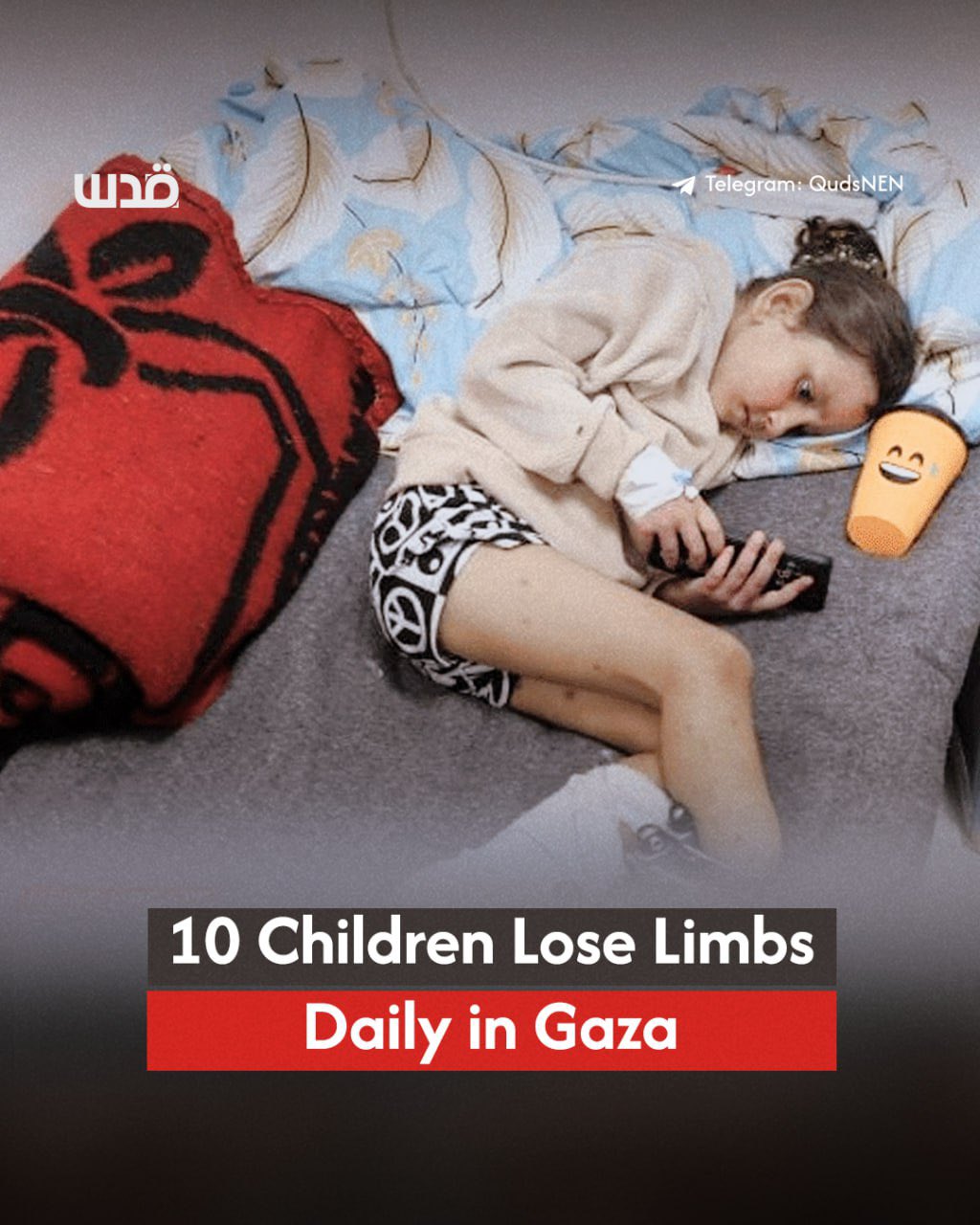
The ongoing Israeli assault on Gaza has caused catastrophic harm to Gaza’s children, with over 1,000 losing limbs; an average of 10 amputations daily, according to UNICEF and Save the Children.

The World Health Organization reported 26,140 severe injuries needing rehabilitation, including 3,100-4,050 amputations, mostly lower limbs.

The UNRWA Commissioner-General, Philippe Lazzarini, confirmed that Gaza now has the highest number of child amputees globally, with many undergoing surgeries without anesthesia due to the healthcare collapse.

Continue reading
300,000 Lebanese Kids Flee to Syria

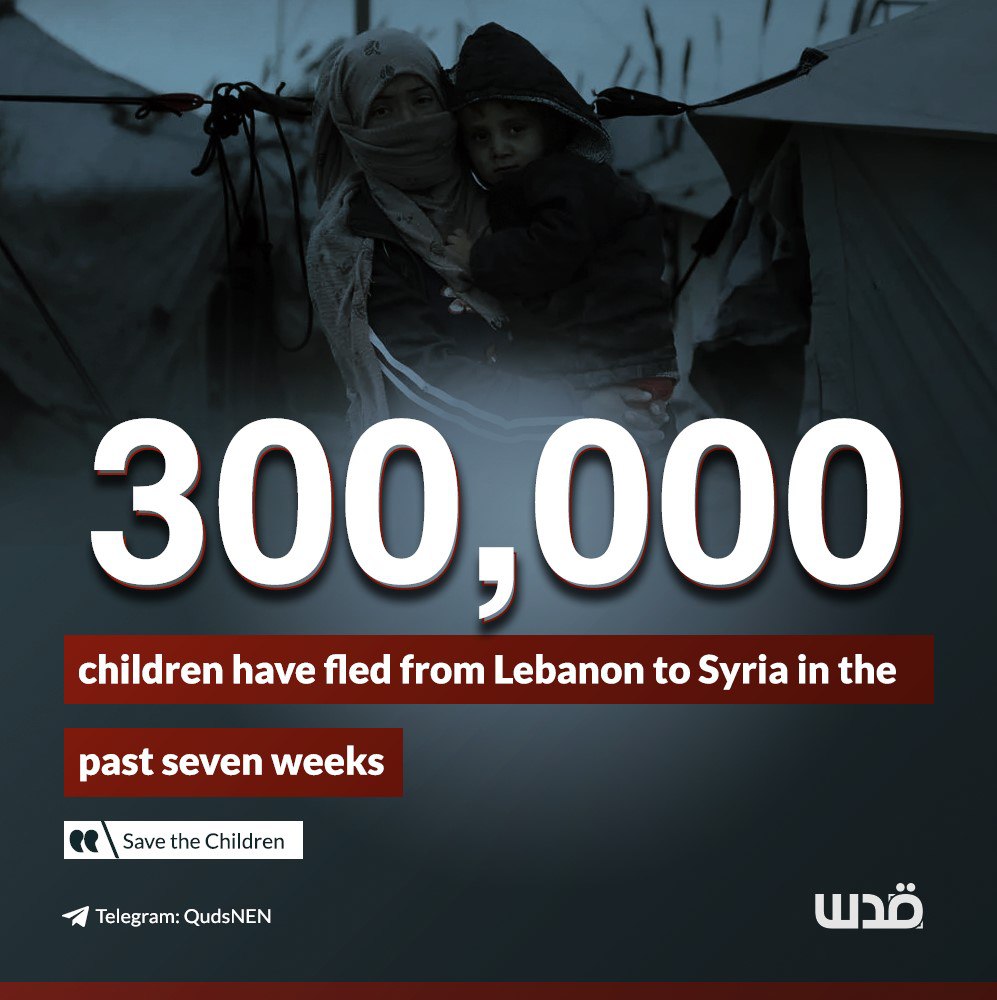
About 300,000 children have fled from Lebanon to Syria in the past seven weeks to seek safety from the worsening conflict, only to arrive in a country where humanitarian needs have never been higher, Save the Children organisation said.

Many children are travelling alone, separated from parents or families, and are at risk of abuse, food shortages and illness as winter looms.

The UN estimates that approximately 60 per cent of the people being displaced from Lebanon to Syria are children and adolescents with many arriving in desperate need of medical care, shelter, food and water.

Continue reading
NGO: Gaza Resembles ‘Depths of Hell’

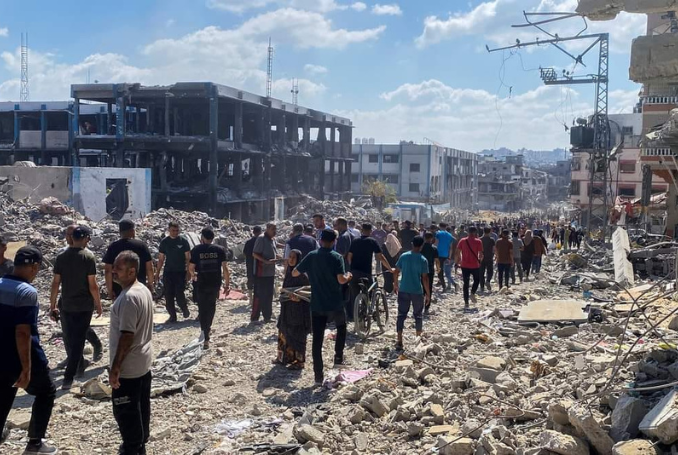
Up to 400,000 Palestinians were on Monday trapped across northern Gaza, with at least 300 people reportedly killed in nine days of bombardment, and a hospital sheltering thousands ablaze in the south with no end in sight to the incessant attacks on civilians.

At Al-Aqsa Hospital in the so-called “humanitarian zone” in the south, patients and families sheltering in tents were on Monday engulfed by a massive fire triggered by an Israeli airstrike” with reports of deaths and multiple causalities. Civilians in the north were directed to the “humanitarian zone” under orders issued by Israeli forces on 7, 9 and 12 October. Al-Aqsa Hospital is just metres away from where children are receiving a second round of polio vaccines.

Middle East Regional Director for Save the Children Jeremy Stoner said:

“What we’re seeing now in Gaza looks like the depths of hell with reports day after day of attacks on children and families. Nowhere is safe.

In the north, an already starving population has been cut off from food for two weeks while trying to dodge bombs and bullets in a kill zone they cannot leave.

In the south – the area to which families in the north were directed for their safety – bombs dropped by Israeli jets have set off a fire that is searing through Al-Aqsa Hospital and tents in the hospital grounds, with reports of rescuers finding burned and charred bodies. ‘Evacuation orders’ are at risk of becoming ‘execution orders’ as children are denied the means to survive.

What military goals could justify such mass-scale slaughter of civilians? The notion of collateral damage must never be used to excuse the predictable killing of children. A year ago, there was international outcry when an Israeli rocket damaged Al-Ahli Hospital in Gaza City, injuring four staff members. How devastatingly far we have descended.

Today, Save the Children has begun a second round of polio vaccines for children in our Deir Al-Balah clinic, as children face bombs and fire just 500m away. Never has it been clearer that this is a war on children, their protection only upheld if they’re deemed a risk to those beyond their borders. Without a ceasefire, these vaccinations simply postpone rather than prevent children’s pain. Without immediate international action, children and families across the Gaza Strip face a death sentence – today, tomorrow, in a week, in a month, by bombs, bullets, fire, disease or starvation. Anywhere, any time.

Gaza is what can happen without the rules of war. Except there are rules – for parties to the conflict, and for the international community – which are not being respected. The only impactful action taken by some member states is to send the weapons being used to kill children and burn patients and families in hospitals and tents. Humanity has lost its way if those with the ability – and legal obligation – to stop this slaughter choose not to.”

Reliefweb

Continue reading
Lebanon: ‘Were Are We Going to Go?’ 1 Million Displaced Families Ask

 Families fleeing violence in Lebanon are struggling to find safety in shelters across the country with at least one million people – a fifth of the population – now displaced with half leaving their homes in the past four days, Save the Children said.

Numbers are expected to swell following new relocation orders issued by Israeli forces on Tuesday, demanding residents in more than two dozen villages in the south of Lebanon to relocate north of the Awali River, approximately 50 km into the country.

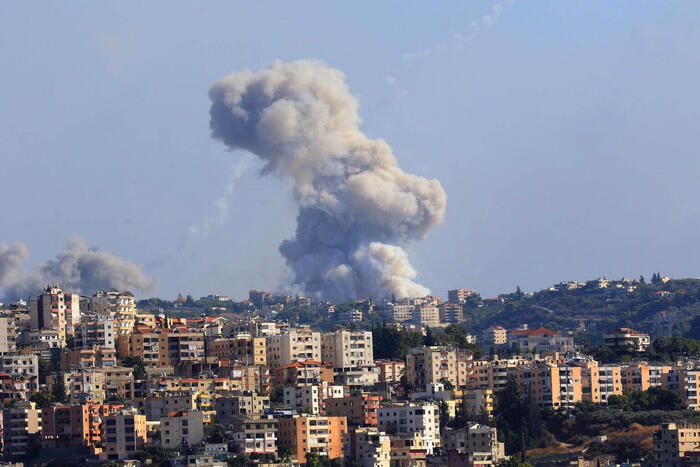
The beginning of ground military operations has been widely reported by media as well as air attacks across Lebanon, including strikes on Ein El Helwe, the largest refugee camp in Lebanon, that reportedly killed seven people, including four children.

The speed of the crisis is placing immense pressure on hospitals, with over 37 Primary Health Care Centres forced to close due to safety concerns, while airstrikes have severely damaged 25 water facilities, leaving 300,000 people without access to clean water.

Over 154,000 displaced people are currently taking refuge in 851 active shelters, including public schools, with 70% of them already at full capacity, and only some equipped with proper showers, sanitation facilities, hot water and heating. Others are staying with host families, often in overcrowded conditions.

Since 23 September, Save the Children has distributed relief items to over 27,000 individuals, including 11,000 children, across 70 shelters, such as blankets, mattresses, hygiene kits, and bottled water. Distributions are ongoing in the North, Bekaa, West Bekaa, Rashaya, Mount Lebanon, Saida, Sour, and Beirut.

The rate of displacement is unprecedented. During the 2016 Lebanon-Israel conflict, a similar number of people were forcibly displaced – over 970,000 – over the course of one month.

According to media reports, about 60,000 Israelis have been displaced from their homes in northern Israel.

Almost 2,000 people have been killed by Israeli airstrikes in Lebanon, including 104 children, and over 8,000 have been injured, according to Lebanon’s Ministry of Health.

Ahmad*, 37, a father of daughters aged two years and seven months, spent a day on the road seeking safety and is now staying at a shelter in Mount Lebanon. He said:

“My wife and I are terrified about what might happen next. We’re scared for our daughters. What if something happens to them? And if something happens to us, what will become of them? Our 7-month-old cries constantly because she senses our fear; she can tell her mother is frightened, and now we’re passing that fear on to her and her two-year-old sister.”

“We need diapers and baby food, proper clothes, and basic necessities. We couldn’t bring anything with us, we barely managed to grab our children and ran for our lives.”

Abir* is a 35 -year-old mother of three children, aged 10, eight and five. Her family fled their village in the south after it was bombed and is now staying in a shelter supported by Save the Children in Mount Lebanon. She said:

“It breaks our hearts to have left our home, but we had to put our feelings aside for the sake of our children. Our village, which had never been targeted before, was bombed, and our children were already terrified by the sonic booms and fake raids.

I barely managed to pull myself together. We had prepared a bag, knowing for almost a year that we needed to be ready, but nothing could have prepared us for the carnage that erupted on 23 September. It took us a full day to travel from South Lebanon to Mount Lebanon, an exhausting journey with no final destination. At first, we had no idea where we were heading; all my husband knew was that we had to escape as quickly as possible. I worry about how my children will cope with all of this. I know the scars this experience will leave on them, and it weighs heavily on my heart.”

Jennifer Moorehead, Save the Children’s Country Director in Lebanon said:

“Children all over the country are affected by this escalating violence, their lives turned upside down almost overnight as they lose their home and sense of safety. There are families in shelters, but also so many still in their cars or in the streets of Beirut, looking for some place to go. The sense of terror is palpable. Our teams are saying that more than anything, families are paralysed by the fear of the unknown.

Children will be disproportionately affected by this armed conflict. As in all recent armed conflicts, children will number too many among casualties.

Schools are closed, shelters and hospitals in Lebanon are under growing pressure, and we are doing our best to support displaced families, but with the launch of ground military operations in southern Lebanon, we are now inevitably going to see even more large-scale forced displacement and destruction.

Children’s lives in Lebanon and in the whole region are hanging in the balance. We call for an immediate ceasefire to prevent further suffering, ensure safe humanitarian access, and stop the conflict from escalating further across the region.”

Save the Children has been working in Lebanon since 1953. Since October 2023, we’ve been scaling up our response in Lebanon, supporting displaced Lebanese, Syrian and Palestinian children and families, and now have escalated an emergency response throughout the country in 70 shelters. Since October 2023, we’ve supported 71,000 people, including 31,000 children, with cash, blankets, mattresses and pillows, food parcels, water bottles and kits containing essential hygiene items.

Reliefweb

Continue reading