Trump and The Cowboy Mentality

By Rashad Abu Dawood

Our generation was always captivated by cowboy movies popular in the 1950s and 1960s. The hero always spoke with his gun and not with his mouth. He kicks the wooden bar door wide open with his foot, not his hand. The patrons tremble with fear as they watch the hero pull his hat down to half of his face and stretch out his legs in his high-heeled shining brass boots, placing them on the table in the face of whoever appears to be sitting across from him.

The terrified bar-tender approaches and asks what he wants to drink, and without even looking at him, he utters a single word. If the bra-tender pours him other than what he ordered, he pulls out his gun and fires a single shot at a bottle on the shelf. If he hears anyone utter a word that displeases him, he raises his gun and… silences them forever!

When he’s about to leave, he demands the baman hand over the dollars in the safe. If the owner refuses, he kills him and takes the money, then… struts out, basking in his power and glory. Of course, morals and values ​​have no value in the world of the cowboy. I don’t know why I remembered this as I watched what Donald Trump did to Venezuelan President Nicolás Maduro on that dark night in world history.

Trump said he felt like he was watching a live television program as US forces arrested President Maduro. I and many others around the world, saw a totally different image of an American president that of the reckless, arrogant cowboy.

What happened wasn’t an arrest, but the ‘kidnapping’ of a head of state from his country’s capital, indeed, from his bedroom while he and his wife were in their pajamas.

The operation was meticulously planned, taking over four months. The soldiers that carried it out was part of the so-called Delta Force, the most powerful unit in the US Air Force. This is the same unit that took part with Israeli soldiers  in their failed attempts to free the hostages in the Gaza tunnels.

The US administration paved the way for the kidnapping of the Venezuelan president by claiming the objective was a war on drugs. However, Trump, true to form, exposed the truth and made statements clearly declaring that he wanted Venezuelan oil, which possesses the largest reserves in the world.

He called on American companies to prepare to return to Venezuela after they were expelled by former President Hugo Chávez, whom Washington had attempted but failed to capture as well.

This is not the first time the United States has been involved in assassinating or overthrowing heads of states in Latin America. It has previously carried out operations in Panama, Guatemala, Chile, the Dominican Republic, and Nicaragua.

This is in accordance with the Monroe Doctrine, which considers South America a backyard for the United States, where no regime should be in power that is not loyal to Washington and its interests.

Trump was not content with seeing Maduro in handcuffs and under guard; he also threatened the leaders of other Latin American countries, such as Mexico and Colombia, under the grossly misleading pretext of fighting drugs.

The president, who is fond of taking “unprecedented” actions, such as officially recognizing occupied Jerusalem as the “capital of Israel” and annexing the Golan Heights, may well continue invading other countries in the “Latin American backyard,” and beyond, starting with Iran. In doing so, he is about to dismantle the international law and order that was born out of World War II and could well pave the way for World War III.

What if now Putin kidnapps Ukrainian President Zelensky, or the Chinese president kidnapped the president of Taiwan? Trump will surely be told: “We did the same as what you did to the Venezuelan president”.

The dealmaker is acting recklessly and is leading America and the world down to the jungle of abyss!

The writer is a columnist for Ad Dustour daily in Jordan and the above article is a translation from the Arabic version.

  • CrossFireArabia

    CrossFireArabia

    Dr. Marwan Asmar holds a PhD from Leeds University and is a freelance writer specializing on the Middle East. He has worked as a journalist since the early 1990s in Jordan and the Gulf countries, and been widely published, including at Albawaba, Gulf News, Al Ghad, World Press Review and others.

    Related Posts

    How Will Trump Get Out of This War?

    By Ismail Al Sharif

    “We are in an advanced position, and we will decide when the war will end,” said Kazem Gharibabadi, Iranian Deputy Foreign Minister.

    President Donald Trump, in coordination with the Zionist entity, is igniting a regional war with Iran which is an unprecedented event in the region. Analysis of the true motives behind this fateful decision vary. One school of thought believes the strategic objective lies in controlling Iranian oil wealth and containing growing Chinese influence. Another links this to the Epstein affair, based on claims of Zionist pressure threatening to expose him to sensitive information.

    A third school believes that Trump is tied to political commitments made to Miriam Adelson, who generously funded his election campaign. Some go even further, alleging that Trump, known for his transactional negotiating style, received substantial financial compensation for engaging in this war. In a related context however, recent reports indicate that Trump himself has blamed his son-in-law, Jared Kushner, and several close advisors for instigating this latest military adventure.

    Whatever the true motives behind igniting this war, one path seems almost certain to end it: Trump will hold a press conference declaring a unilateral and absolute victory. The precise timing of this declaration remains uncertain.

    But the decision to cease hostilities does not rest with Trump alone; it is contingent upon the agreement of two other key parties: Tehran and Israel.

    Israel shows no desire to end this war, as it is the primary beneficiary of its continuation. It systematically seeks to dismantle the structure of the Islamic Republic and sees no harm in the regime’s collapse leading to widespread chaos engulfing Iran and the entire region.

    If Trump fails to restrain Netanyahu, the latter will not hesitate to continue his military operations even after any official American declaration of a ceasefire. This may explain why Trump declared that any settlement to end the conflict would only be possible with Netanyahu’s consent and explicit blessing.

    However, the Zionist entity might feign acceptance of a ceasefire while its Mossad intelligence apparatus works behind the scenes to fuel separatist and rebellious sentiments among ethnic minorities within Iran, such as the Kurds and Balouchis, potentially threatening the cohesion of the Iranian state from within. In response, Tehran would have no choice but to continue targeting the entity, which would then retaliate swiftly, potentially drawing Trump back into a cycle of military confrontation.

    Adding to Trump’s predicament is the possibility that he might ultimately declare a ceasefire unilaterally, without any fundamental change to the structure of the Iranian regime, and without extracting any genuine concessions from Tehran regarding halting uranium enrichment, dismantling its missile program, or severing its ties with regional allies—the very pretexts used to launch the war.

    Even more dangerous is the fact that the Islamic Republic’s resilience and its emergence from this crisis with its system intact will make it a unique and exceptional model: The first country to challenge American hegemony and emerge unscathed. This could encourage other countries suffering under the weight of Trump’s policies or ambitions—such as Venezuela and Greenland—to adopt resistance as a path, even if they lack Iran’s military capabilities.

    It seems to me that President Trump may be following in the footsteps of his predecessor, George W. Bush, when he famously declared victory in 2003 from the deck of the aircraft carrier USS Abraham Lincoln, which was then—as it is today—at the eye of the American military storm. It is worth recalling here that Bush’s speech was a highly symbolic and premature declaration, one that was quickly contradicted by events, as the war on Iraqi soil continued for nearly a decade afterward.

    The war has exhausted Iran and burdened it with immense hardships, making it seriously seek a cessation of hostilities. However, it simultaneously finds itself in direct confrontation with American will. Iranian officials have made it clear that any agreement to a ceasefire and the resumption of negotiations is contingent upon receiving firm guarantees from Washington and Tel Aviv that the aggression will not be repeated. Should Tehran manage to withstand and overcome this phase, it is likely to add to its list of demands one of which is the lifting of some of the sanctions imposed upon it.

    Therefore, it appears that the Iranian strategy is essentially based on a policy of systematic attrition; simultaneously exhausting the United States and Israel by driving oil prices to high levels and closing the Strait of Hormuz, the world’s vital energy artery. This would impose heavy economic burdens that might ultimately compel Washington to reconsider its calculations and agree to a ceasefire.

    In short, Trump will not be in a position to deliver a victory speech in the next week or two, and any such declaration without genuine cooperation from Israel and Iran will amount to nothing more than empty rhetoric devoid of any real substance on the ground. There is no doubt that President Trump has put himself, his country, and the entire region in a very complex strategic predicament, from which the way out may not be as easy as those who made the decision to go to war imagine.

    This analysis was originally written in Arabic and reprinted in crossfirearabia.com

    Continue reading
    Sirens Blast Six Times in Israel in One Day

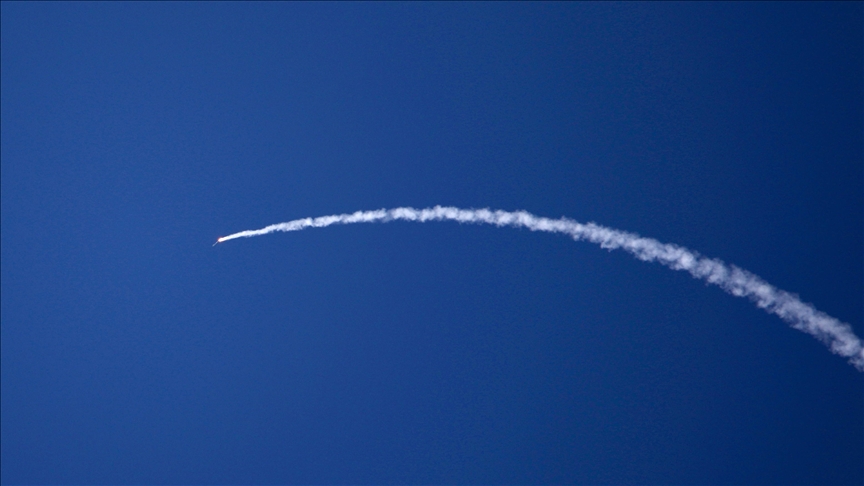
    Sirens sounded across Israel six times on Friday, sending millions running for shelter, with emergency services reporting damage at several locations in the center of the country reports the Times of Israel.

    One impact, possibly by a cluster bomb sub-munition or other fragments, sparked a blaze on the roof of a building in Shoham. According to the Kan public broadcaster, dozens of people have been forced to leave their homes as a result of the damage, the daily paper added.

    CCTV footage appeared to show an impact at an empty school in Rishon Lezion, and several cars were also damaged in the town.

    “I finished running and saw the missile fall. It was a great miracle that my wife and three children were in the reinforced room,” witness Tomer Nativ told the Ynet news site. “It was scary, everything caught fire on the street.”

    A cluster munition also hit a highway in the center of the country, causing a crater, while an impact in Holon sparked a fire in a building, the English paper reported.

    An additional missile hit an open area in central Israel — no sirens sounded as that projectile did not pose a threat to a populated area.

    Cluster bomb warheads indiscriminately spread dozens of submunitions, each with several kilograms of explosives, over a radius of around 10 kilometers (6 miles).

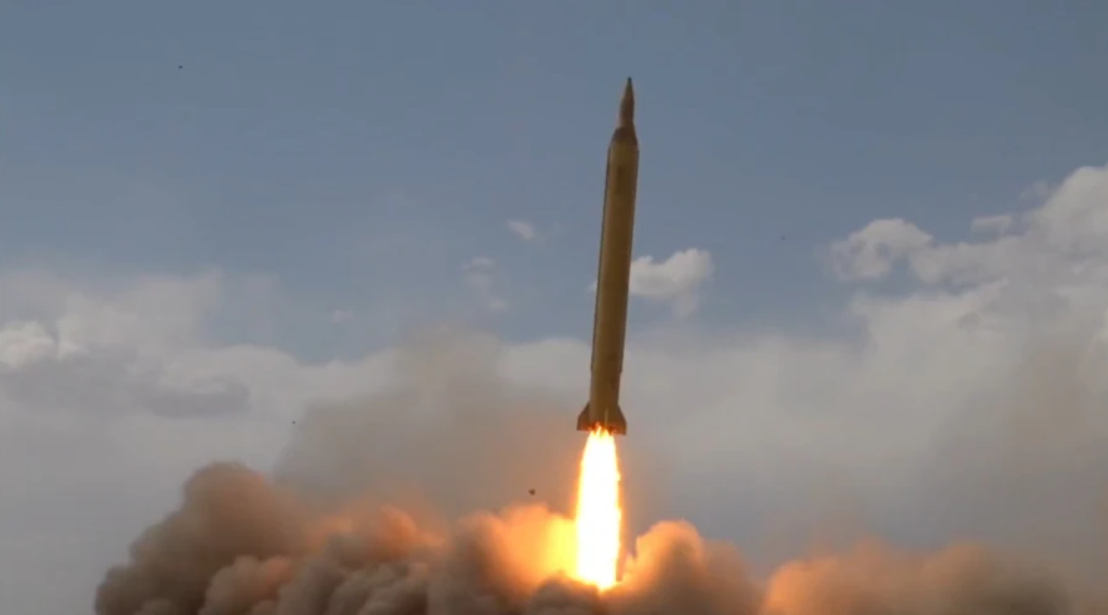
    On the first day of the war, Iran launched some 90 missiles at Israel, before firing around 60 the following day. The rate then declined to around 20 missiles per day for around a week, before slowing further to several a day in recent days. Times of Israel

    Continue reading

    You Missed

    Israeli Official: ‘Life in The North is Dead’

    Israeli Official: ‘Life in The North is Dead’

    White House Economic Council Head Says The Iran War May End in 6 Weeks, Wont Stay Months

    White House Economic Council Head Says The Iran War May End in 6 Weeks, Wont Stay Months

    At Day 16 of The War The Israeli Air Force Say The Dropped 10,000 Bombs on Iran

    At Day 16 of The War The Israeli Air Force Say The Dropped 10,000 Bombs on Iran

    IRGC Spokesman: Most of The Missiles Produced After The 12-Day War Are Yet to be Used

    IRGC Spokesman: Most of The Missiles Produced After The 12-Day War Are Yet to be Used

    IRGC Spokesman: Most the Missiles Launched in This War Were Produced 10 Years Ago

    IRGC Spokesman: Most the Missiles Launched in This War Were Produced 10 Years Ago

    Al Bahri: The Man Who Set Palestinian Theater

    Al Bahri: The Man Who Set Palestinian Theater