Weaponizing Food in Gaza

More than 130 international governmental agencies have issued a demand for the immediate end of the Gaza Humanitarian Foundation (GHF), the deadly US-Israeli mechanism for delivering food to starving Gaza. They called for a return to the Israel disrupted United Nations-led system which, combined international aid agencies with commercial supplies to serve the strip’s families who are struggling to survive Israel’s bombs, military ground offensive, and forced displacement.

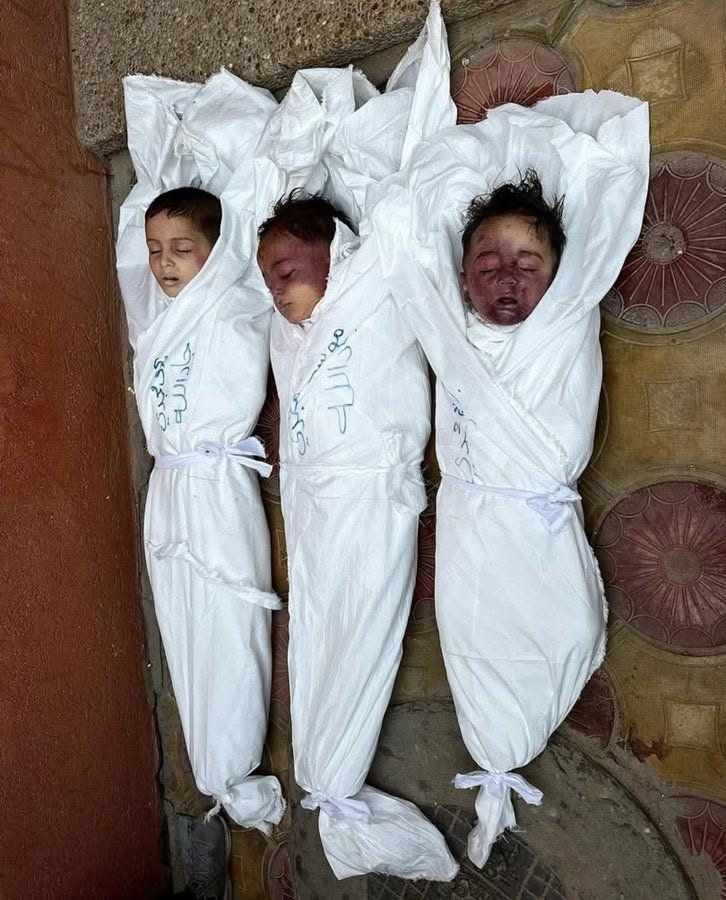
It is impossible to see why an anti-humanitarian enterprise such as the GHF should, instead, attract $30 million in funding from the US which claims to be the global exemplar of morality and integrity. The GHF demonstrates, once again, that this is far from the truth. Since May 27, when GHF began operations, more than 550 people have been killed and over 4,000 wounded among the desperate thousands waiting for the delivery of food parcels at one or other of the four hubs, three in the south and one near the centre. UN relief agency UNRWA condemns GHF for being a vehicle for “weaponising” food aid.

GHF officials deny this accusation and dismiss reports of Israeli shootings and drone and tank attacks against Palestinians approaching militarised GHF hub zones. While killings of Palestinians have been reliably reported since day one, the US and Israel, which co-sponsor GHF, had shrugged off these reports until last week.

Israeli liberal daily Haaretz published statements from anonymous Israeli soldiers deployed near the hubs. According to Haaretz, Israeli officers and soldiers were ordered to fire on Palestinians “when no threat was present.” One soldier told Haaretz, “It’s a killing field. Where I was stationed between one and five people were killed every day. They’re treated like a hostile force – no crowd control measures, no tear gas – just live fire with everything imaginable: heavy machine guns, grenade launchers, mortars. .. Our form of communication is gunfire.” He added, “I’m not aware if a single instance of return fire. There is no enemy, no weapons.” There have been no Israeli casualties during distributions is proof positive of what he said.

Until Haaretz published its interviews, the Israeli military claimed falsely that troops fired in the air when Palestinians approached them. In response to the Haaretz reports, the military prosecutor demanded an investigation into possible war crimes. Israeli human rights organisations Yesh Din and B’Tselem have pointed out for decades that military investigations are rarely launched and even more rarely result in prosecutions of Israeli officers or soldiers. Consequently, the military enjoys impunity and continues to act with impunity.

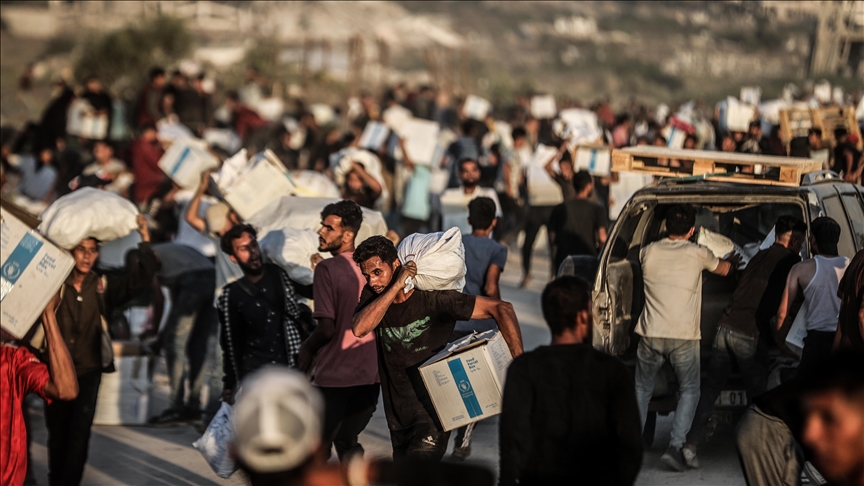
The modus operandi of GHF centres also contributes to chaos and Palestinian deaths. Aid seekers are not informed which of the centres will open. Times vary for distributions which can last one hour or until all the prepacked parcels disappear. Palestinians have to turn up many hours early – usually in the dead of night – to reach the distribution centres. Those who succeed have been on the scene first. Most are fit young men who can survive the wait and the scrum which always eventuates the minute the distributions begin. Women, children and the elderly face exclusion, bullets or trampling.

The parcels, which contain rations, hygiene kits, and simple medicines, can weigh 40 kilograms and cannot be easily transported by one person. The bulky cardboard boxes often break, spilling their contents onto the ground. Fights ensue. Palestinians carry plastic bags when going to collect aid in order to return home with something if not an entire package. When a distribution ends, grenades emitting red smoke are fired by the Israeli army to order Palestinians to evacuate the area immediately.

Medecins San Frontiers/Doctors Without Borders has said GHF “must be dismantled.” It is “forcing Palestinians “to choose between starvation or risking their lives for minimal supplies.” MSF said, “Every day [its] teams see patients who been killed or wounded trying to get food at one of these sites.” MSF called on Israel to “lift the siege on food, fuel, medical and humanitarian supplies.”

The UN has refused to cooperate with GHF, after expressing doubts about its neutrality, accusing it of militarising relief and of contributing to the displacement of civilians, particularly those from the north who must travel long distances in the sweltering heat to access existential aid.

Before Israel imposed its March 2nd blockade on Gaza, the UNRWA, the UN children’s fund, and the World Food Programme had provided Gaza’s 2.3 million residents with their needs via 400 (not 4) distribution mechanisms where Palestinians had registered. They were notified by text or call when to collect their aid. There were no desperate crowds forming hours before aid distributions, no scrambles to receive parcels, and no Israeli shooters or tank commanders to fire on recipients. Food was treated as a right and its distribution did not cost lives or involve the Israeli military.

Michael Jansen contributed this piece to The Jordan Times

  • CrossFireArabia

    CrossFireArabia
    Dr. Marwan Asmar holds a PhD from Leeds University and is a freelance writer specializing on the Middle East. He has worked as a journalist since the early 1990s in Jordan and the Gulf countries, and been widely published, including at Albawaba, Gulf News, Al Ghad, World Press Review and others.

    Related Posts

    Palestinians Remember The Eveil Nakba

    Dozens of Palestinian women at a displacement camp in central Gaza marked the 78th anniversary of the Nakba (Catastrophe) on Thursday, reliving scenes of displacement and loss they said continue to define Palestinian life decades after 1948.

    Held at the Refaat Alareer camp in the Al-Zawaida area, the event linked memories of the historic Palestinian displacement with the reality of the ongoing Israeli war on Gaza, as participants said the suffering of exile and forced displacement had never truly ended.

    The event was organized by the Sameer Project, a relief initiative led by Palestinians in the diaspora, and featured heritage performances, traditional dabke dancing and symbolic scenes highlighting Palestinian identity and the right of return.

    Women and children raised Palestinian flags, symbolic keys, and images reflecting displacement and attachment to the land. Several participants wore traditional Palestinian dresses and chanted songs and national hymns invoking Palestinian memory and what they described as an ongoing Nakba.

    Palestinians commemorate the Nakba every year on May 15 through marches, exhibitions and public events in the Palestinian territories and around the world, calling for rights, including the return of millions of refugees.

    The Nakba refers to the mass displacement of Palestinians in 1948 during the events surrounding the creation of Israel, when hundreds of Palestinian towns and villages were emptied and their residents forced to flee.​​​​​​​

    Reliving displacement

    Ibtisam Abu Muailiq, a displaced Palestinian now living in Al-Zawaida, said Palestinians are still living through the Nakba today.

    The current war, she told Anadolu, had brought back scenes of displacement and tent life that previous generations described after the events of 1948.

    “Our home was destroyed, and we lost loved ones, some killed and others still missing, but we remain steadfast on the land of Palestine,” she said.

    She called on people around the world to show compassion toward Palestinians and support them amid their suffering.

    For Umm Mohammed Abdullah, the Nakba never ended.

    Palestinians, she said, have endured repeated cycles of hunger, thirst, displacement and loss but continue to hold on to their land.

    “No matter how severe the suffering becomes, we will not leave our homeland,” she added.

    Steadfast despite war

    Event coordinator Iman Al-Khatib said holding the event inside a displacement camp carried a message that Palestinians remain steadfast despite wars and catastrophes.

    “We wanted to tell the world that Palestinians remain resilient and that the right of return will continue to live in the conscience of future generations,” she told Anadolu.

    The Israeli army has killed more than 72,000 people, mostly women and children, and injured over 172,000 in a two-year war on the Gaza Strip since October 2023.

    Despite a ceasefire that took effect on Oct. 10, 2025, the Israeli army has continued its attacks, killing at least 856 people and injuring 2,463 others, according to Gaza’s Health Ministry.

    Continue reading
    Palestinian Population Tops 15.5 Million

    The Palestinian Central Bureau of Statistics (PCBS) said Tuesday that the number of Palestinians worldwide has reached about 15.5 million, including 7.4 million living in historic Palestine.

    In a statement marking the 78th anniversary of the Nakba, a term used by Palestinians to mark Israel’s creation in 1948, the bureau said about 8.1 million Palestinians live in the diaspora.

    It said more than two million Palestinians are displaced inside Gaza and the occupied West Bank as a result of Israel’s war on Gaza and continued settlement expansion.

    Israel’s war on Gaza has displaced nearly two million Palestinians out of about 2.2 million who lived in the enclave on the eve of the war, the bureau said. Many now live in tents, shelters and schools.

    About 40,000 Palestinians have also been displaced from refugee camps in the northern West Bank because of the ongoing Israeli military operations, the bureau added.

    In the West Bank, illegal Israeli settlement activity continues to expand, the statement said, adding that the number of illegal settlements and military bases reached 645 by the end of 2025. The total includes 151 illegal settlements, 350 settlement outposts and 144 other sites.

    Official figures show that the number of Israeli occupiers in the West Bank reached about 778,567 by the end of 2024, with 42.8% concentrated in occupied East Jerusalem.

    The bureau said Israeli authorities seized more than 5,571 dunams (1,377 acres) of Palestinian land in 2025 through seizure orders, expropriation and declarations of “state land.”

    It also documented more than 61,000 attacks by Israeli forces and occupiers in the West Bank between 2022 and 2025, which led to the uprooting and bulldozing of more than 81,000 trees, most of them olive trees.

    Israeli authorities continue to impose strict restrictions on Palestinians through about 900 military checkpoints and gates across the West Bank, limiting residents’ movement and blocking access to large areas of agricultural and grazing land, the bureau said.

    In Gaza, the bureau said Israel’s war has completely destroyed more than 102,000 buildings and fully or partially damaged more than 330,000 housing units, along with widespread destruction of infrastructure, health facilities and schools according to Anadolu.

    The Israeli army has killed more than 72,000 Palestinians, mostly women and children, and injured over 172,000 others in a two-year offensive on Gaza since October 2023.

    Continue reading

    You Missed

    Gaza Fishermen Dream of Life Prior to 7 Oct

    Gaza Fishermen Dream of Life Prior to 7 Oct

    Giant Phillippines Volcano Shows no Rest!

    Giant Phillippines Volcano Shows no Rest!

    The Chinese Fortune Cookie and The “Thucydides Trap”! A  View From Amman

    The Chinese Fortune Cookie and The “Thucydides Trap”! A  View From Amman

    Israel Kills 200 Lebanese Children – UNICEF

    Israel Kills 200 Lebanese Children – UNICEF

    Nakba – 78 Years of Occupation Misery

    Nakba – 78 Years of Occupation Misery

    Palestinians Remember The Eveil Nakba

    Palestinians Remember The Eveil Nakba