1 in 7 Displaced in Lebanon – NRC

Lebanon is approaching a breaking point as displacement accelerates, with one in every seven people now displaced in the first ten days of the escalation, says the Norwegian Refugee Council (NRC).

Lebanon Published 13. Mar 2026

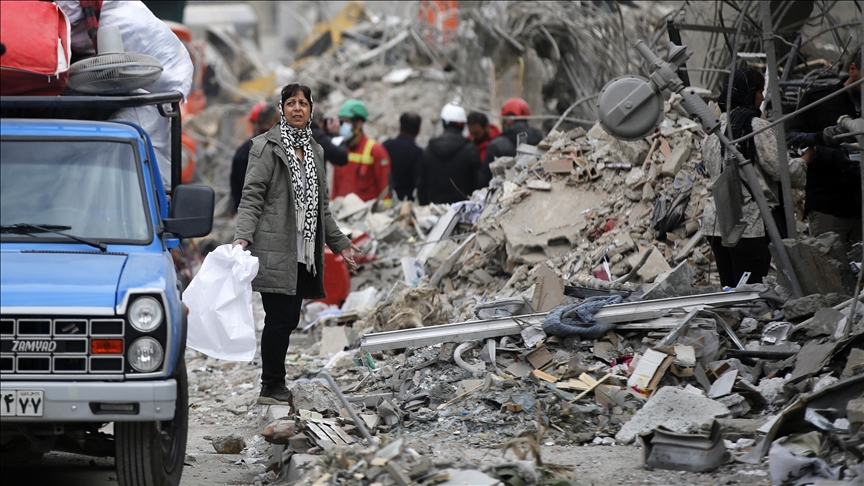
At least 816,000, or 14 per cent of Lebanon’s population, have been displaced, according to official figures. The figures are set to rise further as Israel repeats evacuation warnings and bombards more villages and neighbourhoods across Lebanon.

“The scale of destruction and displacement is increasing with every passing hour,” says Maureen Philippon, NRC Country Director in Lebanon. “This indiscriminate bombing must stop. The situation in the collective shelters I have visited bears witness to repeated trauma among families and their children. People are going through the same cycle of bombing, loss, and displacement that they experienced almost two years ago, only with greater intensity and speed.”

Israel’s evacuation orders have now engulfed 1,470 square kilometres, or 14 per cent of Lebanon, including South Lebanon, Beirut’s Southern Suburb, and parts of Bekaa. Yesterday, Israel issued additional evacuation orders, further expanding the number of Lebanese villages under imminent threat.

In Tyr, South Lebanon, NRC’s office was badly damaged in an Israeli attack in the neighbourhood. We are lucky nobody was in the office as the extent of the damage means that colleagues would certainly have been injured. The organisation had notified Israel of its office location through the UN but received no warning from the Israeli military ahead of the strike.

“Israel’s mass evacuation orders have expanded to broad geographic directives, often demanding immediate movement, creating panic and fear across communities that strikes are imminent – even when they are not. These orders are likely to cause prolonged displacement with little prospect of return. All efforts must be made to end the use of such orders and ensure that whether they choose to leave an area or remain, that civilians are protected in line with International Humanitarian Law at all times by all parties to the conflict,” added Philippon.

Across collective shelter, where over 122,000 people have sought safety, conditions present immediate challenges for people. In one school sheltering 1,200 people, an average of 15 people are staying in each classroom, with every 23 people sharing a single toilet. There are no shower facilities or cooking gas and a limited supply of water.

NRC continues to support collective shelter with pillows, blankets, mattresses, cleaning items and other basics. NRC is also assessing additional support to improve conditions in shelters, including installing showers, adding latrines where needed, providing water, and setting up partitions to give families greater privacy. The scale of needs is already outgrowing support provided by the government and aid organisations.

NRC urges donors to commit flexible funding to enable humanitarian actors to respond to rapidly growing needs. This must take place while diplomatic efforts exhaust all means to bring an end to attacks on civilians and their infrastructure.

Notes to editors:

  • Since 2 March, 634 people have been killed and 1,586 injured in Israeli attacks in Lebanon, according to official figures (Lebanon’s Disaster Risk Management Unit). No fatalities have been reported in Israel as a result of Hezbollah’s attacks (Reuters), but several people have been injured, according to news reports (Jerusalem PostTime of Israel).
  • 816,700 people are recorded as displaced in Lebanon as of 12th March. This includes 125,800 staying in collective shelters (Lebanon’s Disaster Risk Management Unit).
  • Lebanon has a population of around 5.8 million (World Bank). With 816,000 people forced from their homes, this makes up 14 per cent of the total population.
  • Israel has placed 1,470 square kilometers of Lebanese territory under evacuation orders, representing about 14 per cent of Lebanon’s total land area.

For more information or to arrange an interview, please contact:

  • CrossFireArabia

    CrossFireArabia

    Dr. Marwan Asmar holds a PhD from Leeds University and is a freelance writer specializing on the Middle East. He has worked as a journalist since the early 1990s in Jordan and the Gulf countries, and been widely published, including at Albawaba, Gulf News, Al Ghad, World Press Review and others.

    Related Posts

    Hormuz: End of an Era of Martime Dominance

    By Ismail Al-Sharif

    “Nations that believe themselves to be eternal are often the first to be surprised by history.” – Charles de Gaulle

    In May 1949, the Chinese Civil War was nearing its conclusion in favor of the Communists under Mao Zedong. At that time, Great Britain, the world’s most powerful nation, maintained warships on the Yangtze River to protect its citizens and commercial interests in cities like Shanghai and Nanjing. Among these ships was the British frigate HMS Amethyst.

    On April 20, 1949, the frigate sailed up the Yangtze River toward Nanjing, but the Communist forces, who controlled the northern bank of the river, considered the ship’s presence a foreign intervention in the war. Suddenly, Chinese artillery began bombarding the ship, inflicting direct hits. Its captain and several crew members were killed, and its navigation system was disabled before it finally ran aground in the mud near the shore.

    Other British ships attempted to come to its aid, but they too were fired upon by Chinese artillery and forced to retreat. The ship remained trapped for four months under fire from communist forces, amidst tense negotiations between Great Britain and the communist leadership.

    On the night of July 30, 1949, the ship’s new captain, John Cairns, decided to execute a daring plan. He waited for a merchant ship to pass, then moved behind it in the darkness, taking advantage of its cover. His plan succeeded; the ship managed to escape and reach open waters.

    This incident is considered a symbol of the end of the era of British imperial dominance and a harbinger of its decline. Many historians cite it as the moment when the great powers realized that the world had changed and that the balance of power was no longer what it once was. This story is repeating itself today, but it’s not about a single ship; it extends to the American destroyers that patrol our seas.

    Half a century ago, missile production was prohibitively expensive, and the technology for precise guidance systems was unavailable. Therefore, the American navy was designed according to the realities of that era. Then came the 21st century, when electronic technology and computers became accessible to everyone, and precision guidance systems became readily available, whether in a sophisticated missile or a simple drone.

    The Ukrainian war revealed that the era of tanks is over; they became easy targets for drones that cost only a few thousand dollars each. Similarly, the Iranian war reveals that warships at sea are like tanks on land: Easy targets for drones and missiles.

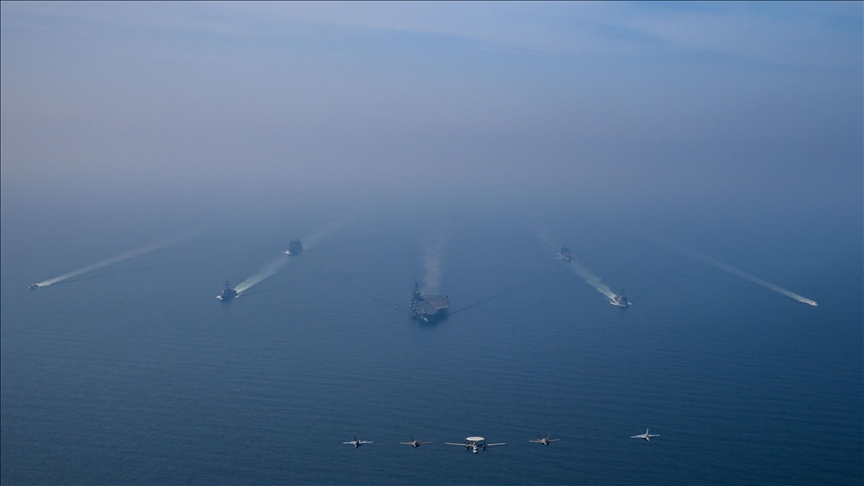
    Consider the crown jewel of the American navy, the aircraft carrier USS Eisenhower, which resembles a floating city with an area of ​​approximately 18,900 square meters. It is accompanied by other highly advanced destroyers possessing immense destructive power. However, no destroyer carries an equal number of interceptor missiles and drones to those possessed by its adversaries.

    This is why Iran continues to defy this presence and close the Strait of Hormuz. This scenario is reminiscent of the Houthis’ actions when a group from one of the world’s poorest countries challenged the world’s most powerful nations and managed to disrupt shipping in the Bab el-Mandeb Strait last year.

    Iran controls the northern coast of the Strait of Hormuz and possesses a diverse arsenal that includes land-based missiles, submarines, drones, fast attack craft, and sea mines. In contrast, US warships have only a limited number of defense systems compared to the size of Iran’s arsenal in this region.

    Military strategists have formulated a simple equation called the “fire-off equation.” This equation posits that a ship’s survival depends less on its destructive power and more on the ratio of threats directed at it to the number of interceptor missiles it possesses to counter them. When Iran or the Houthis launch a salvo of 50 drones at a destroyer with a limited stockpile of interceptor missiles—a stockpile that cannot be replenished in combat—the objective is not necessarily to sink the ship directly, but rather to exhaust its defenses. Once the interceptor missiles are depleted, these destroyers are reduced to approximately 9000 tons of scrap metal adrift at sea.

    In late 2023 and throughout 2024, the Houthis targeted ships in the Red Sea, placing the US Navy in a precarious position. Unable to forcibly reopen the Bab el-Mandeb Strait, commercial shipping was rerouted around the Cape of Good Hope, a detour of approximately 19,000 kilometers. This added weeks to each voyage and incurred additional costs estimated at thousands of dollars. Thus, the most powerful navy in history found itself unable to secure the Bab el-Mandeb Strait.

    For 80 years, the global economy has been built on the assumption that US ships can keep shipping lanes open. However, recent conflicts demonstrate that this assumption is beginning to crumble. Naval power can still destroy the largest fleets on the high seas, but on coastlines and in narrow waterways, it appears less decisive.

    It’s a story reminiscent of the British frigate HMS Amethyst; a moment when superpowers discover their power is no longer what it once was, and that the era of absolute dominance is drawing to a close.

    This article by Ismail Al Sharif was originally written in Arabic for the Addustour daily and reprinted here in crossfirearabia.com

    Continue reading
    How Will Trump Get Out of This War?

    By Ismail Al Sharif

    “We are in an advanced position, and we will decide when the war will end,” said Kazem Gharibabadi, Iranian Deputy Foreign Minister.

    President Donald Trump, in coordination with the Zionist entity, is igniting a regional war with Iran which is an unprecedented event in the region. Analysis of the true motives behind this fateful decision vary. One school of thought believes the strategic objective lies in controlling Iranian oil wealth and containing growing Chinese influence. Another links this to the Epstein affair, based on claims of Zionist pressure threatening to expose him to sensitive information.

    A third school believes that Trump is tied to political commitments made to Miriam Adelson, who generously funded his election campaign. Some go even further, alleging that Trump, known for his transactional negotiating style, received substantial financial compensation for engaging in this war. In a related context however, recent reports indicate that Trump himself has blamed his son-in-law, Jared Kushner, and several close advisors for instigating this latest military adventure.

    Whatever the true motives behind igniting this war, one path seems almost certain to end it: Trump will hold a press conference declaring a unilateral and absolute victory. The precise timing of this declaration remains uncertain.

    But the decision to cease hostilities does not rest with Trump alone; it is contingent upon the agreement of two other key parties: Tehran and Israel.

    Israel shows no desire to end this war, as it is the primary beneficiary of its continuation. It systematically seeks to dismantle the structure of the Islamic Republic and sees no harm in the regime’s collapse leading to widespread chaos engulfing Iran and the entire region.

    If Trump fails to restrain Netanyahu, the latter will not hesitate to continue his military operations even after any official American declaration of a ceasefire. This may explain why Trump declared that any settlement to end the conflict would only be possible with Netanyahu’s consent and explicit blessing.

    However, the Zionist entity might feign acceptance of a ceasefire while its Mossad intelligence apparatus works behind the scenes to fuel separatist and rebellious sentiments among ethnic minorities within Iran, such as the Kurds and Balouchis, potentially threatening the cohesion of the Iranian state from within. In response, Tehran would have no choice but to continue targeting the entity, which would then retaliate swiftly, potentially drawing Trump back into a cycle of military confrontation.

    Adding to Trump’s predicament is the possibility that he might ultimately declare a ceasefire unilaterally, without any fundamental change to the structure of the Iranian regime, and without extracting any genuine concessions from Tehran regarding halting uranium enrichment, dismantling its missile program, or severing its ties with regional allies—the very pretexts used to launch the war.

    Even more dangerous is the fact that the Islamic Republic’s resilience and its emergence from this crisis with its system intact will make it a unique and exceptional model: The first country to challenge American hegemony and emerge unscathed. This could encourage other countries suffering under the weight of Trump’s policies or ambitions—such as Venezuela and Greenland—to adopt resistance as a path, even if they lack Iran’s military capabilities.

    It seems to me that President Trump may be following in the footsteps of his predecessor, George W. Bush, when he famously declared victory in 2003 from the deck of the aircraft carrier USS Abraham Lincoln, which was then—as it is today—at the eye of the American military storm. It is worth recalling here that Bush’s speech was a highly symbolic and premature declaration, one that was quickly contradicted by events, as the war on Iraqi soil continued for nearly a decade afterward.

    The war has exhausted Iran and burdened it with immense hardships, making it seriously seek a cessation of hostilities. However, it simultaneously finds itself in direct confrontation with American will. Iranian officials have made it clear that any agreement to a ceasefire and the resumption of negotiations is contingent upon receiving firm guarantees from Washington and Tel Aviv that the aggression will not be repeated. Should Tehran manage to withstand and overcome this phase, it is likely to add to its list of demands one of which is the lifting of some of the sanctions imposed upon it.

    Therefore, it appears that the Iranian strategy is essentially based on a policy of systematic attrition; simultaneously exhausting the United States and Israel by driving oil prices to high levels and closing the Strait of Hormuz, the world’s vital energy artery. This would impose heavy economic burdens that might ultimately compel Washington to reconsider its calculations and agree to a ceasefire.

    In short, Trump will not be in a position to deliver a victory speech in the next week or two, and any such declaration without genuine cooperation from Israel and Iran will amount to nothing more than empty rhetoric devoid of any real substance on the ground. There is no doubt that President Trump has put himself, his country, and the entire region in a very complex strategic predicament, from which the way out may not be as easy as those who made the decision to go to war imagine.

    This analysis was originally written in Arabic and reprinted in crossfirearabia.com

    Continue reading

    Leave a Reply

    Your email address will not be published. Required fields are marked *

    You Missed

    1 in 7 Displaced in Lebanon – NRC

    1 in 7 Displaced in Lebanon – NRC

    Hormuz: End of an Era of Martime Dominance

    Hormuz: End of an Era of Martime Dominance

    Gaza Faces Massive Dust Storm

    Gaza Faces Massive Dust Storm

    US-Israeli Strikes Kill 503, Injures 5,700 Iranians

    US-Israeli Strikes Kill 503, Injures 5,700 Iranians

    Hormuz and Washington: War Fails to Neutralize Iran

    Hormuz and Washington: War Fails to Neutralize Iran

    Israeli Official: ‘Life in The North is Dead’

    Israeli Official: ‘Life in The North is Dead’