Voices From Gaza: 700 Days of ‘Hell’

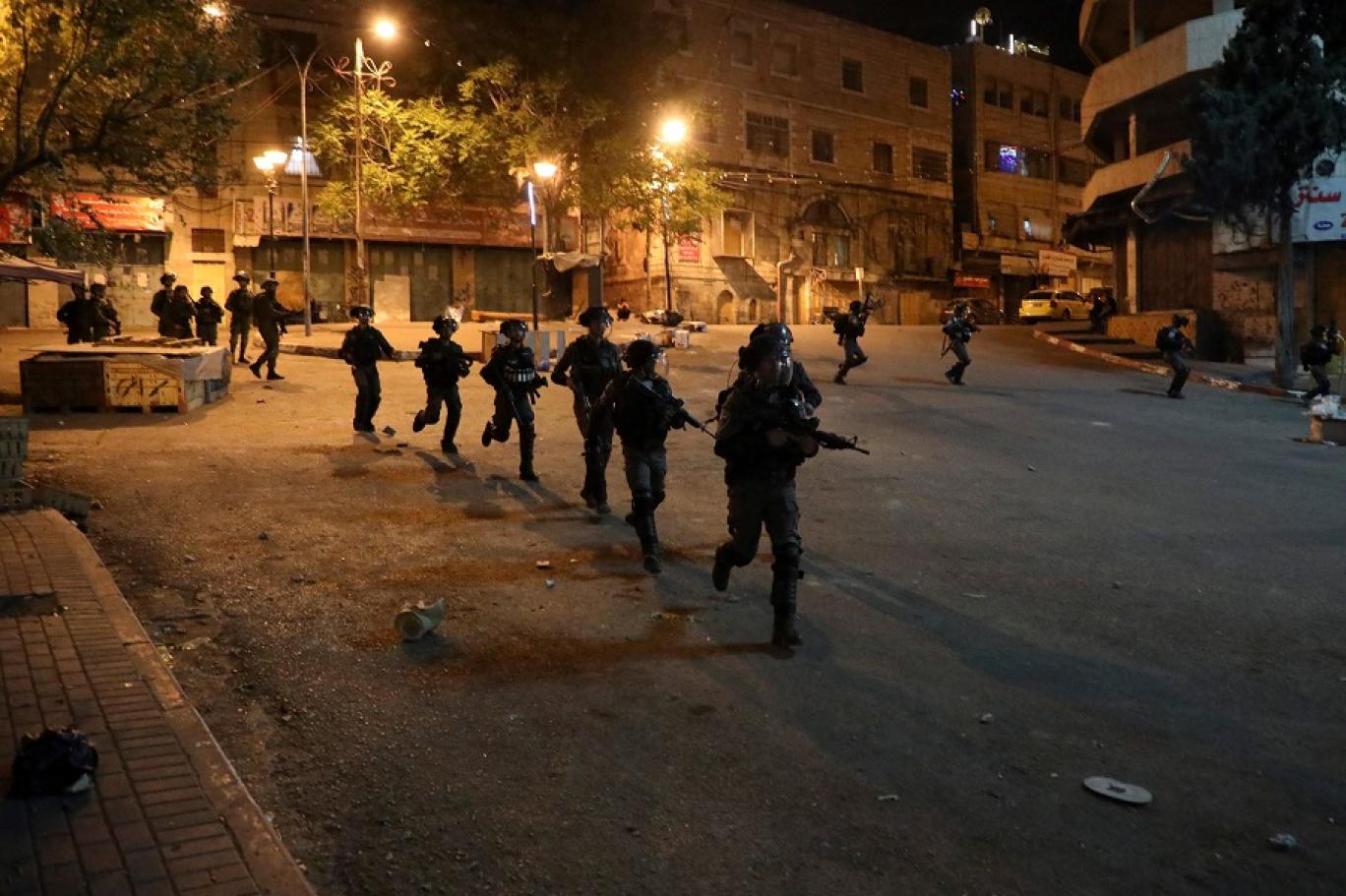
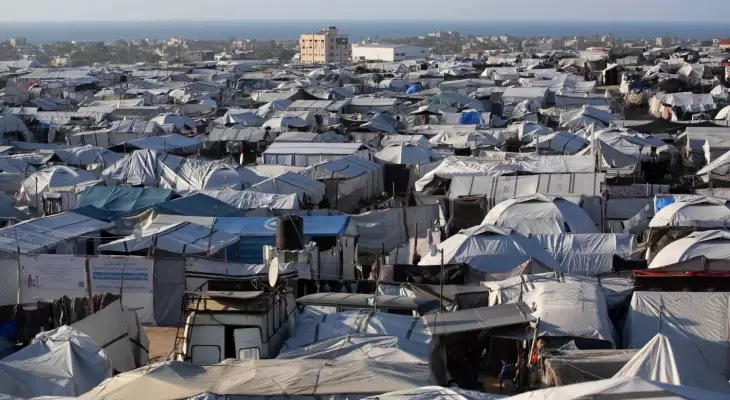
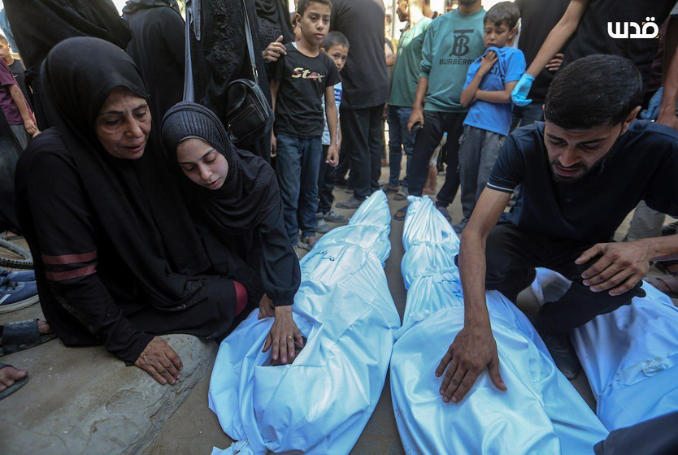
The Israeli genocide starting on 27 October, 2023 through mass bombs and missiles dropped on the Gaza Strip is being discribed as hell-on-earth. After 700 days of slaughter in which the enclave was reduced to ruin, debris and mass killings, Gazans speak of the “hell” they are going through between multiple and countless displacements, starvation and waiting in limbo for what is going to happen next. Their lives have been turned upside down and live in limbo of fog.

All the above interviews were conducted by Al Jazeera satellite channel on the 700 days of horrors the Israeli army has subjected the Palestinian civilians of Gaza to.

“700 days and the killings are still going on with the war taking everything from us,” said one man. “The blood of martyrs is still hemorrhaging,” he continued.

“I now envy the people who have died in this slaughter,” said another. “In this past 700 days, journalists were killed, civil defense men gone, hospitals bombed, children murdered and many other things disappeared…”

After 700 days there is nothing left, there is no children left, no food,  no drink, starvation everywhere, life has become extremely difficult. I have started to say to myself I wish I was long dead and have left this sorry place,” said another woman.

What about the handicapped

‘“I have three teenager sons who are handicapped and the process of displacement with them is very difficult…we were forced to move by the Israeli army more than 15 times – I walked them, I sometimes carried them would you believe, there is no transport and walked under bombs and missiles, sometimes they’d fall very near us, the danger of being killed is real,” the father of the three said.

“There is no food, no drink, there is no place to live, the sewerage is bad, we can’t do anything.”

He added on this 700 day of living like this, the Israeli army has just called on us to keep moving. “They want to displace us yet again from the north to the south, what is next we don’t know. 

We don’t have food, we don’t have water, we don’t have tents, we don’t have anything. On the 700 day, the world is just sitting and looking at us while we move from one place to another.

Another 30-year-old who lost her husband and five children and just stares into the void: “Now they are gone I feel life is empty and meaningless. I force myself to work just to forget but its like living in a distant memory and suddenly wake up to this nightmare. 

Another man with five small children moving around him said: “I have a handicapped son – a grown up, as you can see and I have to carry him across my shoulder blades whenever we are ordered to keep moving.

We are at the end of our tethers after 700 days of devastation, we see death in front of our eyes, there is no let up, the kids keep screaming at all hours of the day and night. We don’t know what is going to happen to us and now we are called upon to keep moving.”

The same is true of another lady. Her plight is the same as many others. “We are being displaced from one place to another. After 700 days we are not able to settle down to establish a tent we can live in, being displaced is like losing one’s soul and I don’t know when this will end or how.

We are living in devastation, death, slow death. Today I envy the people who have died and become martyrs.” 

Another man in crutches said: “Our savings have now ended, we are on aid to say alive, my son used to go to Zakim to get some stuff but they shot at him and now sit by me unable to move.

Blood on the streets

“The past 700 days were the deadliest, killings, bombing, starvation, you see blood seething on the streets, laying bodies of martyrs, people with no legs or arms”.

It has been an extremely difficult 700 days for a woman with the responsibility of looking after three children. “How do I cope, how do I make ends meet. My husband went before my eyes, in front of his kids, I saw, my kids saw an incredible sight of their father spluttering on the wall and now that image never leaves me nor them.

In this 700 days you lost a brother, a relative, a friend as you were forced to move from one place to another in between charities, water queues, cutting wood and all the rest of it. I just can’t describe it,” said one young man.

Sullen future

“For me, my future has perished, gone up in flames, I could have been working by now, having just finished university, but I live in a 4 by 6 tent with nothing to look forward, searching for morsels of food and hewing water, carrying buckets of water not just today but everyday, said a young lady.

Nothing is for certain. The people of Gaza, as of yet, have nothing to look forward to but more slaughter. There is a nagging fleeing, frequently made by Israeli ministers, that the aim is to push these people dubbed at around two million to other countries.

But the Gazans, still after two years of slaughter and going to the third, say they are not leaving Gaza except as dead bodies.

CrossFireArabia

CrossFireArabia
Dr. Marwan Asmar holds a PhD from Leeds University and is a freelance writer specializing on the Middle East. He has worked as a journalist since the early 1990s in Jordan and the Gulf countries, and been widely published, including at Albawaba, Gulf News, Al Ghad, World Press Review and others.

Related Posts

Jordan Footballers Delighted For World Cup Matches

The qualification of Jordan’s national football team for the FIFA World Cup for the first time has sparked ambitions far beyond mere participation, with many Jordanians expressing confidence that the team can make a deep run in the tournament.

The World Cup will be hosted by the US, Canada and Mexico from June 11 to July 19, with Jordan drawn in Group J alongside Argentina, Algeria and Austria.

In interviews conducted by Anadolu in the Jordanian capital, citizens voiced optimism that the team can achieve unprecedented success on the global stage.

“When I see Jordan’s flag flying among the flags of nations around the world, it fills me with pride to be Jordanian,” said taxi driver Ahmad Al-Khalayleh. “Jordan is strong everywhere and will always remain at the forefront, and its flag will continue to fly high, God willing.”

Al-Khalayleh said the national team had faced unfair treatment in previous tournaments but was ready to meet expectations.

“I promise you that Jordan will leave a distinctive mark in its opening match against Austria, and the players will compete with one spirit and one heart,” he said.

Wadie Al-Qaisi, a young supporter, said he hoped the tournament would showcase Jordan’s growing football stature.

“We want the entire world to recognize Jordan’s value and the strength of its national team, and how capable it is of breaking records and achieving the ambitions of the Jordanian people,” he said. “We hope to reach the highest levels at the World Cup.”

Another fan, Aboud Al-Deek, said Jordanians were celebrating a historic achievement.

“We are very optimistic about the national team players reaching this advanced stage and qualifying for the World Cup finals for the first time,” he said. “The entire Jordanian people are happy about this achievement, and we look forward to seeing an outstanding and impressive performance.”

Haitham Al-Dajaah said the team’s success should encourage greater investment in youth football development.

“As fans and members of the sporting community, we hope to see greater attention given to youth and junior development programs so that we can compete in the advanced stages of future World Cups,” he said. “With ambition, determination and perseverance, we will be a formidable force at the World Cup, God willing.”

Young supporter Hamza Salah expressed the highest hopes of all.

“There is a sense of optimism that the national team will advance to the later stages, such as the quarterfinals or semifinals, and even win the trophy, God willing,” he said. “Jordan is capable of achieving that.” Anadolu

Continue reading
Diving in a War Zone

By Jing Zhang

When US and Israeli forces launched strikes on Iran on 28 February, triggering one of the most serious geopolitical crises in years, the Strait of Hormuz – a narrow channel just 34 kilometres wide at its narrowest point – became a global flashpoint overnight.

Iran closed the waterway to foreign shipping, attacking merchant vessels and cutting off around 20 per cent of the world’s seaborne oil trade. Some 20,000 seafarers were stranded in the Persian Gulf. The UN Secretary-General called for an immediate ceasefire.

Beneath all of it, the fish kept swimming.

Back in the water

Three Chinese divers based in the United Arab Emirates (UAE) – diving instructor Rui Li, freediver Shanshan Du and technical diver Jie Zhang – had been locked out of the water for weeks by the coastal closure. When a ceasefire allowed limited access in mid-April, they went straight back in.

World Oceans Day, marked each year on 8 June, carries the theme this year of Reimagining the Relationship Between Humans and the Ocean. For these three, that reimagining is anything but abstract.

“We were actually a little worried before setting off,” says Du, who dived the narrowest stretch between the UAE and Oman on 18 April, just days after the UN welcomed Iran’s announcement that the strait would be open to commercial vessels during the ceasefire. 

“But after more than two months, we all felt it was fantastic to be able to dive again. We encountered a large group of dolphins. There was none of the war-torn atmosphere I had imagined – only peace and beauty before my eyes.”

Zhang, who dived the area as recently as last week, describes coral diversity she has rarely encountered elsewhere – soft and hard corals varying with the topography, and sea turtles gathered in such numbers they evoked a nature reserve.

A person in a scuba diving suit and mask makes a peace sign against the ocean and blue sky.
Courtesy of Jie Zhang. Jie Zhang is back from the depths, feeling the warmth of the sun.

Troubling signs

She also noticed something more troubling. “I saw more white debris on the seabed than before,” she says, uncertain of its origin. And when she and her companions followed dolphins near the eastern side of the strait, the water around the animals was streaked with green algae, oil fumes and floating rubbish. 

“I recalled that when I used to chase dolphins, the water was blue. Seeing this scene with my own eyes is still very heartbreaking.”

Li is careful to hold both realities at once. The strait is not the world’s most biodiverse marine zone, he notes, but its complex topography sustains coral reefs of unusual variety – formations “as white as silver needles” alongside colonies “as purple as pine forests” – as well as seahorses, whale sharks and species rarely seen elsewhere.

He describes witnessing a boat captain who, unable to dive and with no other means of communication, could reliably find a pod of dolphins that seemed to recognise him. “We would greet each other and then go our separate ways,” Li says. “This place is truly magical.”

A wide bay with deep blue water, bordered by arid, rocky mountains and a small coastal settlement on the right.
©Jie Zhang Overlooking the Strait of Hormuz from the Musandam Peninsula, Oman.

Potential catastrophe

Yet he is also acutely aware of what armed conflict can do to such a place. An attack on oil storage facilities, he points out, could be catastrophic for marine life. “Many marine organisms are small and vulnerable. A single attack could be enough to wipe out some amazing species that have never been seen by humans.”

Zhang frames the underwater world’s vulnerability in blunt terms. “No one can speak for the underwater ecosystem  – fish can’t speak, and neither can large animals. 

“We dump all the disputes, wars and pollution on land onto the ocean, ignoring the fact that the ocean has no good self-protection capabilities and can only bear all the conflicts and damage caused by human activities.”

Diving has quietly dissolved certain certainties for all three. “Underwater, the ocean has no borders,” says Zhang. “Ocean currents and schools of fish move freely. When whale sharks cruise, they follow fixed routes through different countries – they are free. Humanity should share this blue world instead of tearing it apart with disputes.”

A person in a wetsuit and goggles floats in the ocean, adjusting their mask with both hands.
©Jie Zhang Rui Li makes a heart gesture to his dive buddy on the water’s surface, which also stands for “OK” in diving hand signal terms.

Mother ocean

Li reaches for a different metaphor – warmer, and perhaps more honest about the limits of human agency. The relationship between people and the sea, he suggests, is something like that between a child and a parent: the ocean sustains us, nurtures us, occasionally punishes us. 

“We have grown old enough to want to protect it, he says, yet what we can actually do remains small. “Our parents are still quietly waiting for us, helping us, and continuing to nurture us.”

Du, diving in a country where people of dozens of nationalities converge, has found that underwater, borders feel beside the point. Communication happens through gesture alone. “Because of this hobby, and because of the ocean, it has created a wonderful environment for us.”

The conflicts raging above the surface have not ended. Talks between Washington and Tehran remain fragile, conditions volatile. But 71 per cent of the Earth is ocean – and, as Li says to anyone who has yet to see it: come and touch the refreshing water whenever you can.

A school of sharks swimming in deep blue ocean water.
©Jie Zhang Madivaru Corner in the Maldives is a world-class dive site. Grey reef sharks and white-tip reef sharks are its permanent residents.

UN News

Continue reading

You Missed

Did Little Malak Deserve Death?

Did Little Malak Deserve Death?

Handala in Ireland

Handala in Ireland

Occupied Palestinian Territories in Crisis

Occupied Palestinian Territories in Crisis

Palestinian Journalists Under Attack – 55 Israeli Violations in May

Palestinian Journalists Under Attack – 55 Israeli Violations in May

Jordan Footballers Delighted For World Cup Matches

Jordan Footballers Delighted For World Cup Matches

World Cup: Trump, Political Footballing and Iran – A View From Amman

World Cup: Trump, Political Footballing and Iran – A View From Amman