Welcome Ramadan

The whole Muslim world— 2 billion people—start fasting just before the sun raises to sun-down as commitment to God and his commands. The Sohour of eating before the sun raise is a religious ritual, designed to give us the strength to carry on the day till sundown when we break the fast.

Ramadan is a commitment to God, one of whose characteristics is to feel with the poor and hungry and realize the Almighty has bestowed upon you greater material things you should appreciate and not over-indulge in or use in excess.

We try to apply the teachings of the Quran and Islam during the holy month, and not indulge in over-eating after the breaking of the fast, but I suppose like anybody else we are guilty of not sufficiently feeling with the poor, despite the fact it is rife, and you see them everywhere men, women and children holding their hand out to you in the street and coming to your shop and asking for money.

But, this is human nature, the way we have been molded, from the day we were first conceived in the womb, that’s why Islam came to us as a source of spiritual salvation, as enlightenment, a methodology, a way of thinking, and a way of life to be connected to God.

I like Ramadan, because for one whole month our lives appear to be turned upside down. Our eating habits change, our sleeping habits change, we start praying on a regular basis, and maybe hear the word of God more often on our lips than we usually do in any other part of the year. Many start praying, the regular five times a day routine.

We are supposed to stop indulging in idle talk and stop talking about other people behind their backs and just keep to one self in spiritual solitude, praying to and thinking about the connection that binds us to God. In Islam, we are constantly told through the Koran to think how we are made, think of the universe, the earth and the skies, and ponder on the vastness and the extraordinary ability of that omnipotent being and examine that eclectic relations where we are supposed to obey commands, and are intrinsically related to the wishes of God, but at the same time have the freewill to make our decisions, and reach conclusions of our own.

I like Ramadan because we don’t spend much, we cut down on our spending habits, we eat what’s in the fridge, and that includes the leftovers, we eat lots of salad, or fatoush (bread and salad) and Qatayeef (small velvety bread with almonds or cheese and sugar) for sweetners, but try not to indulge, buy lots of Qamar Din (apricot drink ) for instance to prevent thirst.

My wife keeps telling me we are not representative of other people, who engage in a spending spree of over-buying food that necessarily goes to waste. We try to stick to basics, although consumption booms during the holy month.


We do however continue to drink Pepsi or Coke with guilt complexes about not boycotting the soft drinks because of being sold freely in Israel that is still widely regarded as an occupation state.

But we try console ourselves by saying the game of boycott is bigger than us, the fizzy soft drink maybe unbearable to resist despite the fact that more and more people maybe shying away. We say it’s a great game of power politics and economics and that the road to non-violent action is long and dreary, and needs commitment. Though many people are tutning to boycott these days because of the Israeli genocide in Gaza.

Instead we limit our devotion to the cultural, religious and spiritual aspects of life, ideas and feelings which we feel we have control over. We like to think of Ramadan as “civilizational”, enriching our soul, with good things in life ones that would please God. In themselves these are deep fulfilling issues but are they enough when so many things are wrong in this world!

Good for the tummy!

Ramadan has practical aspects as well. It is actually good for the stomach, it’s healthy, by a process of denial we are actually enriching our body. By ceasing to eat for one month, you are giving your stomach a rest, from the constant chewing and churning of food, from the everyday wants of avarice, indulging in unnecessary needs and unwanted desires.

As human beings, we constantly drive our selves beyond bodily needs, we eat, drink and copulate in excess, without realizing the damage we are doing to ourselves, our liver, intestines, heart and blood circulation.

In Ramadan our body clock sort of eases down, developing a slower pace to relax and push its muscles in the way it wants, by fasting we are in fact protecting our circulation system, stopping our hands from reaching for the cup of coffee all the time or the pack of cigarettes, from munching from the fridge at all hours of the day. Ramadan is about developing will-power and instituting a method to our life.

In Ramadan the focus shifts from superfluous wants to spiritual needs, with the net result of rejuvenating our bodies both physically and spiritually. Of course as Muslims, we need to increase that spirituality through constant prayers and the utterance of God on our lips which demands a certain amount of will-power to forego immediate pleasures like watching the television and Arabic soap operas which tend to be plenty of in Ramadan. We unfortunately fall guilty to these whims!

If we are fasting for strictly religious reasons, rather than those who just abstain for customary and social reasons—which is the case for quite a lot people—we don’t feel as hungry as the others because there is a purpose, objective and a goal in our fast.

Hunger and thirst is deflected through religious reverence, prayer and ablution that refreshes our very being and increases our will power to help our fellow-beings while devoting our mind, body and soul to a higher being, God.


Ramadan increases our spiritual perception, makes us more pious and in some cases humble. Ramadan lowers our threshold of selfishness, greed, individualism, immediate family interests. It makes the need for togetherness, collectiveness, know the needs of thy neighbor and extend a helping hand that much more greater.


Ramadan is about helping to build the nation and make it strong by making its communities wield together, it’s about kin and folk rather than parochialism and isolationism.

This article was piblished was published on the hackwriters website in 2007.

  • CrossFireArabia

    CrossFireArabia

    Dr. Marwan Asmar holds a PhD from Leeds University and is a freelance writer specializing on the Middle East. He has worked as a journalist since the early 1990s in Jordan and the Gulf countries, and been widely published, including at Albawaba, Gulf News, Al Ghad, World Press Review and others.

    Related Posts

    Palestinians Remember The Eveil Nakba

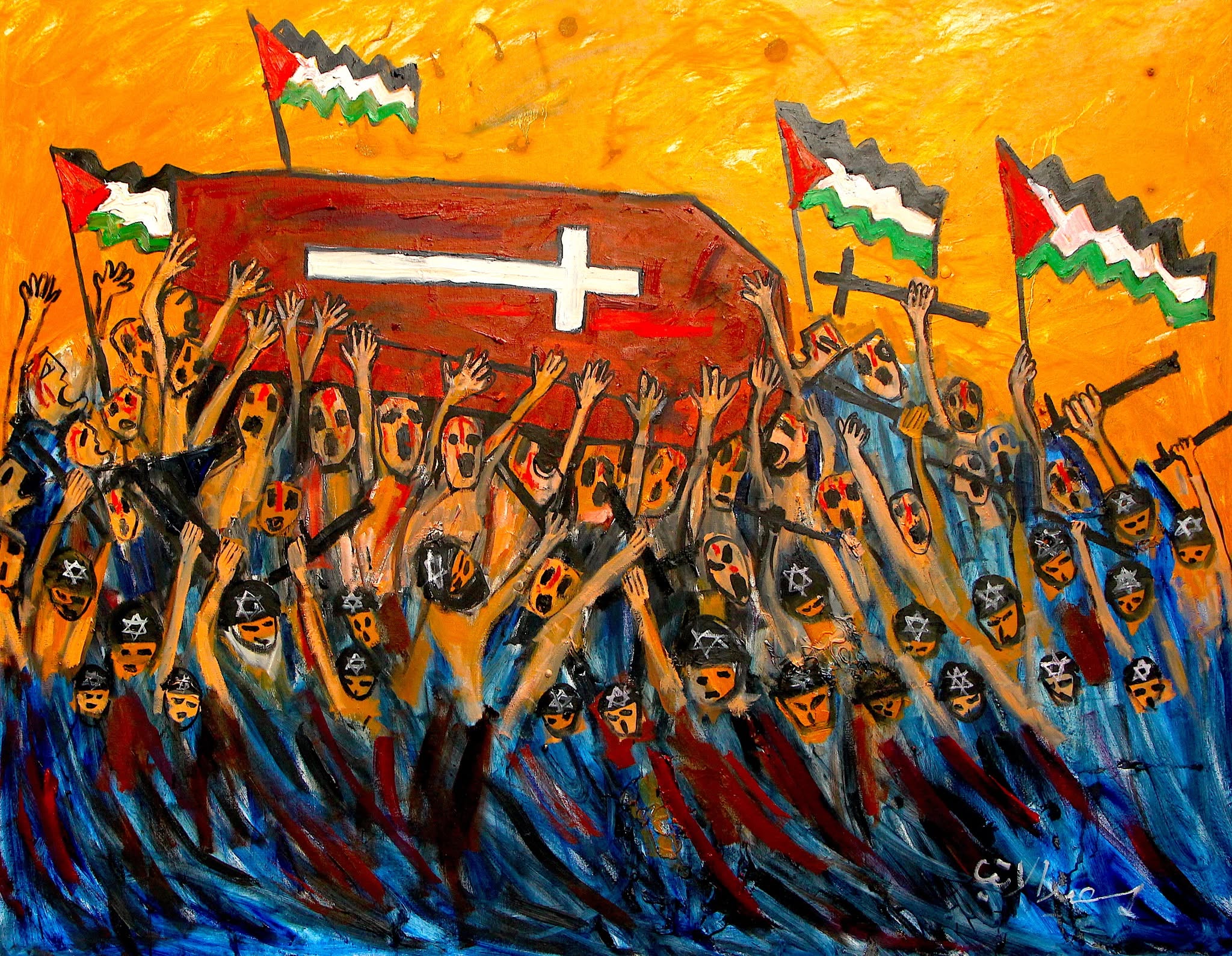
    Dozens of Palestinian women at a displacement camp in central Gaza marked the 78th anniversary of the Nakba (Catastrophe) on Thursday, reliving scenes of displacement and loss they said continue to define Palestinian life decades after 1948.

    Held at the Refaat Alareer camp in the Al-Zawaida area, the event linked memories of the historic Palestinian displacement with the reality of the ongoing Israeli war on Gaza, as participants said the suffering of exile and forced displacement had never truly ended.

    The event was organized by the Sameer Project, a relief initiative led by Palestinians in the diaspora, and featured heritage performances, traditional dabke dancing and symbolic scenes highlighting Palestinian identity and the right of return.

    Women and children raised Palestinian flags, symbolic keys, and images reflecting displacement and attachment to the land. Several participants wore traditional Palestinian dresses and chanted songs and national hymns invoking Palestinian memory and what they described as an ongoing Nakba.

    Palestinians commemorate the Nakba every year on May 15 through marches, exhibitions and public events in the Palestinian territories and around the world, calling for rights, including the return of millions of refugees.

    The Nakba refers to the mass displacement of Palestinians in 1948 during the events surrounding the creation of Israel, when hundreds of Palestinian towns and villages were emptied and their residents forced to flee.​​​​​​​

    Reliving displacement

    Ibtisam Abu Muailiq, a displaced Palestinian now living in Al-Zawaida, said Palestinians are still living through the Nakba today.

    The current war, she told Anadolu, had brought back scenes of displacement and tent life that previous generations described after the events of 1948.

    “Our home was destroyed, and we lost loved ones, some killed and others still missing, but we remain steadfast on the land of Palestine,” she said.

    She called on people around the world to show compassion toward Palestinians and support them amid their suffering.

    For Umm Mohammed Abdullah, the Nakba never ended.

    Palestinians, she said, have endured repeated cycles of hunger, thirst, displacement and loss but continue to hold on to their land.

    “No matter how severe the suffering becomes, we will not leave our homeland,” she added.

    Steadfast despite war

    Event coordinator Iman Al-Khatib said holding the event inside a displacement camp carried a message that Palestinians remain steadfast despite wars and catastrophes.

    “We wanted to tell the world that Palestinians remain resilient and that the right of return will continue to live in the conscience of future generations,” she told Anadolu.

    The Israeli army has killed more than 72,000 people, mostly women and children, and injured over 172,000 in a two-year war on the Gaza Strip since October 2023.

    Despite a ceasefire that took effect on Oct. 10, 2025, the Israeli army has continued its attacks, killing at least 856 people and injuring 2,463 others, according to Gaza’s Health Ministry.

    Continue reading
    Palestinian Population Tops 15.5 Million

    The Palestinian Central Bureau of Statistics (PCBS) said Tuesday that the number of Palestinians worldwide has reached about 15.5 million, including 7.4 million living in historic Palestine.

    In a statement marking the 78th anniversary of the Nakba, a term used by Palestinians to mark Israel’s creation in 1948, the bureau said about 8.1 million Palestinians live in the diaspora.

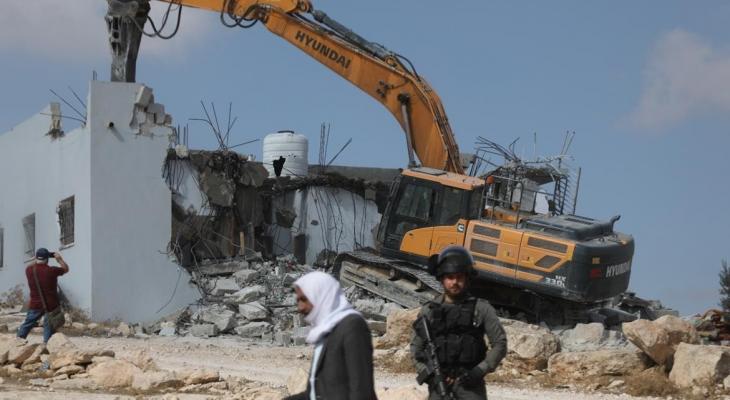
    It said more than two million Palestinians are displaced inside Gaza and the occupied West Bank as a result of Israel’s war on Gaza and continued settlement expansion.

    Israel’s war on Gaza has displaced nearly two million Palestinians out of about 2.2 million who lived in the enclave on the eve of the war, the bureau said. Many now live in tents, shelters and schools.

    About 40,000 Palestinians have also been displaced from refugee camps in the northern West Bank because of the ongoing Israeli military operations, the bureau added.

    In the West Bank, illegal Israeli settlement activity continues to expand, the statement said, adding that the number of illegal settlements and military bases reached 645 by the end of 2025. The total includes 151 illegal settlements, 350 settlement outposts and 144 other sites.

    Official figures show that the number of Israeli occupiers in the West Bank reached about 778,567 by the end of 2024, with 42.8% concentrated in occupied East Jerusalem.

    The bureau said Israeli authorities seized more than 5,571 dunams (1,377 acres) of Palestinian land in 2025 through seizure orders, expropriation and declarations of “state land.”

    It also documented more than 61,000 attacks by Israeli forces and occupiers in the West Bank between 2022 and 2025, which led to the uprooting and bulldozing of more than 81,000 trees, most of them olive trees.

    Israeli authorities continue to impose strict restrictions on Palestinians through about 900 military checkpoints and gates across the West Bank, limiting residents’ movement and blocking access to large areas of agricultural and grazing land, the bureau said.

    In Gaza, the bureau said Israel’s war has completely destroyed more than 102,000 buildings and fully or partially damaged more than 330,000 housing units, along with widespread destruction of infrastructure, health facilities and schools according to Anadolu.

    The Israeli army has killed more than 72,000 Palestinians, mostly women and children, and injured over 172,000 others in a two-year offensive on Gaza since October 2023.

    Continue reading

    You Missed

    Giant Phillippines Volcano Shows no Rest!

    Giant Phillippines Volcano Shows no Rest!

    The Chinese Fortune Cookie and The “Thucydides Trap”! A  View From Amman

    The Chinese Fortune Cookie and The “Thucydides Trap”! A  View From Amman

    Israel Kills 200 Lebanese Children – UNICEF

    Israel Kills 200 Lebanese Children – UNICEF

    Nakba – 78 Years of Occupation Misery

    Nakba – 78 Years of Occupation Misery

    Palestinians Remember The Eveil Nakba

    Palestinians Remember The Eveil Nakba

    Nakba – 78 Years On

    Nakba – 78 Years On