US Loses Nearly $4 Billion in Military Assets

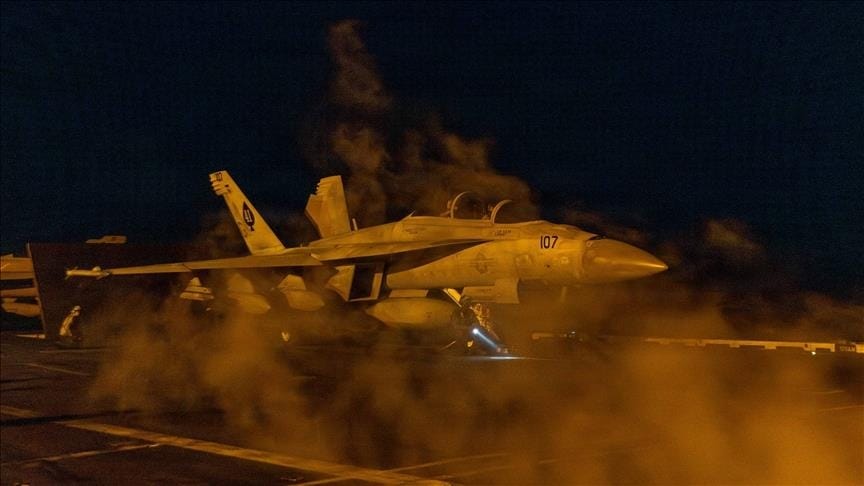
The United States has lost approximately $3.84 billion in assets in the first two weeks of “Operation Epic Fury,” according to estimates and data compiled by Anadolu.

The largest items driving the cost are damaged and destroyed AN/TPY-2 radar components belonging to THAAD missile defense systems in the United Arab Emirates, Jordan and Saudi Arabia, valued at an estimated $2 billion. While the extent of the damage is unclear, satellite imagery analyzed by multiple outlets confirms that four AN/TPY-2 radars have been hit across these locations.

A US AN/FPS-132 early warning radar at Al-Udeid Air Base in Qatar, valued at $1.1 billion, was struck by an Iranian missile when retaliatory attacks began on Feb. 28. Qatari authorities confirmed that the radar was damaged according to Anadolu.

US officials speaking to CBS News have so far confirmed that 11 MQ-9 Reaper drones have been downed. At a unit cost of roughly $30 million, the total loss of the drones is about $330 million.

On the second day of strikes, three F-15E Strike Eagle fighter jets were lost in a friendly-fire incident involving Kuwaiti air defenses. While all six aircrew survived, the aircraft were destroyed, with replacement costs estimated at $282 million.

A KC-135 Stratotanker aircraft crashed in western Iraq during an operation on Thursday, killing all six aircrew. The replacement cost of the plane, first adopted in the late 1950s, is $80 million, adjusted for inflation.

Iran also struck the US Navy’s Fifth Fleet headquarters in Manama, Bahrain, destroying two satellite communications terminals and several large buildings.

Open-source intelligence reports have identified the targeted communication terminals as AN/GSC-52Bs, with an estimated cost of $20 million, factoring in deployment and installation.

In addition to the terminals lost in Bahrain, satellite imagery analyzed by The New York Times of Camp Arifjan in Kuwait showed three destroyed radomes, adding roughly $30 million in damage.

Combining these costs, the US has lost $3.84 billion worth of military assets in its ongoing conflict with Iran.

  • CrossFireArabia

    CrossFireArabia
    Dr. Marwan Asmar holds a PhD from Leeds University and is a freelance writer specializing on the Middle East. He has worked as a journalist since the early 1990s in Jordan and the Gulf countries, and been widely published, including at Albawaba, Gulf News, Al Ghad, World Press Review and others.

    Related Posts

    ‘When Will I Bury My Sister’

    By Faten Al-Hmeidi

    Gaza – Amidst the rubble of destroyed homes and piles of concrete that transformed the landscape of the residential neighborhoods of Gaza, the bodies of thousands of martyrs remain trapped under more than 60 million tons of debris. This has been the case now for over two and a half years, embodying one of the most brutal and protracted human tragedies today.

    With a severe shortage of heavy equipment, machinery, and materials needed to remove the debris, and the Israeli occupation strictly preventing their entry, alarm bells are ringing about serious health and environmental consequences of the accumulating bodies. There are fears of water and soil contamination and the spread of epidemics and diseases, at a time when the Strip is already facing an unprecedented collapse of its health and service systems.

    The anguish extends to families who are still waiting to find their loved ones. The bodies-under-the-rubble issue remains an open wound, adding to the series of crises that weigh heavily on the residents of Gaza.

    “Terrifying nightmare”

    “I’m living in a terrifying, unending nightmare. A normal death is difficult, but at least you bury your loved one and know where they are. But for my sister, Rawan, to be under the rubble since last September means that as I close my eyes every night, I’m gripped by real terror,” journalist Iman Shubeir began, speaking about her sister, whose body, along with that of her child, remains trapped under the rubble of their destroyed home since a year ago.

    Shubeir told the Sanad News Agency that death, however cruel, sometimes leaves a final space for farewells, but what she is experiencing is completely different. The absence of the bodies has deprived the family of their most basic human rights: To know where their loved ones lie, to say goodbye, and to bury them with dignity.

    She described the past year as one of “continuous agony,” as the loss hasn’t faded into a memory that can be lived with, but remains vividly present in all of its painful detail.

    Every night the same images resurface: She imagines her sister and son buried under piles of rubble, in a place the family is not to reach or retrieve. “I imagine the darkness, the cold, the weight of the stones on her body,” she says. “I feel like I’m suffocating just thinking about it.”

    Despite her attempts to live her daily life normally, Shabir insists that what appears to others doesn’t reflect what’s inside of her and what she’s going through. A part of her soul remains trapped beneath those ruins since that day, she said, adding that time hasn’t healed the wound because it never had the chance to heal in the first place.

    With a lump in her throat, she continued, explaining her sister and her son’s presence under the rubble has kept the tragedy alive, as if the moment of loss is re-lived every day. Instead of grief being a painful pause followed by life’s journey, it has become a heavy, daily reality that accompanies her in every detail, making her feel that the disaster is far from over, that a part of her remains buried there, awaiting an end that has yet to come.

    But what burns her heart most is the sight of her nephew, who, with the passage of time, seems to have become part of that rubble. Since the debris swallowed his mother, he has refused to leave the place, spending his days and nights on the ruins, clinging to a thin thread of hope, however cruel, that his mother might one day emerge from beneath the stones.

    There, amidst the remains of the destroyed house, the child grows up with an endless wait, while the rubble becomes a silent witness to a whole year of sorrow, helplessness, and longing.

    “We knocked on every door”

    She said she and her family haven’t stopped searching for months, knocking on every possible door that might lead to the recovery of her sister’s body and her child.

    “We contacted the Civil Defense teams repeatedly and tried every available means, but as a journalist, I know very well what we are experiencing in Gaza is far greater than a typical crisis that can be dealt with using the available resources,” she said.

    She explained that her personal tragedy is just one of thousands of similar tragedies. Large numbers of victims remain trapped under the rubble in various areas, while limited resources are helpless to cope with the scale of the disaster.

    She pointed out the lack of equipment and machinery, the ongoing dangers on the ground, and the accumulation of enormous quantities of debris have all made reaching the victims an extremely difficult task.

    “I know that the civil defense teams are working beyond their capacity and doing everything they can under near-impossible conditions, so my sense of abandonment isn’t directed at them,” She continued.

    “The real abandonment comes from a world that has been watching this ongoing tragedy for months, seeing thousands of families waiting to recover their loved ones from under their destroyed homes, without taking any action…”

    Environmental Warnings…

    Environmental expert Abdel Fattah Abd Rabbo said that leaving the bodies of the martyrs under the rubble for extended periods of time, like now, poses a great environmental and health challenge. It contributes to soil and potentially groundwater contamination due to tissue decomposition and the emission of odors and gases resulting from decomposition, as well as attracting flies, rodents, stray dogs, and other diseases.

    Abd Rabbo emphasized the mixing of the decomposed bodies with the rubble, waste, and sewage exacerbates environmental pollution and hinders debris-removal and environmental recovery efforts.

    He bases his argument on scientific evidence saying, in themselves, corpses are not a primary cause of disease outbreaks but points out that the greatest danger stems from the collapse of water and sanitation services, accumulation of waste, and overcrowding in displacement camps.

    He added the decomposition of bodies in densely-populated residential areas negatively impacts the surrounding environment due to the release of decomposing fluids and organic matter that seep into the soil and affect its quality.

    These pollutants can reach groundwater or nearby water sources, especially in areas where water and sanitation networks are severely damaged and therefore increase the environmental and health risks and the challenges faced by residents and relevant authorities in dealing with the ongoing devastation.

    Extending Risks…

    Furthermore, the decomposition process releases odors and gases. Urea, such as ammonia and hydrogen sulfide, exacerbates local air pollution and negatively impacts quality of life, according to the environmental expert.

    Decomposing bodies, according to Abd Rabbo, attract flies, rodents, stray dogs, and other disease vectors, especially when mixed with solid waste and sewage.

    These effects are compounded by inadequate sanitation and hygiene services, particularly in densely-populated areas and displacement camps, increase environmental and health risks, even though, according to scientific evidence, the bodies themselves are not a primary cause of disease outbreaks.

    Abd Rabbo emphasized the risks stemming from the decomposing bodies vary depending on how long they remain under rubble. He explained in the first few weeks, the environmental impacts are more closely-linked to the decomposition process, odor emissions, and the attraction of flies, rodents, and scavengers.

    As the period extends to months or years, the risks associated with the decomposition itself gradually decrease, but other risks emerge, including continued soil and environmental contamination, delays in debris-removal and rehabilitation of affected areas, and the presence of bodies mixed with rubble, waste, and war debris, stopping environmental and urban recovery efforts.

    “In any case, scientific evidence indicates that the prolonged presence of bodies does not, in itself, lead to outbreaks of disease. Rather, the greater health risks stem from the deterioration of water and sanitation services, waste accumulation, overcrowding, and the spread of disease vectors in affected environments,” he continued.

    Environmental Deterioration Indicators

    Abd Rabbo pointed to several indicators that may point to environmental deterioration in areas where bodies remain under rubble for extended periods. These include the persistent emission of foul odors, an increase in the number of flies, rodents, and stray dogs, changes in soil properties or nearby water sources, and a worsening problem of waste and sewage accumulation.

    He believes these indicators necessitate monitoring and follow-up by the relevant authorities, as they reflect a decline in general environmental and health conditions.

    According to Abd Rabbo, these signs alone do not constitute conclusive evidence of pollution caused by corpses. However, identifying the sources of pollution require specialized environmental and laboratory tests and analyses which may be lacking because of the scale of devastation Gaza has gone through.

    He pointed out that environmental degradation in the Gaza Strip is linked to a range of interconnected factors, including war debris, widespread destruction of infrastructure, disruption of water and sewage networks, and the accumulation of waste. These factors collectively contribute to exacerbating environmental and health risks in the affected areas.

    He outlined several environmental and health steps to be taken when removing rubble, including conducting a field-risk assessment (corpses, hazardous materials, unexploded ordnance) and safely recovering bodies.

    In addition to sorting out the rubble, recycling the usable parts, and safely disposing of the contaminated material, dust must be minimized during operations, and any waste or contaminated liquids must be managed hygienically, with continuous monitoring of soil, water, and air quality. Workers and residents must be protected with personal protective equipment and isolation measures, and environmental rehabilitation of the site must be carried out upon completion.

    60 Million Tons of Rubble…

    The amount of rubble and debris accumulated in the Gaza Strip up to the first half of 2026 is estimated at approximately 60 million tons (other UN estimates indicate 68 million tons), following the complete or partial destruction of more than 80% of buildings and infrastructure.

    Official statistics issued by the Government Media Office in Gaza indicate more than 80% of buildings in the Gaza Strip were destroyed and/or damaged, while the areas are covered with rubble amounting to about between 60 and 70 million tons.

    Official and human rights estimates that between 8,500 and more than 11,000 people remain missing as of the first half of 2026. It is widely believed the majority of these individuals were killed and their bodies remain trapped under the rubble of destroyed buildings.

    Removing the rubble in the Gaza Strip poses a significant challenge to the reconstruction process. The latest UN estimates indicate there are 60 million tons of rubble in the Strip, equivalent to the cargo of 3,000 container ships.

    This means every person in the Strip is trapped by 30 tons of rubble, and removing this enormous volume will require at least seven years.

    UN statistics show the destruction rate in the Strip reached 84%, and 92% for Gaza City. The cost of reconstruction is estimated at $70 billion, according to the United Nations.

    This feature was written by Fatten Al Hmeidi for the Arabic news website, Sanad News Agency, and reappears on  crossfirearabia.com in translation with editing by Dr Marwan Asmar 

    Continue reading
    Gaza, Srebrenica: Two Genocides Years Apart

    Israel Turns Gaza Into a Death ‘Srebrenica’ Camp

    Israel is legitimising and enforcing a systematic pattern of geographic siege on Gaza, extending beyond a comprehensive blockade to include forcible internal confinement. This traps Palestinians within a small, devastated area under conditions more severe and crowded than those in the Srebrenica enclave before its fall in 1995, when genocide occurred according to the Euromedmonitor.

    The Srebrenica genocide serves as a clear historical warning about the deadly impact of besieging civilians and depriving them of protection and essentials for life, particularly when these actions are part of systematic behaviour that is a core component of ongoing genocide, as seen in Gaza the Euro-Mediterranean Human Rights Monitor added.

    On the eve of Srebrenica’s fall in 1995, nearly 40,000 people were besieged within a roughly 150 km². Meanwhile, for most of Gaza’s approximately 2.1 million residents, the remaining habitable area has shrunk to just about 128 km².

    Geographically and demographically, Gaza is now limited to an area about 15 per cent smaller than Srebrenica, but with a population over 50 times larger and a density roughly 60 times higher, all amidst rubble, waste, and a severe lack of basic living conditions.

    Changing Gaza’s Landscape

    Israel is changing the demographic and military landscape of the Gaza Strip by increasing its de facto control and imposing severe restrictions on roughly 65 per cent of the enclave. This action deprives over two million residents of essential resources, prevents their return to their lands and homes, and makes large parts of Gaza prohibited zones under Israeli military control. These measures effectively amount to an unlawful annexation and seizure of land the Geneva-based organization.

    Israeli Prime Minister Benjamin Netanyahu’s announcement to expand military control over 70 percent of Gaza highlights an aim to further settler colonialism and expel the area’s native Palestinians, as this plan would leave only about 109 km² for residents. If this occurs, the per capita share of the remaining space would decrease to approximately 52 m², and the population density would increase to about 19,300 people per km², which is roughly 72 times higher than the density in Srebrenica in 1995.

    Although the numerical figures on population density are alarming, they do not fully reflect the harsh reality of the suffocating overcrowding residents face in the Gaza Strip. Much of the remaining land has been intentionally rendered uninhabitable through systematic destruction. This area is overwhelmed with large amounts of rubble from homes and civilian objects. It is filled with destroyed infrastructure and blocked roads, hindering movement, access, and humanitarian efforts. Additionally, waste, war remnants, water source contamination, sewage network collapses, and exposed land devoid of shelter or safe displacement sites further worsen the situation.

    In addition to severe overcrowding, most residents live in either worn-out tents, which offer no shelter from summer heat, winter cold, or rain, or in heavily damaged houses that could collapse at any moment. These structures are at risk due to ongoing Israeli bombardments or natural elements like wind and rain the human rights organization goes on to say.

    This situation poses numerous risks to hundreds of thousands of families, such as buildings collapsing on residents, fires erupting in overcrowded tent camps, and the spread of diseases due to poor sanitation, ventilation, and lack of clean water. It also deprives them of privacy and safety, particularly affecting women, children, and the elderly, as there are no safe housing options that could help residents escape this extreme overcrowding.

    The residents of the Gaza Strip face a reality that deliberately subjects them to conditions intended to undermine the Palestinian population, either partially or entirely. This includes measures such as deportation or forced transfer, with efforts to legitimise and promote this displacement internationally under misleading terms like “freedom of movement” or “voluntary emigration.”

    The ongoing killings, military operations, siege, and denial of sufficient food exemplify systematic actions that undermine civilian life. These include widespread destruction of civilian infrastructure, effective denial of return, military seizure of large land areas, restrictions on access to medical, health, and educational services, obstruction of reconstruction, and forcing residents into areas lacking basic survival needs. Collectively, these practices convert any choice into a consequence of physical and psychological coercion by Israeli authorities. Any departure of residents from the Gaza Strip under these conditions therefore cannot be regarded as voluntary but falls under forced displacement, which is prohibited under international law.

    The attempts to forcibly transfer the population are a direct continuation of Israel’s settler-colonial approach, which has persisted for decades and is based on policies aimed at erasing Palestinian history, space, and demographics, along with the systematic seizure of land. This phase is characterised by its rapid pace and broad scope, aiming to reach over two million people suffering from ongoing genocide. These individuals have been deprived of legal protection and basic survival means for nearly three years.

    These systematic coercive measures, along with the dehumanisation they entail, are deliberately designed to force residents into a stark choice: either face physical extermination or be forced out of their homeland. This is not a voluntary decision, but a compulsory condition for survival, highlighting the Gaza Strip situation as a well-documented example of mass deportation and forcible transfer in modern legal history.

    Fourth Geneva Convention

    The international community and all states must unequivocally oppose any plans to depopulate Gaza or force residents to leave using misleading terms like “voluntary emigration” or “freedom of movement.” Such population movements, without safe options and under ongoing physical and psychological pressure, are not genuinely voluntary but are crimes of forced displacement. These are prohibited by the Fourth Geneva Convention and the Rome Statute of the International Criminal Court. When this act occurs during an ongoing genocide, it triggers all states’ responsibilities to prevent and stop the crime, avoid recognising any illegal situation resulting from it, abstain from helping or supporting its continuation, and work together to end it and ensure those responsible are held accountable.

    All states must implement prompt and effective punitive actions against Israel instead of merely issuing condemnation statements or broad calls. This includes applying diplomatic, economic, and military sanctions; suspending any agreements, privileges, or cooperation that enable ongoing crimes or provide political cover; enforcing a comprehensive embargo on the supply, transfer, purchase, or import of weapons, munitions, equipment, and military and security technology; freezing the assets of involved Israeli officials; and imposing travel bans on them. Maintaining normal relations with a state that commits genocide and forced displacement, or providing it with weapons, political, and economic support, can be seen as contributing to the ongoing unlawful situation. This may also violate states’ obligations to prevent and stop the crime and to avoid aiding or assisting in its commission.

    The international community must act swiftly and decisively to dismantle Israel’s illegal system of control, detention, and apartheid over Palestinians, including those in the Gaza Strip. This involves forcing an immediate end to its military presence; removing barriers, buffer zones, and restricted areas that reduce the Strip’s land area and hinder residents’ access; and ensuring the prompt, unconditional return of displaced individuals to their original homes. These steps are essential to prevent de facto annexation, settler colonialism, and the forced displacement of Palestinians.

    Euro-Med Human Rights Monitor urges immediate international action to lift the unlawful blockade on Gaza and establish safe, sustainable humanitarian access. This includes opening UN-supervised humanitarian corridors to allow the free flow of food, medicine, fuel, medical supplies, and shelter materials without arbitrary restrictions. The deployment of independent international monitors is crucial to verify compliance and ensure that aid and essential services are not used as tools of genocide.

    Additionally, donors, states, and international organisations should move beyond merely managing the disaster through temporary relief. They need to act immediately to offer safe, dignified shelter solutions for residents, including permitting shelter materials and essential supplies to enter without restrictions, and urgently repairing health facilities, water and sewage networks, and critical infrastructure. A genuine path toward reconstruction cannot exist without lifting the blockade, ending Israeli restrictions on materials and equipment entry, ensuring residents can return to their areas, and stopping the ongoing destruction of civilian structures.

    Reconstruction efforts should not replace accountability or serve to normalise the consequences of the Israeli crimes. Instead, it must compel Israel to take legal responsibility for the extensive destruction and ensure victims’ rights to reparation, compensation, and the restoration of safe living conditions on their land.

    States with universal jurisdiction courts must issue arrest warrants for Israeli political and military leaders involved in the ongoing genocide and initiate legal proceedings to fulfil their international legal obligation to prosecute serious crimes and combat impunity. They must also hold accountable their citizens found to have committed violations against Palestinians, in line with their national and international legal obligations and within their territorial or personal jurisdiction.

    Relevant UN agencies should urgently conduct an independent assessment of the Gaza Strip to identify the areas that are truly safe for habitation and human use. This will reveal the Israeli misrepresentation that considers nominal geographic zones as habitable. Euro-Med Monitor emphasises the importance of legally and practically distinguishing between the theoretical geographic regions still available to residents and the zones genuinely suitable for living or for safe displacement centres, which must be free of rubble, environmental and health risks, unexploded ordnance, and war remnants, EuroMed concluded.

    Continue reading

    You Missed

    ‘When Will I Bury My Sister’

    ‘When Will I Bury My Sister’

    Gaza, Srebrenica: Two Genocides Years Apart

    Gaza, Srebrenica: Two Genocides Years Apart

    The Gaza Holocaust

    The Gaza Holocaust

    25 Palestinians Spent a Quarter-Century in Israeli Prisons

    25 Palestinians Spent a Quarter-Century in Israeli Prisons

    Israeli Bulldozers Demolish Two Homes in Palestinian Town

    Israeli Bulldozers Demolish Two Homes in Palestinian Town

    Gaza Death Toll Tops 73,000 With 173,571 Injured

    Gaza Death Toll Tops 73,000 With 173,571 Injured