US-Iran: Deal Today, Deal Tomorrow!

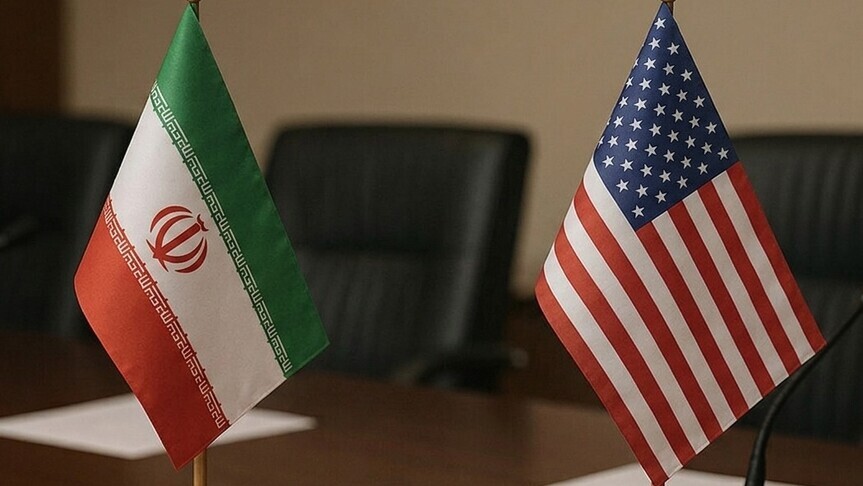
Iran’s final decision on a possible memorandum of understanding with the US is “under consideration,” a source familiar with the matter said on Sunday.

“Iran has not yet announced its final decision on the proposed memorandum of understanding,” the source told the Fars News Agency.

“The review of the political, legal, and technical dimensions of the proposals is still ongoing,” he added.

According to Fars, the various aspects of the proposed deal is being discussed at both expert and decision-making levels.

US President Donald Trump wrote on his Truth Social platform Saturday that a deal with Iran is scheduled to be signed on Sunday.

Pakistani Prime Minister Shehbaz Sharif, whose country has been mediating between the US and Iran, also said the deal could be finalized in the next 24 hours.

Iran, however, said the agreement will not be signed on Sunday, but may be inked in the coming days.

The Pakistan-mediated diplomatic process has focused on ending hostilities between Tehran and Washington, reopening the Strait of Hormuz to maritime traffic and reaching a consensus on Iran’s nuclear program.

Iranian officials have repeatedly said a large portion of the proposed text has already been agreed upon, while accusing the US of slowing progress through shifting positions and contradictory statements. Anadolu

  • CrossFireArabia

    CrossFireArabia
    Dr. Marwan Asmar holds a PhD from Leeds University and is a freelance writer specializing on the Middle East. He has worked as a journalist since the early 1990s in Jordan and the Gulf countries, and been widely published, including at Albawaba, Gulf News, Al Ghad, World Press Review and others.

    Related Posts

    Hassan Al Karmi: The Dictionary-Maker

    EDITOR’S NOTE: This is a tribute article I wrote originally about the Palestinian dictionary-maker who died on 5 May, 2007. It is befitting to reprint now from the hackwriters website because of the enormous contributions this man made to Arabic-English, English-Arabic dictionaries.

    I first met Hassan Al Karmi when he was in his 90s. He was still as sharp as a tack. He was living another of his golden ages. He had already 14 Arabic-English, English-Arabic dictionaries under his belt and he was now writing treatises on Islam and the West. After our first meeting to do an article on him that appeared in a local newspaper–not written by me–we became friends and I started to visit him regularly though not as much as I would have liked. He would tell me Marwan keep coming to see me, I want to discuss what is happening in this world that has gone mad!

    He first lived alone with only a Sri Lankian maid to look after him although he had numerous old guard friends, part of them his relatives, and part admirers, just happy to be in the company of a man who started to make dictionaries in the 1960s.

    Hassan Al Karami made Amman his home in 1990 saying this is where he wanted to spend his retirement and the rest of his life. He came here quite by chance en route to Damascus where his wife wanted to see her original birthplace. Whilst in Amman, she passed away and so Hassan Al Karmi, nom de guerre Abu Zeyad, decided to make his home permanently here. He says he was 87 or there about by then and felt that it was time to come home.

    Hassan Al Karmi had lived most of his life in London, and therefore could legitimately be called Anglo-Palestinian as he migrated to Britain in 1948 when Palestine fell to the Zionist occupiers. However, he never forgot his roots.

    He was a Jerusalemite, born and bred, a teacher and an educational inspector by profession who traveled all over Palestine in the inter-war years from 1918 till 1948. He wasn’t too sure of the exact date of his birth, although he would tell me it was either in 1904 or 1907 but all he would say is he and his family would move at that time freely between Palestine, Syria and Jordan where his father served as chief judge in the 1920s to then Prince Abdallah of Trans-Jordan.

    In an unpublished autobiography, Al Karmi vividly describes these years. The information he provides about his life in the various cities of Palestine during the 1920s and 1930s in places like Al Ramleh and Jerusalem are particularly illuminating. The reader receives a sketchy but a clear picture of the educational system in Palestine under the British Mandate with the young Al Karmi moving from one school to another.
    From 1948 to 1990 London was to be his home, finding a job at the British Broadcasting Corporation–BBC Arabic–as a language supervisor, checking and correcting the Arabic that was spoken and broadcast to the Arab world. He remained at the BBC till his retirement in 1968, but by then he was known all over the Arab World through his program Qawl al Qawl, “Saying Upon Saying” that started in 1954 and lasted till the 1970s.

    This program made him famous, almost a star, heard by many across the Arab world, commoners and kings, intellectuals and princes. He would tell me his presence at the BBC allowed him to meet and interview people like the late Sir Anthony Eden who was British Foreign Secretary at the time of the Suez Crisis in 1956 when Britain, France and Israel attacked Egypt, and he frequently interviewed Glubb Pasha who headed the Arab Legion in Jordan in the early 1950s.

    The late King Faisal of Saudi Arabia who was murdered in the early 1970s wouldn’t miss an episode of the program, Karmi told me when they used to meet in the 1960s the king would tell him he was a judicious listener to the program. The late Egyptian President Gamal Abdel Nasser was another admirer, and ordered his own media to emulate the program.

    Abu Zeyad was very proud of his BBC series not only because of the many friends he made across the Arab world including the late King Hassan II of Morocco but it helped him to maintain his roots and culture for he would frequently travel to the region to buy books and dissect the knowledge which he would use as quizzes for his program.

    And in his London home he built an impressive collection of books, numbering at least 1000, which he left to one of his two daughters, Ghada Karmi, a medical doctor-turned academic, an author, commentator, and now a researcher at Exeter University’s Institute of Middle East Studies. Although the 48-volume collection of “Saying Upon Saying” was brought from London to stay as a cherished prize in his Amman flat.
    He only bought a fraction of his books to Amman and some of his dictionaries, a number of which are out of print, but many others still on the market. He used to say to me proudly in actual fact he wrote 14 dictionaries but only eight are published, a great achievement in itself.

    His first, Al Manar dictionary, was started in the early 1960s at the height of his career at the BBC, but was published in 1970, it is today long out of print although I managed to see a copy of it in one of the bookshops in downtown Amman.

    On occasions I tried to ask him how he actually went about making his dictionaries but at many times his thoughts would seem intellectually scattered and his mind thinking of too many ideas. He was much too concerned with the malaise of the Arab world, arguing there was now another Christian crusade led by the United States against every Arab man and women, young and old.

    Words seems to him superfluous if they are not connected to the culture, politics, religion and economics of the region. He looked for social habits and idiosyncrasies, seeing the Arab man as riddled with contradictions that are as much as his own fault as the fault of the globalist culture and the dictation of the outside world, of Bush’s America.

    He was an inter-disciplinarian in the way he approached his work. He would always say that making dictionaries was the hardest projects he ever embarked on, but it was one of his priceless projects because it put the course of the Arabic language on a fixed linage and protected it. That’s why an endless amount of reading was required to look at the normative values of Arabic words and phrases, how the Arabic word was used and understood by the ordinary man-in-the street rather than how the intellectual and the pedagogues understood them and handed them down to the plebs.

    What made making dictionaries in Arabic harder still he would say is, because unlike English, there is no ready-made references in Arabic and involved looking at words and going back to their origins, dissecting their consonants, or when they were said and come up with modern equivalents but one that ensure consistency and not deviate from the tone, intonation and syntacs.

    Of course he had to look at other dictionaries which he brought back to London from his frequent trips to Arabia. Sometimes he would expressly travel to Egypt, Lebanon and Syria to gather what he termed as a book culture which he would ship to his house in London and sift through patiently to understand how one would differ from another and the context in which it is being used.

    He thought there was no time to lose, for him time was of the essence, his dictionaries, books and world news was of paramount importance. When he wasn’t preparing one book, he would be seen scribbling in his shaky writing and would at times amusingly say ‘I can’t make head or tail of what I wrote’. On seeing him sign a book for me, his son Zeyad once comment amusingly, ‘take care of the signature, one day it will be very valuable.’

    I remember his late 90s, where he would be sitting at his desk or at his favorite armchair with a magnifying glass in one hand and a pen in the other saying I just completed the adding of 10,000 extra words to one of my dictionaries that was to be printed in Beirut, then switching his mind to George W. Bush and his neo-conservatism, curse their politics in Iraq and on Palestine and say ‘why don’t they leave us in peace, we are a peaceful people.

    The sum total of all of his printed dictionaries was eight over the span of the 1970s, 1980s and 1990s. They included Al Mughni Al Akbar, (English-Arabic), Al Mughni Al Kbir (English-Arabic), Al Mughni (English-Arabic), Al Mughni Al Waseet (Arabic-English), Al Mughni Al Waseet (American English-Arabic, Al Mughni Al Wajeez (English-Arabic), Al Hadi for Arabic language, Al Hadi Al Waseet, Al Hadi for students).

    It was very strange to be in the company of such a man, I never thought of him per se as a dictionary-maker. I suppose I was very privileged to have known a man whose mind was to say the least multi-dexterous, leaping from one idea to another, it simply kept buzzing and enthused with intellectual thought. There was no end to his surprises.

    One day I went to see him and out of the blue handed me a book he just published on a cat he had in his inter-war years in Palestine. Would you believe somebody would write a book on his cat, he would tell me, and yet why not, cats are very clever things you know and we should appreciate them more, one day I was trying to get rid of my cat, so I took it 20 kilometers from where I lived and left it there, and when I went back home there it was on my door step, what other animals would have the sense to do that.

    He would tell me the story time and again and I would just nod my head and think of his many talents. It was his almost devoutness to knowledge, almost a humbling trait, that would probably stick out as his most basic of his character.

    Hassan Al Karmi was not the kind of person who would be sidelined. While many people start becoming peripheral as they enter their octogenarian years, the intellectual caliber of Al Karmi left no room for peripheralism or the sense of being left out on any topic of conversation.

    His mind never surrendered to his enfeebled body, and which radiated with sparkles of intellectualism about the moderation and enlightened forces of Islam and the godlessness of the West led by America and George Bush’s version of global domination. Towards his latter years, and through a penetrating historical analysis he came to speak of an embedded alliance between Judaism and Christianity and even supported the coining of the phrase of “Judeo-Christianity” to express an intrinsic relationship between the USA and Israel.

    Towards the latter part of his life, his daughter Siham, herself a lady in her 70s and a biology teacher, came all the way from London to be with her father, while the others would try and come as much as possible. He and they shall be remembered as living in two cultures and trying to reconcile themselves with both.

    Continue reading
    Ibn Batuta: ‘Prince of Muslim Travelers’

    He visited numerous regions in more than 40 countries across the three continents of the Old World, covering more than 120,000 kilometers in his travels. He is Abu Abdullah Muhammad ibn Abdullah ibn Muhammad ibn Ibrahim ibn Abd al-Rahman ibn Yusuf al-Lawati al-Tanji, famously known as Ibn Battuta, one of the greatest Muslim explorers in history.

    His journeys extended from Morocco to China, Malaysia, and the Philippines, a distance unmatched by any traveler before him. This led a prestigious university like Cambridge to bestow upon him the title “Prince of Arab Muslim Travelers.”

    Birth and Early Life:

    Ibn Battuta was born in 703 AH (1304 CE) in Tangier, northern Morocco, to a family from the Lawata Berber tribe, whose roots trace back to the Cyrenaica region of Libya.

    According to some sources, the name “Ibn Battuta” is derived from his mother’s name, Fatouma. It was customary at the time for children to be named after their mothers, and this name was affectionately shortened to Battuta instead of Fatouma.

    His family was renowned for its legal scholarship and practiced law during the Marinid dynasty.

    Ibn Battuta was raised with a love of learning and reading, as he came from a scholarly family. He received an Islamic upbringing and likely studied at a traditional Islamic school (kuttab), learning the Quran and Islamic jurisprudence, following the common practice in North Africa at the time.

    Upon reaching the age of 21, he resolved to go to Mecca for the Hajj pilgrimage, a journey initially planned for 16 months but which extended into nearly 30 years of exploration.

    He visited many countries in the eastern hemisphere and almost the entire Islamic world, acquiring a wealth of knowledge that enabled him to experience adventures and adventures unmatched by any traveler before him.

    Ibn Battuta recounted that he undertook this journey alone, without his parents. In his book, “A Gift to Those Who Contemplate the Wonders of Cities and the Marvels of Travel,” commonly known as “The Travels of Ibn Battuta,” he wrote: “From Tangier, my birthplace, on Thursday, the 2nd of Rajab, 725 AH/1324 CE, intending to perform the Hajj pilgrimage to the Sacred House of God and to visit the grave of the Prophet, peace and blessings be upon him, I set out alone, without a companion to keep me company or a mount to join me in.

    A strong, determined impulse and a deep longing for those holy sites resided within me. I resolved to leave my loved ones, both male and female, and departed my homeland like a bird leaving its nest. My parents were still alive, and I endured the pain of separation from them, experiencing the same hardship they endured.”

    Ibn Battuta’s Travels

    Some researchers say that his pilgrimage was not solely for the purpose of performing the Hajj, but also aimed at learning, meeting scholars, and engaging with them, particularly in Islamic sciences, in addition to visiting all the regions reached by Islam.

    During his journey, he faced difficulties and challenges, some of which nearly cost him his life, including being kidnapped by pirates and suffering a severe illness.

    His physical immunity was weak, making him unable to resist disease, but this did not deter him from continuing his quest to achieve his goal.

    In 1325 CE, Ibn Battuta’s journey began from the Moroccan city of Tangier towards Mecca. He passed through Algeria, Tunisia, and Libya until he reached Alexandria, which he described in his book.

    He describes it as “a well-guarded port and a pleasant city, wondrous in its grandeur and authentic in its architecture. It possesses every imaginable improvement and fortification, and boasts worldly and religious landmarks. Its buildings combine grandeur and solidity, and it is radiant in its beauty, encompassing all virtues due to its central location between East and West.”

    After Alexandria, Ibn Battuta traveled to Cairo, which at that time comprised four cities: Fustat, founded by Amr ibn al-As; al-Askar, founded by Salih ibn Ali al-Abbasi; al-Qata’i, established by Ahmad ibn Tulun; and Cairo itself, founded by Jawhar al-Siqilli, the commander of al-Mu’izz li-Din Allah al-Fatimi.

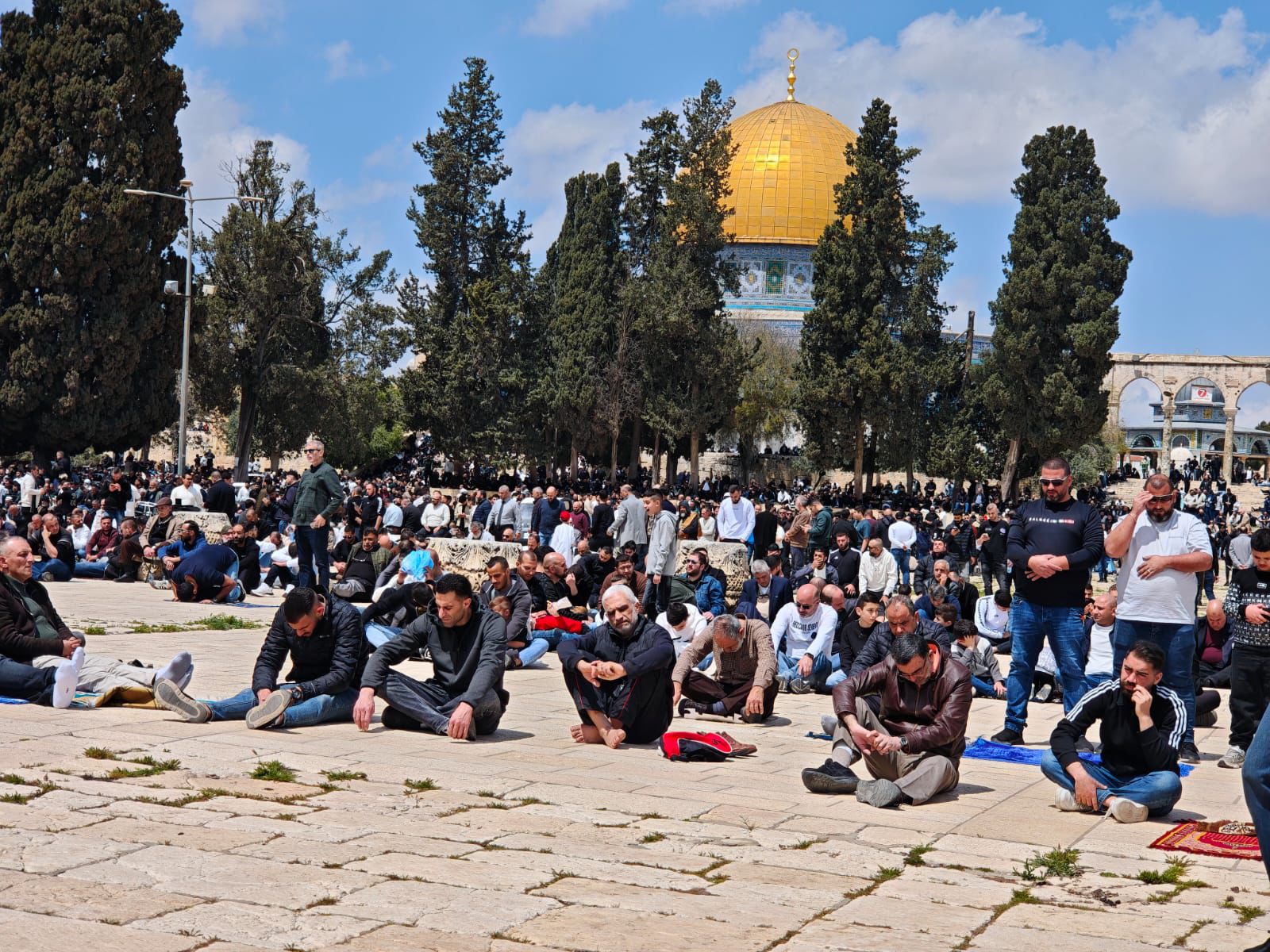
    He continued his journey across Egypt until he reached the Red Sea, then proceeded to Palestine, where he visited Bethlehem and Jerusalem, and described the Al-Aqsa Mosque.

    He said of Al-Aqsa: “It is one of the most wondrous, elegant, and exquisitely beautiful mosques. It is said that there is no mosque on earth larger than it.”

    Then, describing the Dome of the Rock, he said: “It is one of the most wondrous, exquisitely crafted, and uniquely shaped buildings. It possesses every beauty and incorporates a touch of every kind of splendor. It stands on a raised platform in the center of the mosque, accessed by marble steps. It has four doors, and the surrounding area is also paved with marble, expertly crafted. Likewise, its interior, exterior, and interior are adorned with various types of decoration and exquisite workmanship, defying description. Much of it is overlaid with gold, so it sparkles with light and shines like lightning. The eye of the beholder is dazzled by its beauty, and the tongue of the one who sees it is incapable of describing it.”

    He also visited the city of Acre, which had been devastated by the Crusades, which had not long since ended.

    Ibn Battuta then left Palestine for Damascus, where he spent several months studying, before departing the entire Levant for the Hijaz, specifically Mecca, to perform the Hajj and Umrah pilgrimages.

    After the Hajj season ended, Ibn Battuta did not consider returning to his native Morocco. Instead, he continued his journey towards Iraq, accompanying the Iraqi Hajj caravan to the city of Najaf. He then visited southern Iraq and the city of Wasit, whose people he admired.

    Next, he entered the city of Basra, which he described as “one of the mother cities of Iraq, renowned far and wide, spacious, elegantly decorated, with numerous orchards and abundant fruits. Its abundance and fertility stem from its location at the confluence of two seas: The salty and the fresh. Nowhere in the world are there more date palms.”

    After Basra, he entered Baghdad, which the Mongols had destroyed a century before his arrival. He observed its buildings and the remnants of its ruins.

    He then visited Persia and the city of Tabriz, before returning to Mosul in Iraq. He then decided to return to Mecca to perform the Hajj for the second time.

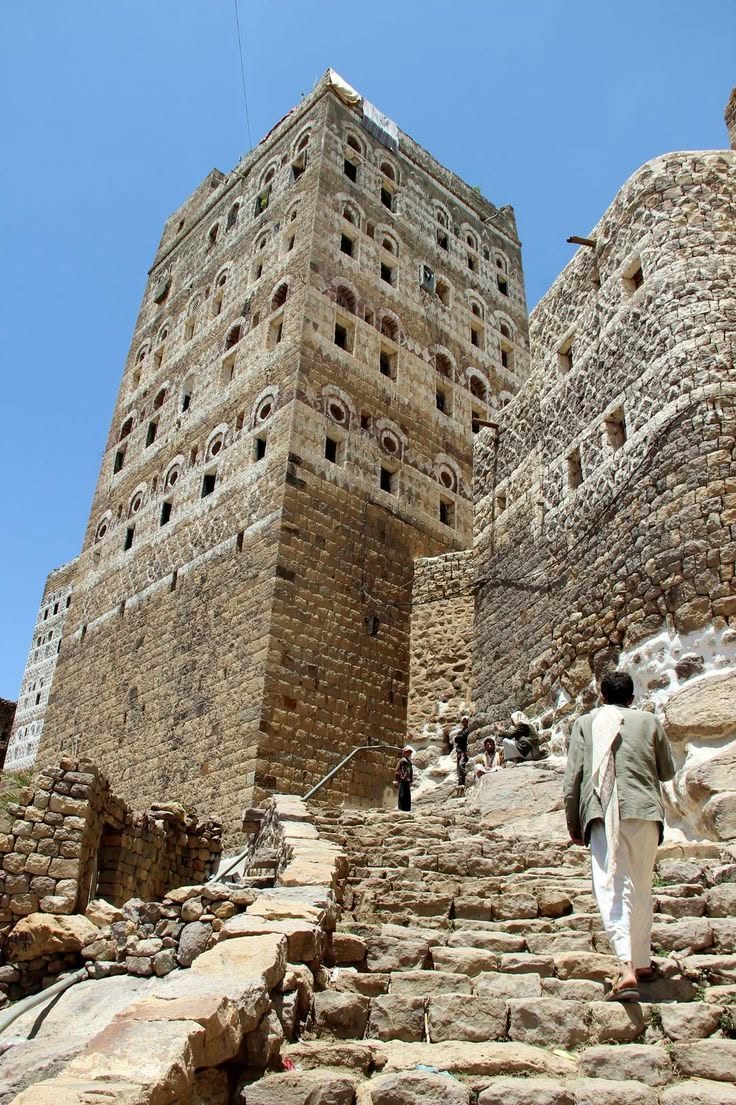
    He stayed in Mecca for a while until he recovered from an illness. Afterward, he traveled to Jeddah and then visited Sana’a in Yemen.

    In 1328 CE, Ibn Battuta embarked on a sea voyage from Aden to Mogadishu in Somalia, and then to Kilwa, a city in Tanzania on the Horn of Africa coast.

    From Kilwa, he sailed back towards Dhofar, then to Oman, then to Hormuz, before returning to Persia and finally making his way to Mecca in 1330.

    After that, Ibn Battuta visited the Levant again, then headed north until he entered Asia Minor, reaching Sinope on the Black Sea coast, and then crossing the sea to Crimea.

    He then visited southern Russia, and from there traveled to Constantinople, the capital of the Byzantine Empire. From there, he returned to Persia and continued his journey eastward until he entered India on September 8, 1333.

    He spent approximately 10 years there, visiting many regions and serving as a judge for Muhammad Tughluq, the ruler of India, or the Tughluq dynasty.

    He then wanted to leave India, but its ruler was unwilling to let him go. He claimed he wanted to perform the Hajj pilgrimage, but Muhammad Tughluq refused.

    In 1345 CE, Muhammad Tughluq suggested he be sent as his ambassador to China. Ibn Battuta readily accepted, seeing it as a suitable opportunity to leave India and explore new regions and places.

    Thus, Ibn Battuta traveled to China as Muhammad Tughluq’s ambassador and was also appointed a judge there. On his journey, he passed along the coast of Burma (Myanmar) towards the island of Sumatra, and then on to Guangzhou, where he finally arrived in China.

    Hindu pirates had attacked his ships and those of his companions while they were sailing along the Indian coast, kidnapping him. He managed to escape, but then found himself caught in a storm that sank many of his ships and killed many of his men, as he recounts in his book.

    Before all this, he decided to visit the Maldives, located in the Indian Ocean, south of India and Sri Lanka, after hearing about them.

    He landed there 10 days after departing from the southern coast of India. The inhabitants welcomed him warmly, hosting him and appointing him their judge, thus elevating him to a position of great respect.

    A year after his arrival in China, Ibn Battuta returned to Mecca, where he stayed for a while before returning to his native Morocco in 1349 CE.

    He reached the capital, Fez, and then entered Tangier. There, he discovered that his mother had passed away months before his arrival, while his father had died several years prior.

    A year after his first journey, Ibn Battuta embarked on a second, shorter trip, traveling to Granada in Andalusia via the Strait of Gibraltar.

    In 1353 CE, he undertook a third journey, lasting two years, traveling across the Sahara Desert to the Mali Empire in western Sudan.

    He reached the Niger River, then Timbuktu in Mali, before returning to his homeland in 1355 CE at the request of the Marinid Sultan Abu Inan ibn Abi al-Hasan, to document his experiences during those travels.

    Ibn Battuta as a Judge and Poet

    During his long journey of three decades, Ibn Battuta’s mission was not limited to travel and exploration. He also worked intermittently in several of the countries he visited.

    He served as a judge in India and the Maldives, and as an ambassador to China. He settled in the Maldives for a time, married there, and served as their judge, gaining considerable respect due to his status as a Muslim scholar who had achieved great renown in India.

    After arriving in Morocco, he also served as a judge, a position he held until his death.

    Furthermore, during his travels, Ibn Battuta praised the sultans, kings, and prominent figures in the countries he visited, drawing upon his poetic talent.

    In return, he received financial gifts and some presents, which he used to finance his travels, in addition to those who hosted him for a few days and those who provided him with jobs to earn a living.

    Ibn Battuta’s Journey

    The book “The Journey of Ibn Battuta” is one of the most famous travel books, in which he recorded what he witnessed and discovered during his travels (Al Jazeera).

    The Book of the Journey

    About a year after Ibn Battuta’s return from his third journey, specifically in 1356 CE, the ruler of Morocco at the time, the Marinid Sultan Abu Inan ibn Abi al-Hasan, asked his scribe, Muhammad ibn Juzayy al-Kalbi al-Gharnati, to record Ibn Battuta’s experiences and observations in a book.

    Ibn Juzayy worked with Ibn Battuta for two years to write down what he had lived through over 30 years, compiling it into the book “The Journey.”

    It was narrated that Ibn Juzayy said: “I have conveyed the words of Sheikh Abu Abdullah (Ibn Battuta) in terms that fully convey his intended meanings, clarifying the approaches he adopted. I have sometimes quoted him verbatim, without altering his original meaning or details. I have included all the stories and accounts he related, without attempting to verify their authenticity or test them, although he followed the most reliable methods in establishing the chains of transmission for his authentic narrations.”

    The book “The Journey” has been translated into several living world languages, including Portuguese, French, English, and German. It recounts the events Ibn Battuta experienced during his travels, the people he met and interacted with, and the rulers of the regions he visited and those he worked with.

    The book describes the things that caught his attention, the various types of clothing and foods and their preparation methods, as well as the cities and regions he entered, and the political and economic conditions of those places.

    After completing this book, Ibn Battuta retired to a judicial position, where he spent the rest of his life.

    His Death

    Historical sources differ on the date of death of the traveler Ibn Battuta. Some sources suggest he died near Tangier in northern Morocco in 770 AH (1368 CE).

    Others place his death between 777 AH (1375 CE) and 779 AH (1377 CE). No one mentions the cause of his death.

    A tomb attributed to him exists in Tangier, despite the lack of any sources stating that he died there.

     Aljazeera.net

    Continue reading

    Leave a Reply

    Your email address will not be published. Required fields are marked *

    You Missed

    US-Iran: Deal Today, Deal Tomorrow!

    US-Iran: Deal Today, Deal Tomorrow!

    Hassan Al Karmi: The Dictionary-Maker

    Hassan Al Karmi: The Dictionary-Maker

    Ibn Batuta: ‘Prince of Muslim Travelers’

    Ibn Batuta: ‘Prince of Muslim Travelers’

    Fatima Cates: First British Muslim in Liverpool

    Fatima Cates: First British Muslim in Liverpool

    Layali Al Khatib: First Palestinian Contender Into Space

    Layali Al Khatib: First Palestinian Contender Into Space

    Eisenkot: Netanyahu Fails in His Wars on Gaza, Lebanon and Iran

    Eisenkot: Netanyahu Fails in His Wars on Gaza, Lebanon and Iran